
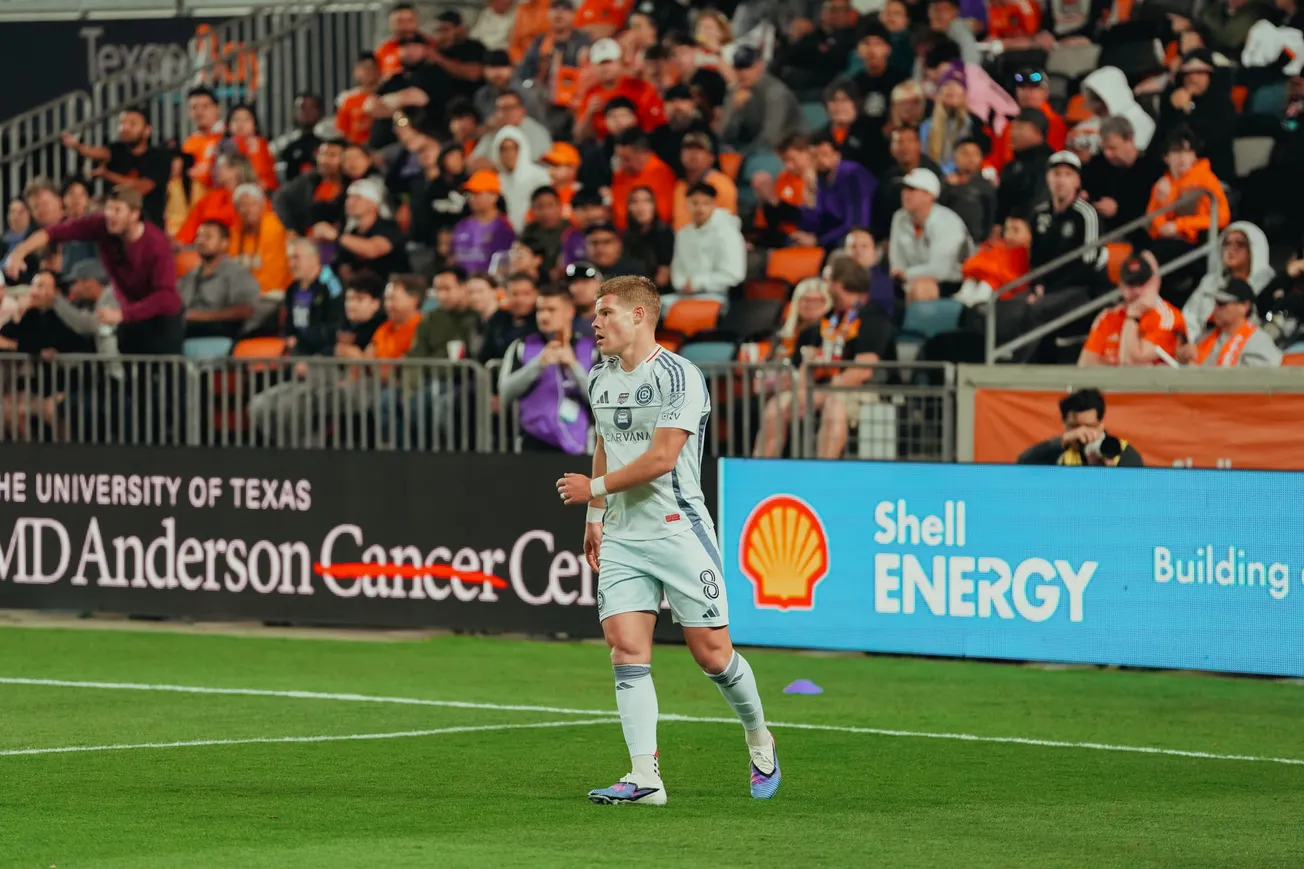
Sometimes, life has a way of reminding you no matter how good things look, everything can get turned around in an instant.
Chris Mueller had built a successful career as a professional athlete – a job title that, many kids might use as their give as their answer to a question about what they want to be when they grow up, but one that is unattainable for the overwhelming majority of aspirants, regardless of how hard they work.
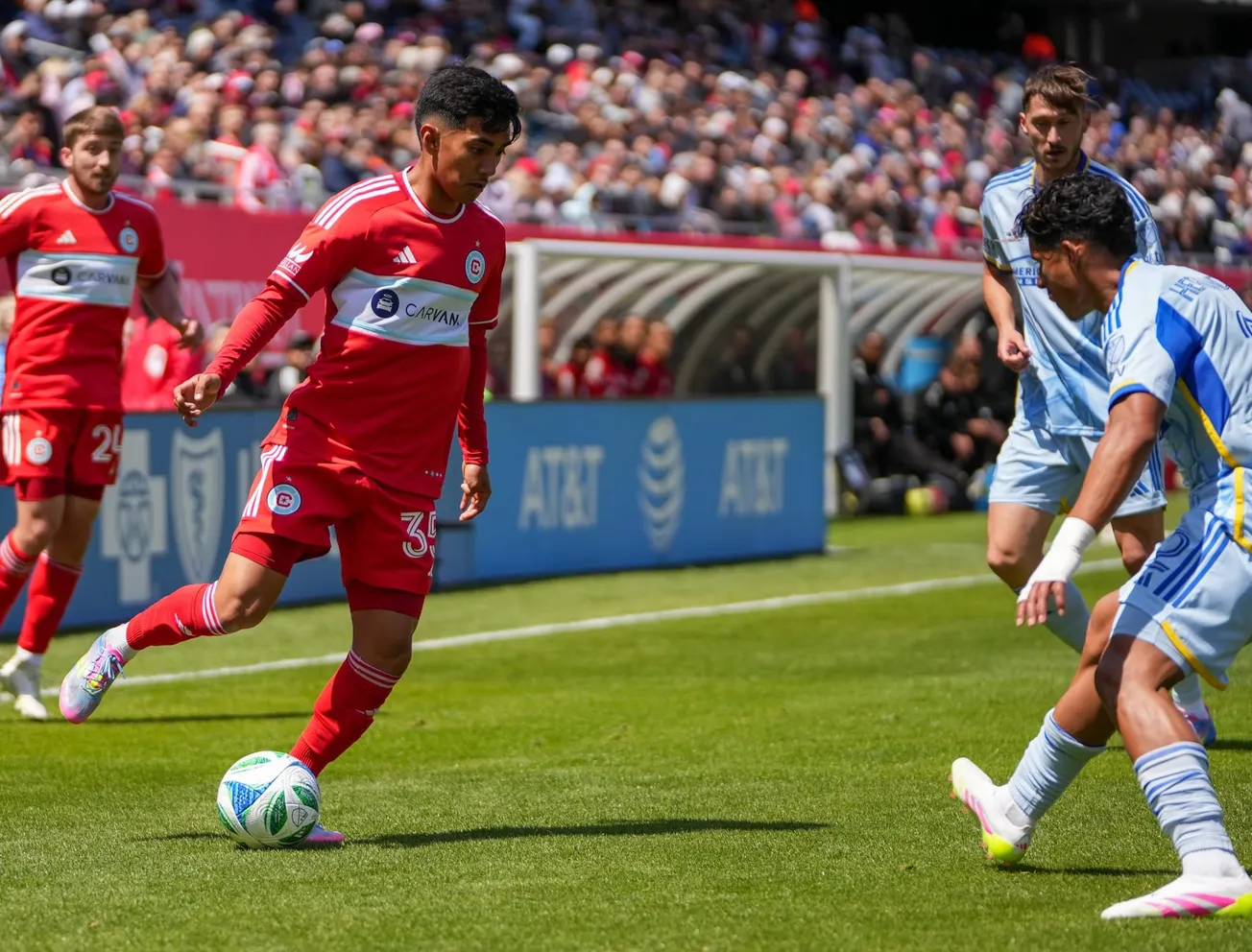
His abilities as an athlete had taken him to the University of Wisconsin as a student-athlete, then to Orlando for his pro debut where he quickly gained a reputation as a winger with pace and an eye for the net.
The attention of then-U.S. Men's National Team Head Coach Gregg Berhalter took notice of the young winger, giving the Schaumburg native a call up for friendlies in December 2022. In Mueller's first cap – a friendly against El Salvador – he scored a brace and added an assist for the national team, earning him man of the match honors.
After 112 appearances for Orlando City, he made it across an ocean, signing for Hibernian FC in the Scottish Premiership. The game soon took Mueller home, when the Chicago Fire signed him from the Scottish storied Edinburgh club.
Alongside soccer, he built a family life, with he and his wife welcoming another addition to their family last February.
Congrats to Chris and Alyssa Mueller for welcoming the newest addition to their family over the weekend! #cf97 pic.twitter.com/uUxai5pQdt
— Chicago Fire FC (@ChicagoFire) February 25, 2025
All that success, however, did nothing to prevent disaster from striking. Last summer, the Fire winger revealed that he had been diagnosed with pericarditis, a swelling of the membrane that surrounds the heart.
Pericarditis is uncommon, but not rare, with around 150,000-200,000 cases diagnosed in the United States each year. It can be caused by a number of factors, ranging from a reaction to a viral infection to autoimmune disorders.
For most people diagnosed with pericarditis, the disease is self-limited, and they are able to continue to go to work and return to full activity in a few weeks.
The intense physical demands on professional athletes, however, often means that they require closer monitoring. Physicians that spoke to MIR97 Media about the disease (but who had no knowledge of Mueller's case) said that standard procedure would be to ensure that a pro athlete was back to normal for 1-3 months before receiving clearance to play.
In a video released by the team, Mueller disclosed his fight with the illness publicly, talking about the challenges of his illness and praising the support he had received through the challenges in a message posted to the Fire's social media.
The injury derailed his career and kept Mueller native from being a part of the Fire's return for the postseason for the first time since the Chicagoland native turned pro.
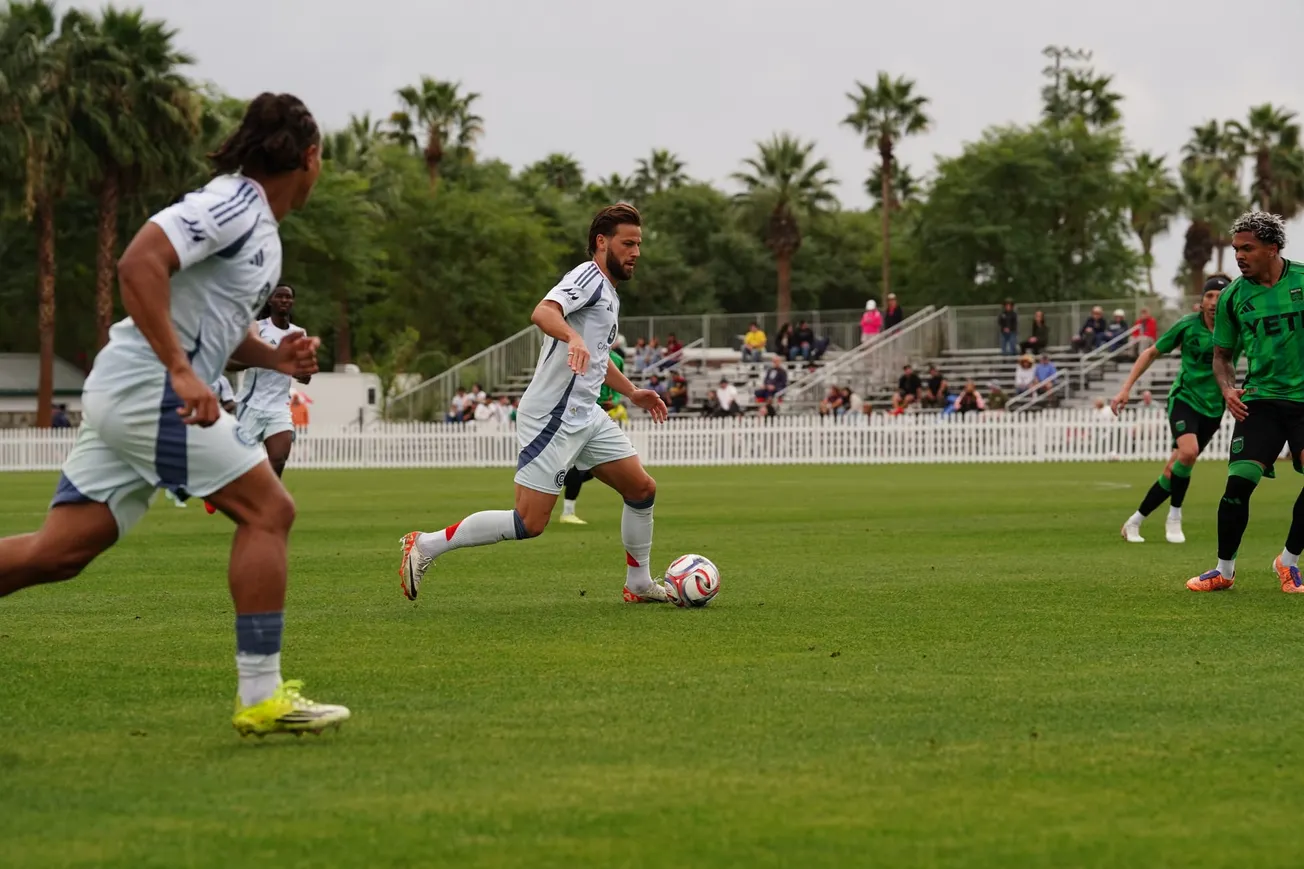
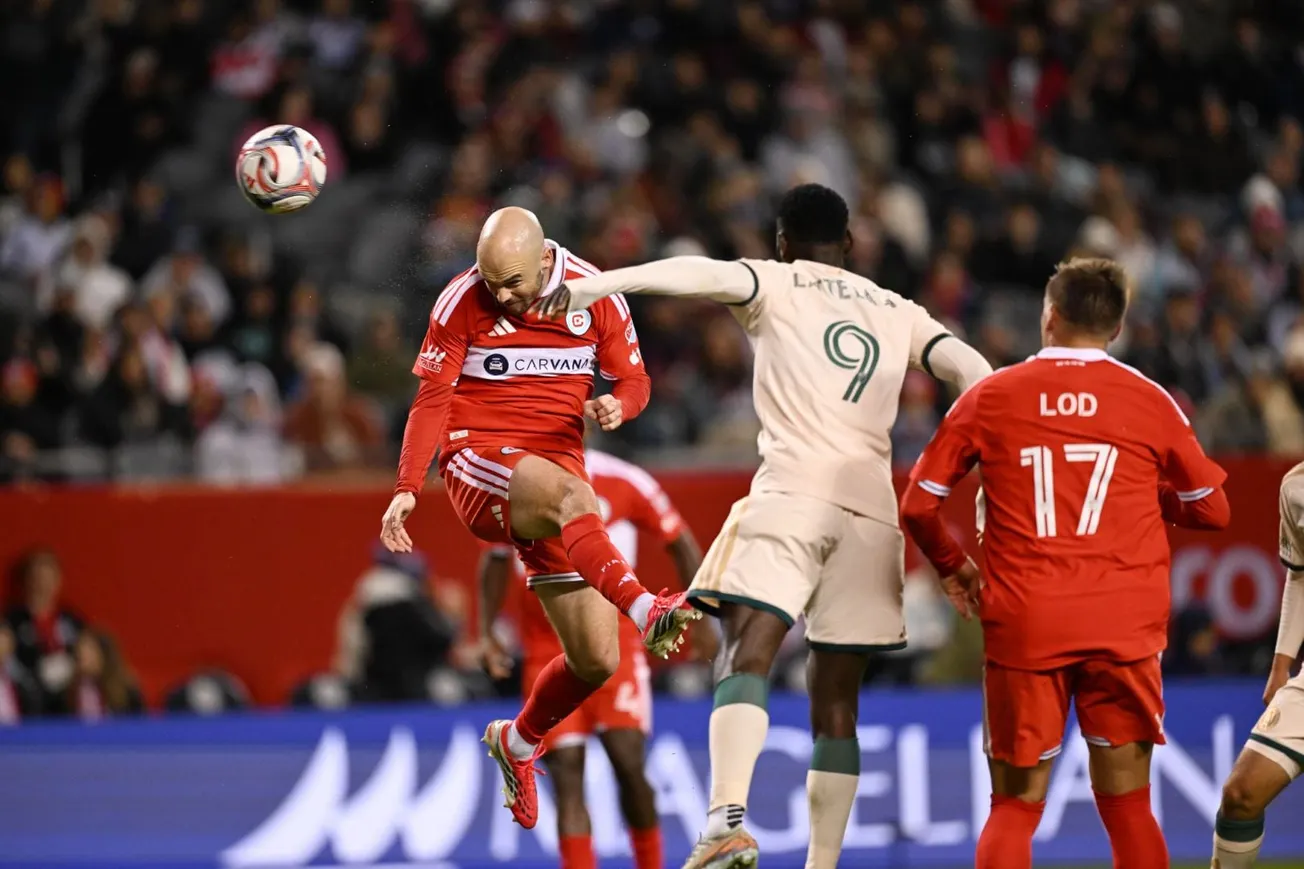
On Saturday night in Houston, with the Fire playing on their back foot for most of the second half in a game that was tied 1-1, Mueller returned to the pitch in a competitive match for the first time in 16 months.
"Obviously, it's been a long time for me out of the game," Mueller told MIR97 Media during media availability following the Fire's season opener in Houston, calling the return a "long-awaited moment, just in the sense that getting yourself back to 100% fitness at such a high level of professional sport."
"It was one of the most demanding things just in terms of, you know, getting so far out of shape and then coming all the way back to that point was obviously a big accomplishment for myself, and I was obviously excited for the opportunity to come and help the team at such a crucial time in the game."
Coming on in the 76th minute, Mueller looked calm – almost nonchalant – as came on to the pitch for Robin Lod, instead of like a player seeing his first competitive action in over a year.
Mueller's return had the makings of a fairytale moment, but it wasn't to be. Just over a minute after Mueller and Christopher Cupps were subbed on, Houston scored the eventual game winner.
It wasn't the ending that Mueller wanted.
"You know, it's funny how you can get that perspective when you're out so long," Mueller said, "and it's like, oh, just getting back is a blessing, right? It's... you're grateful to be out there, to be healthy, to do what you love, and then you get those moments where you know you're competitive, and you want to win, and want to make the difference. And then to come back and [concede] and to have it sting like that also kind of takes away from the magnitude of the moment, in some sense."
Watching Mueller play for about 20 minutes including stoppage time, you wouldn't have noticed that he had missed any time. His speed and quickness on the ball, sure-footed first touch, all were there.
"I think my teammates have been really supportive of me. I think the coaching staff has been really supportive," Mueller said about what enabled him to return to action and look as if he hadn't missed any time.
Even if his physical performance on Saturday looked identical to what we'd seen from Mueller previously, he says the experience changed him mentally – for the better.
"Obviously, it gives you a bit of freedom, I think as well," Mueller said of the ordeal. "When you look at the severity of what I faced last year, I think in a lot of ways, mentally I feel very liberated from my old pressure that I used to put on myself," saying he would "used to self-sabotage when I would play soccer."
"Now, I feel like I just don't have any fear or real pressure that I'm putting on myself. I'm just really enjoying it, because from my own first-hand experience, that it could be taken away at any moment. So I think that sort of freedom that can come out in that way and make you play better."
Asked what message he'd send to himself at the start of the illness if he could, it was clear that Mueller used the challenges as an opportunity for personal growth. "I think that's something that I could take away from this is just the idea that I can... I would be able to tell myself that, like, look, on the back end of this, you're going to prove a lot more about who you are than if you would have played the whole season and scored 20 goals. You know, because it's a real adversity that you're facing in your own life, where you know you go home, and deal with it every day, versus the other people, they have their lives and move on" after games.
"And you know, the team's still moving forward, the team's still accomplishing things, and it's just you versus you," Mueller said of his time dealing with the illness. "You know that you're kind of in the trenches, in the dirt in some sense. But I think you to push through something of that degree, and then prove to myself that I can still come out strong, that I could still choose to be my best, to aim up."
Mueller thinks he came out stronger because of the experience. "I think that the confidence that I have in myself, now that I've been through something that, you know, that's really, really hard. And then I think, that's the evidence that you stack, just in proving to yourself that you are who you say you are."