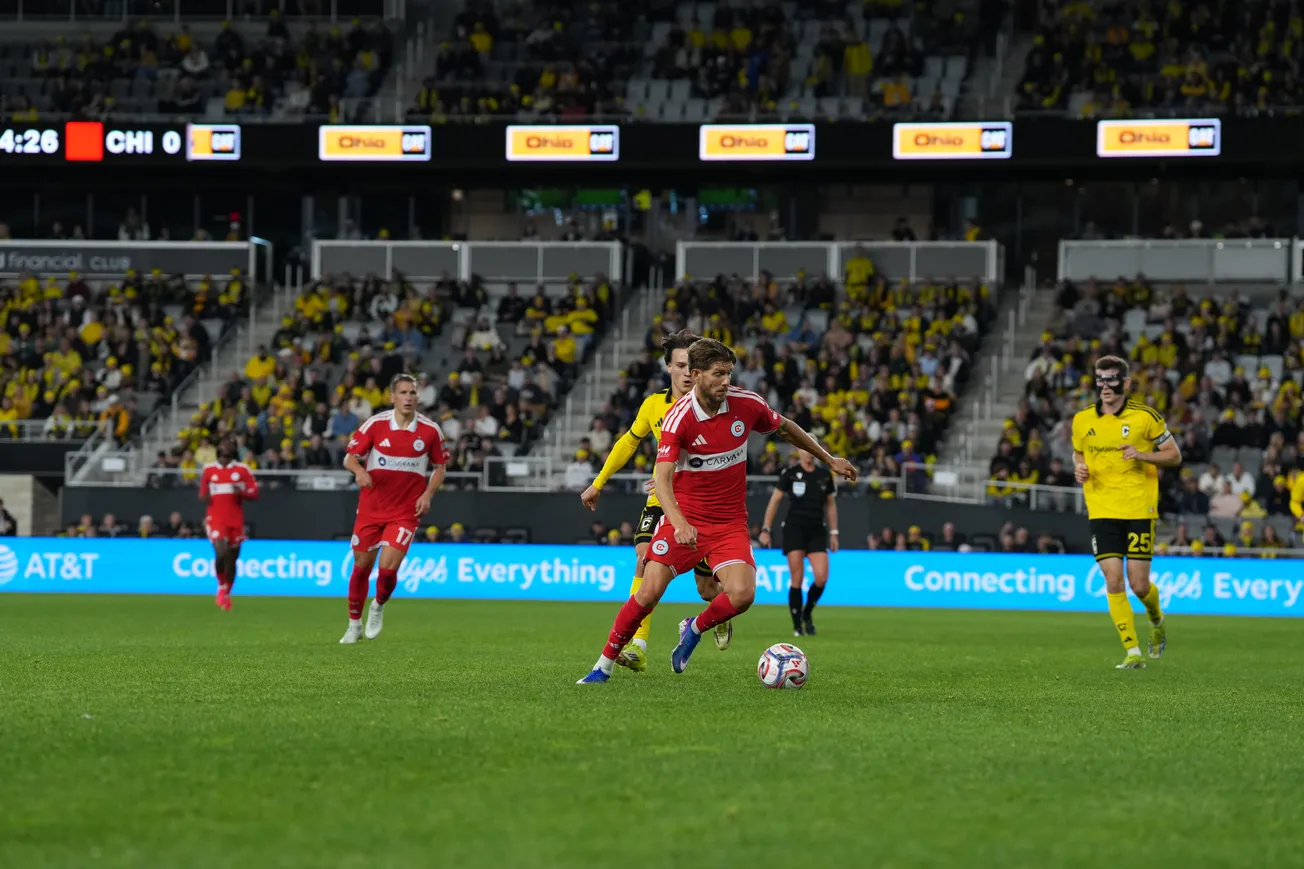
The Fire returned to the site of their first match under Gregg Berhalter and showed the progress they’ve made, keeping a clean sheet for the second game in a row in a building where they conceded four times last year, and some of the potential problems the team may face in 2026.
Here's five things we learned Saturday in Columbus.
1. Dylan Borso can ball
The Chicago Fire first team has two former MLS Next Pro Golden Boot winners on the squad in David Poreba and Jason Shokalook. Both are on first team deals and while succeeding in the reserve league in no way guarantees performance that will translate to the top flight, goalscoring is one of the skills where there’s increasing evidence that performing at that level can translate to MLS success.
All of which is to say: If you had to bet on which Fire II player would be the first to get an item in this column by the impact they made on the course of the game, virtually no one would have answered “Dylan Borso.”
And that includes Dylan Borso. “I mean, if you told me 24 hours ago I was going to be playing in an MLS game, I'd tell you you were full of crap,” the Fire midfielder (now wingback?) said.
Borso was brought to the first team midweek – as a fill-in for practice. “As of two days ago,” Berhalter said after the game, “he wasn't even involved in the first team and we needed him for training; he came in and did well. Today was an outstanding performance, really strong performance from Dylan. Good confidence and it showed that he's been developing.”
Over the course of 2026, it’s reasonable to expect that both Poreba and Shokalook will make an impact, but Borso did in this one: Not only did he “play in an MLS game,” he also played in an MLS game.
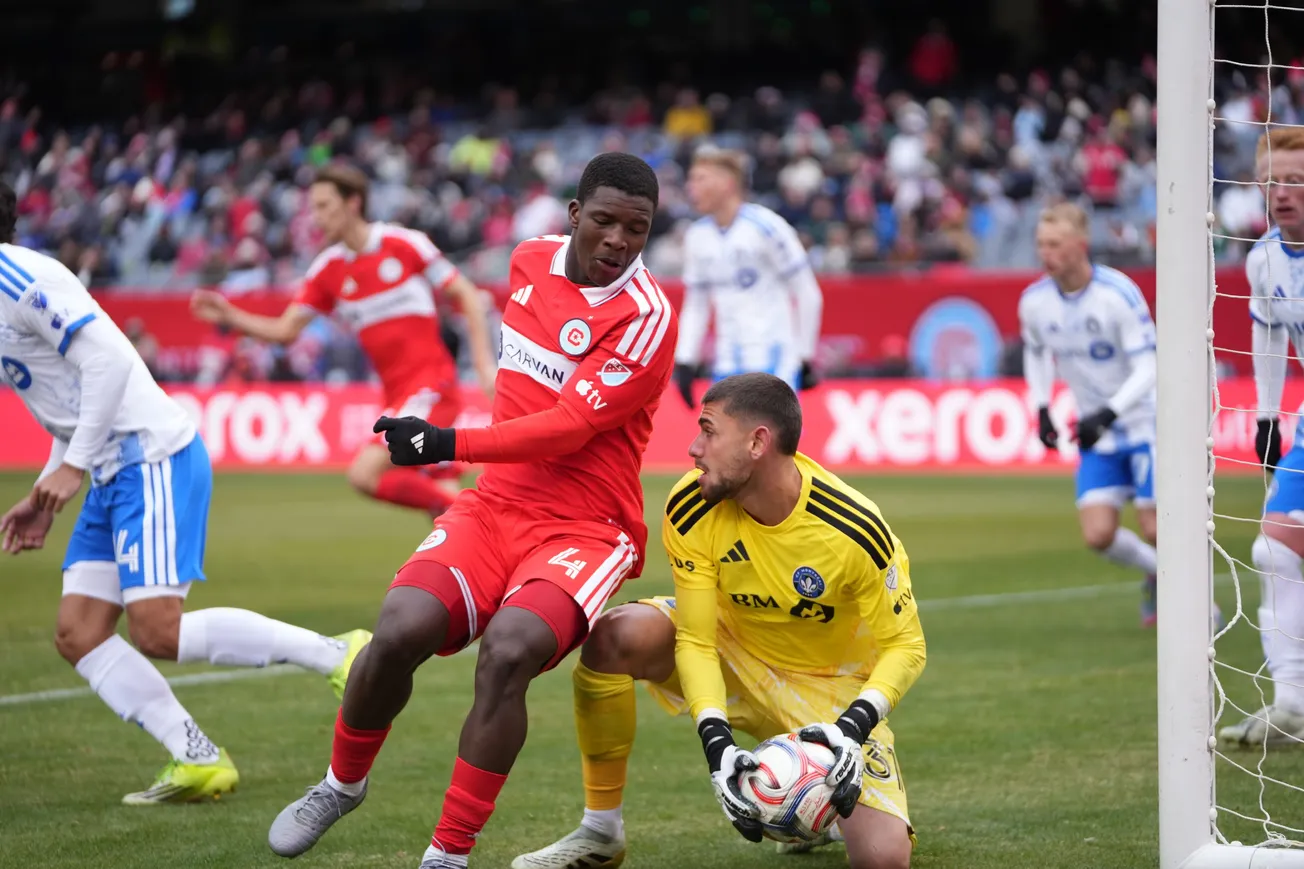
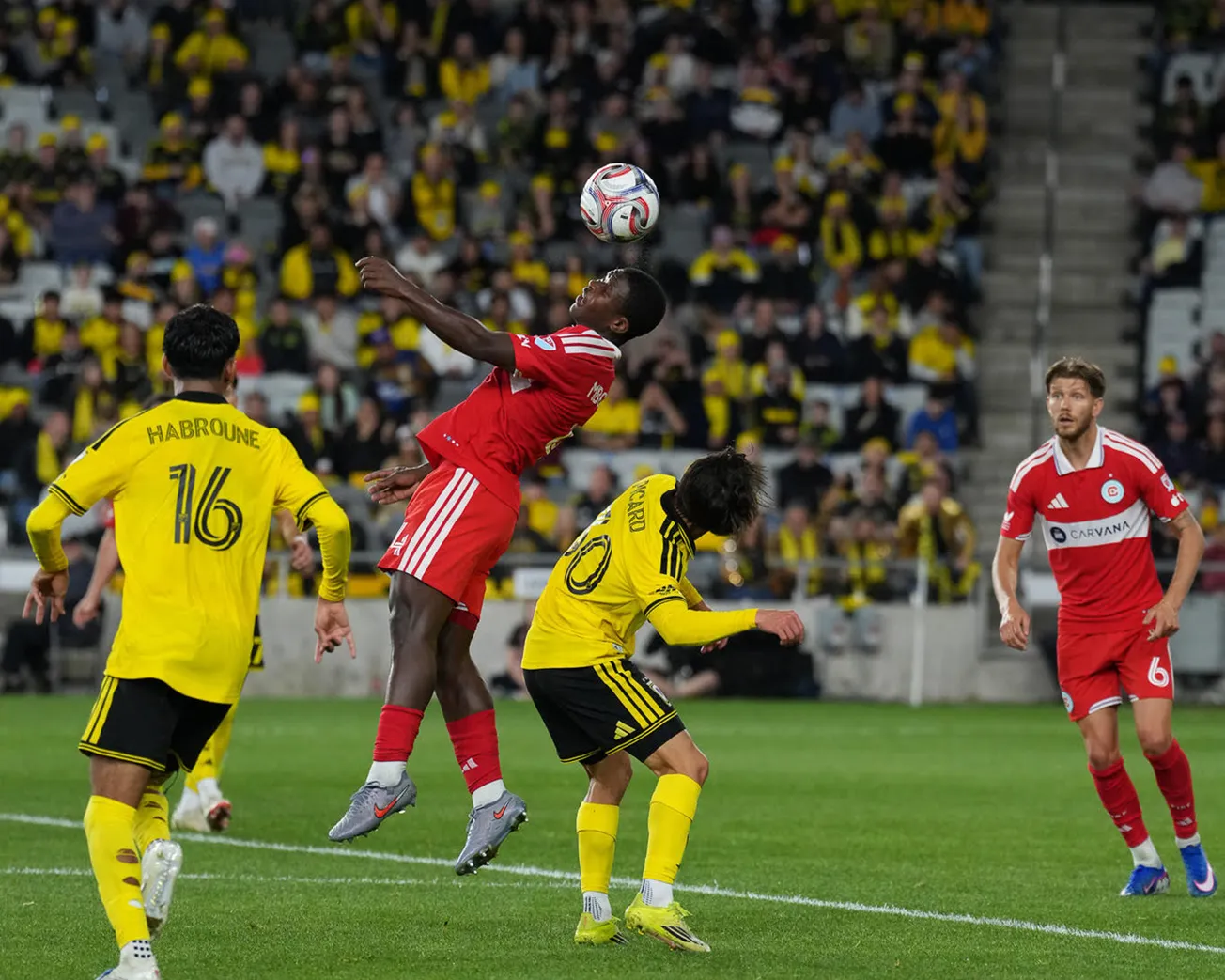
He had the Fire’s best chance on the evening, in a fantastic short-range header that Crew goalkeeper Patrick Schulte had to be very sharp to keep out of his net. He also had the best singular stand-out defensive play, clearing a ball off the goal line in a play where he was heads-up enough to make the right run and deny Max Arfsten what would have otherwise been the game’s first goal.
Here’s what’s wild about that: Borso isn’t a natural fullback. In his time with Fire II, he’s played primarily as a winger, only making the switch to a deeper-lying position in the last few games of the 2025 season. (He did play as a left back against amateur team Chicago City in the U.S. Open Cup in 2024.)
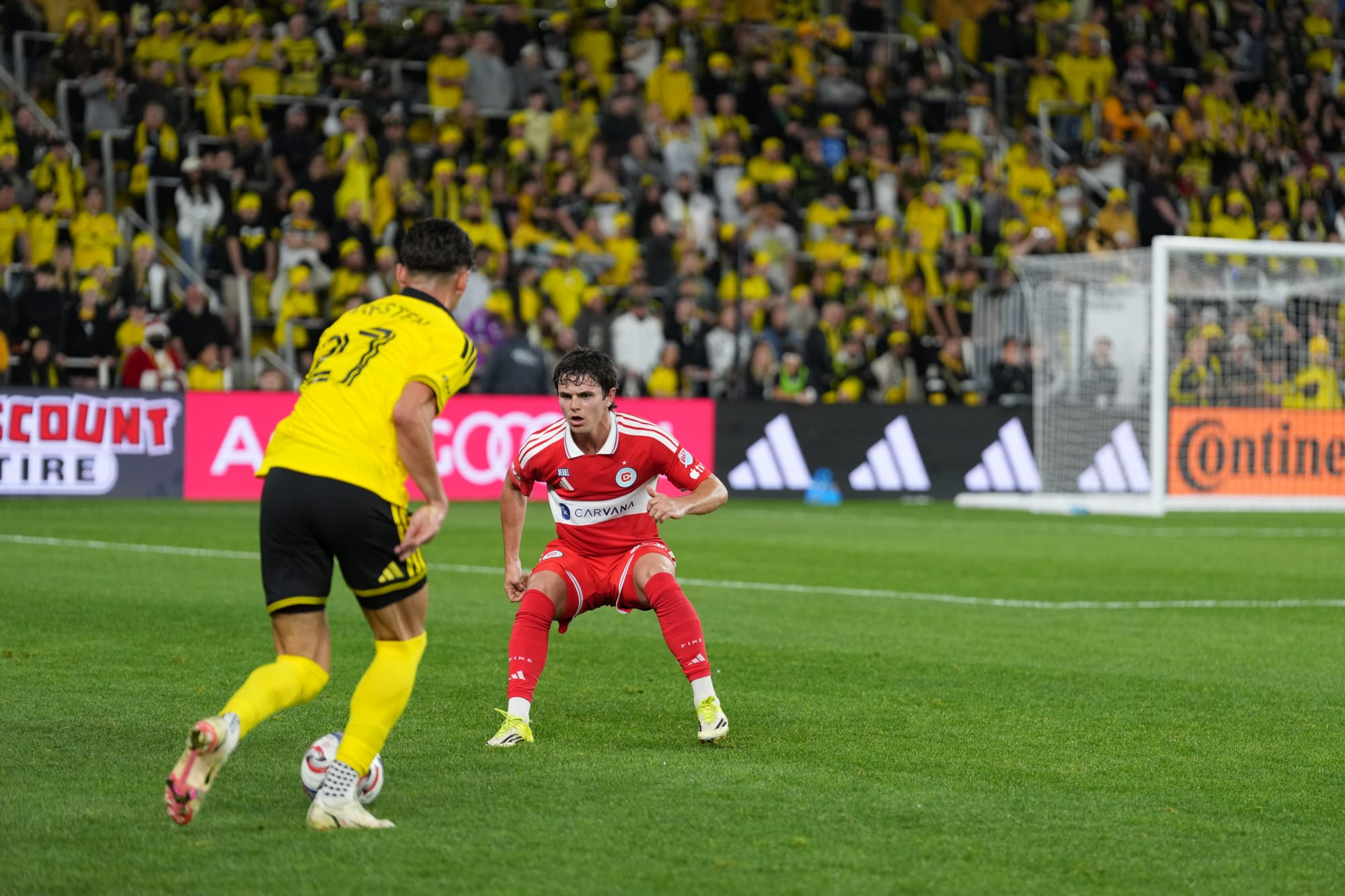
After saying he was “probably a little jittery to start,” he said that he just “grew into” the game.
On that clearance? Here’s what the 19-year-old Fire debutant said: “I saw [Chris] Brady make a great first save and I knew I had to at least put my body on the line for the rebound. I got lucky I was in a good spot. You know, the right back is still a new position, so I'm still learning some tricks but I'm glad I got my hands behind my back and got big.”
Over the past few years, the Fire have spent a lot of money on a lot of different options at the position who haven’t been able to figure that out.
And on his header? “I was shocked there. I couldn't believe he got a hand on that. But, you know, that's football and a hell of a save. I saw Robin [Lod] get the ball on the left side, knew I had to get up there into the box. Big skip, just put a head on it and hell of a save.”
Berhalter was also impressed with the Fire academy product’s performance, calling it “amazing,” continuing, “we never give game balls out and we gave him a game ball. We only give game balls for wins but I think he deserved it.”
Fire II winger to fullback to first team to getting the game ball in his debut. That’s one heck of an arc.
That actually brings us to our next point:
2. There’s something to be said for versatility
Maren Haile-Selassie has moved from the bottom-left of a lineup graphic, starting at left back in the season opener, to top right, and back again.
You could argue that he looked best last week against CF Montréal, and had the Fire’s first shot on target in that game – a good attempt from inside the box that required Tomás Gillier to be sharp. After Jonathan Dean’s red card, the Fire brought on Joel Waterman for Jonathan Bamba, giving the team a back-three and pulling Haile-Selassie into the left back spot vacated by Dean.
Haile-Selassie was one of the most active players for the Fire throughout the game, and he looked good in both positions.
Last Saturday, he had one of the Fire’s strongest individual performances in Columbus. He may not be a game-in, game-out starter for the Fire – on our season preview episode of The Bonfire, Joe Lowery of Backheeled, called him “the best backup winger in MLS,” and we’re certainly not going to argue with one of the smartest, most knowledgeable guys covering the league – but backups are notably not starters.
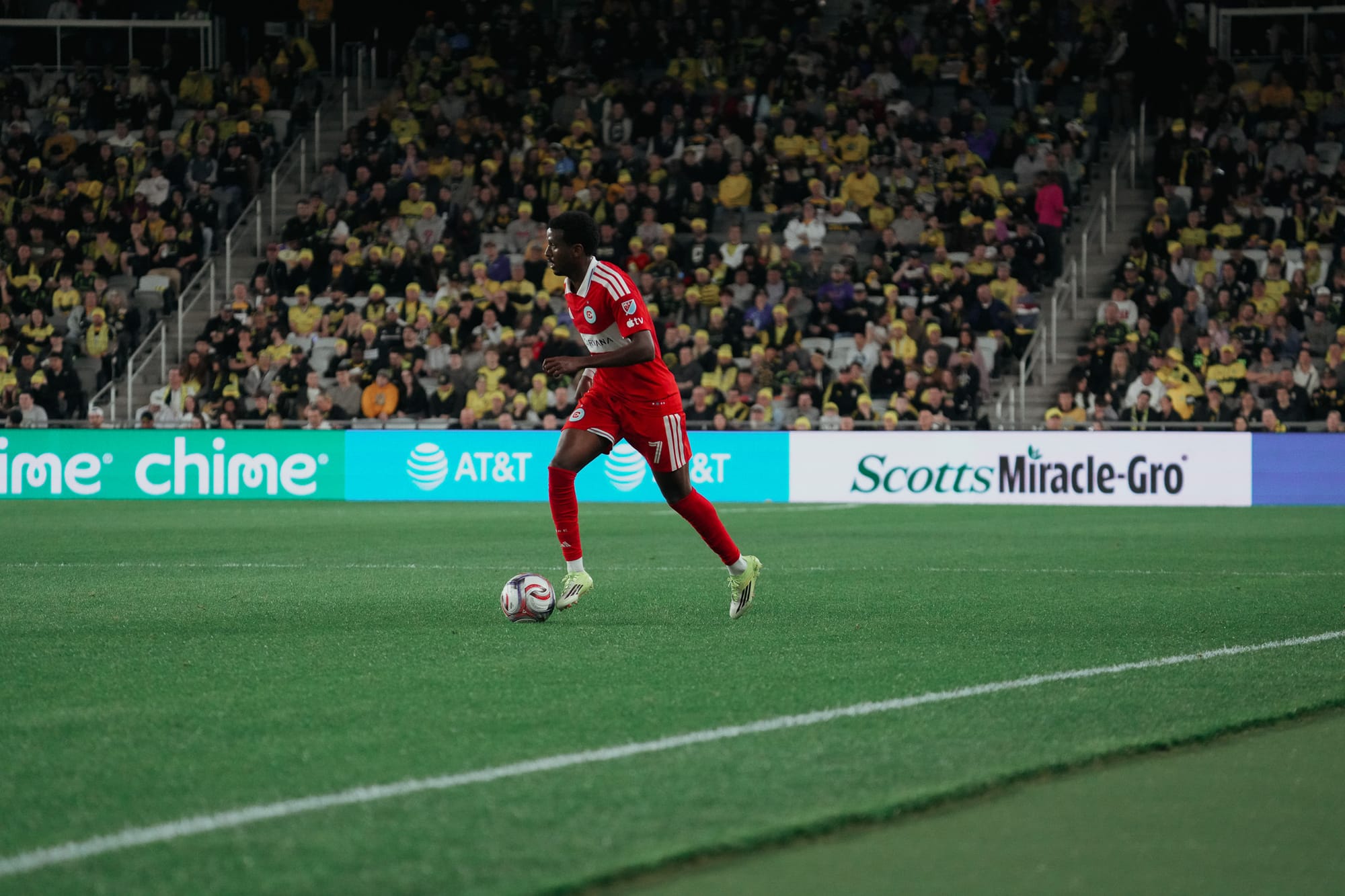
Even if he doesn’t start every game, he’s poised to eclipse his contributions from 2025 (that isn’t a particularly bold claim, since he’s already had nearly a third of the minutes he had in all of 2025) – and that versatility is a big part of why he’ll get the opportunity to do so.
He hasn’t just been a body plugged into a spot on the lineup. Regardless of where he’s been, he’s put his technical abilities and good decision-making (not to mention his speed) to use for the squad.
That kind of versatility makes you more valuable on a roster. It also makes the team around you better. Still, being a good player that can play in a position doesn’t mean you’ll be able to make the same impact that you would playing elsewhere.
The Swiss… outfield player… isn’t the only one who’s taken on new roles in 2026. Chris Mueller played nominally as a forward at the start of this one (and here’s hoping the injury that took him out from his first start since late 2024 is nothing serious), though in practice he almost played like a second striker and was often lying deeper than Zinckernagel or Bamba.
Robin Lod has played throughout attacking positions in his time in MLS, and started the season off as a right midfielder against Houston (not his best game, but he’s shown that he’s capable of playing there in Minnesota), and as a sort of centralized attacker late against Montréal playing when the Fire were down to 10 men, scoring a goal that capped the Fire’s victory. And this is after many of us assumed he’d deputized into André Franco’s no. 10 central attacking midfield role until his return from injury later this year.
One other guy who’s popped up in a number of positions for the Fire this year is Philip Zinckernagel, who last year set the Fire’s single-season goal contribution record with 15 goals and 15 assists – the first time a Fire player had reached double digits on both tallies in a season.
But…
3. It turns out that Zinckernagel isn’t a superhero
Philip Zinckernagel had one of his worst performances in a Fire shirt on Saturday. That’s pretty obvious based on the eye test.
But if you don’t want to believe the eye test, he has one of the worst ratings he’s had on American Soccer Analysis’s goals added metric, which looks at how every action a player takes on the ball increases their chance of scoring, or decreases their chance of conceding. If advanced metrics don’t do it for you, he also had the worst rating of any Fire player on Fotmob.
And if you just want to count? When the final whistle blew in Columbus, it was the first time since Zinckernagel came to MLS that he made it three consecutive games without a goal contribution (yes, we count secondary assists, because this is America and that is American soccer heritage).
Look: it’s a small sample size and the quiet start isn’t necessarily a cause for concern. Still, three makes a trend, so it’s fair to ask: what changed for Zinkernagel in 2026?
Two things: One, the Fire were missing not just one, but several key attacking pieces. Andrew Gutman, one of the most underrated contributors to the Fire’s attack this year, has been out for every one of those games. Against Houston in the season opener, Bamba was unavailable. Against Columbus? Cuypers didn’t make the trip. Zinckernagel is good – but those 15 assists? That was him producing for others around him. That’s a lot harder to do when familiar attacking talent isn’t available.
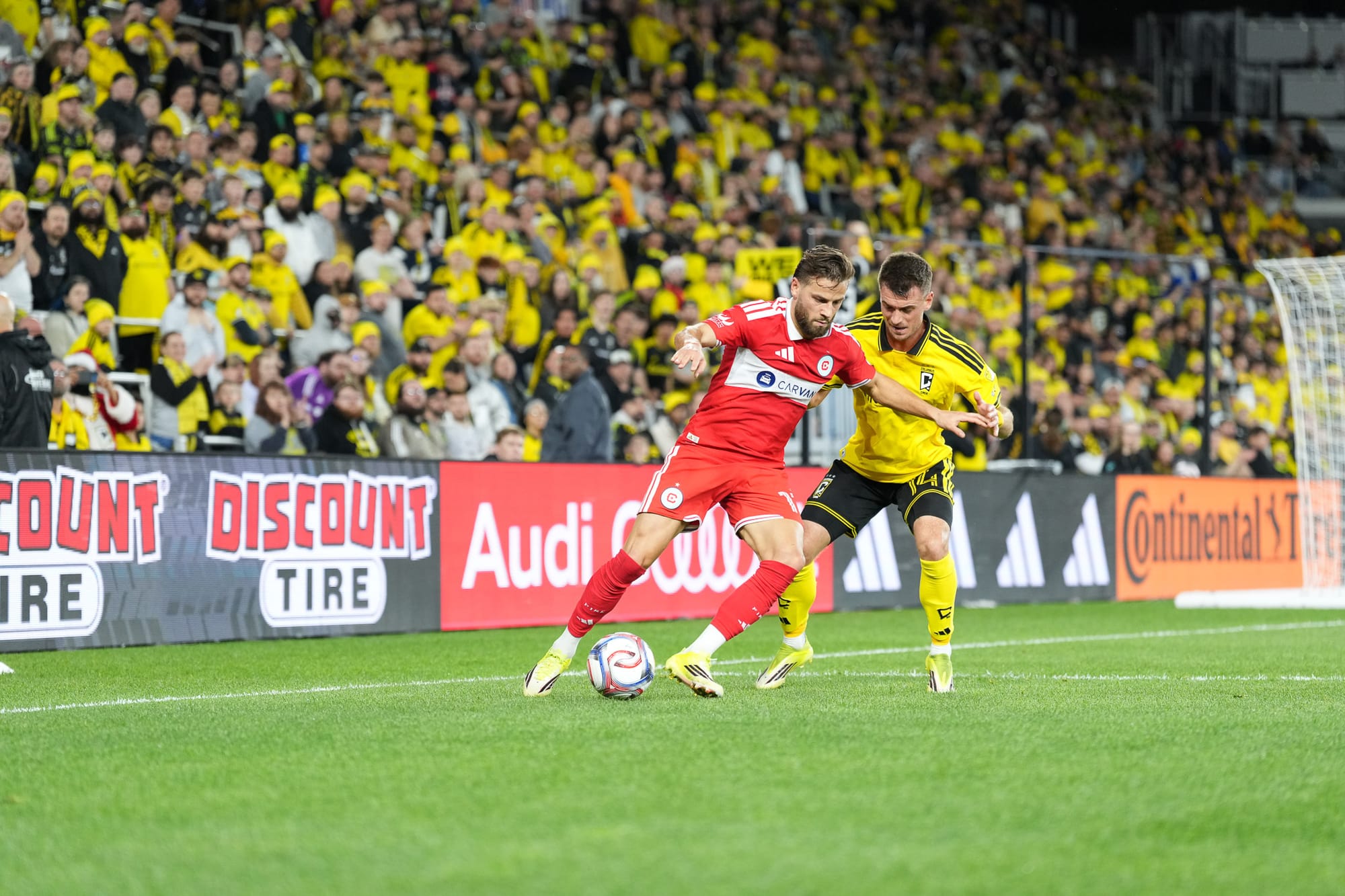
Second: After being a virtual lock starting on the right wing through 2025, his first two starts of 2026 came in the attacking midfield. He can play that position – early on, it seemed that his positional flexibility, being able to play on either wing or in the no. 10 spot, was one of his big selling points. But it isn’t his best. Against Columbus, he nominally started on the right wing – but in reality, with Cuypers out, was being asked to play a very different role than he did throughout 2025.
Zinckernagel was visibly frustrated – early on in the game, he felt like he was fouled and was banging his hand on the ground, trying to get the attention of Head Referee Tori Penso. To put that into context, that’s the same gesture that Mueller used later after going down with an apparent injury in just first start and second game after a nightmare of a year dealing with health issues.
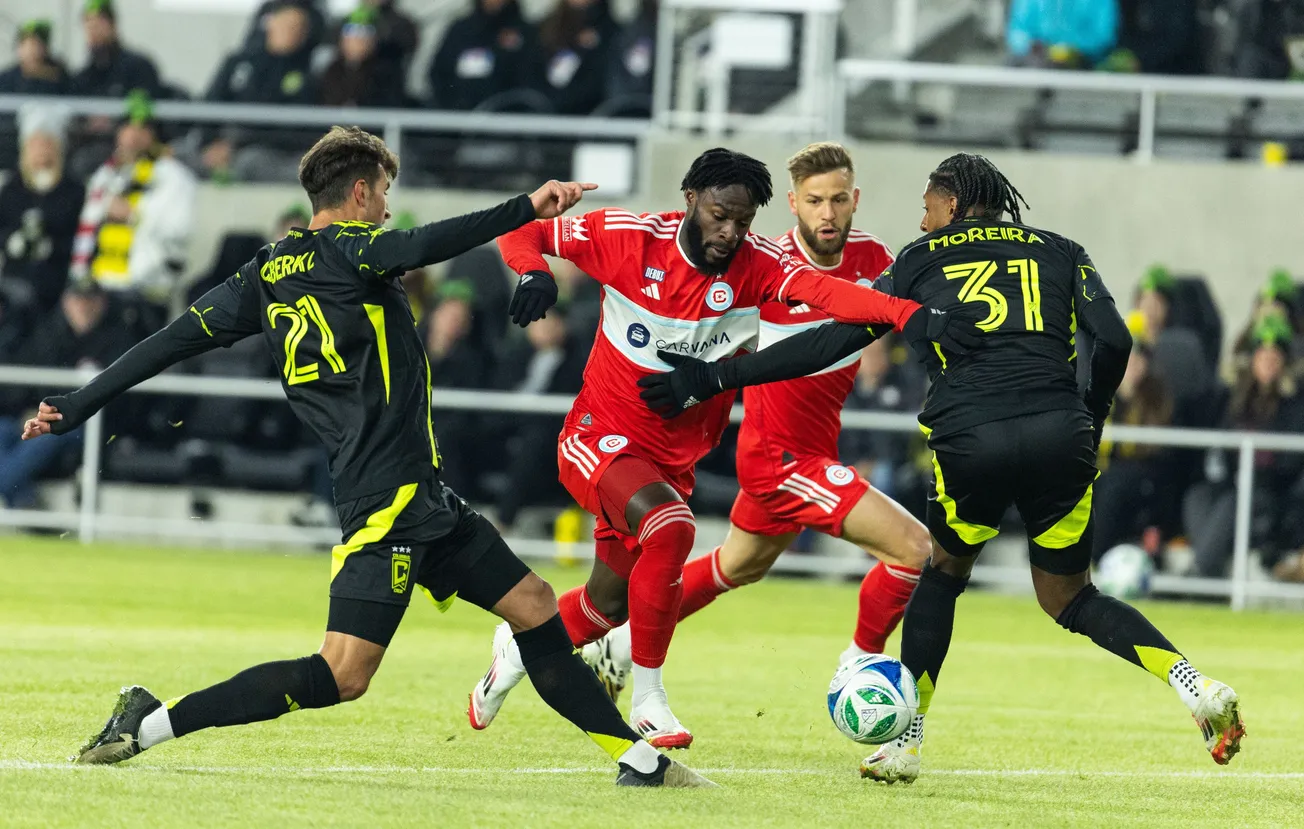
Several other times during the course of the game, the Dane voiced his frustration to (or around) Penso and if we’re being fair, he had every reason to. Although the Crew’s Malte Amundsen did get a yellow card for grabbing Zinckernagel when he was about to break ahead, it was far from the only time that he fouled – just, many of them weren’t called.
To be fair, he was far from the only Fire player that had words – sometimes clearly at high volume – directed at Penso during the match. And after keeping her cards largely in her pocket throughout the game, Penso finally unleashed a torrent of five yellows starting in the 77th minute – a clear indication that control of the game had slipped away from her.
But it’s all but certain that the officiating isn’t the only thing frustrating Zinckernagel. Between being taken away from his best role (if not technically position in this last one), having a bigger target on his back after an All-Star season last year, and, at times, being triple-teamed by Crew players when he had the ball, there are plenty of contributing factors. But let’s be honest: A lot of it would be water under the bridge if he’d been scoring.
Zinckernagel’s talent didn’t change and he hasn’t slowed down. His touches remain clean, and he’s showing the same skills that won the hearts of so many Fire fans in 2025. But he isn’t Superman. He can’t do it alone.
4. The Fire could really use a proven striker behind Cuypers on the depth chart
Let’s start by giving credit where it’s due: For a guy that doesn’t officially have the “iron man” title (missing out on one game in 2025), Hugo Cuypers is about as close as one can be.
The Belgian forward has appeared in 66 of 71 MLS league matches the Fire have played since he arrived in Chicago in 2024, and every appearance has been a start. In those 66 appearances, he’s played 5,620 of a possible 5,940 minutes – just shy of 95% of the total possible in those matches.
He has been incredibly consistent, both ability to stay healthy and the impact he’s made when playing. But there is a difference between wanting Cuypers to play every possible minute for the Fire, and not preparing for the inevitability that at some point, he won’t be available.
One of the obvious holes in the Fire’s roster has been backup striker: A proven player that Berhalter (and fans) believe can make a difference off the bench in relief of Cuypers or play alongside him when the Fire are chasing a late winner or equalizer, and be a credible scoring threat from kickoff in games when the Belgian DP isn’t available.
No offense to Tom Barlow (who started last week, by the way) or his hat trick against D.C. last year, but his departure in the offseason felt like a statement that the Fire were looking to upgrade at his position. Instead, Gregg Berhalter filled from within the ranks, signing MLS Next Pro Golden Boot winner Jason Shokalok to a first team deal.
In the medium term, that might work: Goal scoring is one of the skills that does seem to travel with players when they move up from Next Pro.
Short term?
Look: If Berhalter believed in Shokalook’s ability to come in and do some version of the job Cuypers did for most of a match, he’d have started the former Akron Zip in Columbus last Saturday. (Shokalook was listed as questionable but came on late, seemingly suggesting that he was healthy enough to play. Given that it was a possible head injury, it is likely that he was either fit or not, rather than under a minutes restriction).
And if you don't trust Shokalook, why sign him? And why put him in second on the depth chart at a crucial position where it's not like, unlike wingback, you can often get decent results by pulling another player out of position?
Instead of giving Shok his first start, Berhalter rolled with Mueller against Columbus but here’s the thing: His name and number may have taken the place of Cuypers, but he clearly didn’t have the same job description that the Fire’s team reigning Golden Boot would have if he’d been fit. (We’ve also seen Robin Lod come on late and play a handful of minutes as a central attacker.)
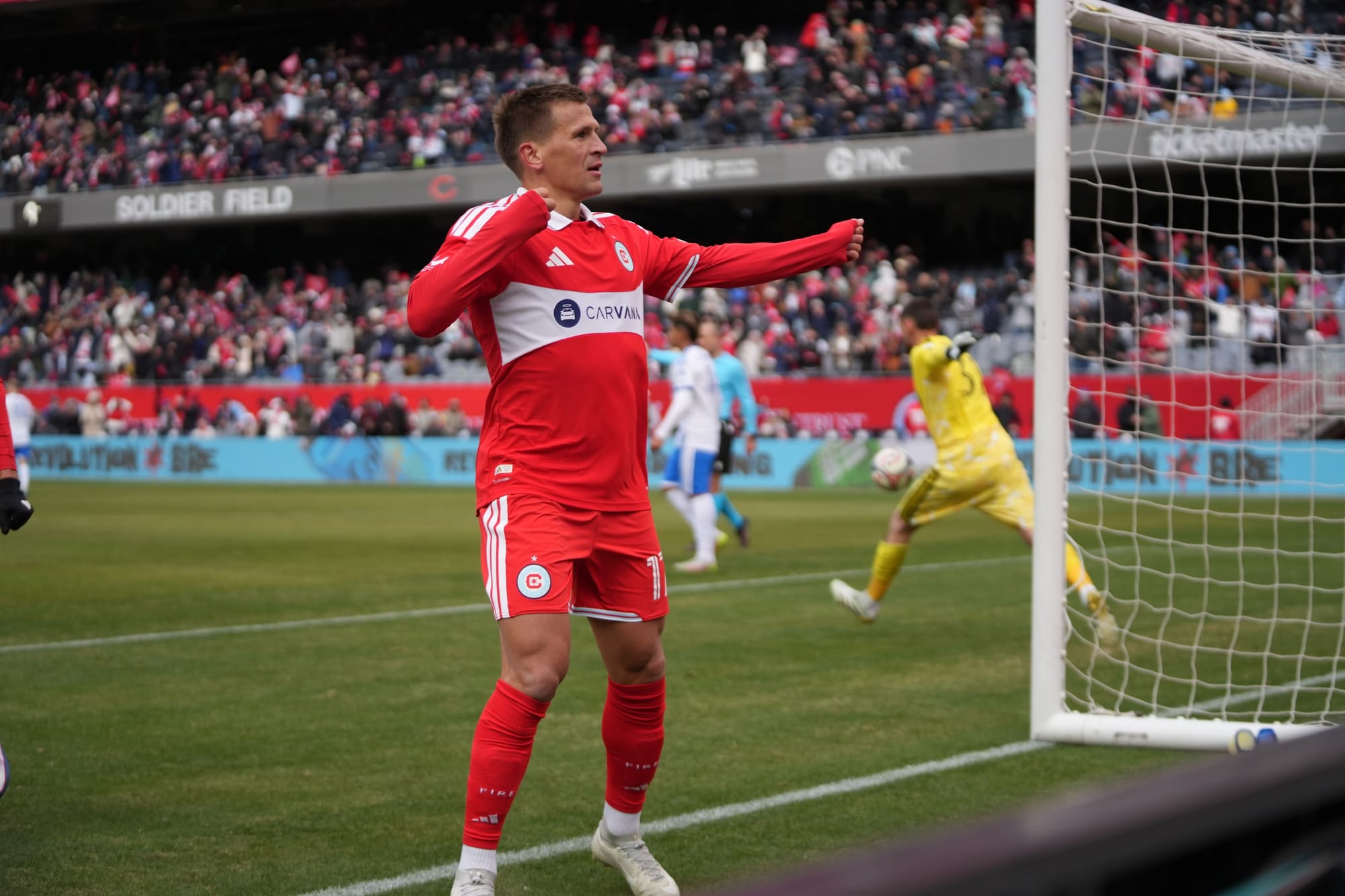
While Mueller performed admirably in his first start since 2024, because of the change in tactics and roles at the center forward spot, the shape and game plan for the Fire changed, and the Fire didn’t score in this one.
Maybe Shokalook will be what Duncan McGuire was for Orlando, or Patrick Agyemang for Charlotte: A guy that came through the college ranks and finds a way to highlight reels in MLS with his scoring prowess. Maybe that day is coming soon – Shokalook may not have been fully fit, after having missed out on full training this past week.
Zooming out, with Cuypers and Gutman out, I think most would gladly take a road point against the Crew in Columbus’s season opener, but the lack of a backup striker complicated things for the Fire.
Speaking of…
5. There might be some warning signs
After the incredibly large sample size of 270 minutes and six halves of competitive soccer, the Fire have looked great in a couple (first 45 minutes against Houston, playing a man down in the second half Montréal), good in one (first half against Montréal, controlling the game but just finding the back of the net once), pretty good in one (second half against the Crew), somewhere on the lower end of decent in another (early against the Crew), and pretty miserable in another (second half against the Dynamo).
That 1) is pretty inconsistent and 2) not where the Fire hoped they’d be in year two under Gregg Berhalter (and sure, it is also very early).
Credit to Lod for scoring the latest non-extra time goal in Fire history against Montréal, but it came just after Cuypers put the game out of reach by scoring from the penalty spot. Montréal knew they were getting bullied by the Fire despite the hosts being down a Man In Red and to say that their heads weren’t in the game at that point is probably an understatement. So on one hand, yes, those two goals scored when shorthanded count for the Fire. But they shouldn’t count for much when we’re talking about the team’s overall performance.
Excluding Lod’s late dagger, the Fire have now scored just twice from open play in 270 minutes of competitive soccer. Last year, it took the Fire 22 minutes to reach that mark.
If you want to be glass-half-full about all of this, the Fire have conceded just twice in those 270 minutes. Three games into 2025, the Fire had allowed seven goals – three of them coming in the first 45 minutes of their season opener against Columbus (they’d scored seven in that stretch).
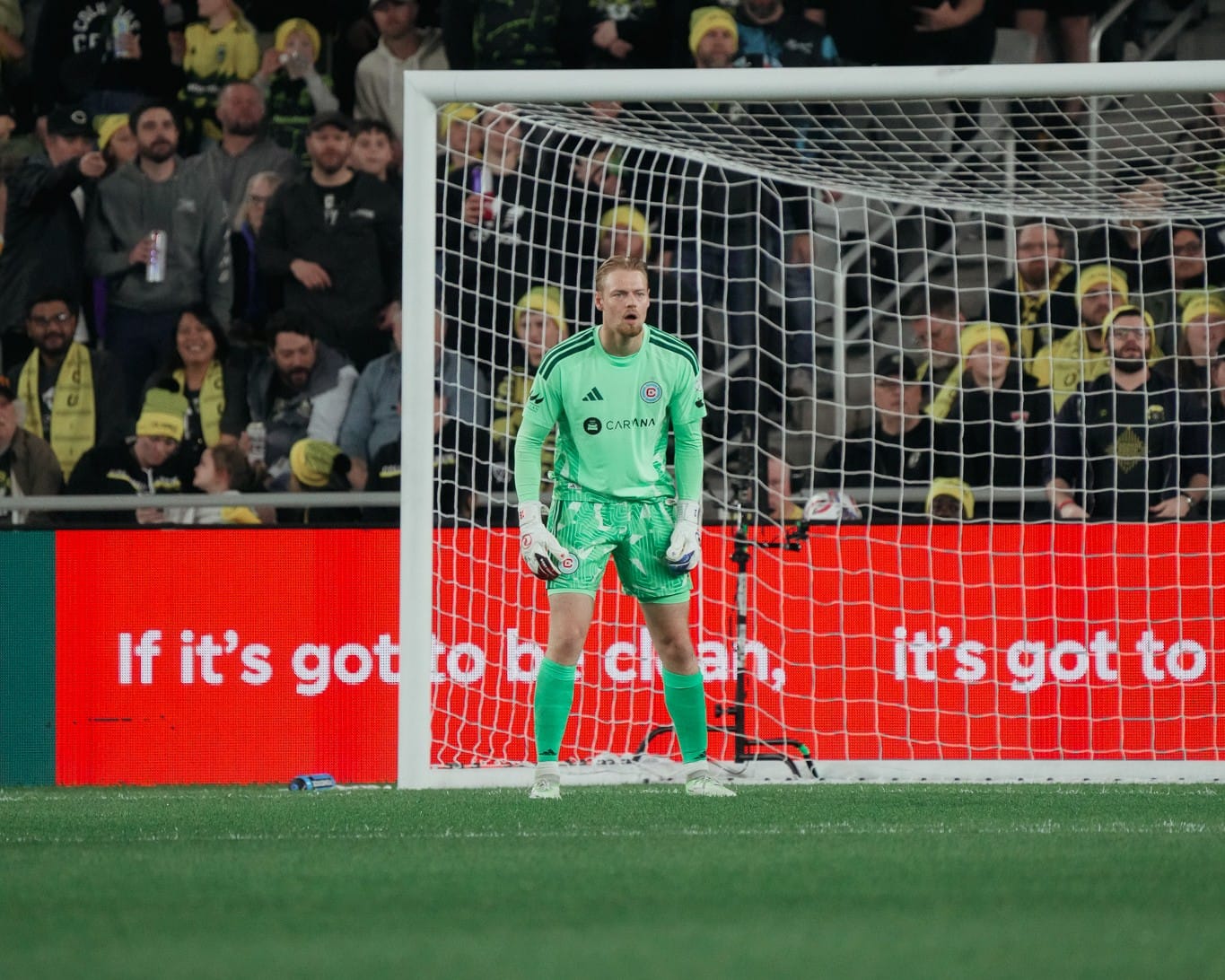
While it’d be funny, in an MLS kind of way, for the Fire to switch from having an elite offense in 2025 to an elite defense in 2026 while keeping the same coach and the vast majority of the same players, ultimately, your ceiling is higher if you have a great offense and a decent defense than it is the other way around. (And goals are fun! Watching your team score a boatload of goals is fun! Watching your team spend most of their games holding on to a 1-0 lead is stressful!)
Zeroing in on the game against Columbus, where the Fire failed to find the back of the net, helps explain why the Fire’s offense hasn’t been clicking the same way this year (again, early!) .
”I wasn't pleased with the first half” against the Crew, Berhalter said following the match, “how we were getting locked on to one side. We were asking the guys to switch field, not get into the side channels they wanted us to to then trap us. Second half, we did a much better job of that.”
What changed? Back to Berhalter: “Our center midfielders performed much better and we started to control the match.” Yes, the Fire controlled the match a lot better. They had chances, and you could say the Fire maybe did deserve a goal (sometimes, ball no go in as Matt Doyle of Tactics Free Zone likes to say).
Yes, the midfield performed better, but it still didn’t look like the Fire through most of 2025. Points 3) and 4) above are a big part of why, but let’s zoom out: Berhalter has not been able to find a creative playmaker that does the work that Franco did so wells or the Fire last last year, and which Brian Gutiérrez did better than we often gave him credit for.
So far, Zinckernagel’s been the player Berhalter’s turned to the most, but it hasn’t worked out terribly well (see point no. 3 above!). Could Lod be the solution?
The Fire miss Franco, and with the Fire missing Franco, they miss Guti.
Maybe this is a non-issue: Maybe, if Cuypers had been able to travel, we’d have seen Zinck (or Lod) ball out rather than the team needing to switch tactics to play with Mueller as something closer to a false 9 than a true striker. Maybe if Haile-Selassie had been free to play in the attack with Gutman healthy or Dean available, Zinck or Lod would have been able to get the ball to one of the Fire’s two fast, creative, technical wingers and it’d have overwhelmed the Crew’s still-in-progress defense.
Or maybe it’s an issue that will get solved: It’s clear that regardless of formation, the tactics in 2026 aren’t exactly picking up from where they left off when the Fire made it into the postseason by beating Inter Miami in their own house last September, and changes – especially with how the midfield plays and connects to the attack – can take time to really click for everyone.
But it might be an issue.