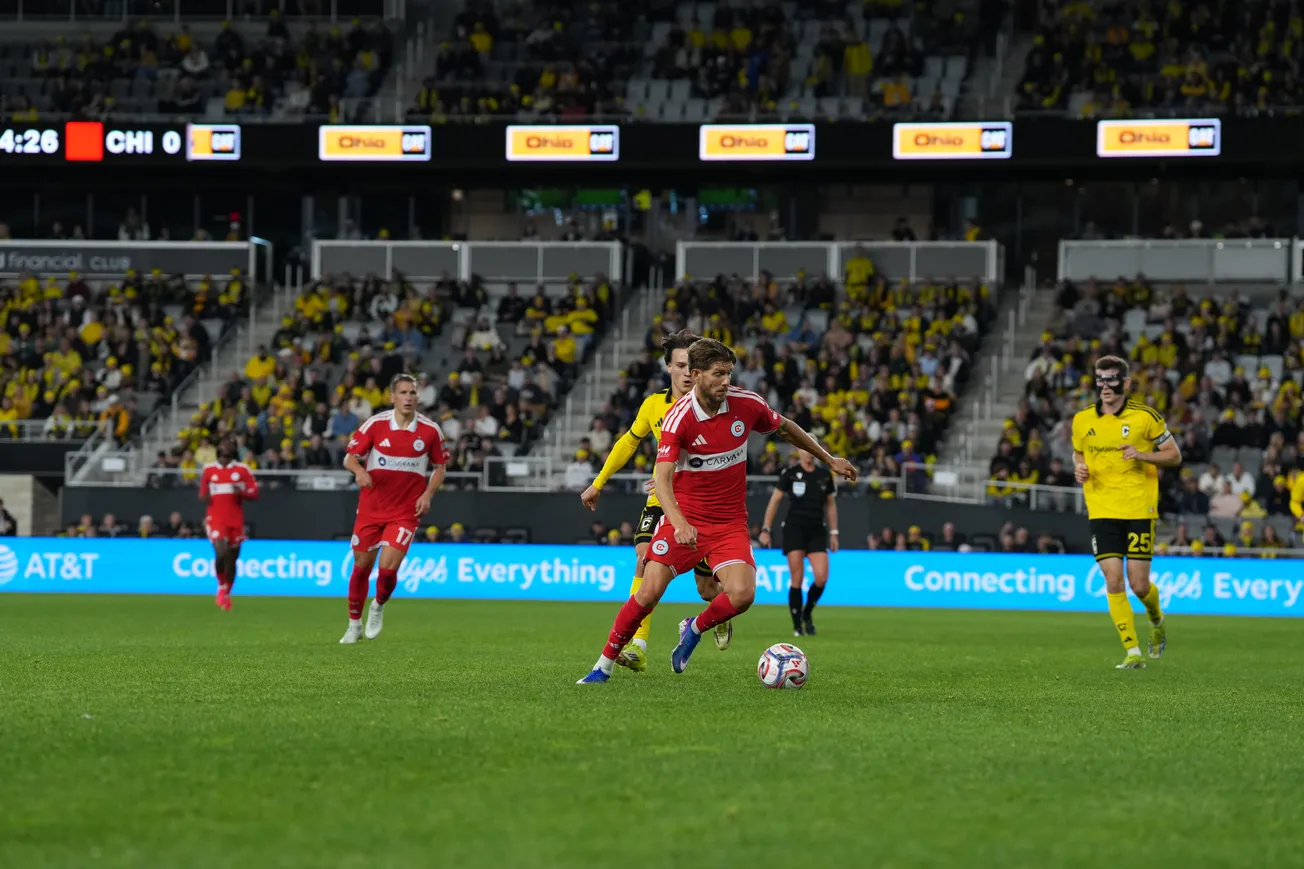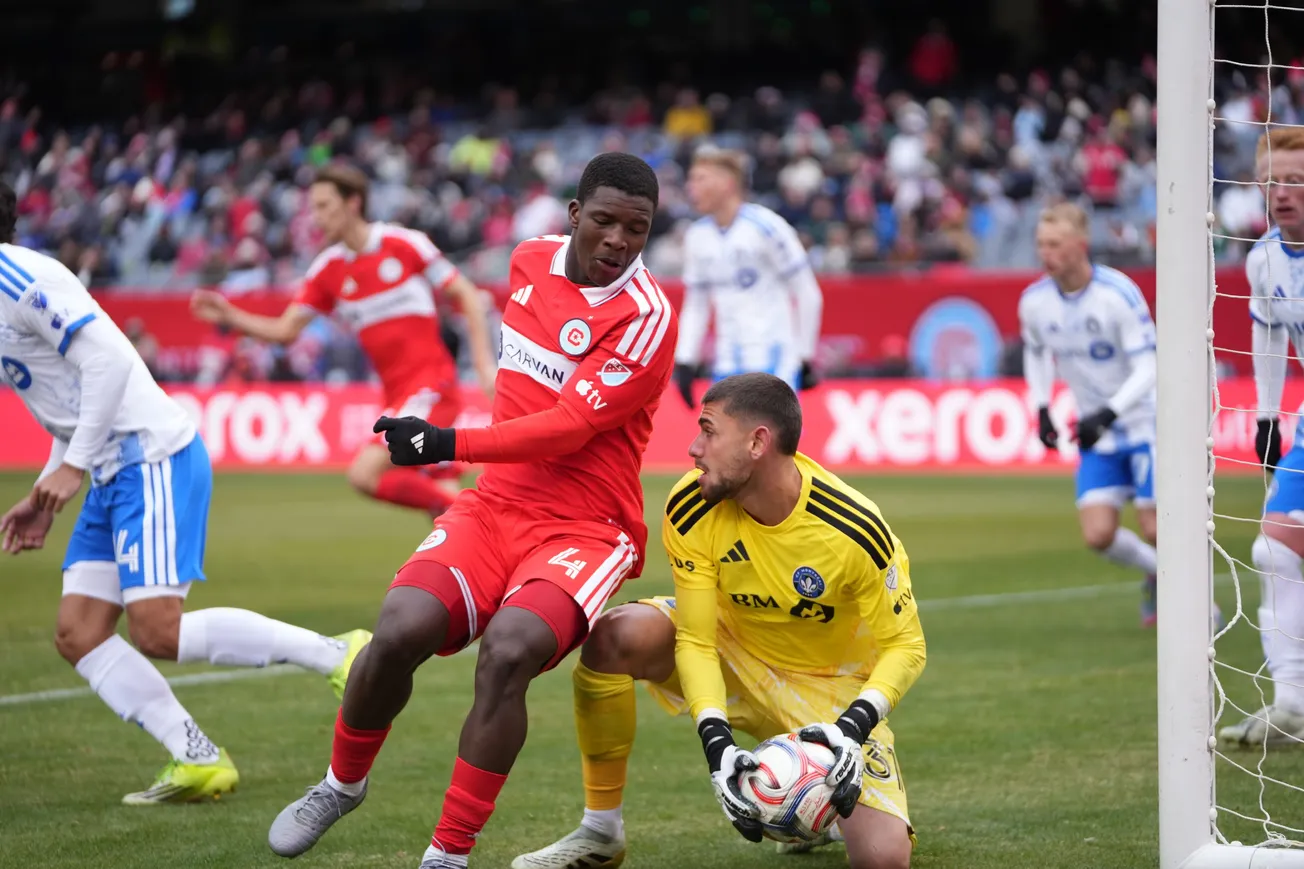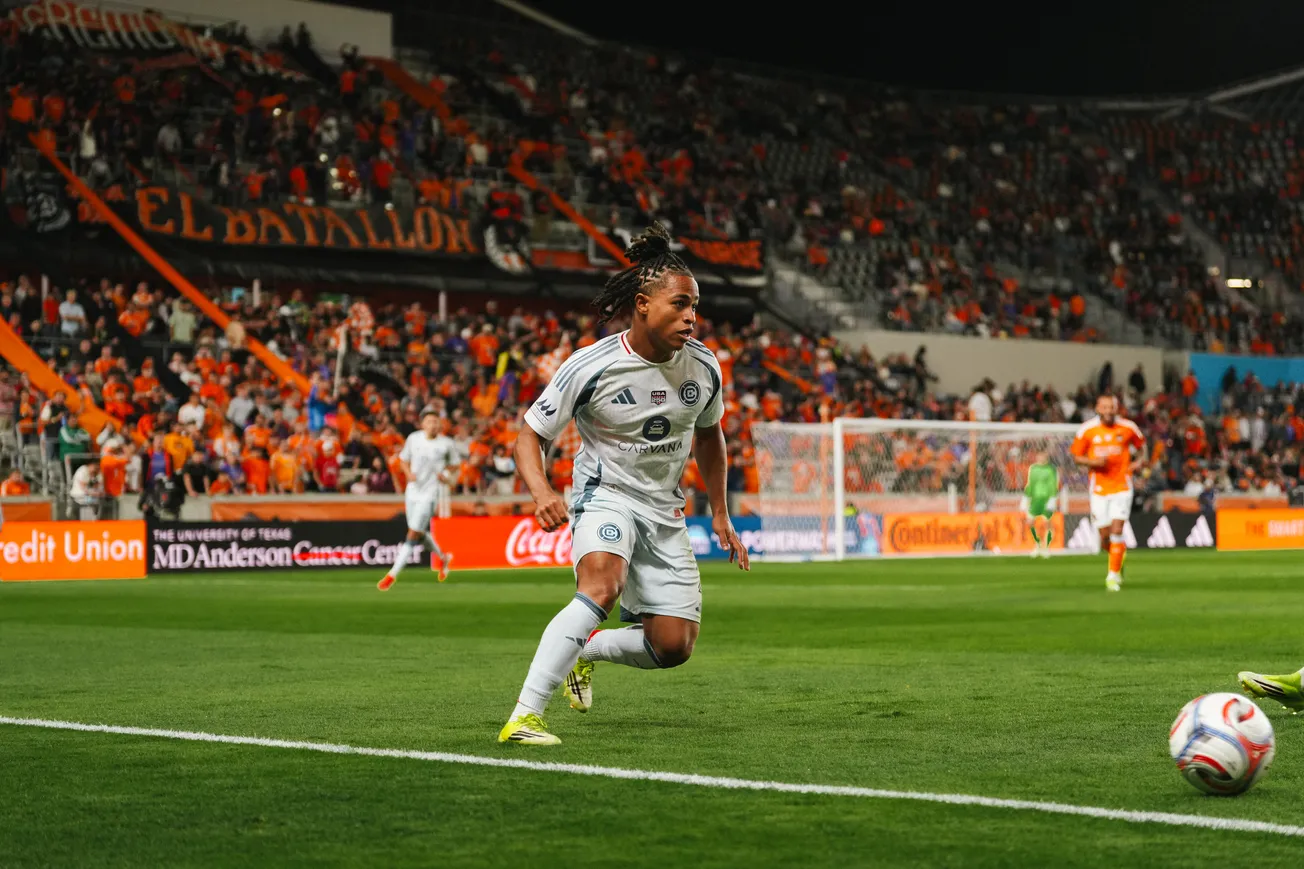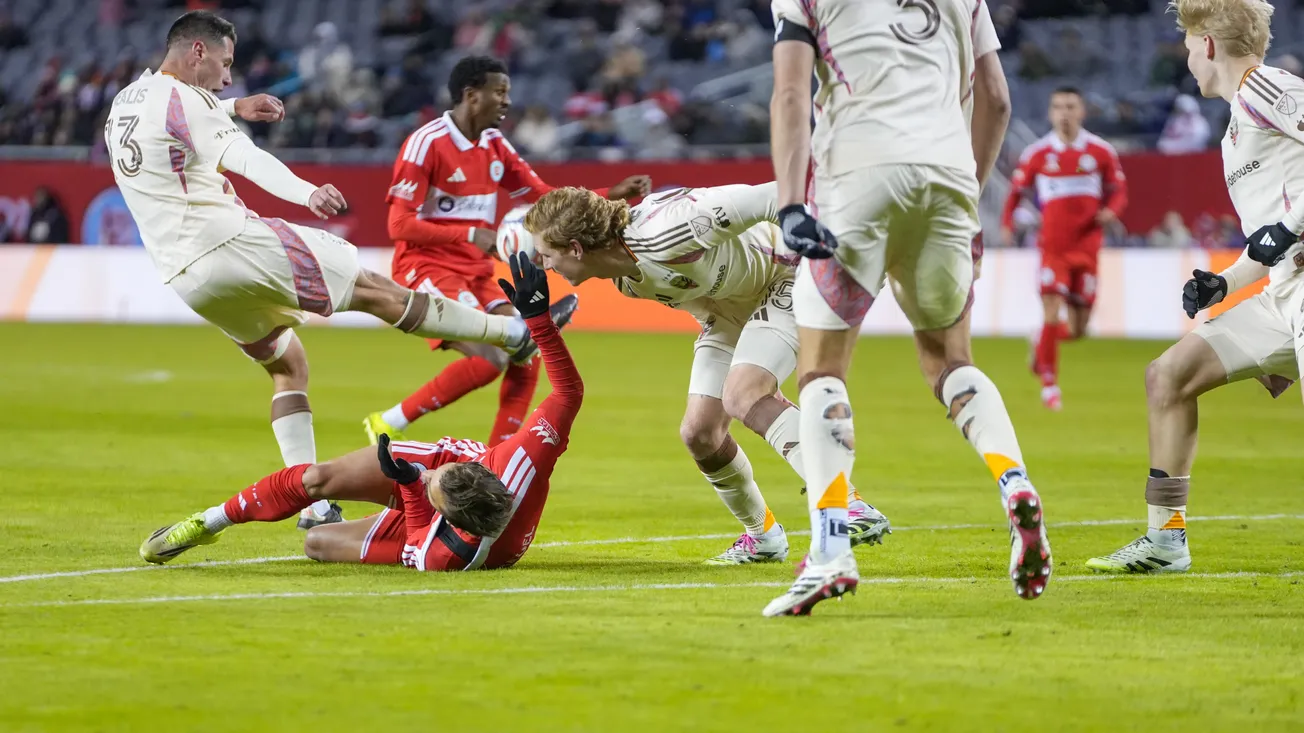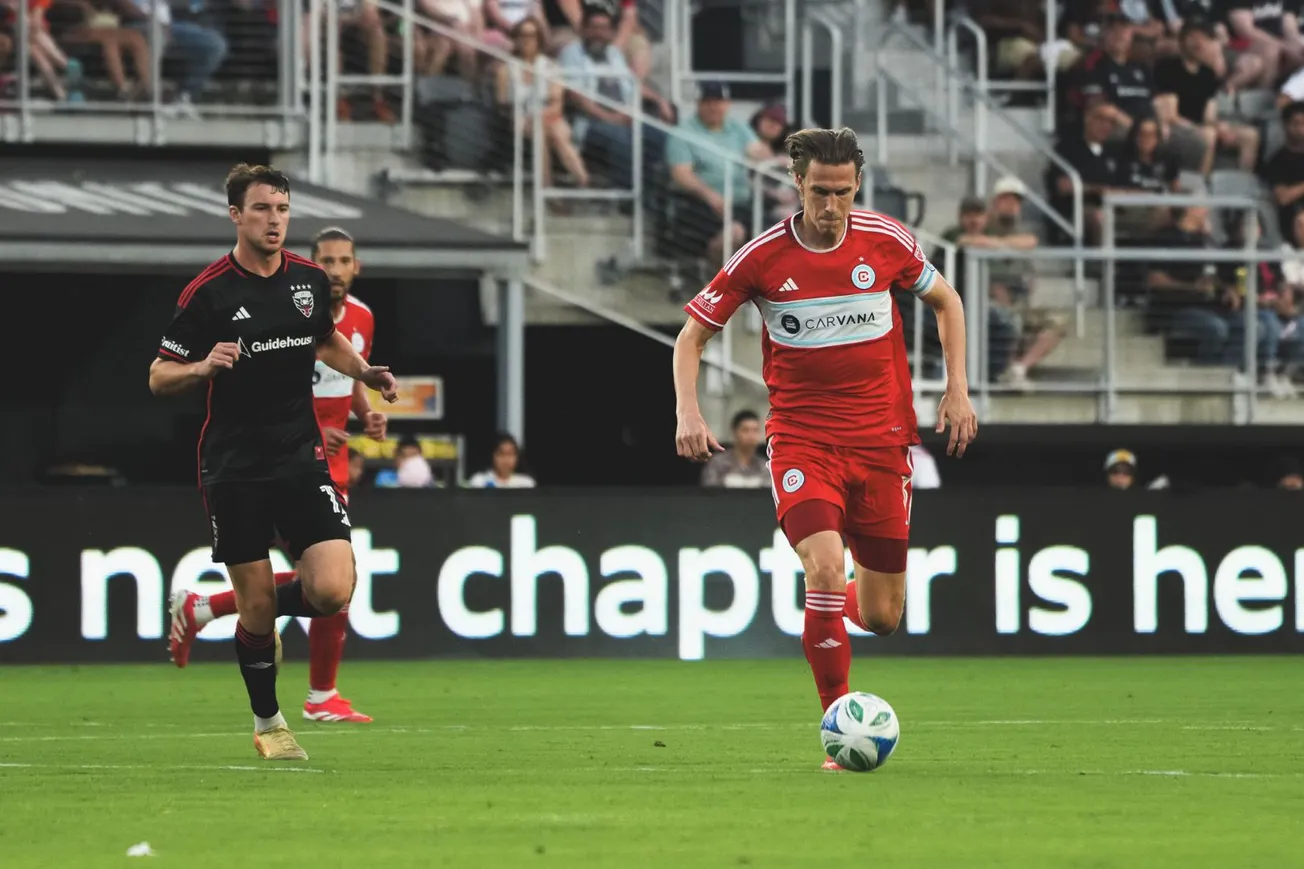
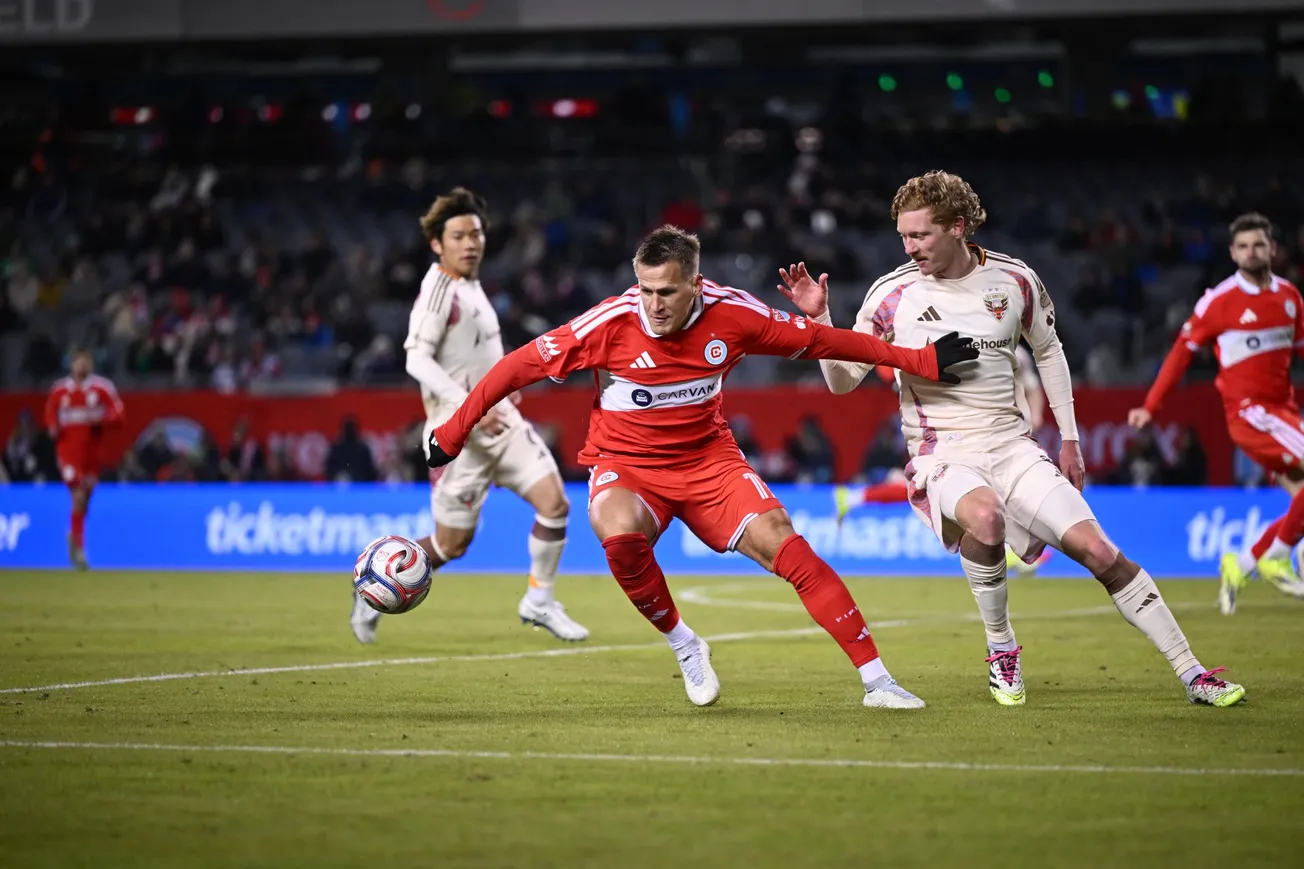
The Chicago Fire fell to D.C. United, the 2025 Wooden Spoon winners in a game where the home team struggled to break down D.C.’s compact defense and generate sustained chances, ultimately falling 2-1 in a game where D.C. had the only goal in open play.
Here’s five things we learned from a cold, dreary night at Soldier Field.
1. The vibes are off
One disclaimer before getting into this one: The Fire have played four games. It is still early. Actually, very early – far too early to reach any conclusions about the Fire’s 2026 season. All of the trends we’re seeing will change – and I’d expect most to be reversed – long before Decision Day this fall, but that doesn’t mean they’re not factors now.
This column is usually pretty data-and-analysis infused, even if we try to steer it away from being stat-heavy, but that’s not the only way we learn, and vibes matter to players and to fans.
And so far in 2026, the vibes feel off. Results are part of it, but even before the results have been in, it doesn’t feel like a happy continuation of the 2025 squad that scored the second most goals in the regular season.
The problems started early. After a first half against the Dynamo in the season opener, the Fire were the protagonists – if not really clinical – going into half up by a goal. In the second half, they were utterly flat. From my vantage point in Houston’s press box, I could see Fire Head Coach Gregg Berhalter getting increasingly frustrated with different aspects of his team’s performance as the game wore on. After the game, he said that in that second half, “it was like we stayed in the locker room. Really, no movement for each other.” In other words – it wasn’t something Houston did, it was the Fire not playing as a team.
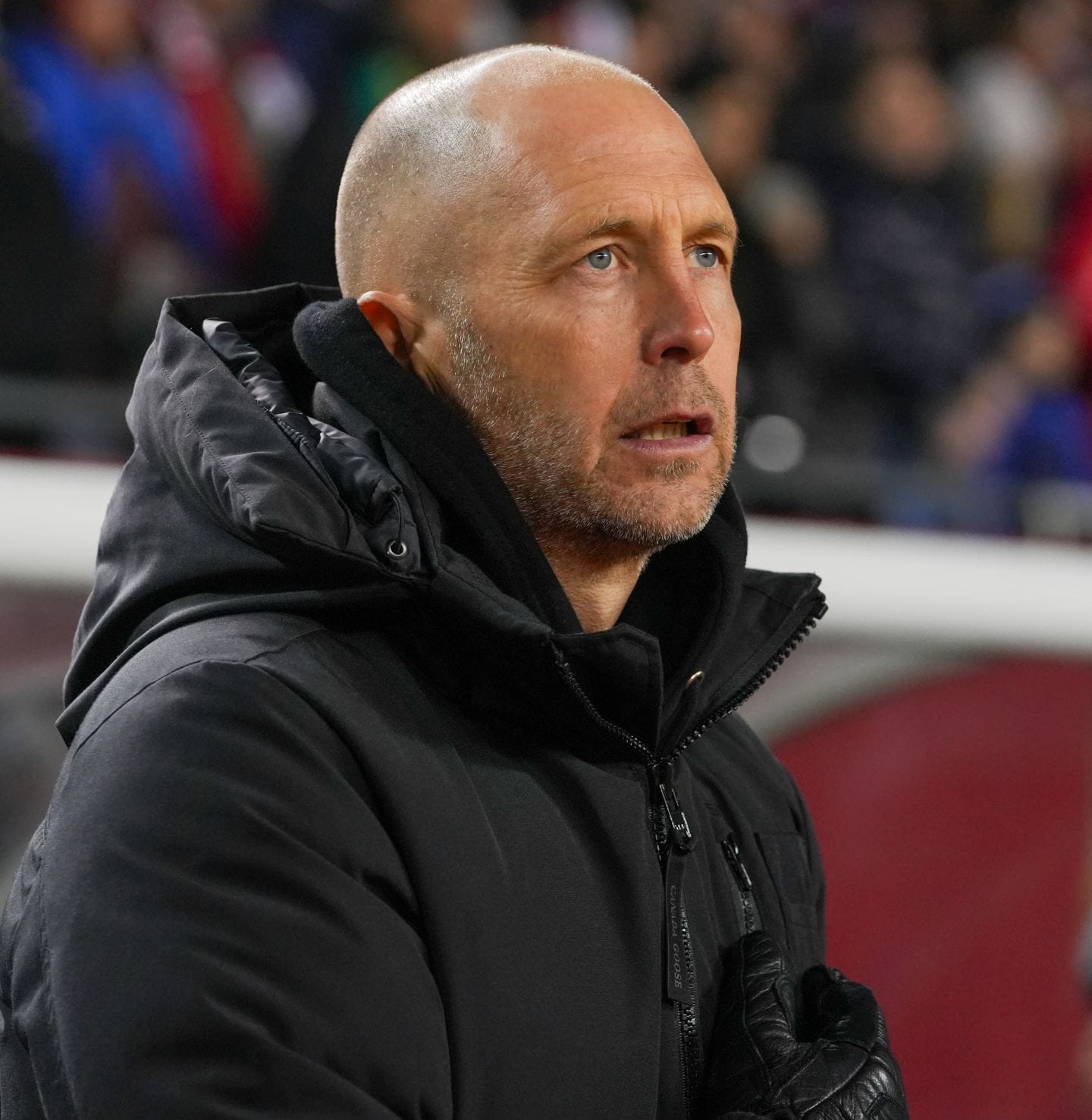
The Fire have mostly played as a team, and they’ve out-possessed opponents so far this year (Montréal, down a man for a long stretch, was the exception, and the numbers were about 50/50 in Columbus), but the team has struggled to play cohesively in the attack. The defense has improved, but still felt less than deadly-level effective in key moments (as cost the Fire last night).
The Fire haven’t looked convincingly better than any of their opponents through 90 minutes this season with the possible exception of Montréal, who team owner Joey Saputo seems to be on a mission to drag back to lower division soccer – and has nearly succeeded, at least in terms of budget and investment. More than that, though, they haven’t felt like a team that is acting like one that can confidently execute their game plan through 90 minutes.
Before taking questions after the game last night, Berhalter gave opening remarks to reporters where he called it a “disappointing performance,” saying “the standard wasn’t good enough.” That wasn’t often the case last year.
At the end of the conference, I asked Berhalter if it was fair to say that mentality and focus were an issue and he said “I think so. To me, it’s about embracing the battle of the game, embracing what the game was going to bring us. We had a lot of respect for D.C. and what they could do.”
Look: it’s hard to blame a goal on vibes, but the first goal the Fire conceded in open play since opening week was a collective failure. “When you look at the goal that we conceded” Berhalter said after the match, “it was a number of missed tackles, missed clearances and then wide open space at the top of the box. And it actually starts from us trying to press for the winger, against their center back, and that's why a center mid has to go wide. Then it's a whole chain of events that happens.”
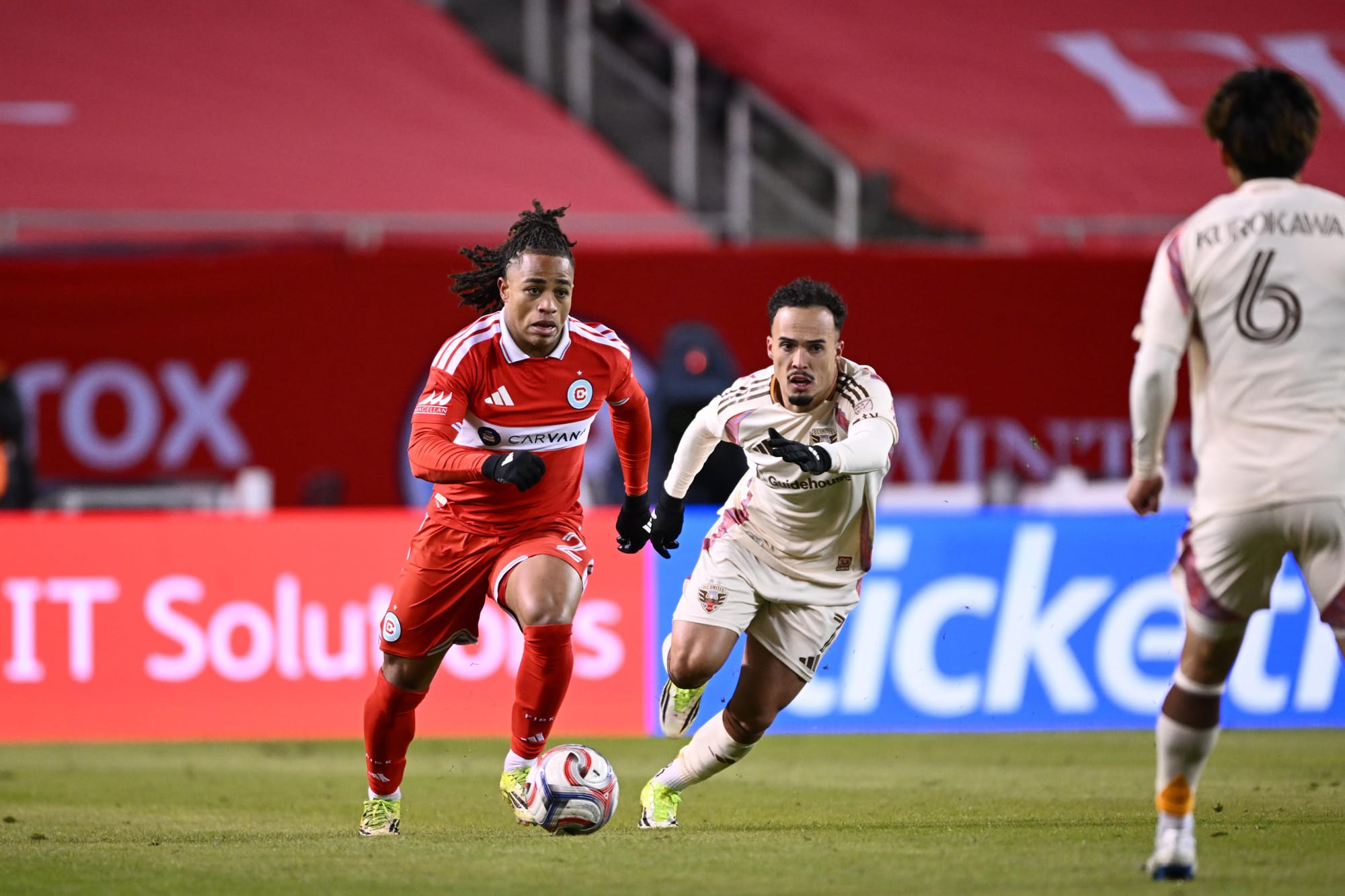
The Fire had a number of opportunities to regain control – and often did, fleetingly, just to have a D.C. player step in and take the ball back. On the actual goal sequence, Leo Barroso, Anton Salétros and Mbekezeli Mbokazi all cleared or deflected an incoming ball out of the box – but none of them definitively and a D.C. player was able to send it back in quickly. Mbokazi was the last in the sequence, but in the entirety of the play, more than half the Fire’s squad was directly involved – and none had an answer for D.C.’s press and ability to jump on loose balls.
So far this year, it’s just felt off. And the fans seem to think so as well. The announced crowd of 15,845 last night is the smallest the team’s had at Soldier Field since May 29, 2024, when 11,372 showed up on the Wednesday after Memorial Day. While weather – and playing a night game in Chicago in mid-March, with the Big Ten men’s basketball tournament happening in town – were certainly factors, the crowd in both this one and the home opener seemed to be less enthusiastic than what the team had down the stretch last year, even adjusting for size.
2. Philip Zinckernagel can excel playing from the midfield
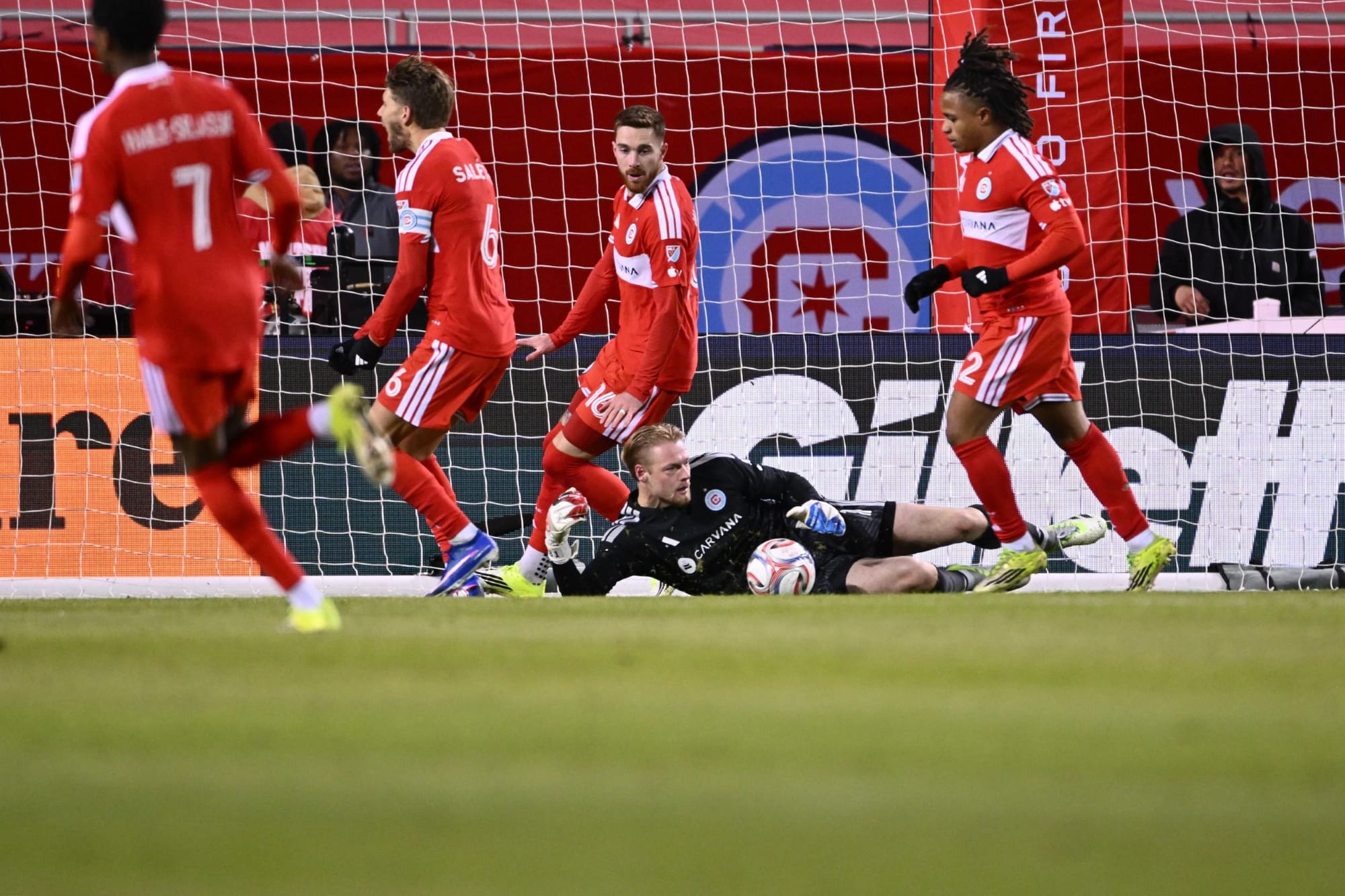
A week after being visibly frustrated during the Fire’s 0-0 draw in Columbus, Zinckernagel responded with, statistically, an excellent performance for the Fire. Playing out of a free-floating midfield role (though we were initially told he’d be on the right wing, and that’s how he was shown on the formation graphic on the broadcast), he was by far the best player on the pitch for either team last night.
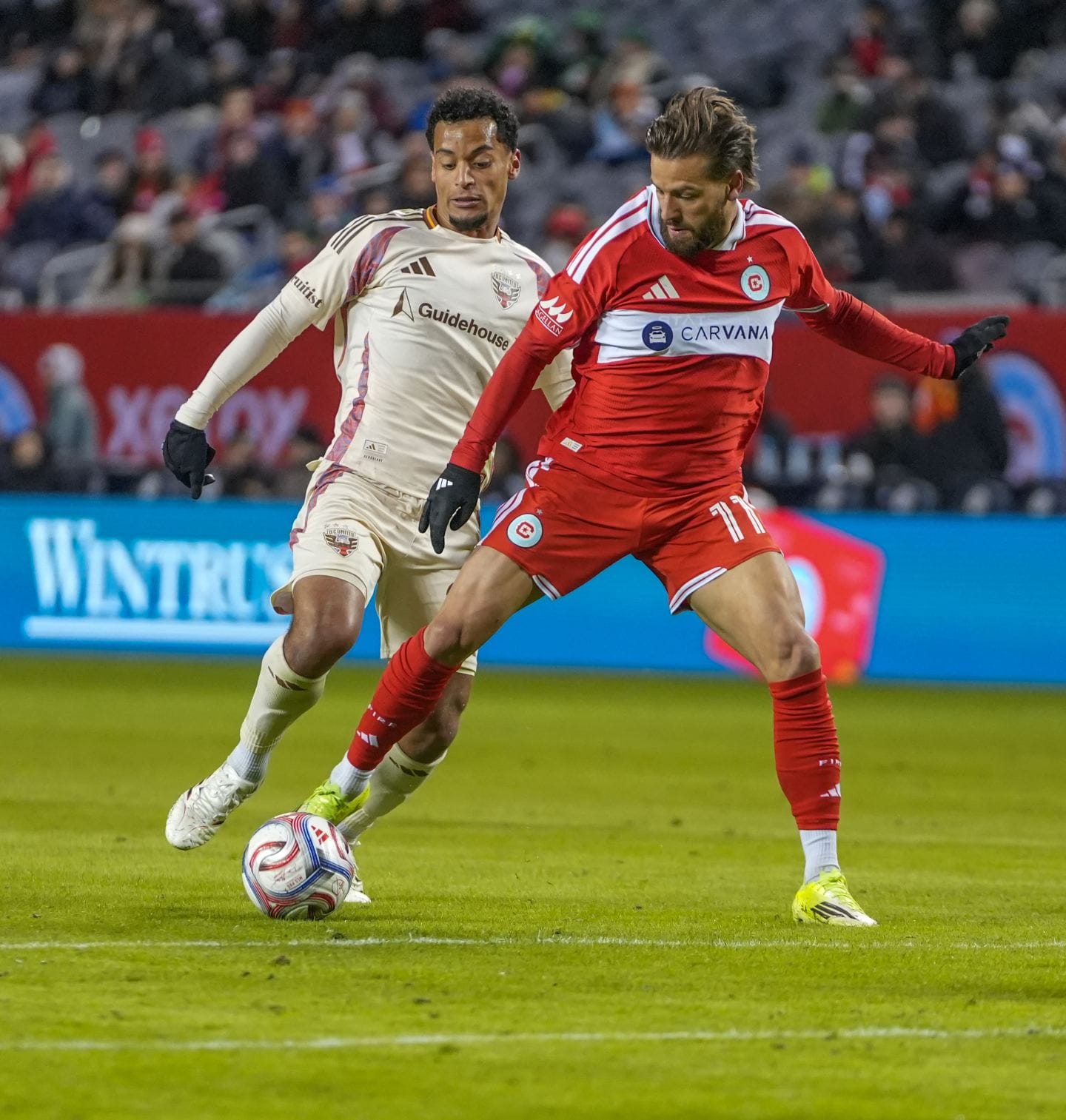
And that’s despite the play that earned him a yellow in the 24th minute, when he went to ground inside D.C.’s box but was ruled to have simulated the contact. Asked about the play after the game, here’s what Zinckernagel said: “I definitely don't think it was a dive. I think it could have been a penalty if he went to see it on VAR. I even heard the VAR asking him to check it, but he thought it was too soft. It's his decision. If you're inside the box and you feel contact, you go down. But I didn't even try to go down at first. He hits me from behind, and it's kind of annoying to run around with a yellow card for the whole game.”
According to American Soccer Analysis’s goals added (g+) metric (yes, we are so back to the data-and-analysis), Zinckernagel was by far the best player on the pitch for the Fire, with a +0.9 rating over 116 minutes. The rest of the team combined had a +0.94 rating. The g+ metric quantifies every contribution a player makes on the ball, in both attack and defense, and is the single most holistic look at a player’s on-pitch contributions, both positive and negative.
Not only did he lead in g+ on aggregate, he lead in most of the components: Dribbling (+0.09), shooting and passing (each +0.16), and fouling (+0.26 – remember, being fouled in a way that helps your team score also counts for this metric). He was second for receiving passes (+0.18, and was responsible for many of the passes that Hugo Cuypers, who led in that stat, received.
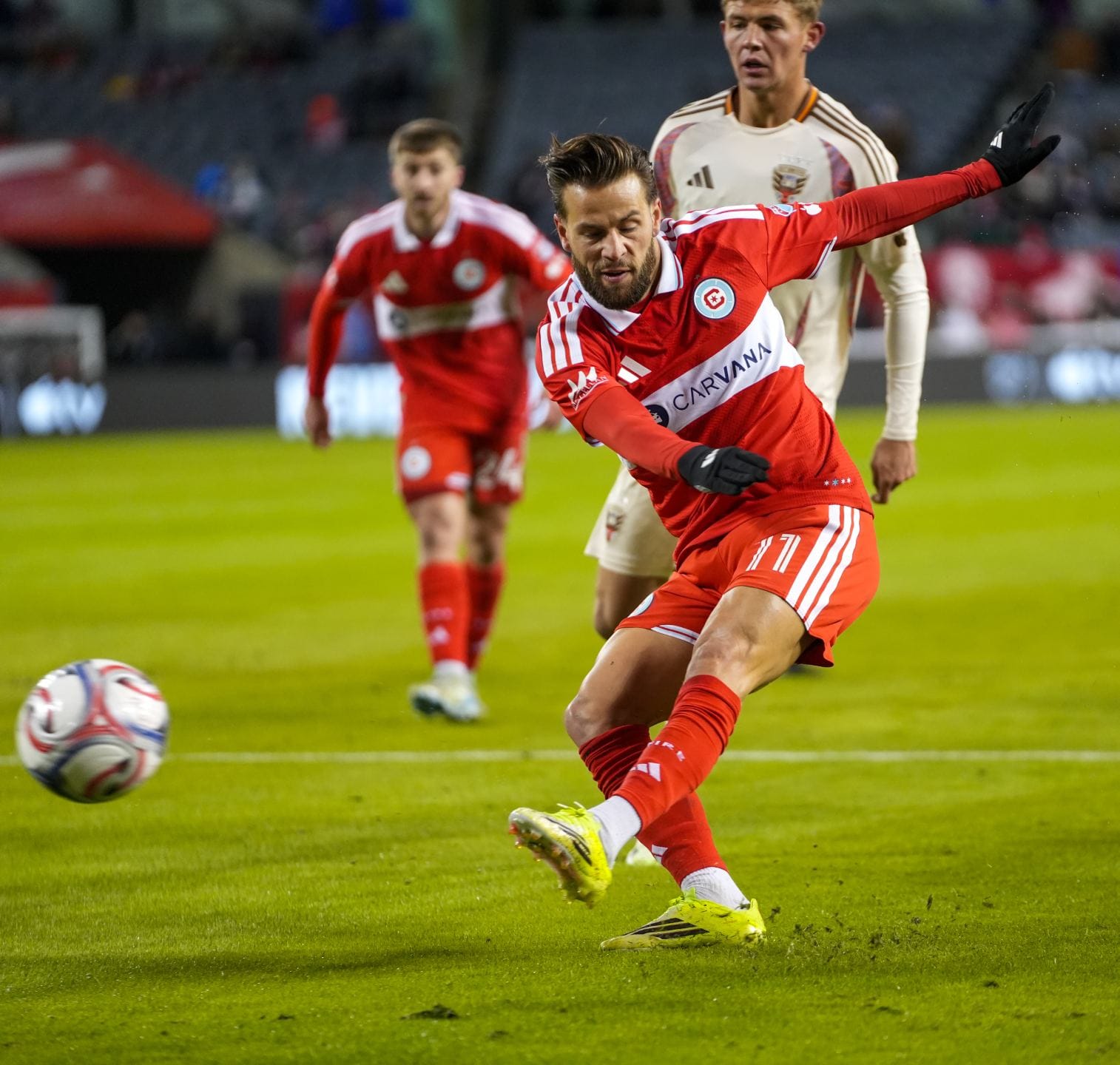
That isn’t to say that he was perfect. He didn’t do the job that André Franco did (nor do I think he was asked to), and I think that until Franco returns, the team is going to miss Brian Gutiérrez’s contributions, even if, like Zinckernagel’s last night, he often did a lot of the right things, just not in a way that influenced games, but it was, overall, a very strong outing for the Dane, and any concerns that anyone had about Zinckernagel’s attitude after last week in Columbus (you know who you are) should feel like those fears have been put to rest after that performance where he got his head down and went to work.
3. The Fire can’t keep playing Zinckernagel in the midfield and Lod on the wing
As strong as Zinckernagel’s play was in the midfield, he is now in the midst of his longest stretch without a goal contribution since coming to MLS. He may be the Fire’s best attacking midfield option, with speed, dribbling, passing, and the ability to frustrate defenses, but overall, he wasn’t as effective as he was last year playing on the right wing.
The Fire have now gone 270 competitive minutes (plus a lot of stoppage time) since scoring a goal in open play. That's a pretty good sign that the attack isn't working.
Against D.C., many of Zinckernagel's best moments came from him playing on the right side, near – but not exactly where – he played almost the entirety of last season on the wing. Before going down in the play that earned him a yellow, Zinckernagel, coming in along the right wing, smoked Australian international Kye Rowles on a turn to cut into the box. Whatever happened after that, those are the kinds of plays that changes how teams defend and will, over the course of a season, draw defenders towards you – and penalties for your team.
Zinck might be the Fire’s best attacking midfielder available, but he’s also the Fire’s best right winger. Ahead of coming to Chicago, his positional versatility looked like his best asset, but it was his play from that position that made him the Fire’s all-time single-season goal contributions leader and earned him an All-Star nod last year.
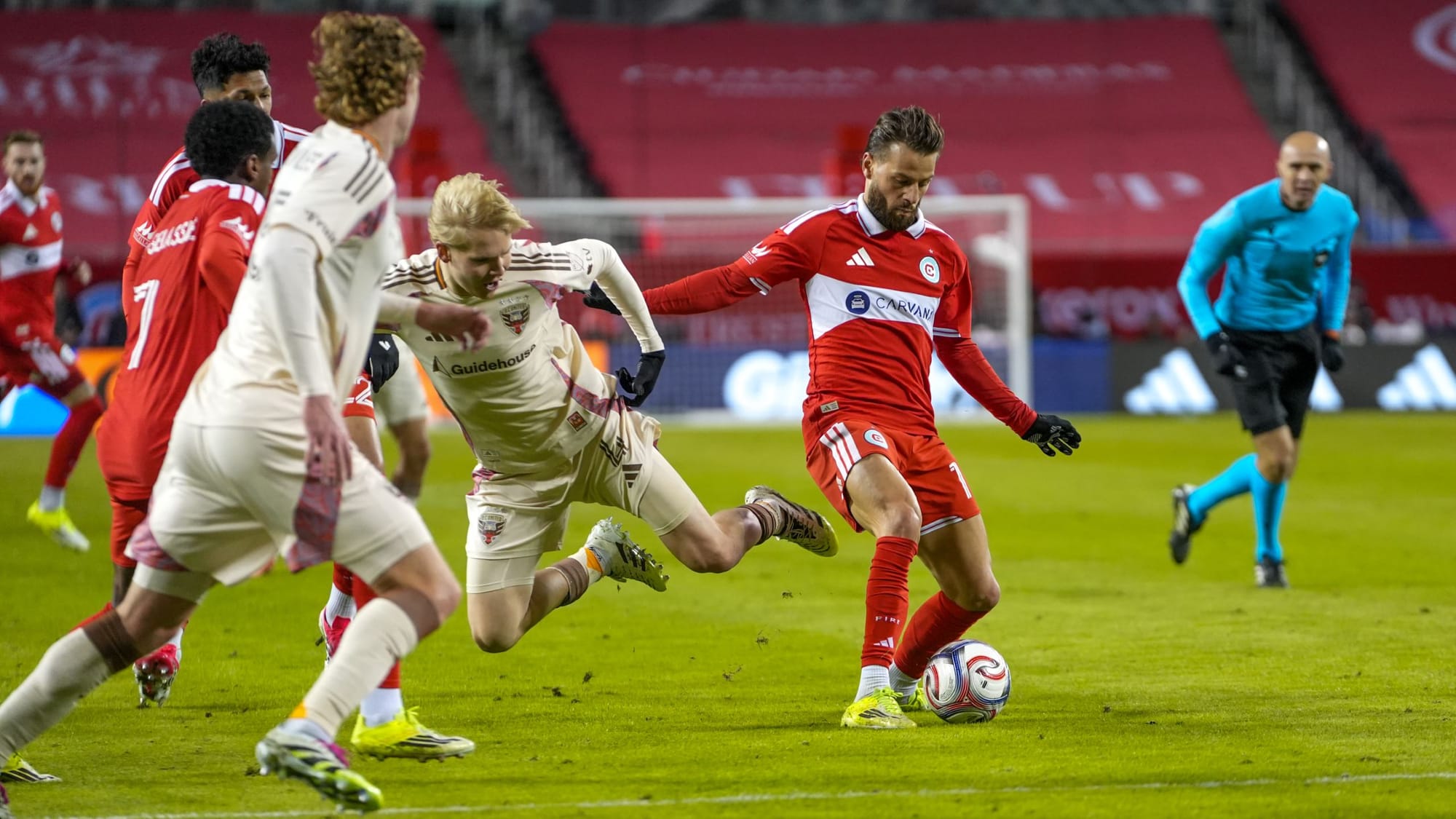
At the same time, Robin Lod, who was one of the most consistently productive players in MLS in his years with Minnesota, has struggled on the wing. In 65 minutes last night (which was somehow barely more than half the game), he had just 30 touches, and his presence on the right wing didn’t seem to trouble D.C.’s defense too much. On the g+ metric, Lod had a decent game, fourth on the team overall with a +0.22 rating, but the issue isn’t that he didn’t make a positive impact when he was involved: It’s that he didn’t get involved enough to challenge D.C.’s back line and create space for others.
I asked Berhalter about the choice to play Lod at right wing after the game. Berhalter said “we'll talk to him and show him video and everything like that, but he's played right wing all preseason and was comfortable there, so it didn't take much to make that decision. He's just getting back into it. He didn't start the last game, he didn’t start the game before, he was out, so he's getting into it. He'll be fine.”
That may be, but just before, Berhalter called the lack of production from the wings last night “disappointing,” continuing “We had two shots on goal and how many shots off target? It was accuracy that was an issue. We had a number of chances that we didn't put on frame, and we need to do better with. We need to get our attacking group right, in terms of who's playing with who and how we're lined up, and get the players in the right positions so that they can affect the game more, because it's a highly talented group, but we're off a little bit right now.”
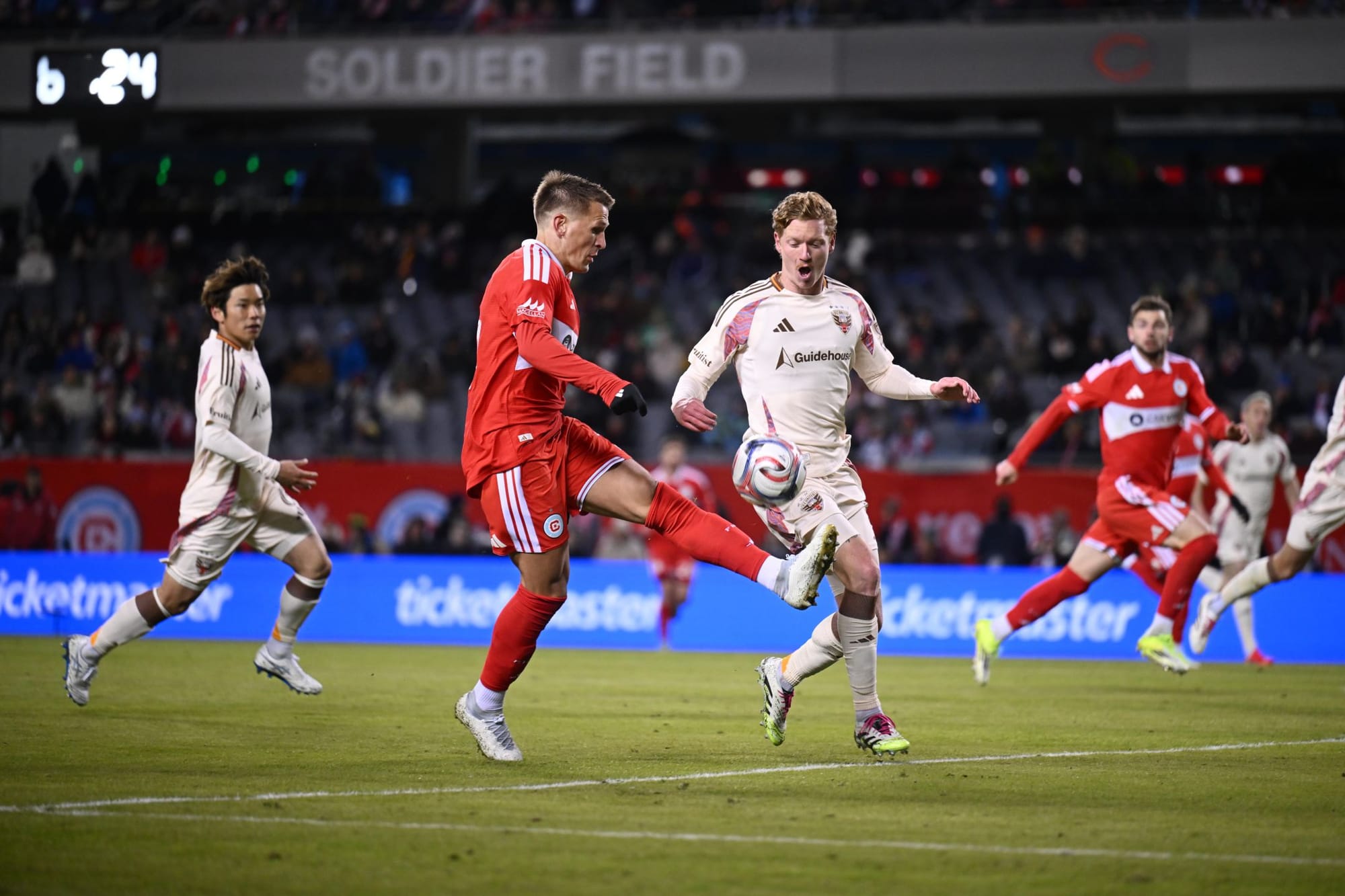
Reading between the lines here, it sounds like we may see a change, and if I were in his shoes? I’d start with seeing how things looked putting Lod in the midfield and Zinckernagel on the right. I also wouldn’t be shocked to see Maren Haile-Selassie, who I can confidently say has been the Fire’s second-best player at right wing this year after Zinckernagel back into the XI some time soon.
Berhalter may not like what he thinks he gets from Lod playing in the no. 10 role, necessitating Zinckernagel’s move to that spot. He knows that that takes away a valuable attacker on the wing, but doesn’t see the team creating enough if the 2025 All-Star isn’t there until Franco gets back.
And my fear (I think this may be a theme later) is that some of this is based on a look at the schedule: The Fire have 14 games before the World Cup break this summer, and 20 games after, with the summer transfer window opening three days before the Fire’s first game back. I think a number of teams are probably thinking, “try and hang till the break, re-load in the summer and climb the standings.” For the Fire, it could be “muddle through” – the team has 10 games left till the break – and then be the team you really want to be for the last 60% of the season, whether through Franco’s return, summer signings, or both.
4. The defense is better – but needs to stay locked in
The Fire’s defense, overall, feels a lot less porous than it did through most of last year. And this is, again, a time where it’s important to use words like “early” and “small sample size” a lot here: The Fire have played four teams in 2026, only one of whom made the playoffs last year and have one win to show for it.
Still, the defense feels better – when it’s locked in (see point #1 above). Mbokazi is the single biggest difference in terms of personnel, and what he has done (and not done) sis a good way to look not only at his performance but that of the squad.
Mbokazi had an excellent open-field tackle in the 41st minute that virtually everyone in the press box thought must have been a foul because of how effective it was (almost everyone up there has watched this team for a longgg time). Overall, he won all four of duels he was involved in on the ground, and three of the five in the air.
When he wins the ball back (and he’s done that a lot), he can advance the ball at his feet – and it is fun to watch him charging ahead – or lay off an accurate pass in build-up.
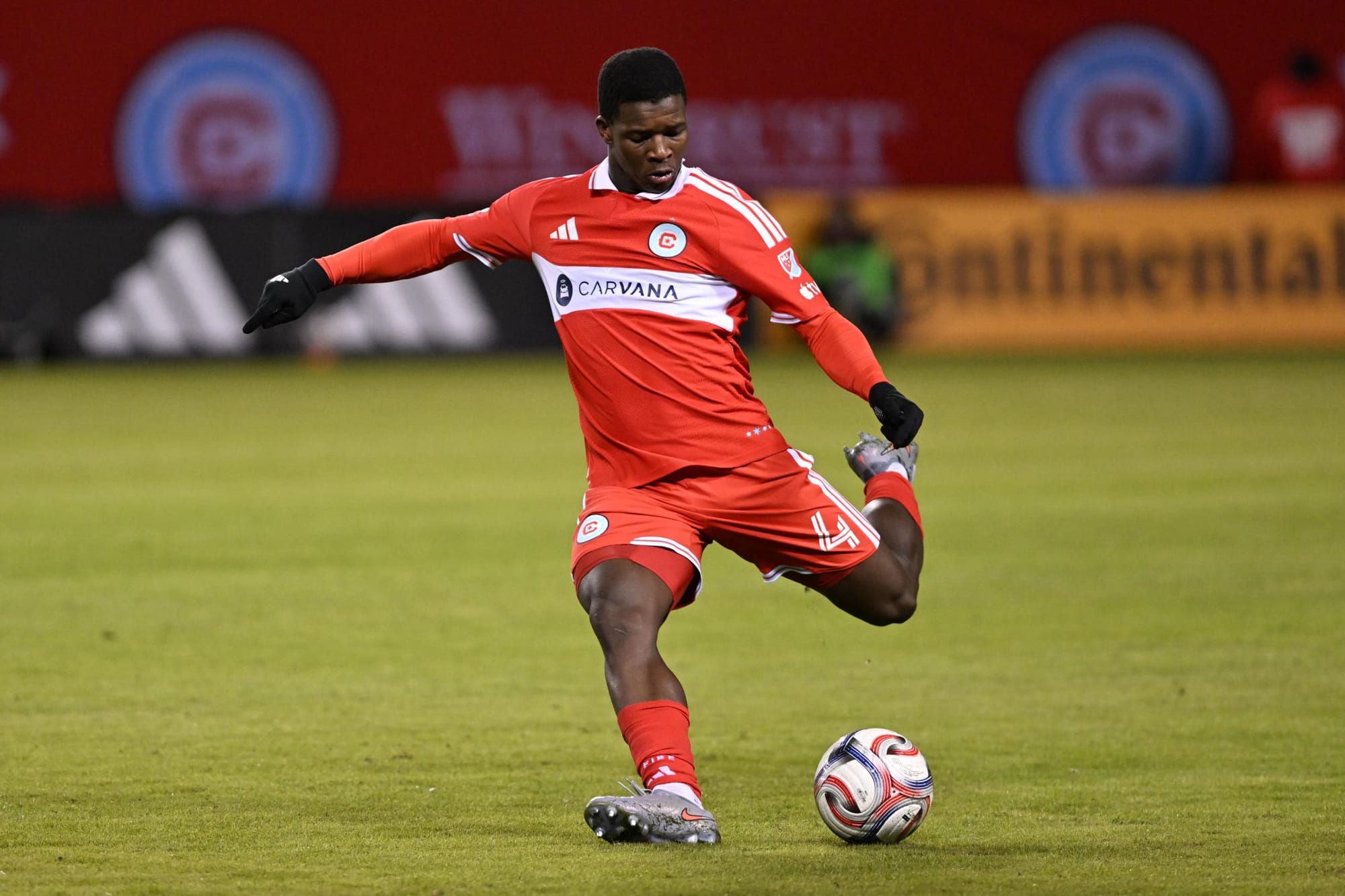
Mbokazi’s game wasn’t perfect, however: he was the last Fire player to make contact with the ball before D.C.’s first goal, and he made questionable choices a number of times throughout the match, choosing to opt for long balls when a more controlled build up would have worked better for the team.
He has also stepped out of position a number of times in the Fire’s opening four games, though it hasn’t directly cost the team so far (arguably, he was well out of position on the play where Dean earned a red card, which may have been a contributing factor, but Mbokazi didn’t put blue fabric in Dean’s hand on that one).
Overall, with Mbokazi in the lineup, Elliott hasn’t been drawn out to clean up as many messes as he was for much of 2025, which further helps the team’s stability.
Mbokazi hasn’t had a complete game yet. But you can see that he’s got all of the tools necessary to be one of the best players in his position in the league – he just needs to learn how to consistently pick the right tool for the job at hand.
The same goes for the Fire’s defense as a whole: It feels like they’ve got what they need to be one of the better – if not one of the best – defenses in MLS, but it just isn’t there yet.
5. The Fire could use some stability in the lineup
The Fire made four changes from the starting XI last week in Columbus, as the Fire have struggled to have everyone available early. On top of that, the team has switched from a back four, with two center backs, to a back five with three week after week so far this season.
It’s hard for individual players – or the team – to find a rhythm as players with the formation, position and availability shifts week to week.
To be clear, most of the changes have been forced: Last week, Hugo Cuypers was injured, Jonathan Dean suspended, and Andrew Gutman, the normal starter at the position Dean played, still hasn’t played a competitive minute in 2026.
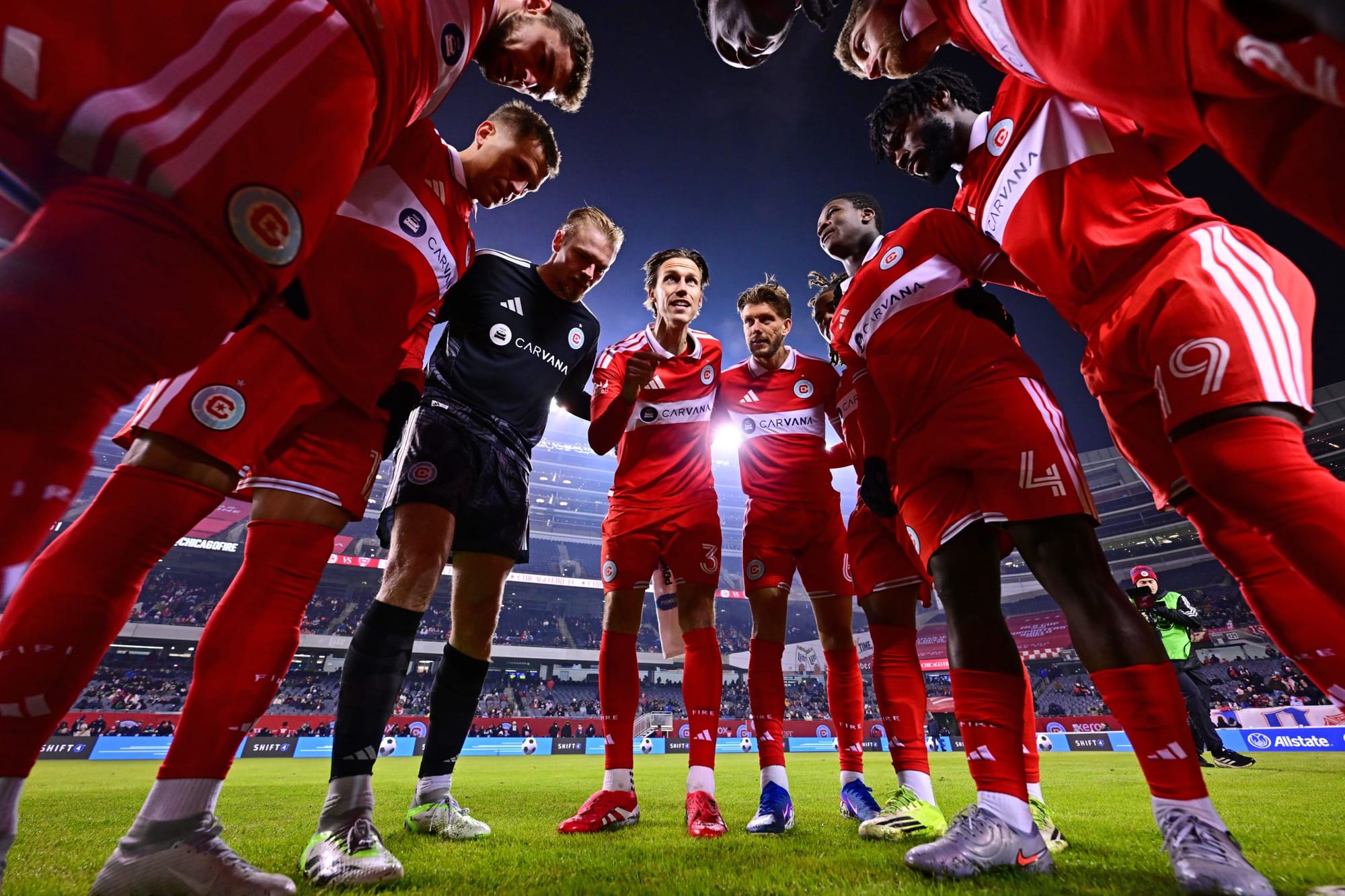
I’m not sure if it easier to see the trends – the team has struggled to create, regardless of who has been playing and what formation the team has been playing in – or harder, because judging week-to-week performances is difficult when few players are in the same spot – and playing next to the same teammates – from one match to the next, but it does feel like some of the rhythm and vibe issues the team has had to date can be explained mostly – though not entirely – by shifting lineups, but it does make it hard to suss out what didn’t work in a game versus what just isn’t working.
Asked after the game about playing a deeper-lying role this year in the midfield, Zinckernagel said “I think one of the things is that we have been playing also with a [three-man backline], which takes one offensive player out, which makes it a little bit more difficult to create chances and find spaces. It's only the second game in a 4-3-3 with a [no.] 10 [attacking midfielder]. I still like it, but obviously I'm a little bit further back and helping out in the midfield. I'm a little bit further away from the goal. It's something that I want to continue to be dangerous and get shots off and get into chances, but it's a process. I think we're going to be fine solving it like this, but it just takes some time, hopefully we'll play more 4-3-3 so we can get a rhythm like we did in preseason.”
As I said in the beginning: It’s still very early, and although we can now see patterns, there’s plenty of time for things to change. Stability and a (mostly) first choice XI could go a long way to helping.