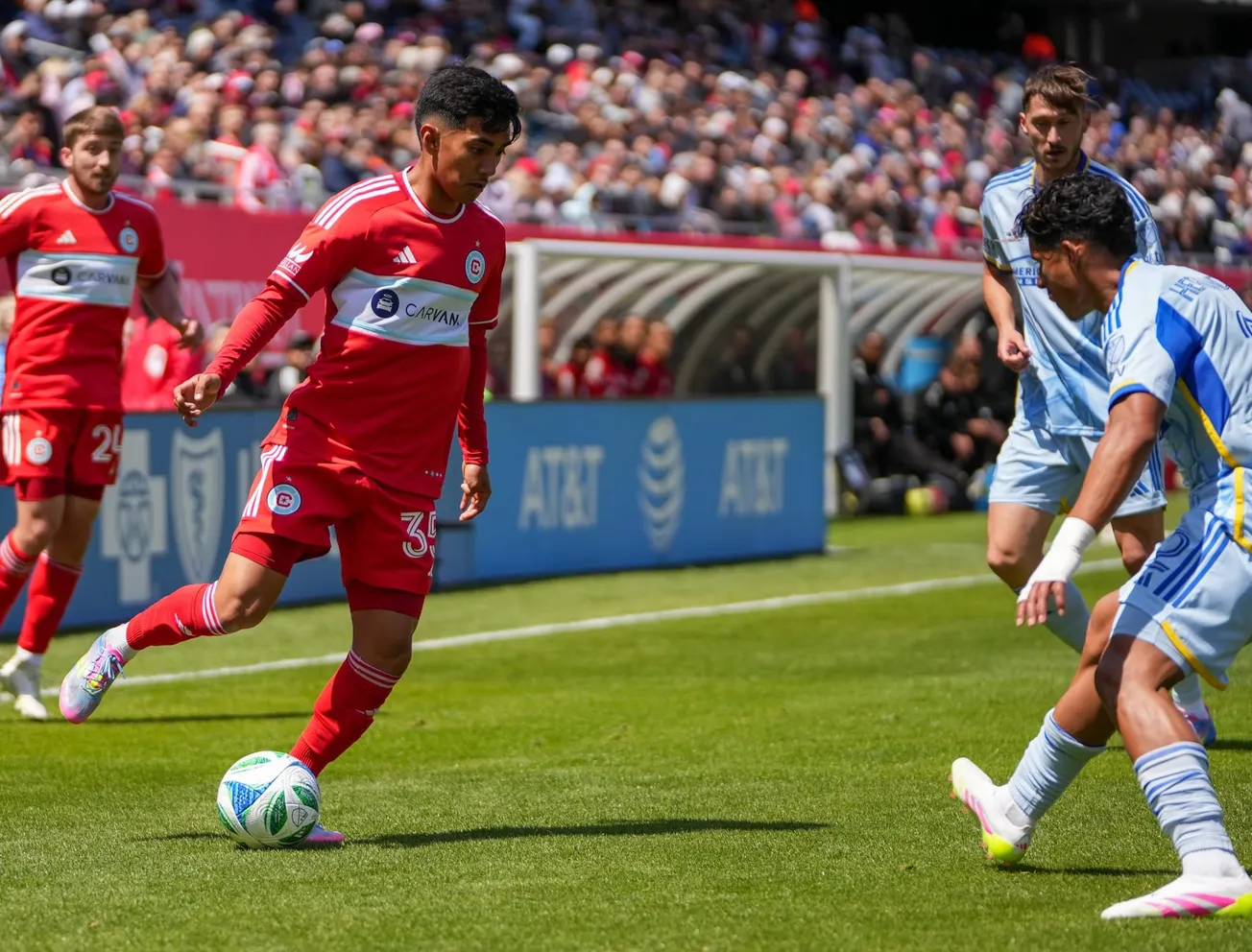


The Fire’s first game of the 2026 campaign is in the books and even if many of the faces on the pitch were new, with four players making their Fire debuts, including MLS debuts, the ultimate result was painfully familiar, with a 2-1 defeat halving the margin of 2025’s season-opening 4-2 defeat in Columbus but yielding the same number of points in the standings.
Here’s five things we learned last night in Houston.
1. The Fire can be utterly dominant against opponents
The Fire were dominant in the first half of the team’s first competitive game in nearly four months. The Fire didn’t just control possession, they dominated it, holding nearly 70% of the ball midway through the first frame. When the half ended, the Fire still had 58% of the ball – and the half’s only goal, courtesy of Hugo Cuypers’ 31st minute tally.
The Dynamo had basically no answers for the Fire’s attack in the half, other than a performance from goalkeeper Jonathan Bond that likely resulted in more highlight-reel worthy saves in one night than he was able to put together throughout 2025 with the LA Galaxy.
“I think it was an excellent half,” Fire Head Coach Gregg Berhalter said of the team’s performance through the first 45 minutes. And even if the Dynamo weren’t exactly projected to be one of the most difficult opponents the Fire faced this year, that doesn’t mean that they’d be easy to play against. “They’re playing a back five,” Berhalter said, “they’re compact, they’re difficult to break down. We had some good movements behind the back line that caused chances.”
2. But wins won’t come “on autopilot”
The second half, by comparison, was a different story. We stopped playing and we came out of the locker room, and it was like we just stayed in the locker room, really,” Berhalter said following the game. “No movement for each other. Houston, as they bring the pressure, we have to play behind them; we don’t play behind them. We give each other balls in difficult positions and just, basically, lack of movement. It’s like we’re on autopilot.”
As a result, Houston were able to get into the game. “They went up a little bit more man-to-man and pressed a little bit higher than they did in the first half,” midfielder Anton Salétros said after the game, “and we weren’t able to cope with that.”

Berhalter summed it up well: “I think it’s a good lesson. If we go out and play at half speed, you know, we’re a below-average team.”
3. But there’s still a chance to get off to a better start than last year
Ultimately, whether they learn that lesson or not is still up in the air, but there is hope: Last year, the Fire also dropped their home opener and went on to have their most successful season in a decade.
This year, the expectations around the fire are higher, with many of the league’s smartest minds (I’m going to go ahead and tell you to subscribe to Matt Doyle’s excellent Tactics Free Zone now that he’s fully independent and Joe Lowery at Backheeled, particularly if you want to have a stronger understanding of the league as a whole or the tactics and storylines of the game) putting the Fire as a top-10 team in the league and likely competing for home advantage in the playoffs in a very strong top of the Eastern Conference.
The Fire are also hardly alone amongst good teams that dropped points: Inter Miami lost their season opener to Los Angeles FC last night. And it wasn’t good teams losing to other good teams: The Philadelphia Union, last season’s Supporters Shield winner, lost to D.C. United, a team that few – if any – think will still be playing once the postseason starts.
The squad’s next opportunity to show their progress over the past year comes next week at Soldier Field. Last year, the Fire played a dominant game but ultimately settled for a draw against D.C. United off a heartbreaker late in the game (a team that, yes, finished well outside of the playoffs). That left the Fire with a single point across their first two matches.
By the end of the season in 2025, the narrative for the Fire was that they were a good team but unable to get consistent results against top teams. Early on, though, conceding points after playing better than their opponents was an issue for the team. That is ultimately a big part of why the Fire had to win a wildcard game rather than making the first round proper (and reliably getting three points against weaker opponents, rather against the top teams in the league, secured the Shield for Philadelphia last year).
The Fire can show progress next week at Soldier Field against CF Montréal – a squad that lacks both the talent and depth of the Fire – by earning three early-season points that should be on the table for the team.
4. The depth has improved
Speaking about being a deeper squad, the Fire’s depth has certainly improved. The Fire entered the match without three starters in Jonathan Bamba, Andrew Gutman, and Jack Elliott; four if you include André Franco, on a long-term injury.
The Fire were particularly stricken at wingback, where, in addition to missing Andrew Gutman, Jonathan Dean unavailable and Viktor Radojević has yet to see his debut for Chicago due to injury troubles.
A year ago, that would have been a significant challenge for the Fire to overcome. This year, while it isn’t fair to say that the team didn’t miss a beat, they did put together a starting lineup that gave the Dynamo absolutely nothing through the first 45 minutes.
Yes, things broke down in the second half, and yes, it’s likely that having any of the team’s normal starters available could have tilted things in the Fire’s favor, but the first half shows that the talent level was there.

The absences definitely left their mark: Berhalter had significantly fewer options on the bench than he would have otherwise – but that’s just how depth works. While it’s fair to say that the Fire’s squad was more banged up than the Dynamos, the hosts were without defensive midfielder Artur and had sold starting right back Griffin Dorsey earlier this week. Plus, all of the Dynamo’s goals happened before Houston Head Coach Ben Olsen looked to his bench.
MLS rosters will always be relatively small, with a strict cap on the number of players available. Combine that with a salary cap limiting what teams can afford to spend on depth pieces, and few teams can sustain the loss of multiple starters.
And sure, you could argue that the Fire didn’t, given the result after 90 minutes, but I still think that the team should be confident that even missing some key pieces, they have the talent to field a team they can be confident in.
5. Mbokazi is ready for MLS
When a new player enters the league, there’s always a question about how they’ll adapt. MLS is an athletic, physical league that also features extremely high-end technical talents, something MLS tries to remind viewers of from time to time with, shall we say, occasional promotional images featuring Lionel Messi and Son Heung-Min.
Combine that with the travel and geography – the high in Houston on Saturday was about 50ºF warmer than in Chicago – and it’s a lot for many players to jump into and perform at their peak level.
Talent sometimes has little to do with it: Djé D’Avilla is a highly intelligent, technical player with great ball-winning abilities as a d-mid, but looked utterly lost in his first minutes with the Fire last year, taking a number of months to learn to float before showing just how well he could swim.
The challenges of coming to the league are particularly acute for younger players, and players coming from overseas coming from leagues that are weaker than MLS.
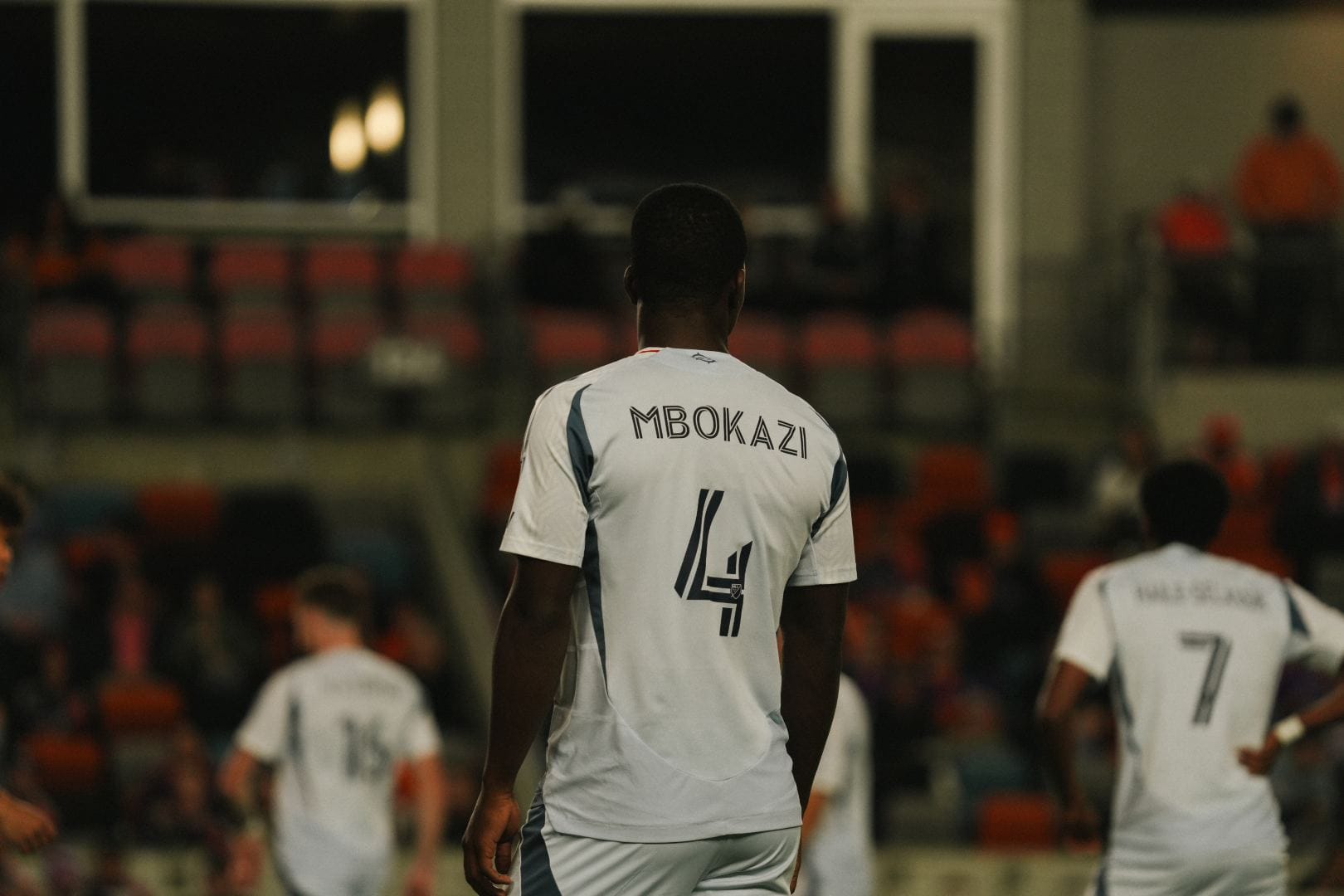
Mbekezeli Mbokazi is both of those things, and even if his performances for the South African national team proved that he was capable of high-level play and even if he looked good in preseason, actual league games are ultimately played at a different level than preseason scrimmages. That all left it as an open question about how ready the 20-year-old South African would be for games that count against MLS opponents.
He put those questions to rest last night in Houston, going 88 minutes and looking very much like he belonged. He was clearly processing the speed of play of MLS, and everything from his defensive spacing to his tackles showed he was up to the task (to wit: he does a great job making up ground and making a fantastic open field tackle on Houston’s Mateusz Bogusz in the 36th minute).
To be clear: The performance wasn’t perfect. He opted for long balls that were typically unnecessary and often felt like they were something between “hope and prayer” to “hospital” balls more than real attempts to connect with a teammate, completing the pass on just one of his long-distance nine attempts last night. And an almost casual clearance gave the ball back to the Dynamo in a dangerous area (which he was able to clean up, to his credit), when better options were clearly available.
Still, it’s clear after his debut that Mbokazi has all of the tools necessary to be a very successful center back in this league and while progress is rarely linear, the Fire’s new addition has set a very high floor for himself while also giving tantalizing hints that he also has a sky ceiling.