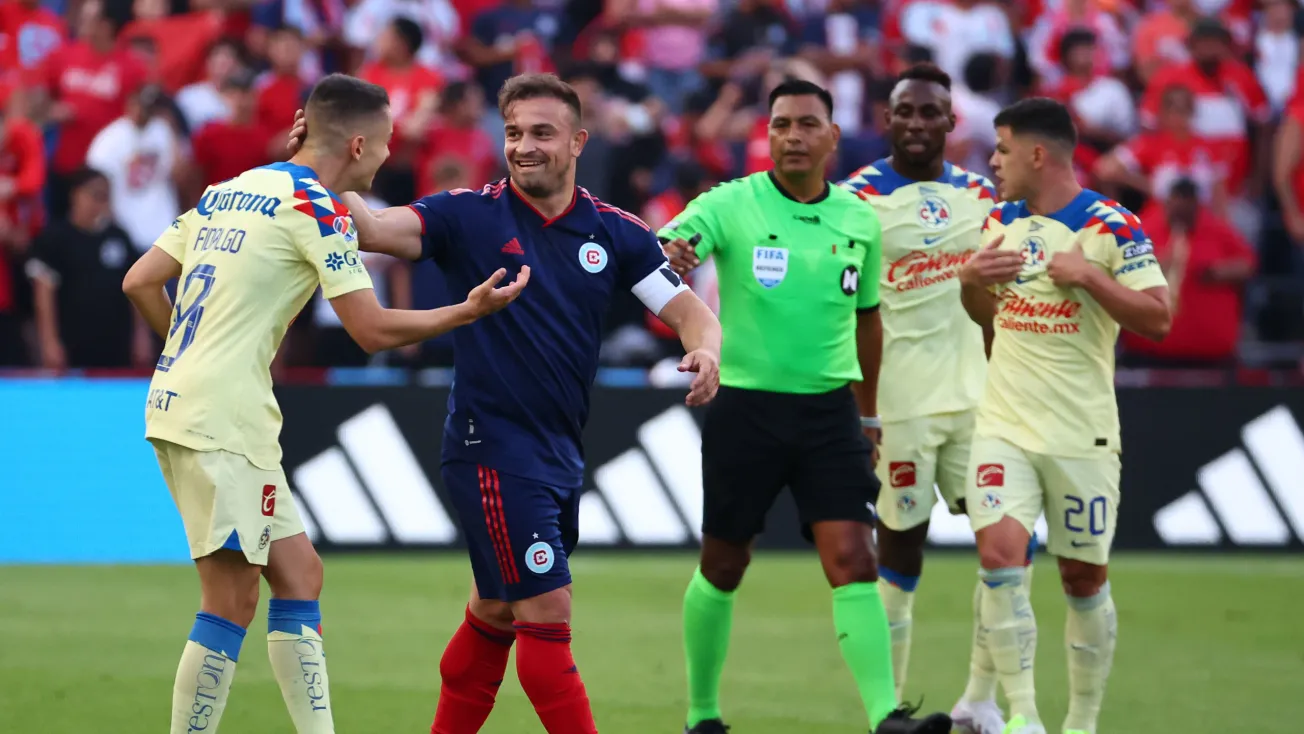

Ahead of MLS’s impending shift to a fall-to-spring schedule that will align the league with most of Europe, the league announced a shift in the transfer windows. This year, the winter transfer window will open January 26nd and close March 26th. The summer window, meanwhile, opens July 12th, one week before the World Cup finale, and closes September 2nd. That change is one of several that the league announced – including a tweak in the rules for international slots that may directly impact the Fire, who have 13 international players but only eight slots.
In effect, the shift shortens the window early in the year to enable a longer, later window in the summer. The move solves a long-standing issue that MLS teams had: With the window open later in most of Europe’s top leagues, many transfer targets left offers from MLS on the table, hoping to land a deal elsewhere. Often, hoped-for deals never materialized for the player in question – but a move to MLS was off the table with the window closed. Now, considering the time difference, players will have several hours to finalize a move to North America after a move to or within Europe is off the table.
That shift highlights a number of other, smaller shifts to league roster rules – some of which might have a significant impact on the Fire.
MLS has also removed the limit on the number of cash for player trades (“cashfers”) a team can make in a year. That mechanism, introduced last year, enables teams in the league to trade players for actual money, rather than fictional allocation currency. Previously, teams were limited to acquiring only two players per season using that mechanism.
While the Fire have not been involved in a cash transfer, last year, the Colorado Rapids did make inquiries about acquiring Brian Gutiérrez before acquiring Paxten Aaronson from Eintracht Frankfurt.

Loans are also changing slightly: now teams can loan players of any age within the league. Previously, only players 24 years of age or younger were eligible for intraleague loans. While loans within MLS have not been used often in recent seasons, expanding the pool of eligible players may make them more common. The team has not been involved in an intraleague loan in recent years.
Taken together, MLS is expanding the internal market for player movement, which might help boost player valuations abroad. MLS Commissioner Don Garber has previously noted that in most leagues around the world, the internal transfer market is by far the most robust and helps set a floor for moves elsewhere. Until recently, however, MLS’s internal market was relatively small, typically restricted to middle-roster-or-lower players and was constrained by the mandatory use of allocation money, rather than cash, on internal moves.
With the shift in transfer windows added in, on paper, the is starting to look more like leagues in Europe with regards to player movement and over time could have a significant impact on the valuations and quality of players that move to, from and within the league.

Two of the other changes, however, may have a more immediate impact for the Fire: There is now no deadline for a player to switch from international to domestic status (removing the need for an international slot), and teams can trade for international slots for only the first half of the year.
MLS restricts the number of international players to 241, starting with a default of eight per team, but allows teams to trade for slots for a period of time. In addition to domestic passport holders, however, permanent residents (those with Green Cards, refugee or other permanent immigration status) are considered domestic for MLS roster purposes.
Earlier this decade, the Fire were able to use that – combined a keen understanding of the immigration system – to get players Green Cards quickly, giving the team competitive advantage. Former Fire center back Carlos Terán, for example, received his Green Card just 16 months after joining the team, while former Fire full back Arnaud Souquet was considered a domestic player by the start of his second season.
This year, however, the significant roster turnover the Fire have seen in the past two seasons as Gregg Berhalter and the Fire front office have revamped the squad has left the team with 13 international players – and just eight slots.
Between now and the MLS roster compliance date (February 20th), the team must find a way to even those numbers out. To do so, the team will likely rely on several methods: Players like Hugo Cuypers, about to start his third season in MLS, are likely in line for Green Cards, and moves out – whether permanent or on loan – remove the need for an international slot. Last year, the team loaned Omari Glasgow to Loudon United in the USL Championship, in part to clear an international slot.
Players are considered domestic as soon as they complete their visa interview – but until the change announced today, that had to happen by the start of the summer window. Now it can take place at any time, and the player will no longer require an international slot from that point going forward.
That dovetails with the shift in rules for loans of international slots. Previously, a slot could only be loaned for the remainder of the season. Teams, however, might need a slot for a player that was on loan for only half the year, or might have reason to believe that a player could be eligible for a Green Card (and thus domestic status) by the summer.

Teams invented workarounds, with examples of a slot being traded in the winter at a curiously low valuation – only to see it traded back in the summer – but now that’s unnecessary: A slot can be loaned until the start of the summer window, or any date within it.
In practice, that means that players can head abroad during the end of the break for the World Cup or during the pause in MLS games for the Leagues Cup group stage for an interview and be domestic thereafter, and the Fire could acquire a slot on loan for half the year without having to resort to handshake deals or trade significant cap space to cover the cost of slots for the entire year, starting in February.
That may ease the path for the Fire to become roster compliant without losing as much in trades.