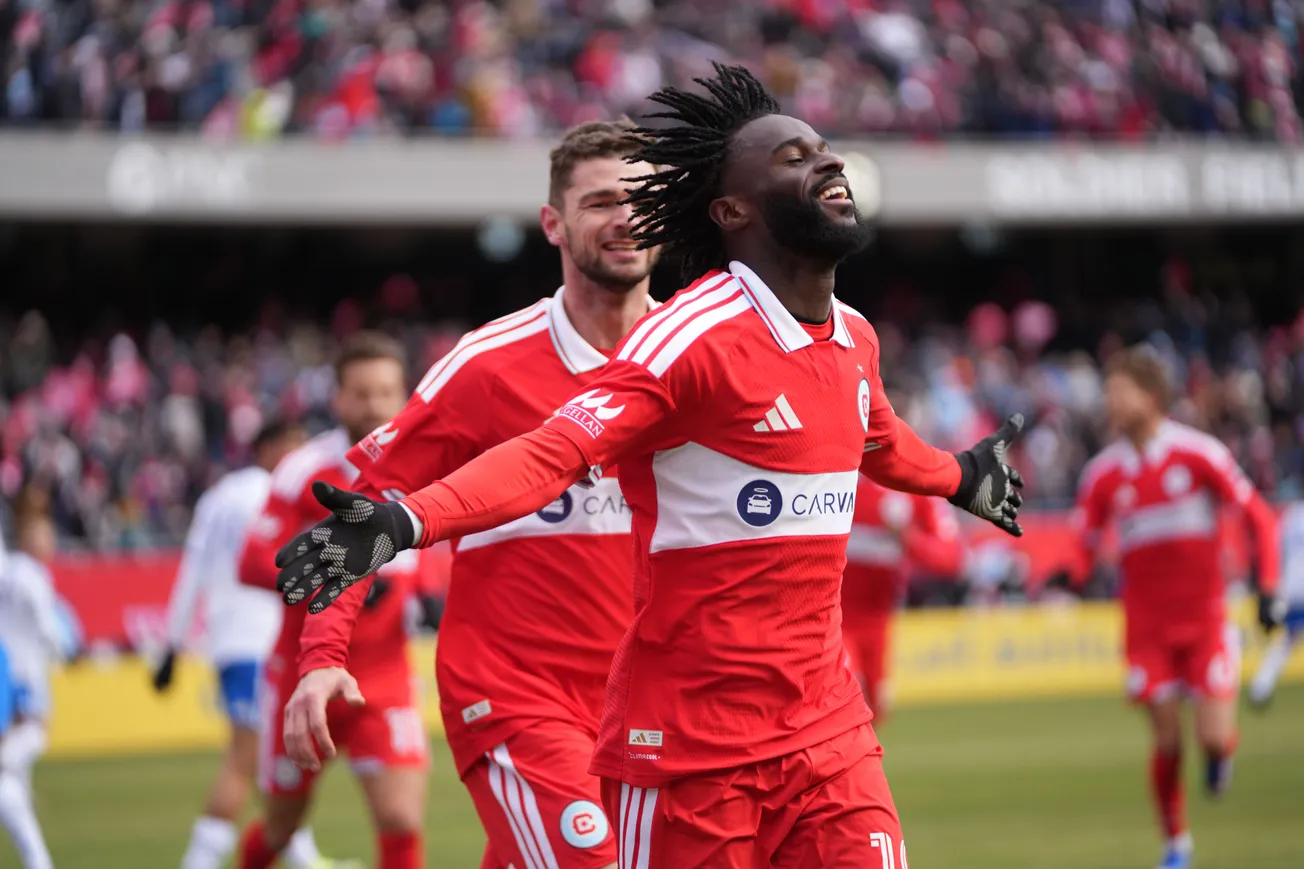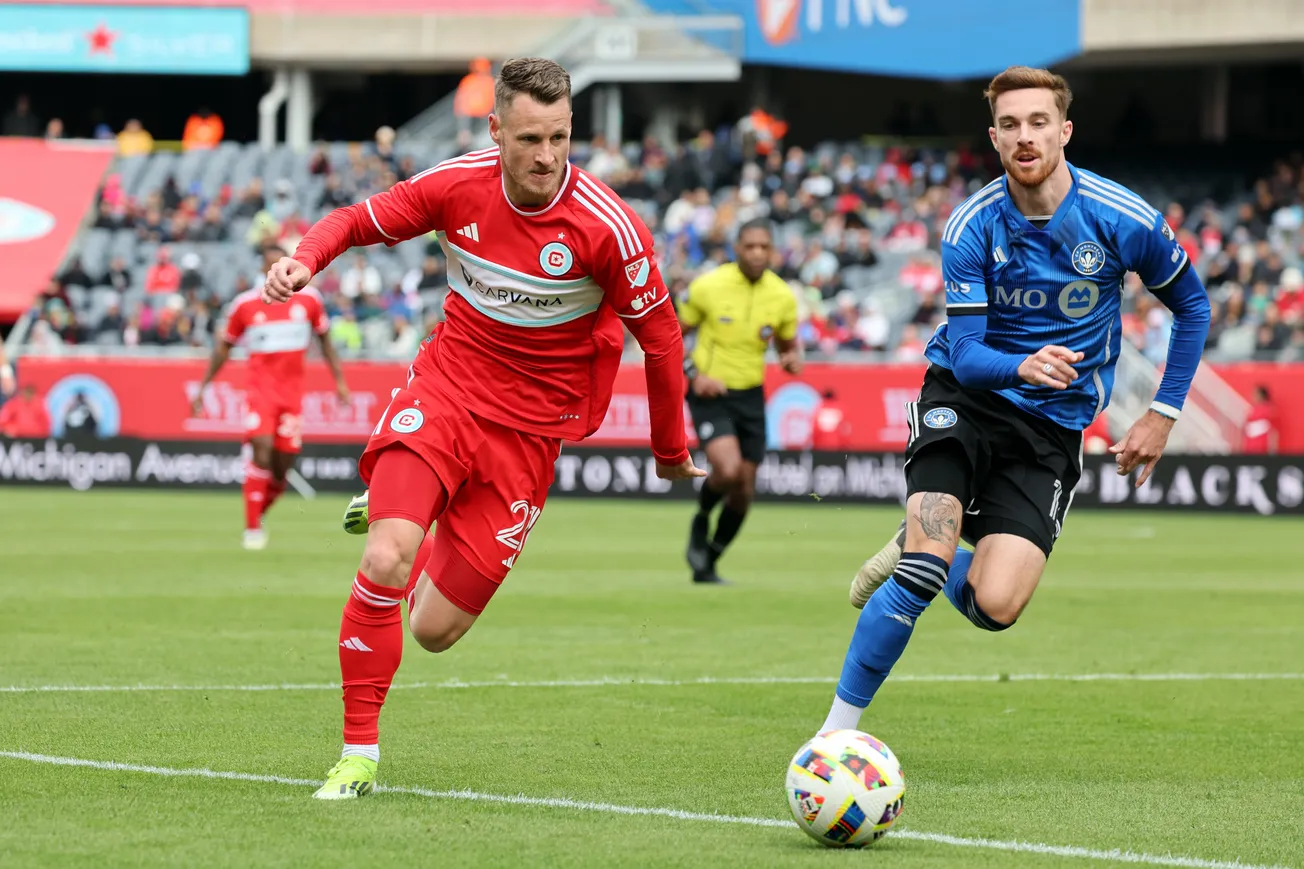
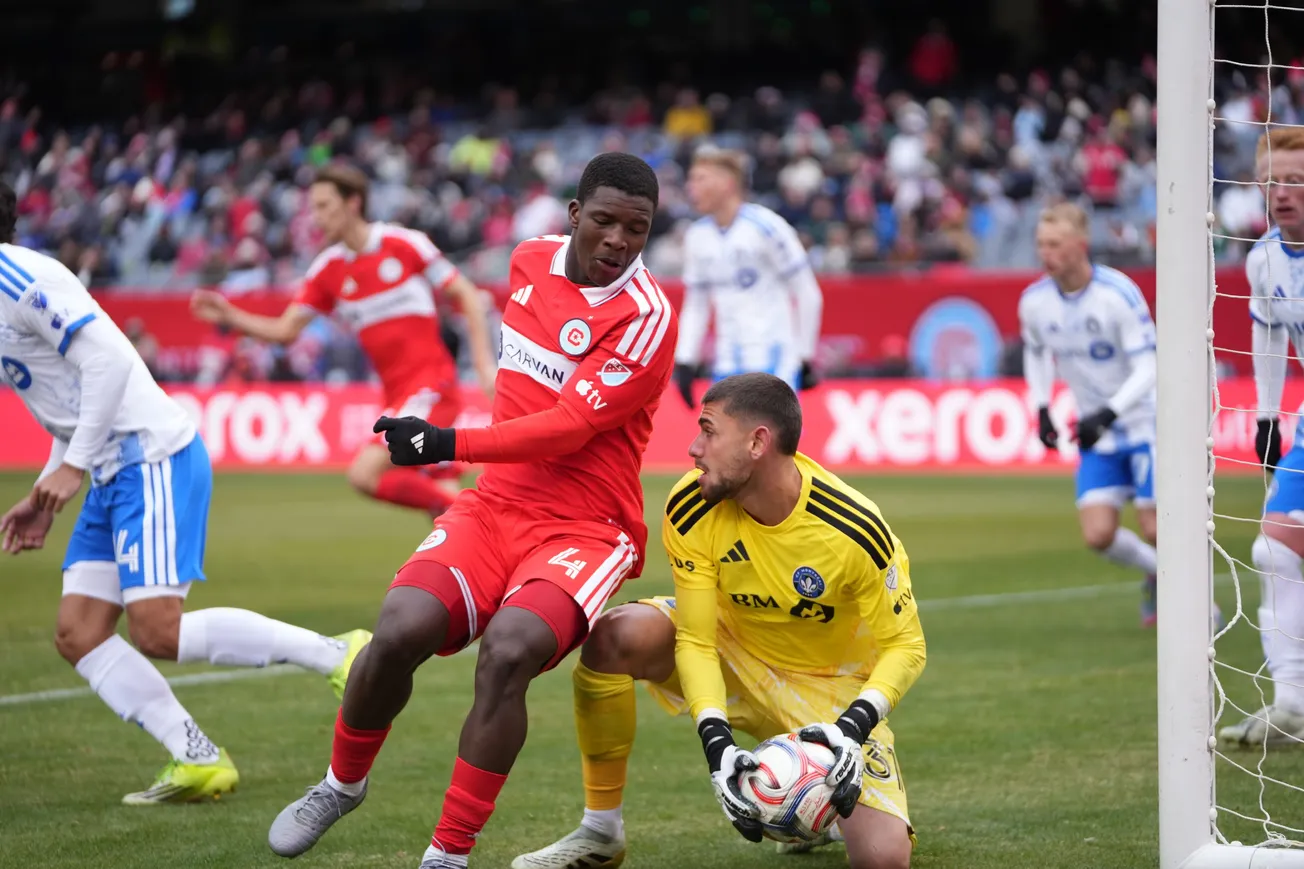
For the first time since 2017, Chicago’s home crowd saw the Fire walk away with three points in a home opener. Against a weak Montréal side, that might have seemed like a foregone conclusion, but the squad found a way to take a tough situation and come out tougher.
Here’s five things we learned from the Fire’s 3-0 demolition of Montréal.
1. This team is better than last year’s
Even after two games – and just one result – saying that the team is better this year than in 2025 doesn’t feel like much of a limb to go out on. The Fire have taken a noticeable step forward in multiple places compared to last year and are now a better team. The comparison to make isn’t necessarily where the team was last fall, but instead, where they were a year ago.
That makes facing Montréal at home an almost perfect test case. Almost exactly 11 months ago, the team hosted Montréal and ended the night with a 1-1 draw. But it isn’t just yesterday’s 3-0 score that changed from a year ago.
From the opening minute, the Fire looked confident. The shape was fluid on both sides of the ball. Anton Salétros might have been a deep-lying midfielder one moment, in another, he might be on the left flank while Jonathan Bamba tucked inside. The extra familiarity that returning members of the squad have in year two under Fire Head Coach Gregg Berhalter is evident, and that familiarity has seemingly helped new faces like Mbekezeli Mbokazi and Anton Salétros integrate seamlessly into the team.
Even playing down a man from the 53rd minute on – about half the game by the time the 12 minutes of second-half stoppage time are factored in – the Fire looked confident and controlled the terms of engagement throughout. In possession, Brady and Mbokazi might have been the only Fire players on their half of the pitch while the team pushed numbers forward – and the South African center back might have been straddling the center of the pitch.
The Fire knew how they wanted to play and were confident enough to do it. And if you don’t believe the eye test, the numbers bear it out, too.
In 2025, the Fire actually lost that xG battle, 0.54 to 1.1. They were outshot by Montréal 16-6, and Brady made five saves. In 2026? The xG at the end of the match were 3.03 to 0.10 (no, that’s not a typo), and Montréal didn’t even manage four shots in total, according to Opta’s data.
Down a man, the Fire conceded possession to their opponents but kept them out of dangerous areas, and it wasn’t until the 88th minute that Montréal managed a shot on target while playing a man up.
While it might be tempting to dismiss Montréal as an opponent, they didn’t take a massive step back from where they were a year ago (when they finished with 28 points, just two clear of the Wooden Spoon).
Last season, one of the Fire’s issues was seeing out results against opponents they had outplayed. The Philadelphia Union won the Supporters Shield for the league’s best regular season in large part by beating teams that didn’t look like they belonged anywhere near the postseason. The Fire couldn’t do that consistently last year.
Now, the Fire have shown that they can. And that is largely the difference from getting a wildcard spot to being comfortably in the playoffs.
2. Sometimes, adversity makes you stronger
That isn’t to say that it was a perfect outing for the Chicago Fire. At half, with the Fire up 1-0, you’d be forgiven if the game was starting to feel eerily like the game against Montréal last year.
Behind the numbers, there were differences: The Fire outplayed Montréal throughout the opening frame, and if Montréal’s Tomás Gillier wasn’t the best player on the pitch, the Fire likely would have been two, if not three goals up. Still, if Montréal were going to get a result in this one, it likely would have come by being outplayed for stretches and finding a result in key moments.
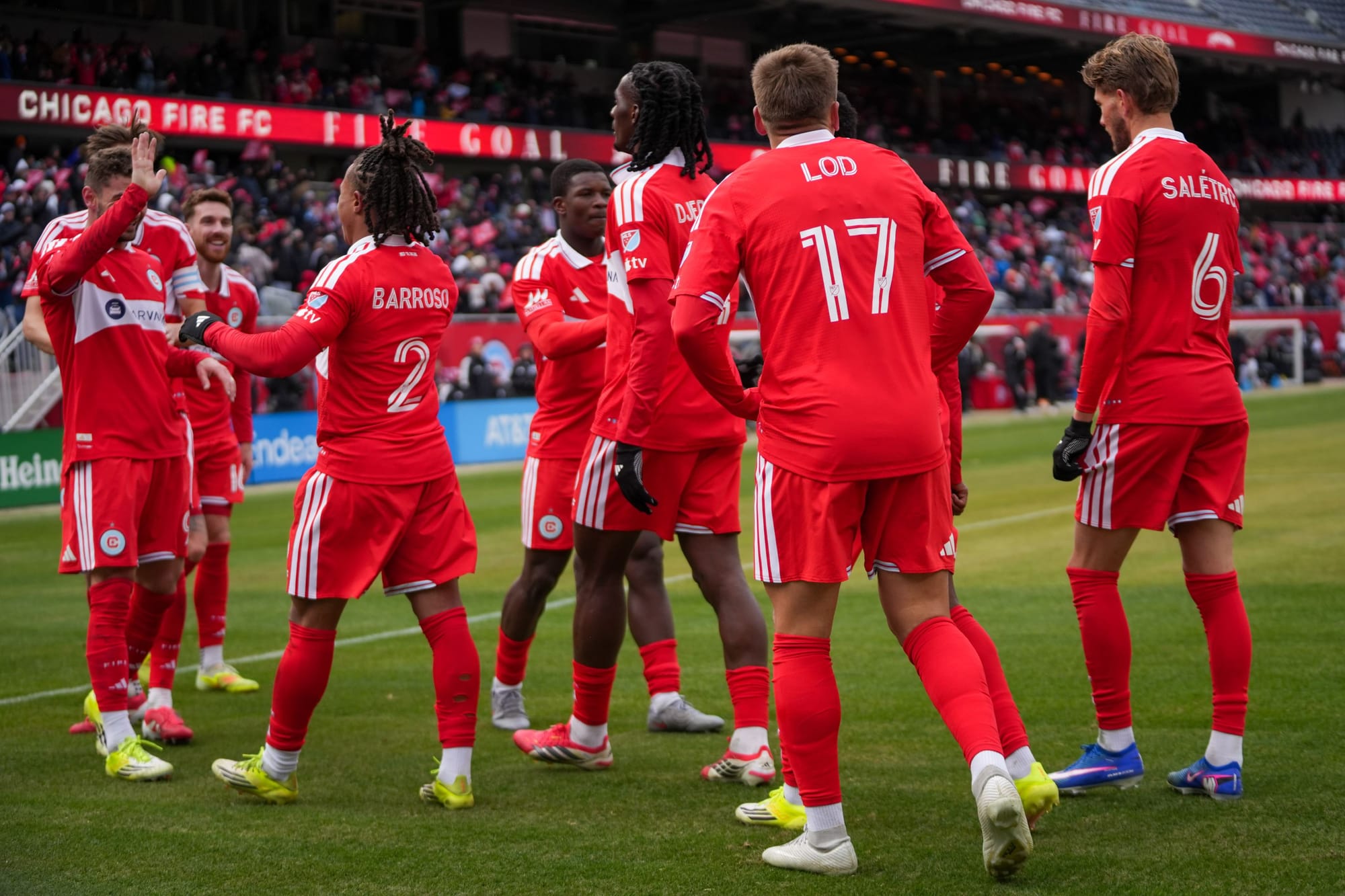
Coming out of the tunnel, the visitors certainly seemed hungry for an equalizer, and the Fire appeared to be losing focus. Fire Head Coach Gregg Berhalter keyed in on that after the match, saying “if you think about it, we come out of the locker room, and we play 11 minutes and then get a red card on an avoidable play. It can go the other way also, right? We can end up losing that game, and then this conversation is completely different. So, the eleven minutes are what I am going to be looking at” after the game. “How do we get better? How do we come out of the locker room? I think with more urgency, putting them under more pressure, trying to create more goals, scoring chances early in the game, and early in the second half. ”
In a twist of fate, the red card seemed to galvanize the Fire, with Berhalter saying that it “actually sparked us and gave us a lot of life, a lot of determination. Then we just grew into that game, as they had to come, and they opened up space. And we have very good counter-attacking players, we have very good pressing players, and you know, we were able to create several chances on the counterattack.”
It isn’t crazy to think that the red card turned the tide in the match – what’s crazy is that if it did, having to play a man down for nearly half the game galvanized the Fire and put them firmly in the driver’s seat for the match.
3. Leo Barroso is hitting another level
Leonardo Barroso flew somewhat under the radar around the league in 2025. Some of that might be the injury troubles that limited him to just over 1,000 minutes over the course of the season.
Some of it might be due to the fact that Barroso is a young player who took time to adjust to the league and, frankly, was outshone in the wingback spot by Andrew Gutman playing on the opposite side for all 34 matches last year.
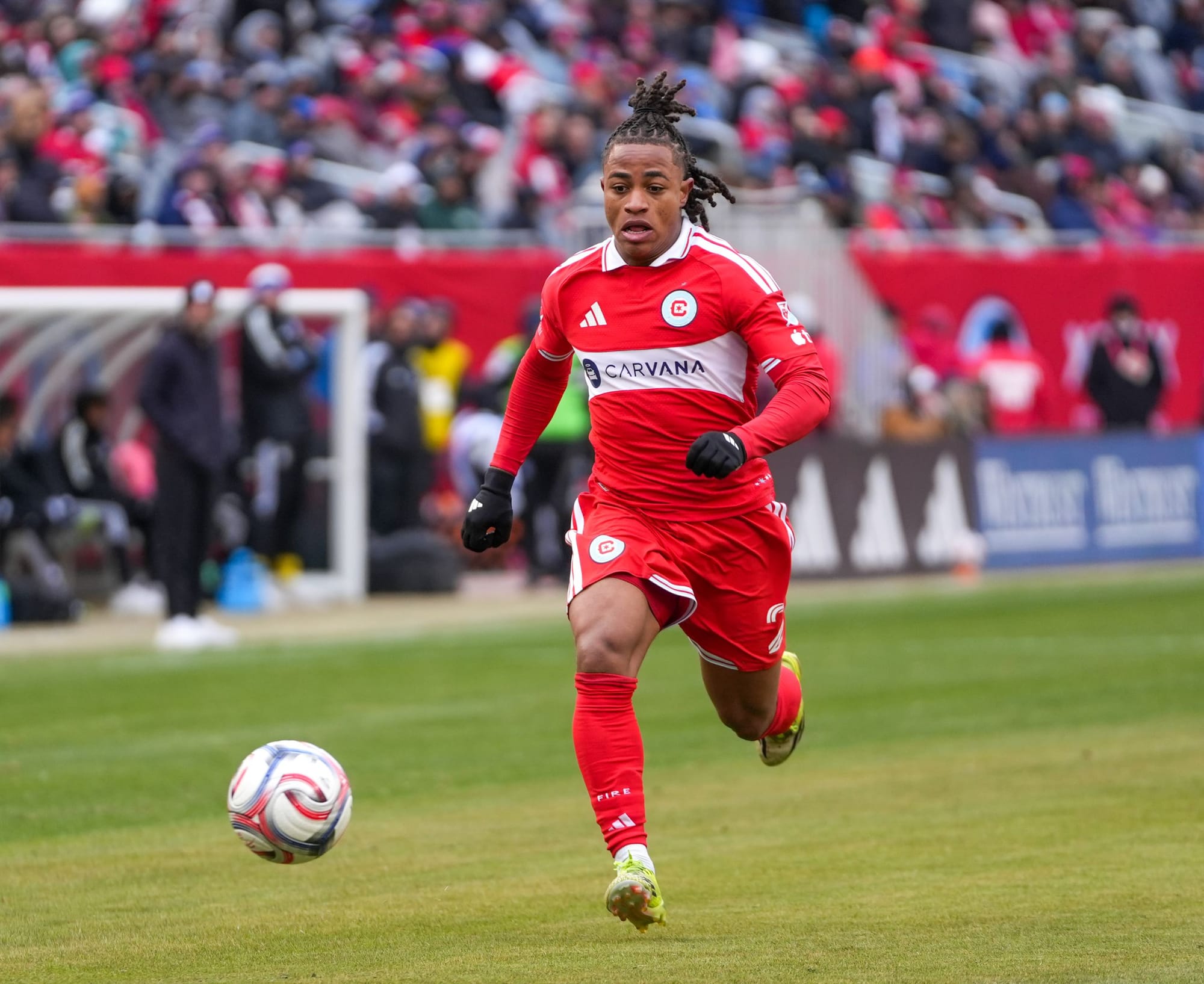
But you’d better believe a lot more people will be talking about Barroso in 2026. For starters, it looks like he may not have left the gym from the moment the Fire’s 2025 season ended until he boarded the plane for preseason in January.
Putting in a coach’s choice (and let’s be honest – it has to be a consensus choice, right?) man of the match performance, the Portuguese fullback was everywhere and did all the right things for the Fire.
He might have been denied an assist on the Fire’s opening goal – Gillier was active and parried what looked like a cross, technically resetting possession before Bamba got on the end of it anyways – but it was his play that made it happen.
With the Fire down a man, his dogged one-on-one abilities as a defender also came into play, often helping to close down spaces before Montréal could create anything.
Playing across from Jonathan Dean (for half the game, anyways), Barroso stepped into the offensive void that Andrew Gutman’s injury created for the Fire from the fullback possession, and when Gutman is back playing, giving the Fire another option, the Fire’s attack will stand to benefit greatly by having high-caliber players on either side of the pitch from the fullback position.
What’s keeping Barroso from playing at that level week-in, week out? “For Leo, it's just a question of himself,” Berhalter said after the match. “He's his own barrier. If he could have that focus and determination intensity every game, he's a top top player, and we've seen it before. Sometimes, it's a little inconsistent. Like last week, it's a very similar type of environment, right? But we didn't get the same outcome. So for him, we know his talent level, and today, you got to see it; you got to see what he's like at his best.”
4. Hugo Cuypers will not go quietly into the night
With rumors swirling that the Chicago Fire are targeting Robert Lewandowski, it’s an open secret that Hugo Cuypers, in the last guaranteed year of his deal in Chicago, might be available for the right price this summer.
When MIR97 Media asked him about the possibility of the arrival of the Polish superstar and what it might mean for his future with the club during media availability at the start of preseason, Cuypers was equanimous, saying that he could deal with rumors “in an easy way,” saying “ I'm happy here. My family is happy here. We built something good last year and now I'm just focused on building on that.”
Still: He’s clearly aware of the possibility that the Fire might be signing a player that would make his spot in the lineup tenuous, and might make his spot in the roster untenable.
And he isn’t taking it lying down.
Against Montréal, Cuypers was a force of nature throughout the game. His stoppage-time penalty kick finally put the result out of doubt for the Fire, but he was active from the game’s first kick, when he forced a turnover and had a solid look at net – one of the few times that the Fire had real pressure bearing down on Montréal’s net in the game’s opening 20 minutes.
Including stoppage time, was active in pressing for nearly 100 minutes and landed all four of his shots on target.
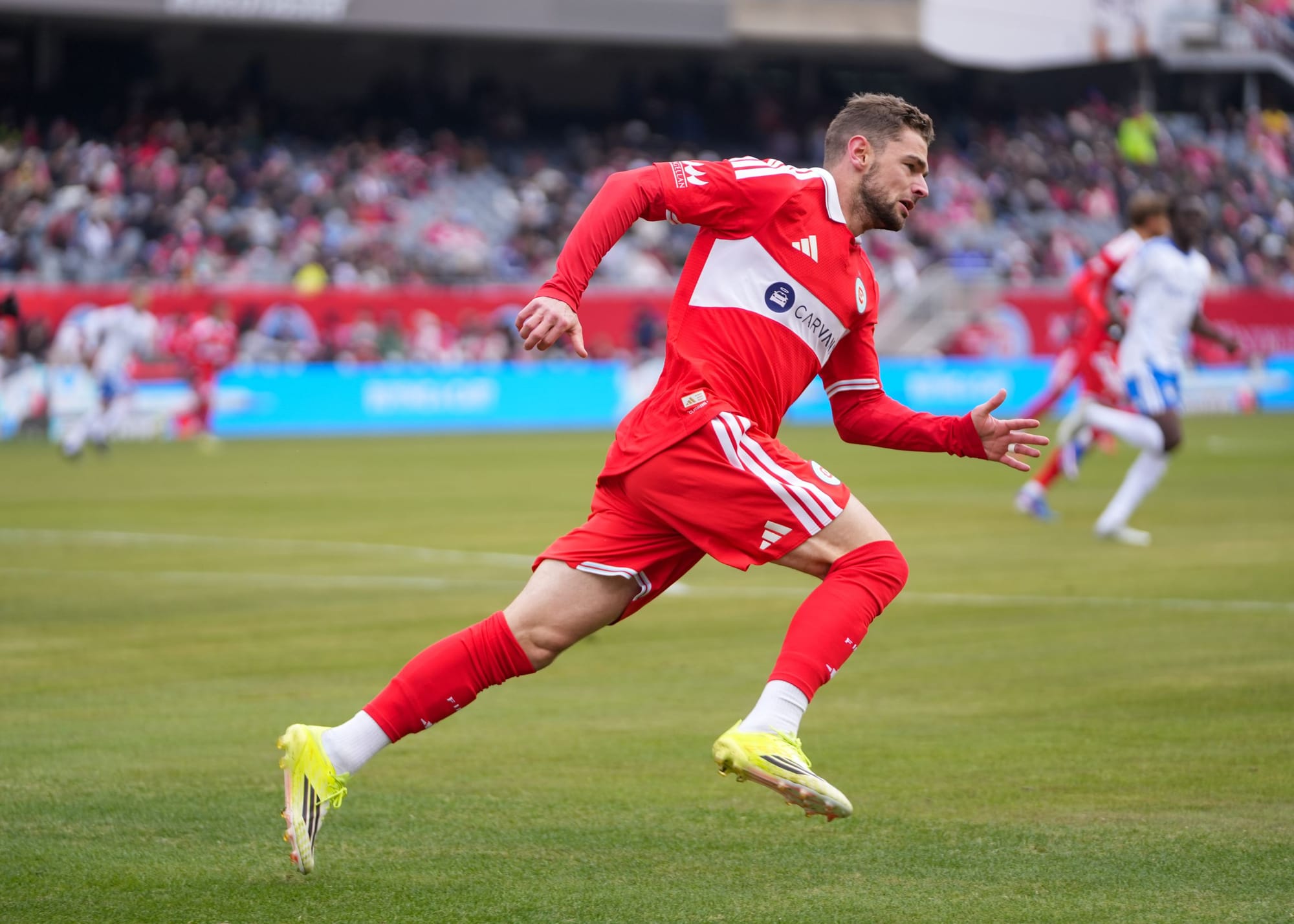
There’s something great about a good, old-fashioned heatmap sometimes, and Cuypers tells the story of his performance well: Cuypers was all over the pitch for the Fire, and was as active in the middle of the pitch as he was in the final third. He won eight of 12 duels, including five from six on the ground, and made five passes into the final third.
And it’s no coincidence he earned the penalty that he took for his second goal of the season.
Through no fault of his own, Cuypers might be gone by the end of the season. But whether it’s to prove that he should be allowed to stay, show his worth to a potential suitor or just because that’s the kind of player he is, he isn’t going to go quietly.
5. The mentality of the team has improved from last year
2025 was a much-improved year for the Fire, and about half of the players on the squad were new.
Throughout the season, however, there were more than a couple performances that caused Fire fans to think “same old Fire” – a reference to the teams that would play well for stretches before becoming their own worst enemy on the pitch.
Getting a red card in the 53rd minute might have been one of those moments, but the fact that it seemingly became a rallying point says a lot about the mental growth of this team. Some of that is collective, but it’s the response from individual players that is telling.
Nowhere is the shift more evident than Chris Brady’s play. Berhalter called out the young goalkeeper’s (ignore what your eyes tell you looking at the man – he’s just shy of his 22nd birthday) decisionmaking playing out of the back after last week’s loss in Houston – the only time in this reporter’s memory that the coach has gone out of his way to put a spotlight on a poor performance from a member of his squad.
But Berhalter knew what he was doing, communicating publicly through the media to reinforce the message that he’d given Brady privately.
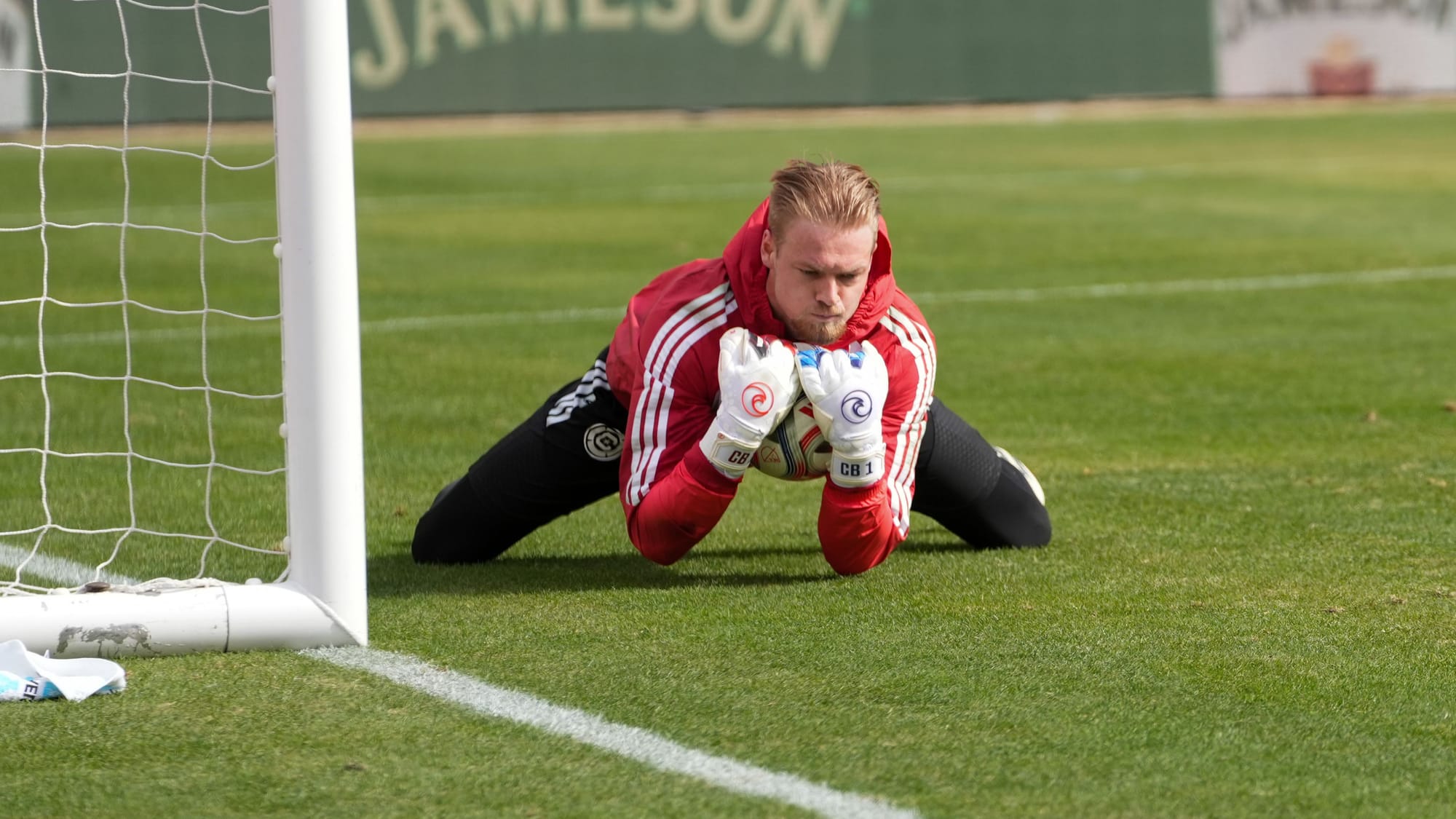
Even if Brady wasn’t called on to make a save very often, he was active in buildup – and took last week’s criticism to heart. “We worked a lot with Chris,” Berhalter said after the match, “a lot of conversations with him this week, and he responded in a really positive way. What I urged him to do is take control. He's the goalie. He's the one who's starting these attacks to take control, build up, and he did that today. He had a really solid game management side today. Really good build-up. When we wanted to play short, he found the solution. When we wanted to play long, he found the targets,” with Berhalter calling it a “great response” from the goalkeeper.
Speaking to reporters after the match, Brady said that the clean sheet performance “sets my standard, my personal standard, and the standard we have for our guys on the back line. This is what we need to expect week in and week out. We keep working every single day of the week to make sure that this is the result defensively each weekend.,” before confirming that a personal goal for 2026 is to make the U.S. Men’s National Team World Cup squad – “but that starts with what I’m able to do here and focusing each day in training… and performing when it’s my time.”
Brady then went on to call out a squad mate, saying “Mauricio [Pineda] today. It was an incredible game. This guy was helping a ton in midfield, winning first and second balls. This guy was all over the place. He was an animal today, so just want to give him props.”
Pineda didn’t see the pitch last week in Houston. When given the opportunity with a start in the home opener, Brady is right: he didn’t miss a beat and put together one of his stronger performances for the Fire.
With Pineda in, someone had to come out of the Fire’s midfield, and that man was Robin Lod, who had an uncharacteristically forgettable performance in opening week.

How did the Finnish player respond to being on the bench until deep in second half stoppage time? With a goal that put an exclamation point on the victory for the Fire.
That kind of mentality says a lot about him – and the group around him.
The group’s ability to respond will be tested next week, assuming that Gutman isn’t ready to play and that Dean is unavailable (something that I wouldn’t stake a ton of money on – Synchuk looked clearly offside, which would negate Dean’s red card if it’s reviewed during the week), but there’s every reason to believe the Fire are ready to respond.