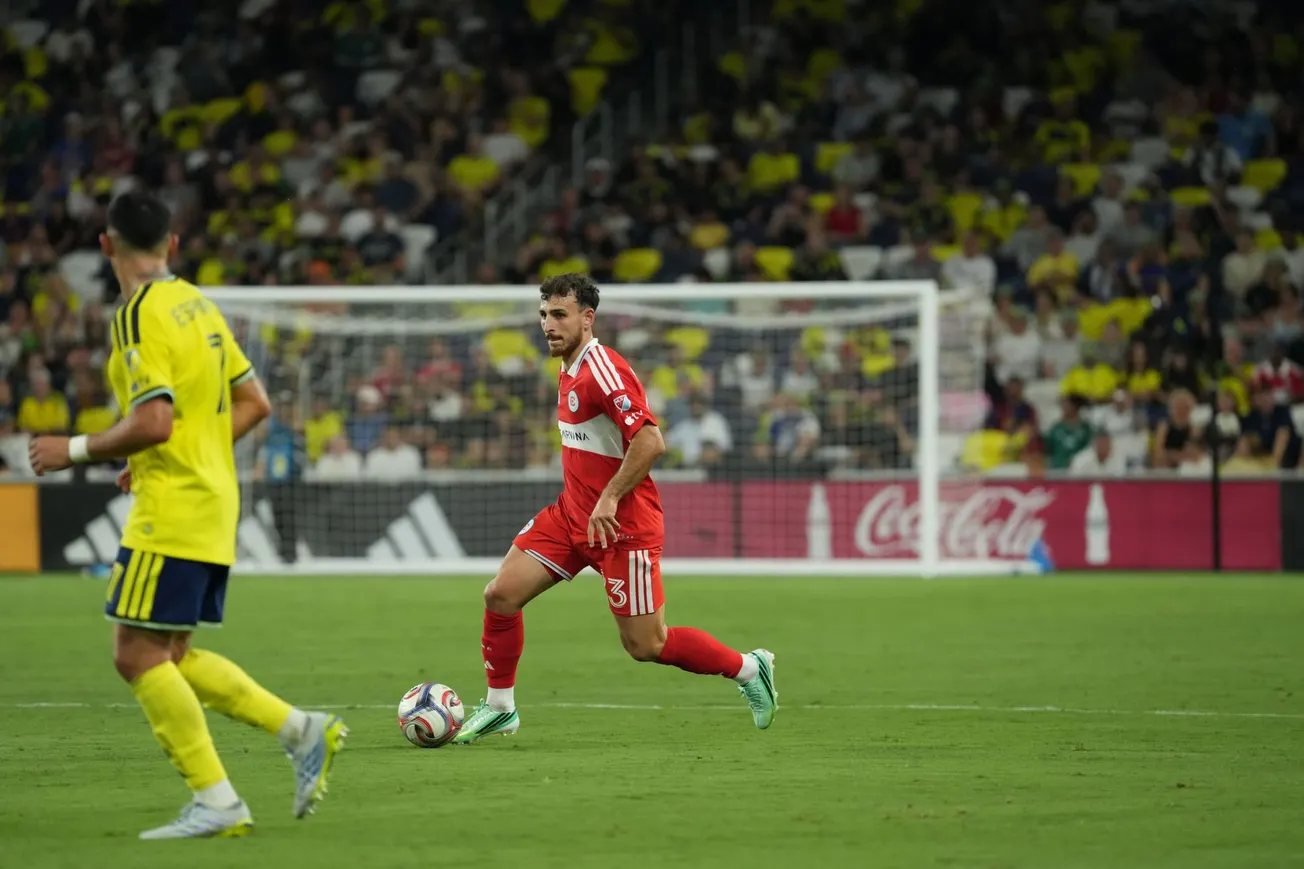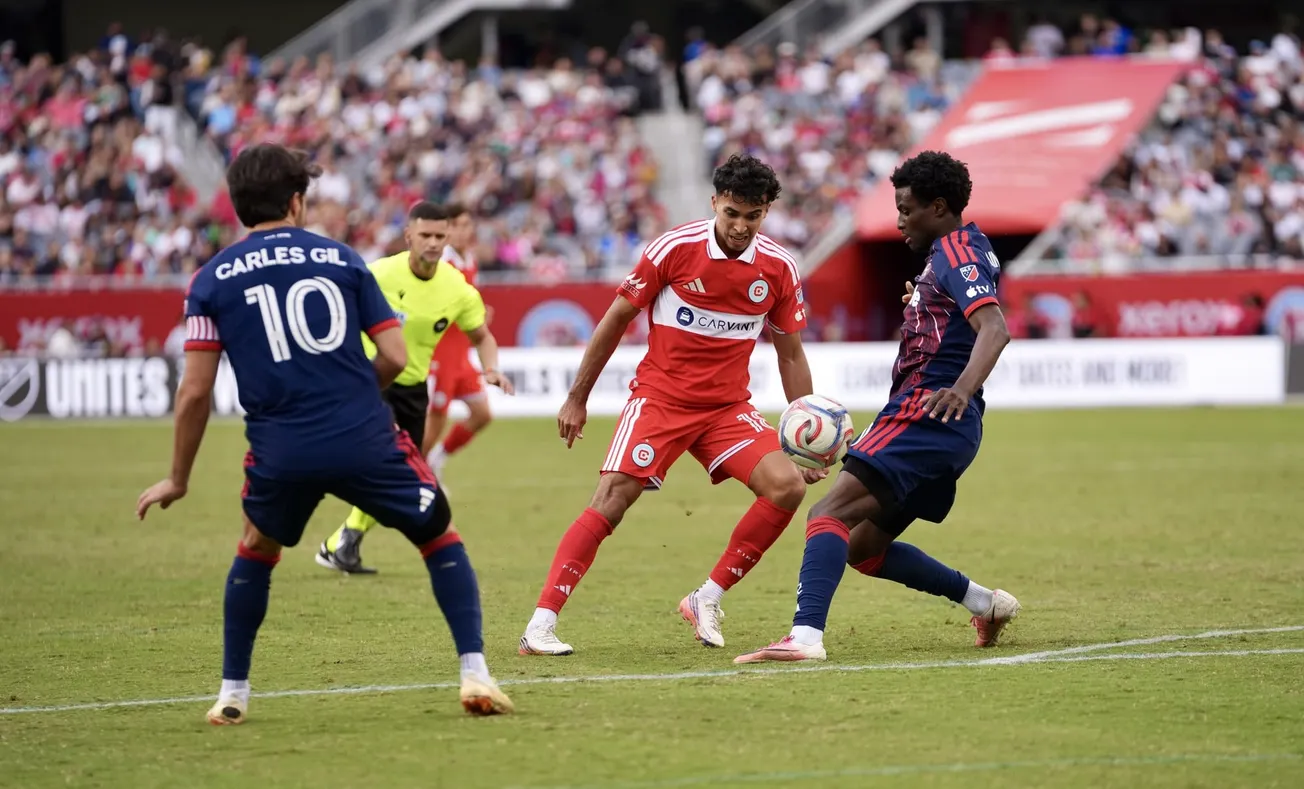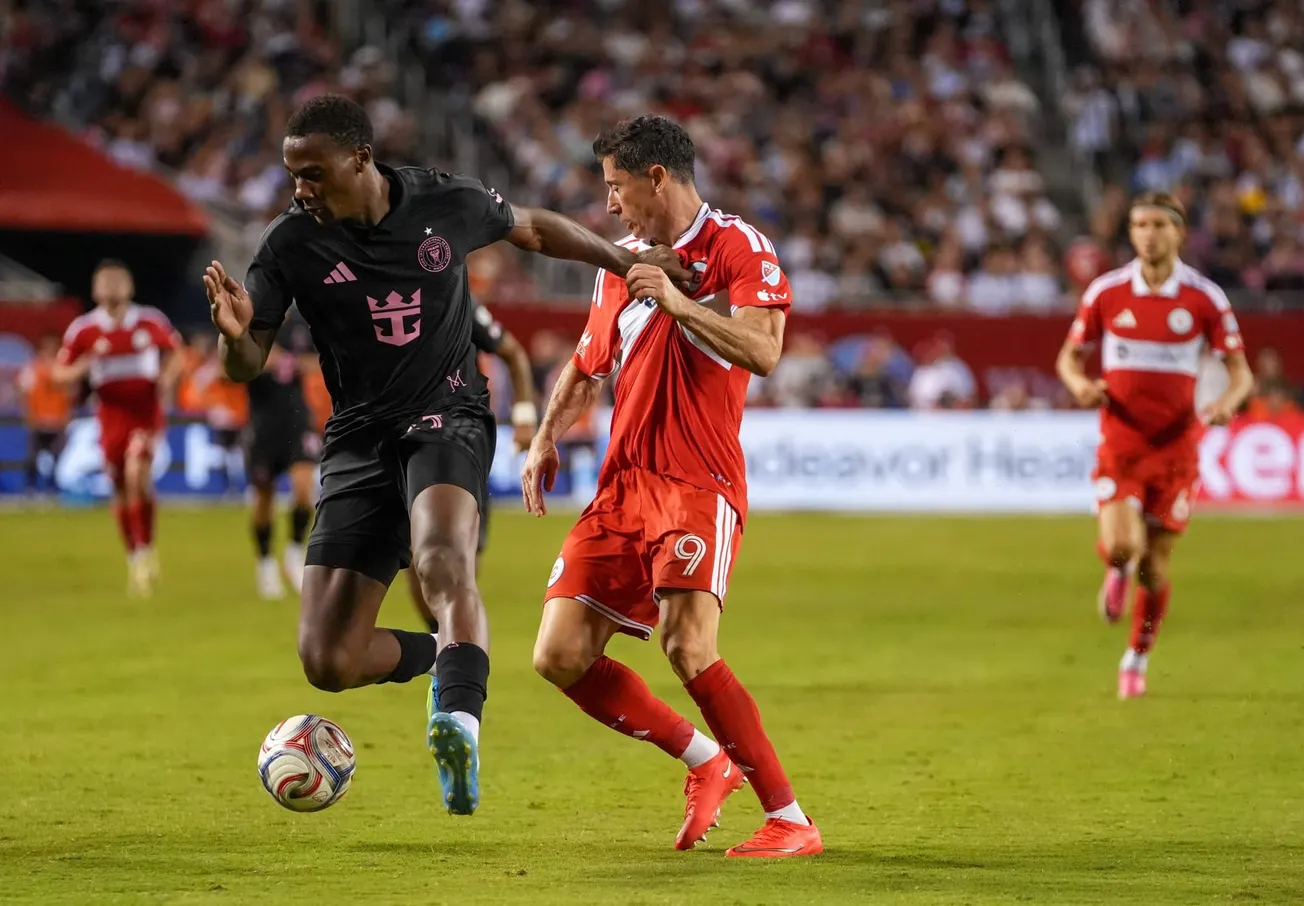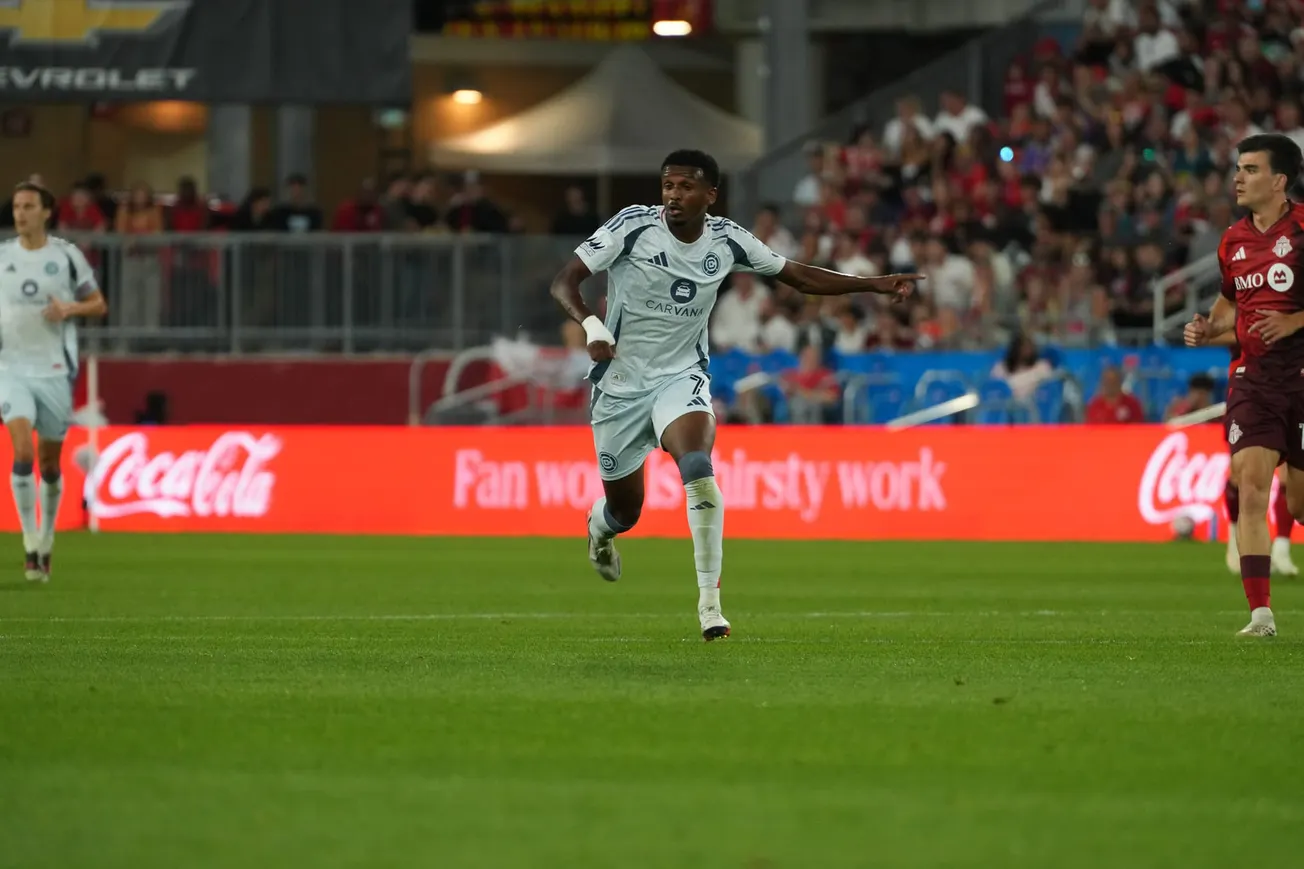

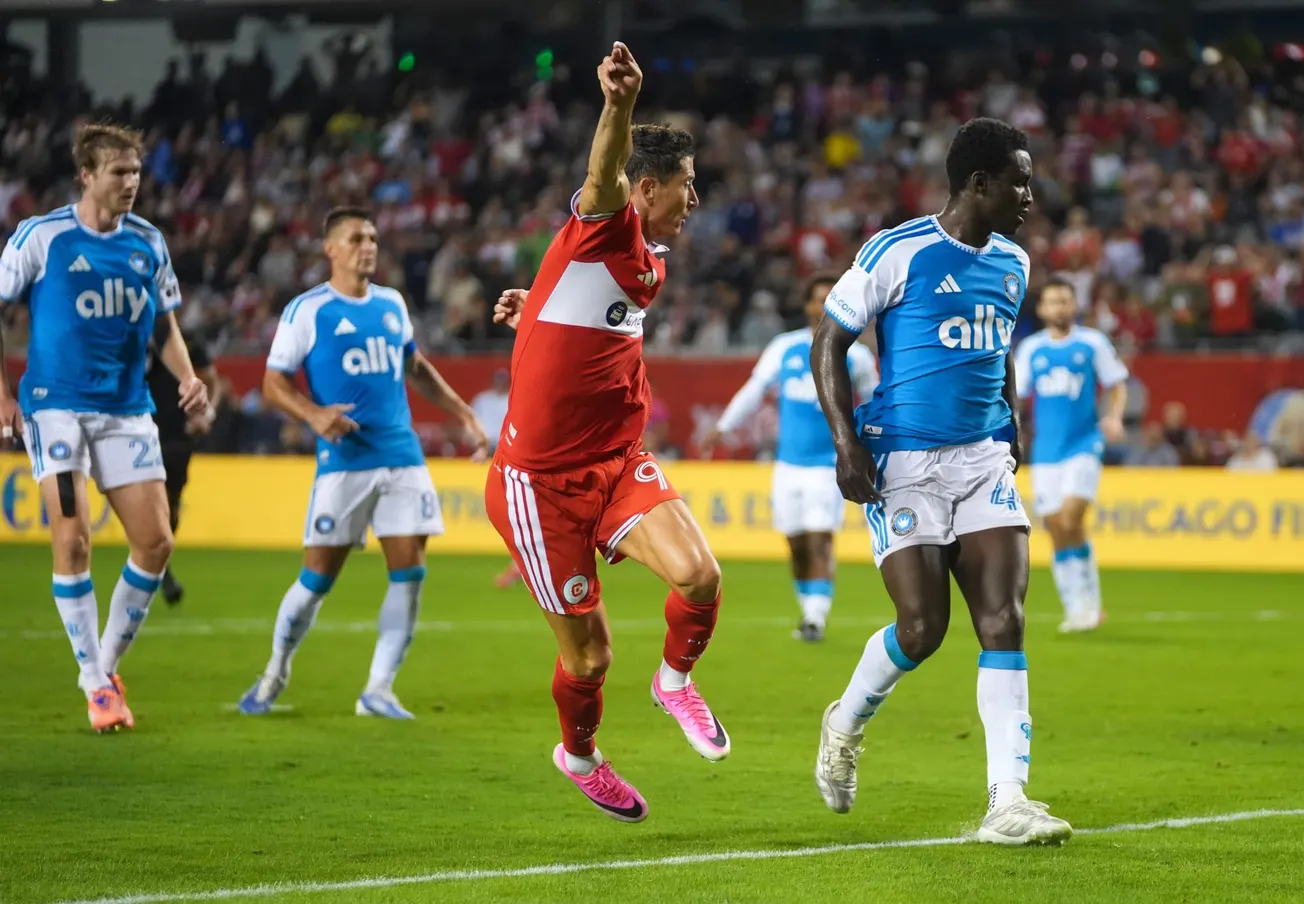
Seventy days after their last win, the Fire were once again victorious at Soldier Field, with Robert Lewandowski joining Frank Klopas, Andy Herron and Thomas Frankowski as the fourth Chicago Fire player to get two goals in his home debut.
More than the victory, we’re finally starting to get answers to a lot of the questions that were raised after two losses to open up the second half of their season.
Here’s what we learned from the Fire’s win over Charlotte FC last night.
The new guy can score
We knew the goals were coming for Robert Lewandowski and last night, they finally did.
The fact that one of the top goalscorers of all time bagged a brace in MLS shouldn’t be surprising, but Lewandowski’s two goals were a good reminder of what has made him such a prolific scorer throughout his career.
The first goal – the Fire’s first this season from outside of the box, even if the penalty arc isn’t exactly downtown or anything – was a classic goalscorer’s goal, with Lewandowski taking three quick touches to settle the ball and send it past Charlotte’s Kristijian Kahlina. Lewy realizes the best way to beat the goalkeeper isn’t force – it’s getting the shot off while the defenders are screening him but before they have time to get into position to block.
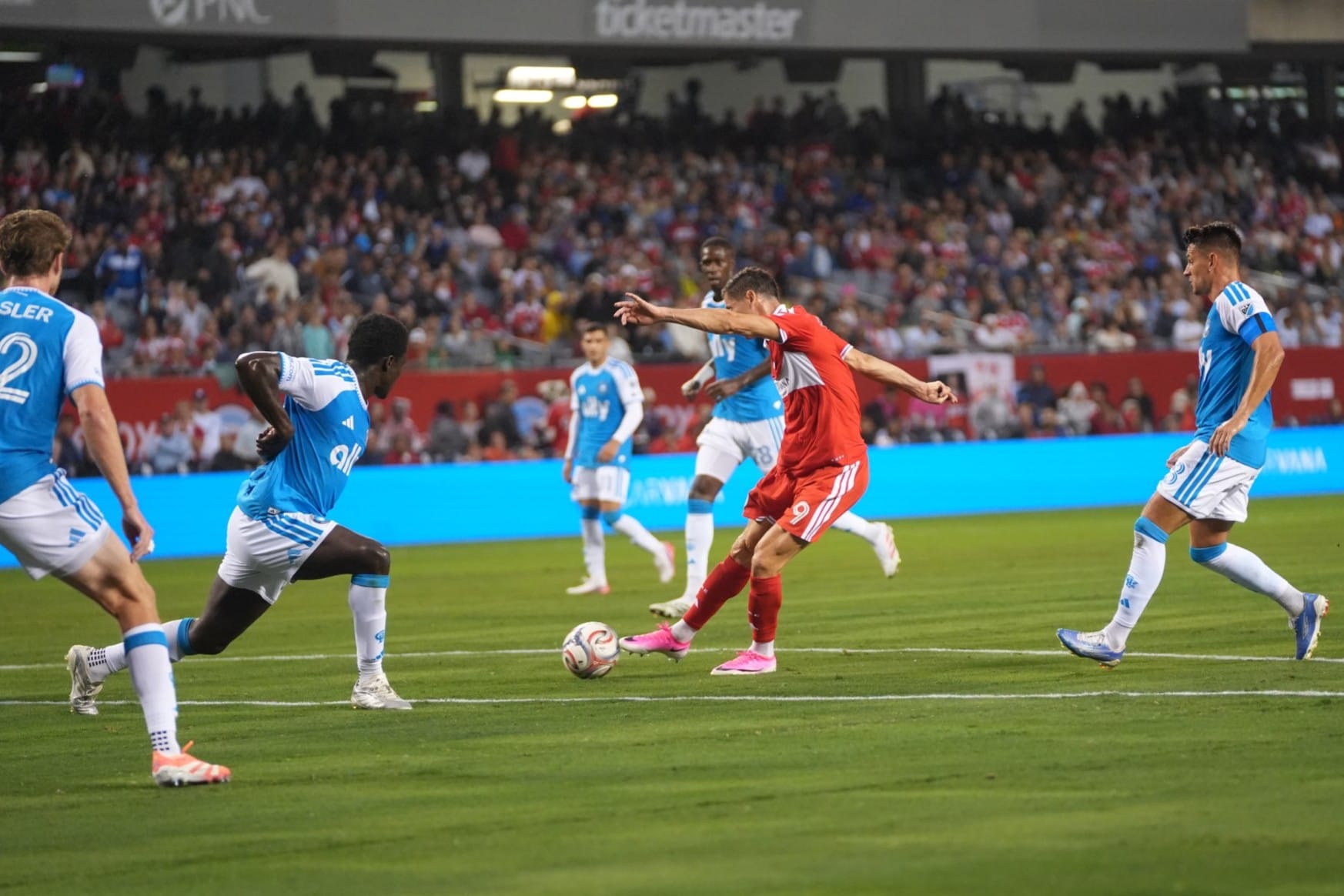
The second goal, however, showed the kind of poise that you don’t see nearly as often. Rather than try to slow his run and corralling Andrew Gutman’s pass – likely by having his back to goal – he lets the ball continue on to Robin Lod, who sends it on to the Fire’s new no. 9, now well in the box. Lewandowski shows the kind of poise and control that very few players have, particularly on a less-than-stellar pitch at Soldier Field last night. Lewy again takes three touches and sends it across goal and into the back of the net.
More than that, Lewandowski was a toe poke or a half step away from putting one or two other opportunities away. It wasn’t just the goals. He looked like the kind of player that is going to keep on scoring.
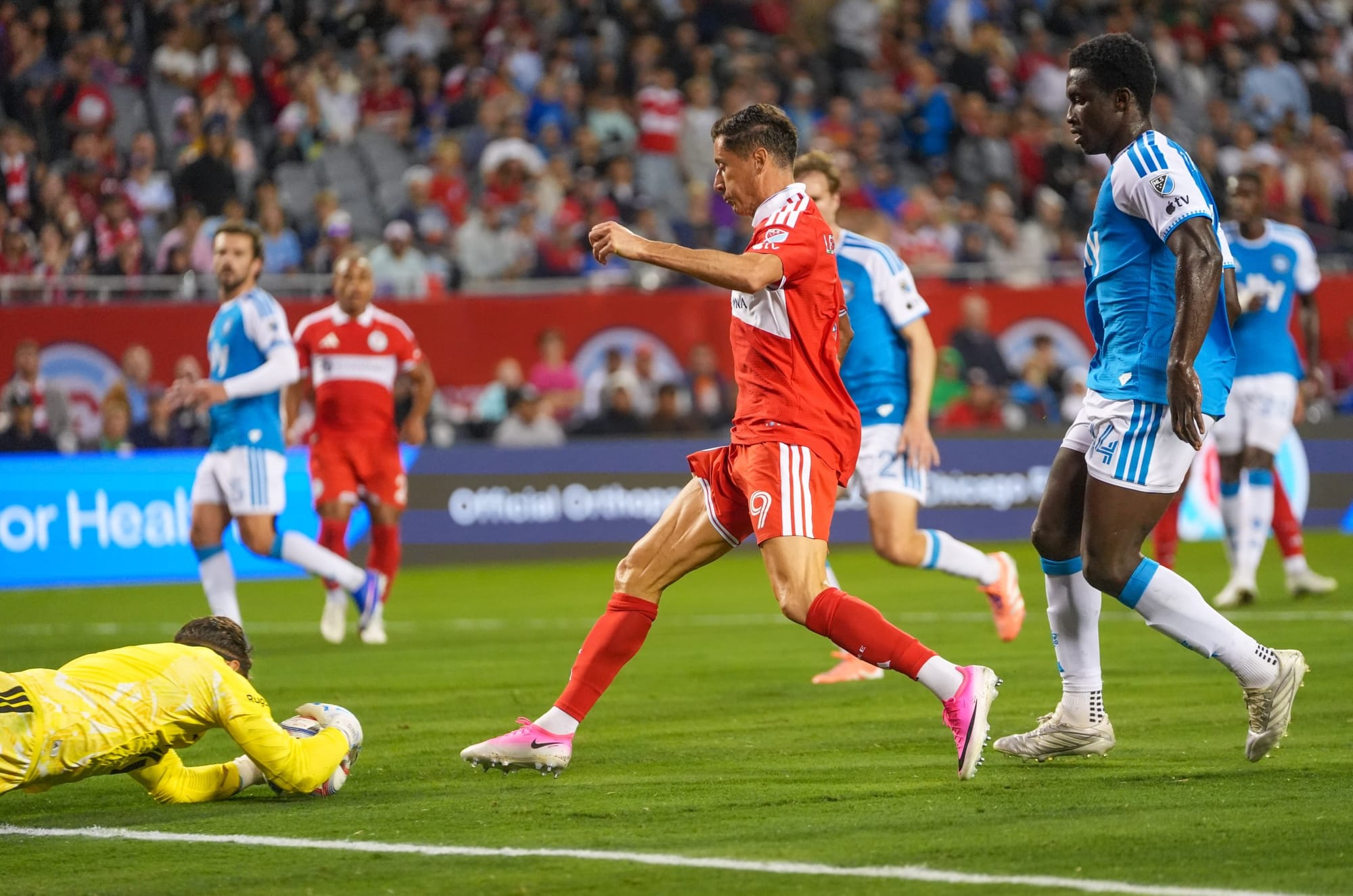
Berhalter summed it up well postgame, saying “That type of quality is hard to find. When you think about when you look at the two goals he scored, when you look at some of the other plays that he has in the game, it's just high quality.”
The Fire are figuring things out defensively
Ahead of the game, Gregg Berhalter said that Lewandowski’s arrival has not only created a need to attack, “but defend. That’s what I mean by we got a lot of work to do. Candidly, we’re still figuring it out.”
We saw the first concrete evidence of that at Soldier Field on Saturday. There were two changes in the starting XI from last week: Viktor Radojević and Maren Haile-Selassie were out and Andrew Gutman and Robert Lewandowski were in.
The team had, in various sources, put the lineup down as a 4-3-3 and as a 4-4-2, with Lod’s role and responsibilities being the clearest differentiator between the two. In reality?
The shape was fluid but played more like a 4-2-3-1 throughout the bulk of the match, with Lewandowski as the sole forward, and Lod joining Zinckernagel and Bamba as part of a fluid attacking trio. That enabled Djé D’Avilla and Anton Salétros to play in something closer to a double pivot.
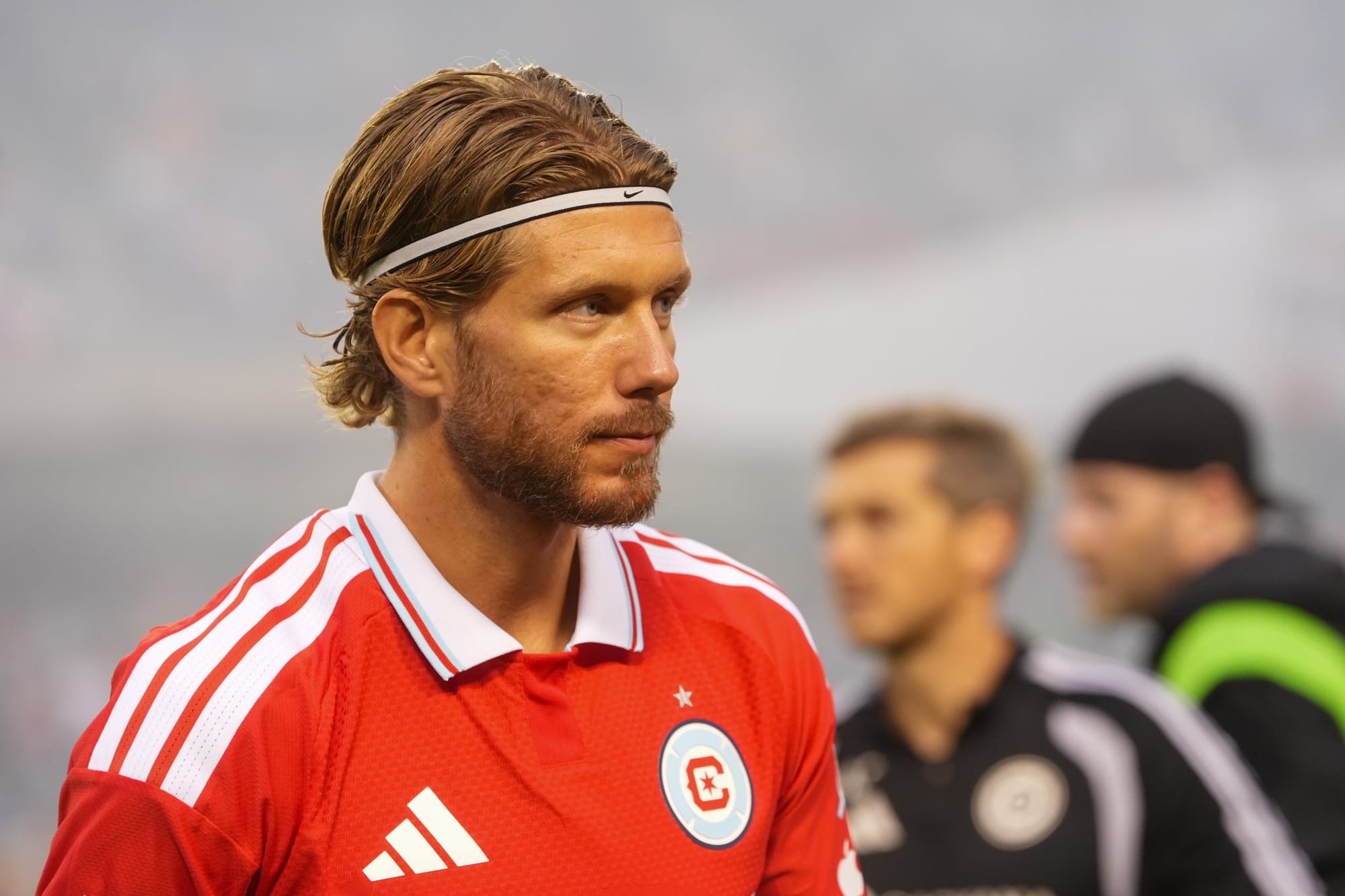
Sometimes, it did feel more like a 4-4-2, with Lod moving closer to the second striker role, but overall, it felt like the Fire were playing with an additional midfielder – and D’Avilla, and to a lesser extent, Salétros and Lod, looked more comfortable as a result.
After the game, Lewandowski said “Sometimes when we see how we're playing, like 4-2-3-1, 4-4-2, in the end, it's not too important. More important is our position in the game with the ball and without the ball. If you see that some space is free, we're going down and using the space.”
After two weeks of not really doing that, we saw it last night.
It wasn’t perfect, but it worked, both based on the eye test and the only number that matters.
The Fire still have more to figure out on defense
After the game, Berhalter said “You can tell we're a team that's still trying to figure everything out. That's what I saw on the field,” saying “there’s positioning stuff we need to keep working on. Defensive shape could be more closed, preventing central access, but that’s going to come.”
All of which is fair. For the past half-dozen or so games, with the Fire playing mostly out of a 4-4-2, we’ve said time and time again that the shape resulted in the Fire giving up space in zone 14 – that’s the “central access” Berhalter was talking about – far too easily.
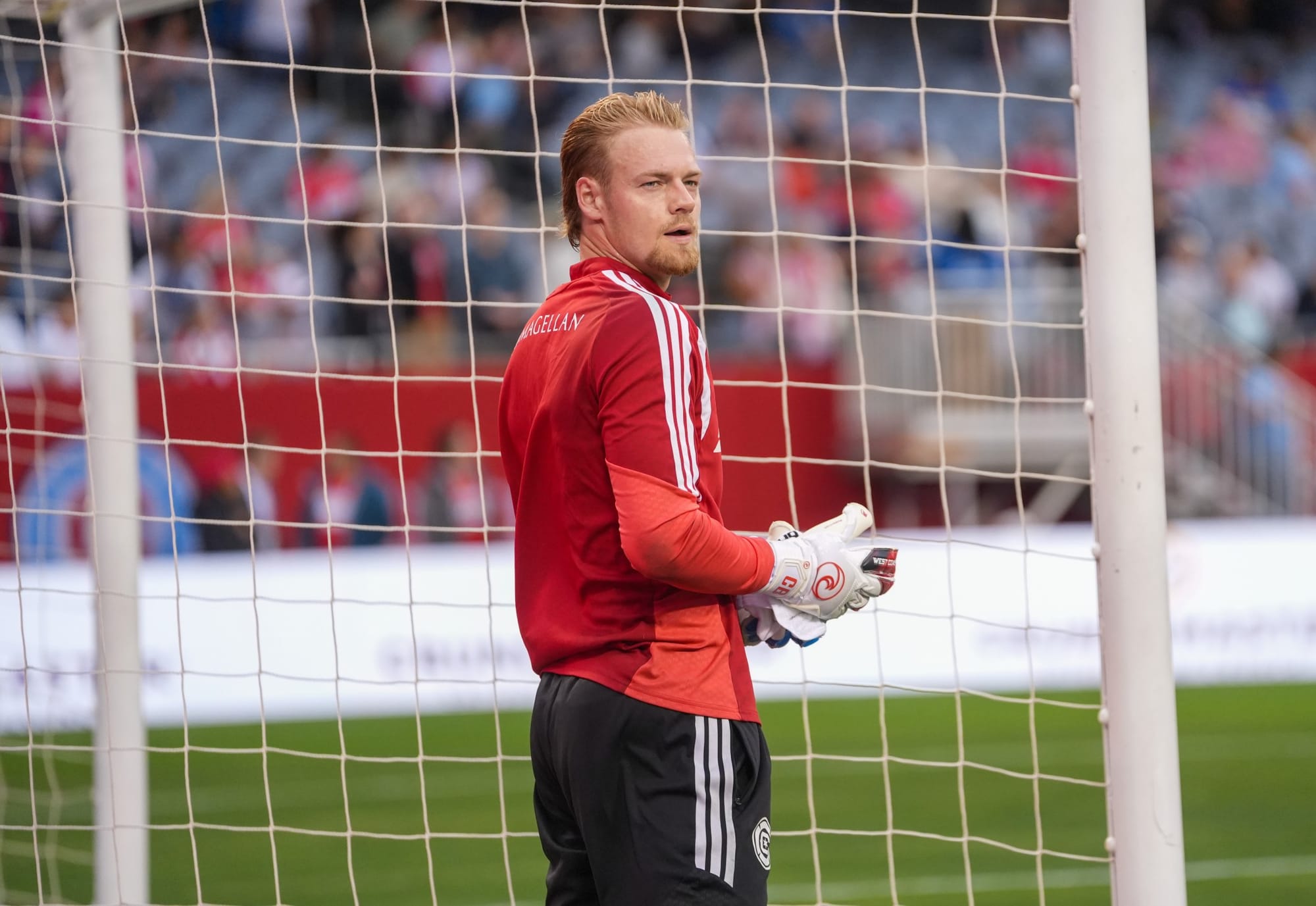
Look: I’m not going to nitpick too much about a performance where the Fire allowed one shot on target, but if Charlotte had been a bit more clinical – they had 21 passes into the Fire’s box, while the Fire had 9 going the other way – they could have given the home team a lot more trouble than they ultimately did.
Ultimately, however, after a couple of rough outings, Joel Waterman looked like he’s finally found his footing, and showed why he’s been considered a starting-level center back in this league. After the game, Berhalter said that center back partner Jack Elliott had been playing with a minor knee issue, putting more onus on Waterman on the back line.
Did he show that he can cover the same amount of ground as the injured Mbekezli Mbokazi? No. But he looked notably better and with a fully healthy Eliott next to him, what was starting to feel like a potential extra alarm fire on the back line is looking like it’s getting under control, bit by bit.
Waterman credited the full week the team had to prepare for this one behind it, saying the team made “Just little changes in the angles at which we want to play and press. It's huge and we worked on that this week. We had a full week of training.”
The adjustments are happening in near-real time: Berhalter said at half, they adjusted Zinckernagel’s positioning to tighten things up after feeling that they were too open to switches from Charlotte. As a result, the Fire really did cut down on the opponent’s opportunities in the second half compared with the first.
Lewandowski is doing more than just scoring goals
Something we’ve said several times is that Cuypers wasn’t just the team’s leading goalscorer: When the Fire would lose the ball, his hold-up play, pressing and ability to steer the opponent’s attack away from the most dangerous areas of the pitch helped out the Fire’s defense immensely.
Lewandowski, at 37, would not do that – at least not to the same extent and the same way that Cuypers did. We talked about it. Berhalter, in the quotes above, talked about it.
All that still holds true, but that’s not the only way that your striker can get involved defensively. Against Charlotte, smart positioning from Lewandowski while the team was defending kept a number of Charlotte players from fully committing to the attack.
Despite playing as the sole forward, Lewandowski wasn’t playing like a poacher: He would pick moments to drop deeper, making himself useful in buildup in ways that were akin to – not the same, but similar enough in outcome – to what Fire fans are used to seeing from Cuypers.
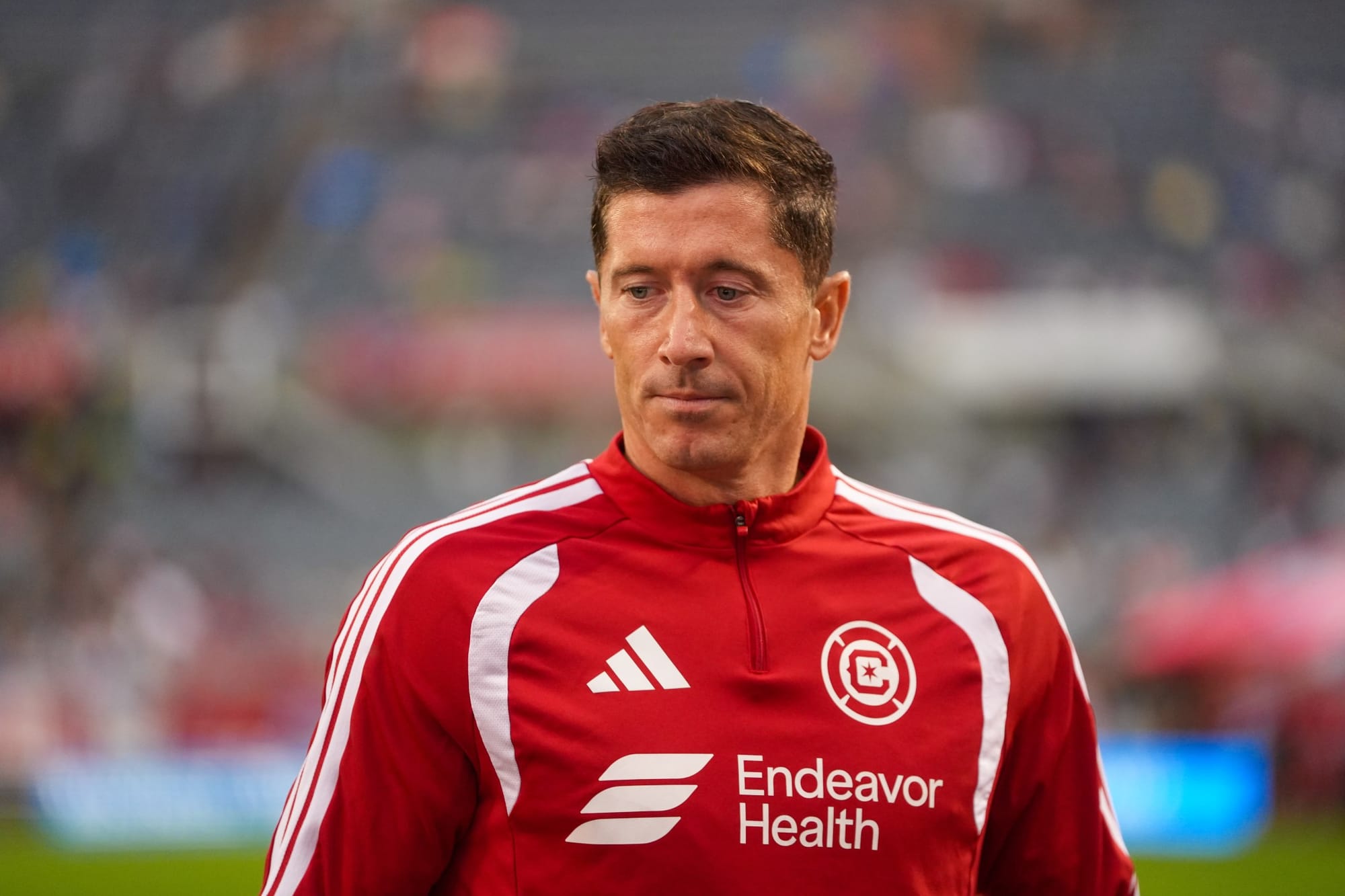
Here’s what Lewandowski had to say about all this: “Contrary to appearances, soccer is a very tactical sport… If you can get by with less running on the field, it means you understand soccer, and sometimes just because someone runs more doesn’t mean they’re doing it the right way, and the same goes after so many years of playing soccer, all that experience, knowledge of the game, how to move tactically on the field, how to position yourself sometimes between players or in other spots. I try to pass that on to the guys, and they’re very open to it; they analyze things too sometimes, and they offer their own tips as well.”
The Fire “have another gear”
After the team’s first win in 10 weeks (yes, the World Cup break does that number no favors), the quotes were notably upbeat. Read through them, however, and the common theme is that even in victory, the team isn’t where they think they can be.
Some of it is getting back to full fitness – from Lewandowski, something that both he and his coach identified – but also others. So far, the Leo Barroso that we’ve seen is not the one that we knew before his injury, losing one-on-one battles – and just getting outrun in ways we didn’t see from him previously.
That’s an obvious avenue for improvement, as is the continued growth in familiarity between the team and their newest player, something Philip Zinckernagel identified postgame, saying “We still have to understand and learn how Lewandowski moves, his behavior on the pitch, and what he likes and all that stuff. But it was just a matter of time before he kept going. The understanding is getting better and better.”
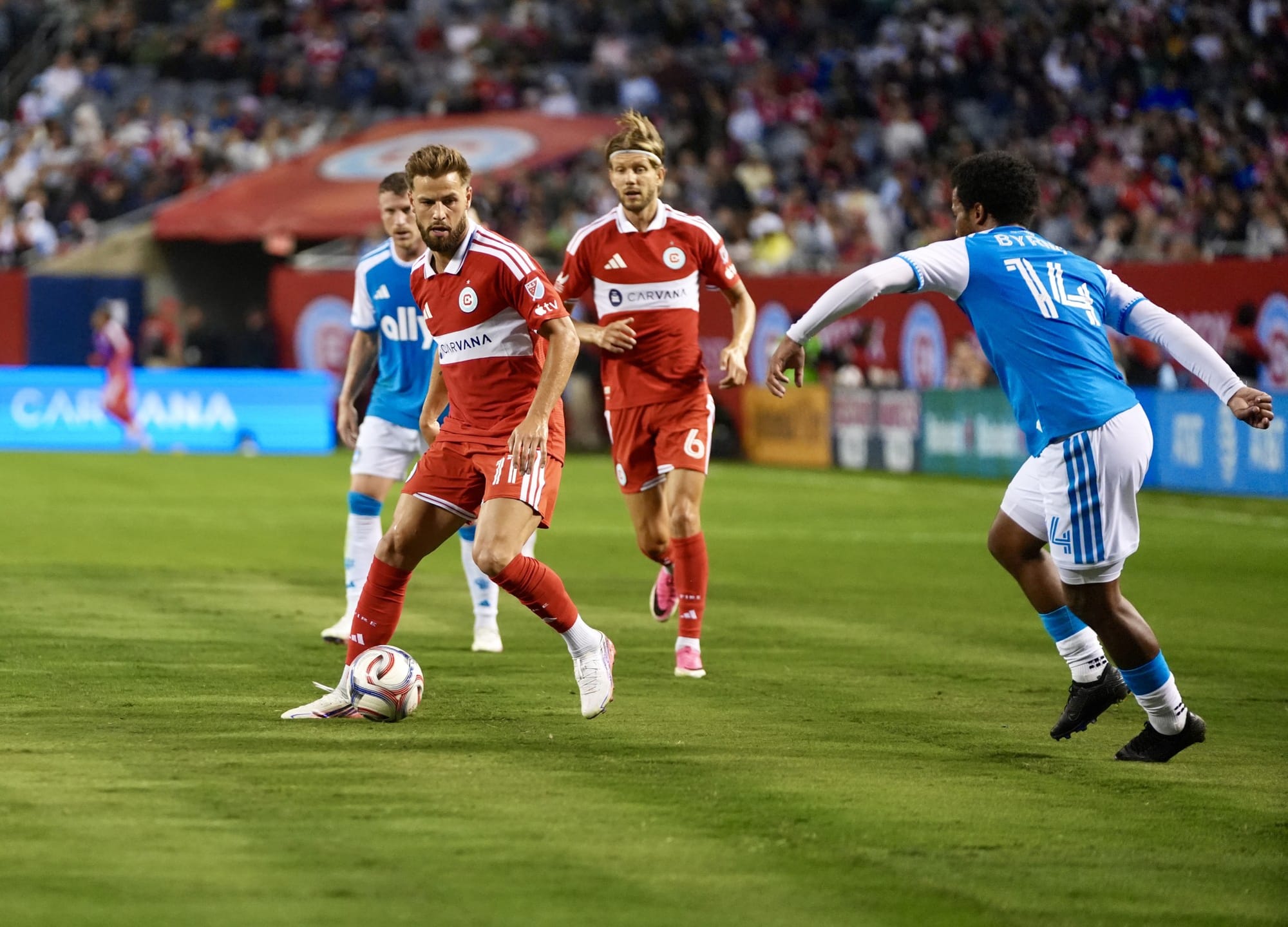
It’s easy to see how a few small changes – including to the pitch, which was in very rough shape after summer concerts at Soldier Field – could sum up to a big difference in how the team plays.
Berhalter said it directly: “I don't think we're there yet. I think we have another gear. I think we showed glimpses but there's more to come. As we get more comfortable with each other and what this new look is, I think we're going to create even more chances.”
Zinckernagel was even more blunt: “I think with a better pitch, we would have killed them. But it got a little bit exciting; we did well defensively as well, and I think that was a strong signal from the back as well. With a few tough weeks, it was nice to be solid defensively as well.”
Like this content?
Sign up for our newsletter, with weekly content coming straight to your inbox every Monday, starting on August 10.