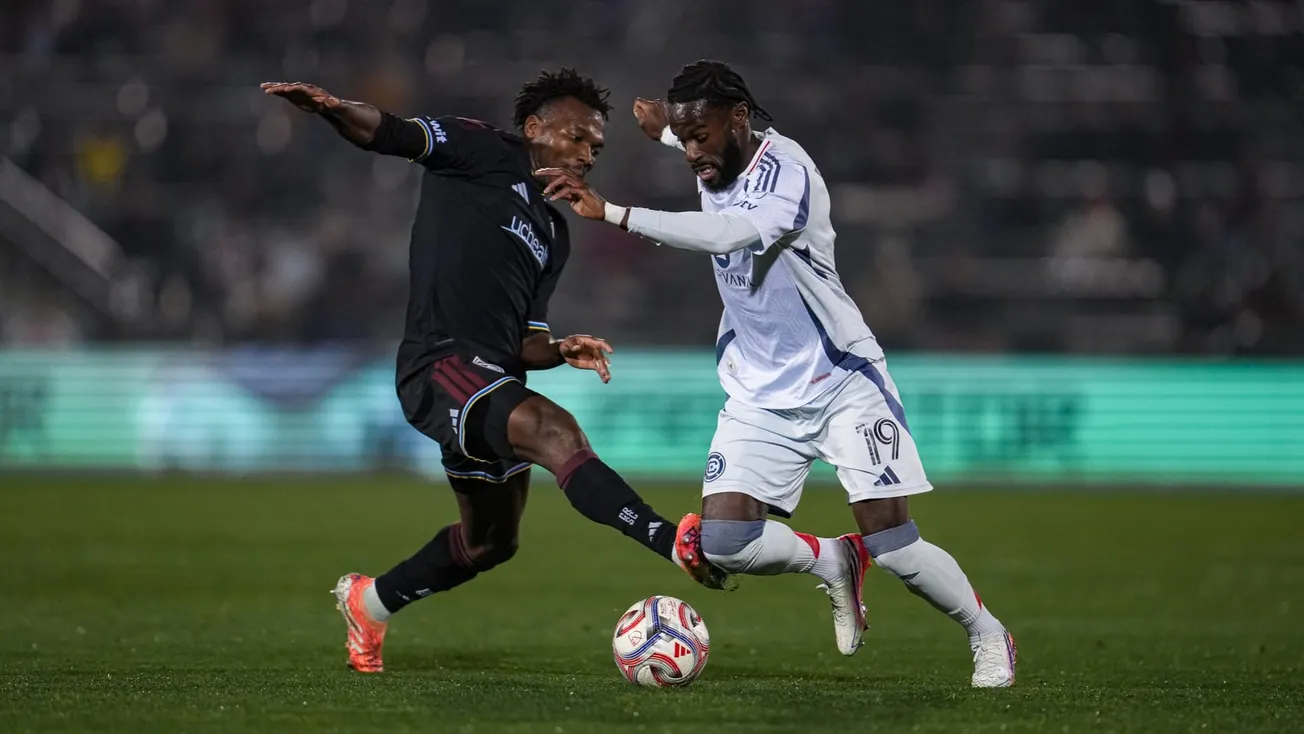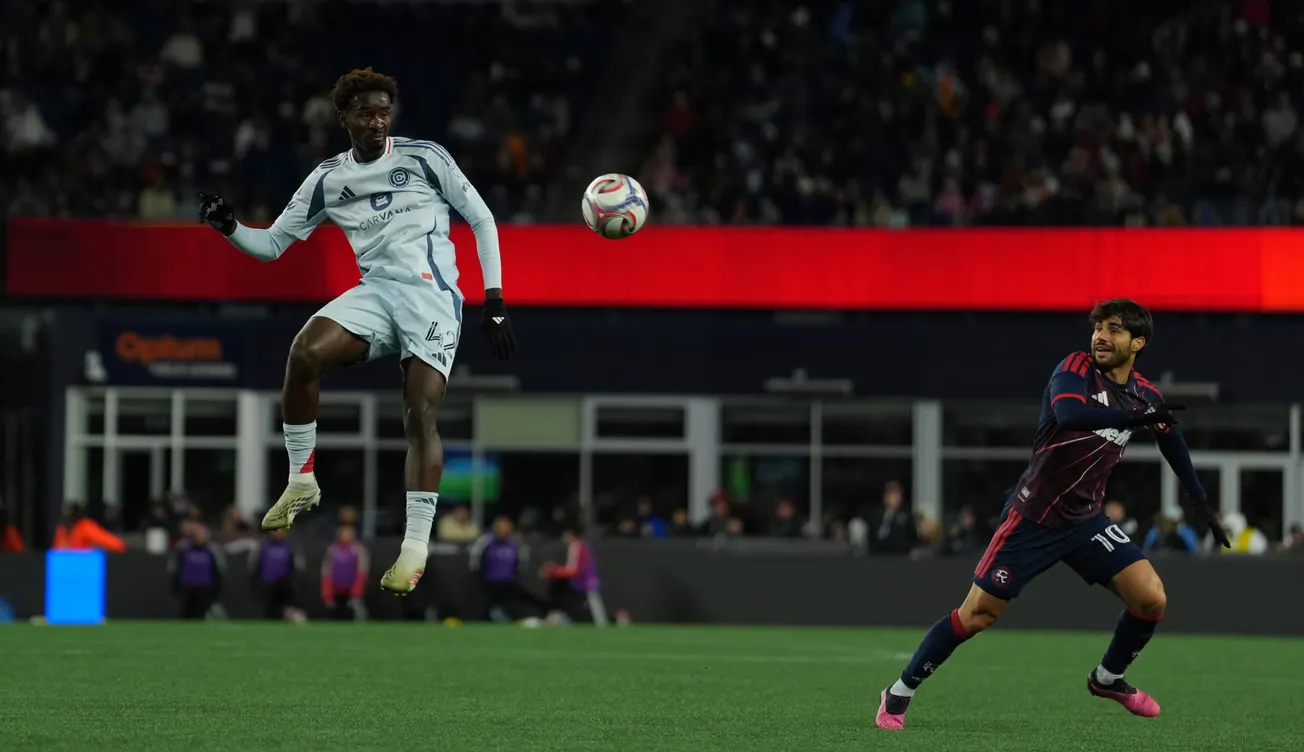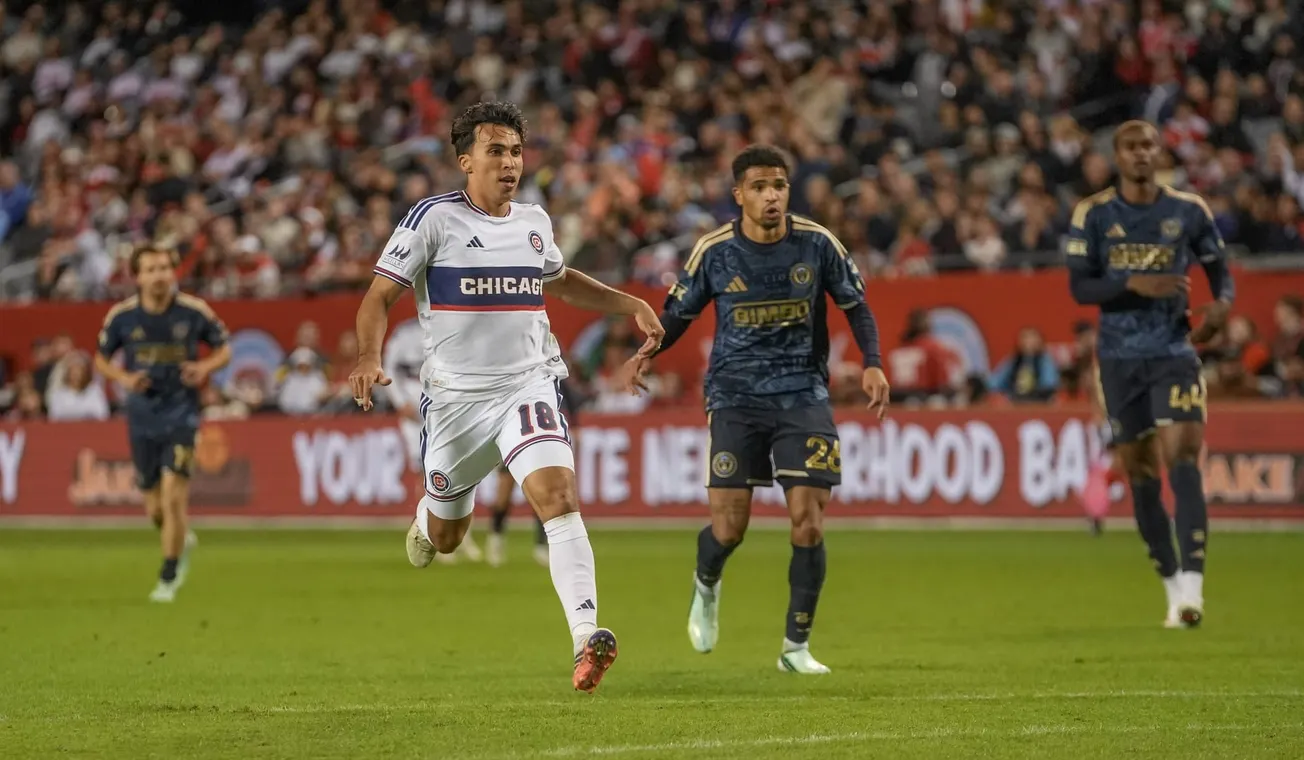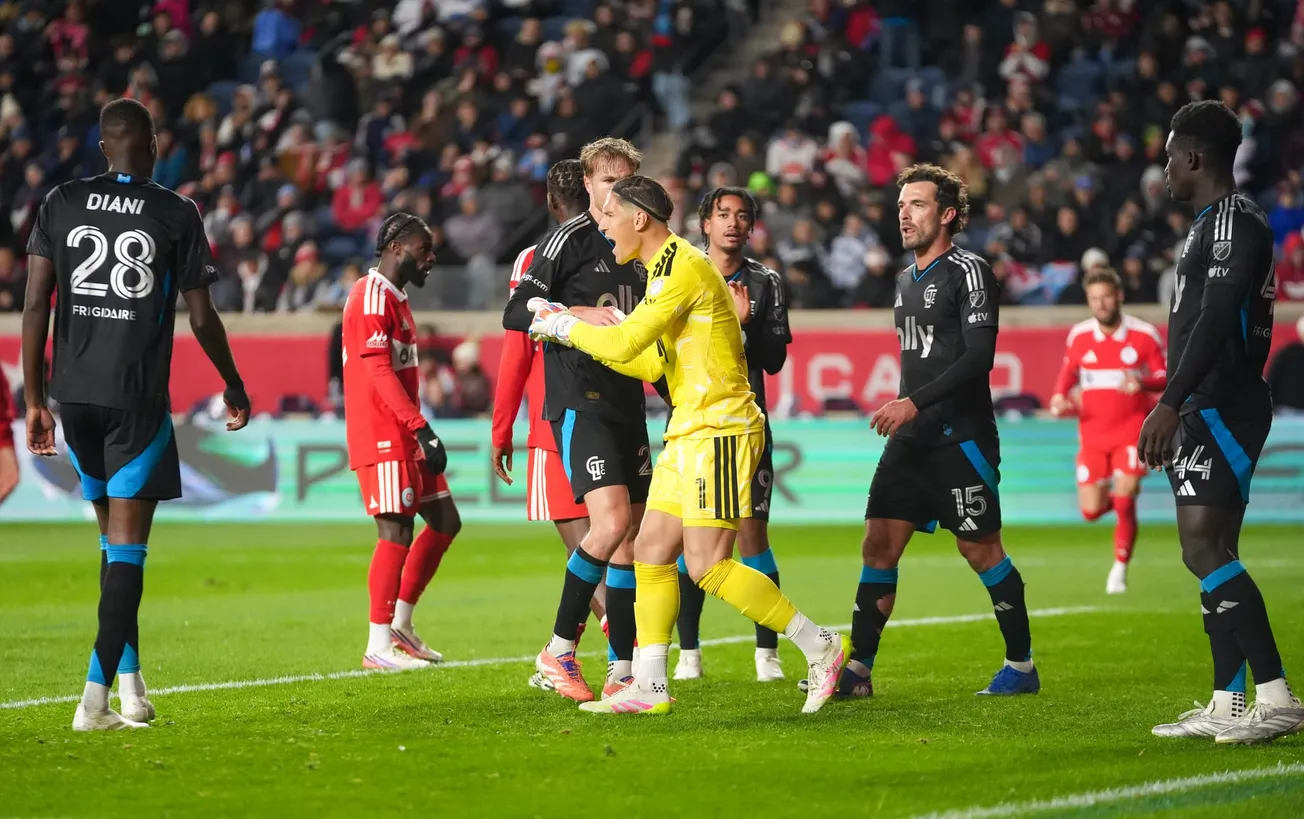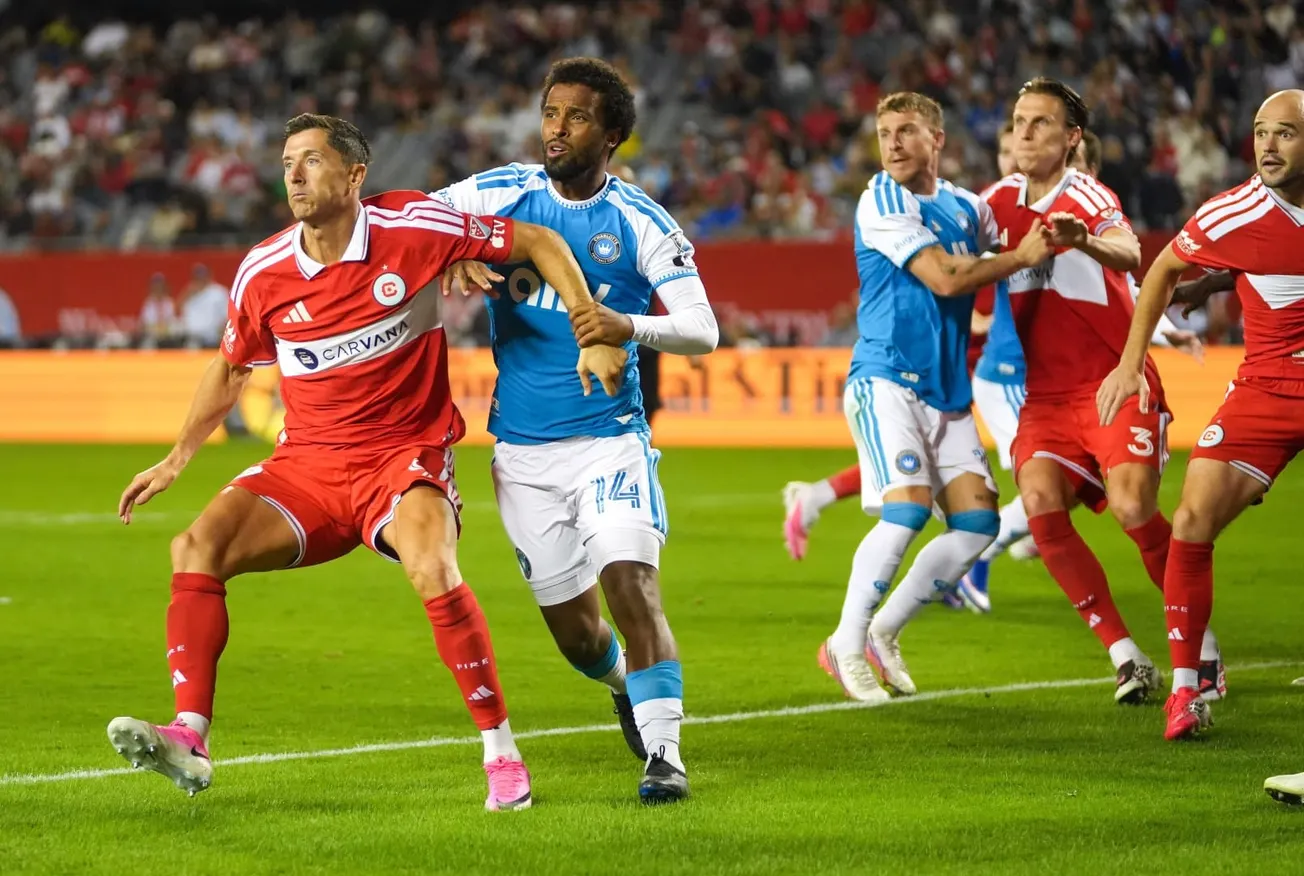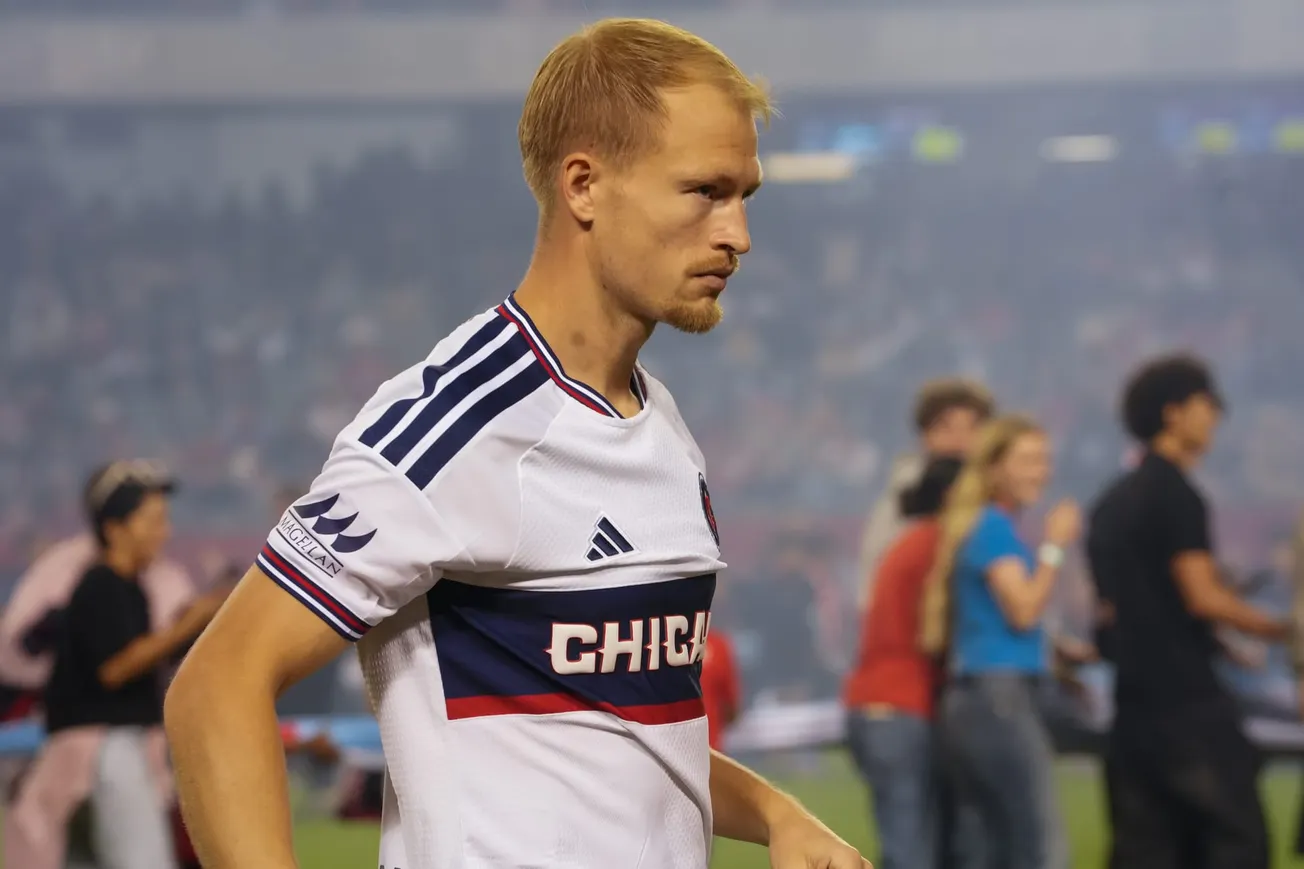

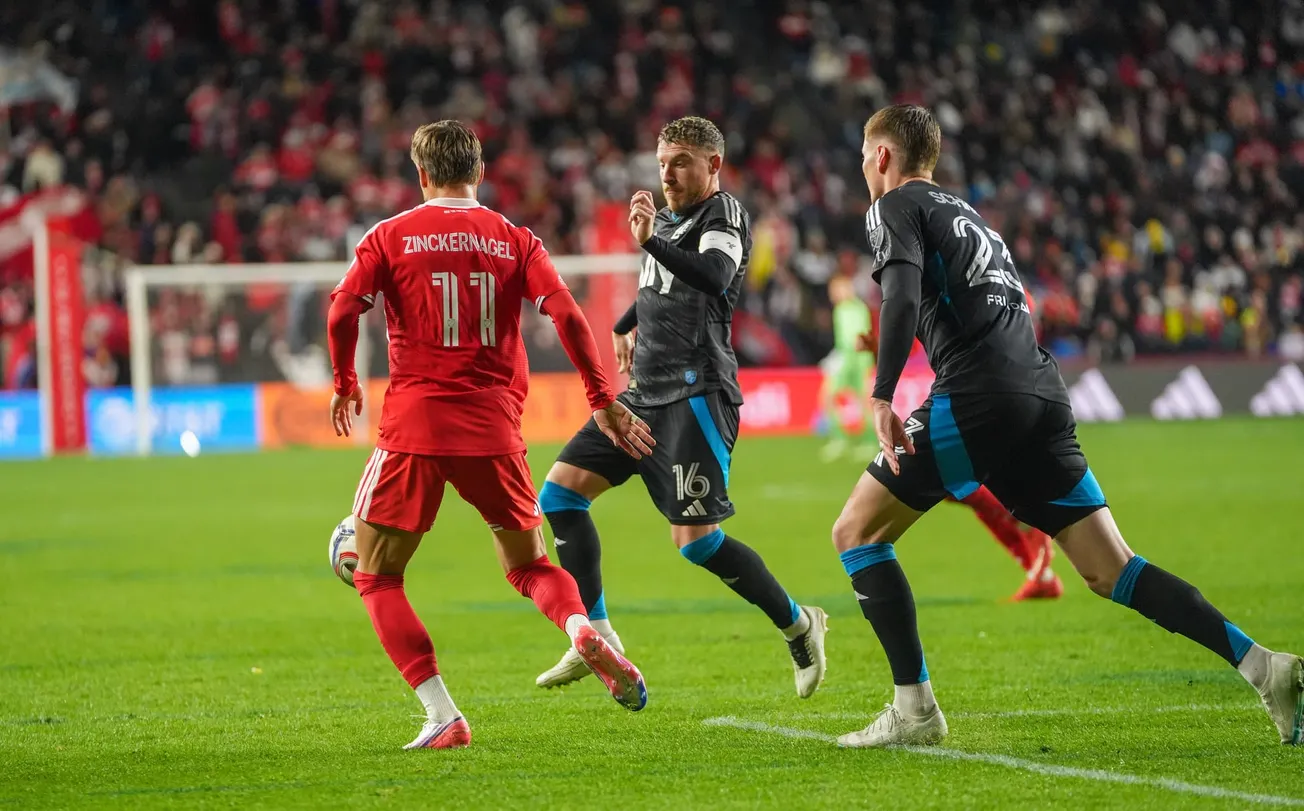
For the second year in a row, the Chicago Fire opened their first round playoff series with a come-from-behind performance that ended with heartbreak at the end.
The Fire are alive to fight another day but now head to Charlotte facing elimination.
Here’s what we learned from the last-kick loss at Bridgeview last night.
Sometimes, you are exactly exactly what you looked like
This was the 41st competitive game of the Chicago Fire’s season. With nearly 3,700 minutes of tape on the 2026 edition of this team, we’ve got a pretty good idea of who they are, even if there have been a few changes along the way.
For the first half-hour in Bridgeview, the Fire were the protagonists, maintaining the bulk of the pressure.
They had a few good chances, starting in the sixth minute when Kahlina was asked to make a save, leaving a rebound that Philip Zinckernagel sent above the net from about seven yards out, but for the most part, despite controlling the game, they didn’t feel particularly deadly.
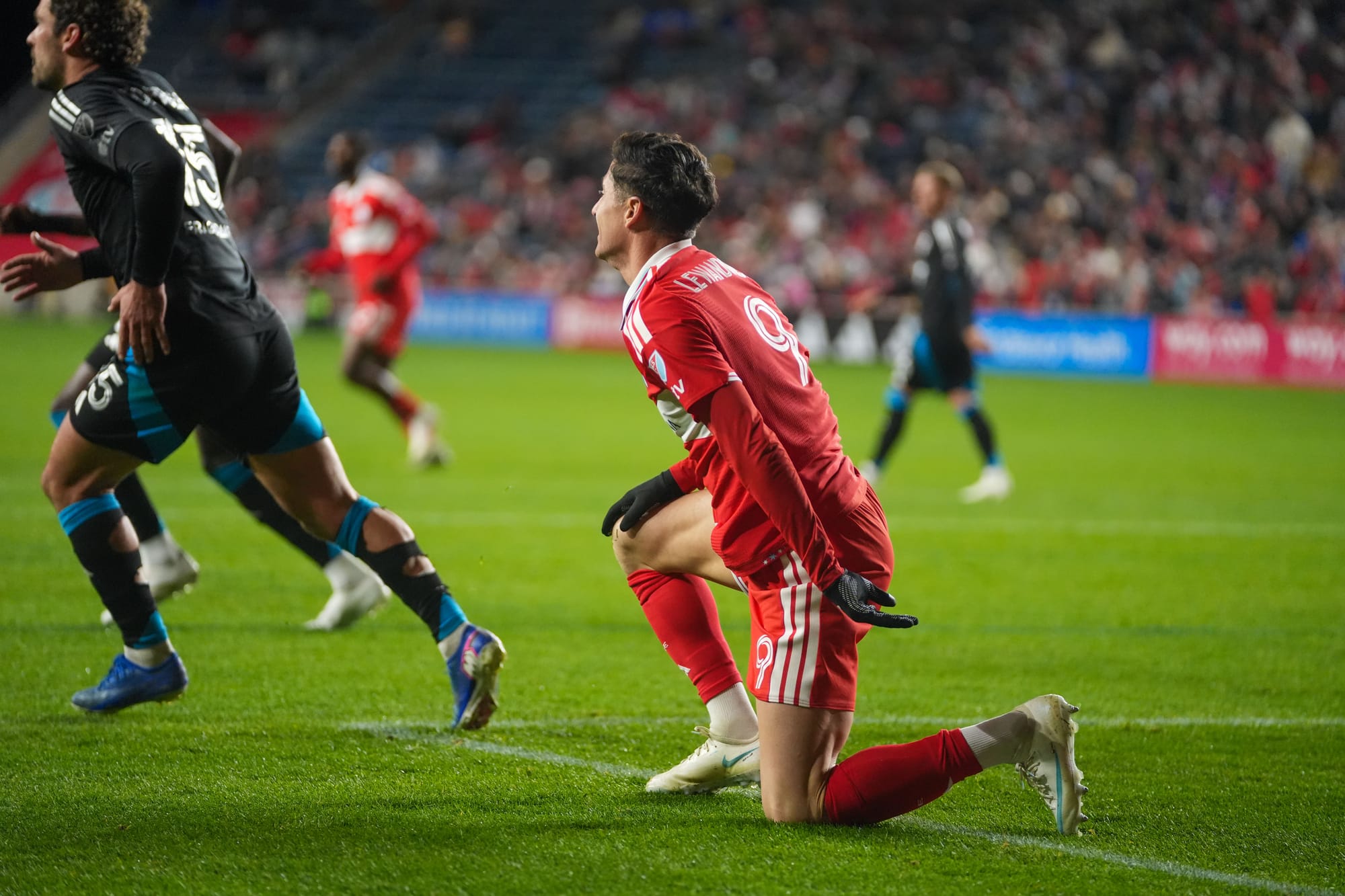
The midfield was adept at moving the ball but not at unlocking Charlotte’s defense. The wingers were fast but somehow that didn’t extend to arriving in dangerous areas when it mattered, and when the ball was in the box, Lewandowski was too often the man out of it, while other times, when he was open and in a dangerous position, he wasn’t given service.
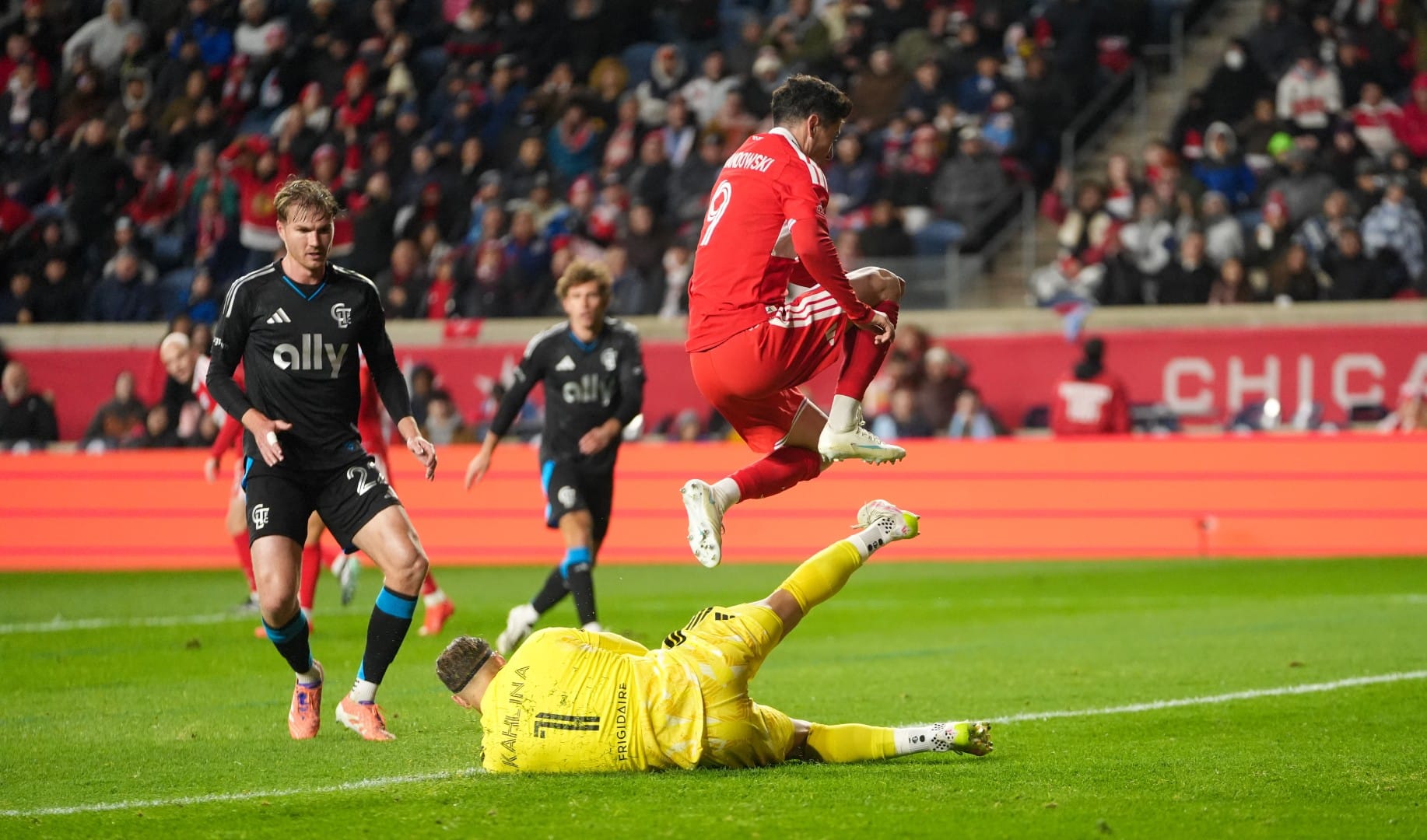
This is a game the Fire could have won. Charlotte had the higher xG (but I’m not really sure what you’re supposed to do with single game xG anyways), but a big part of that is that any half chance they had became a shot – some on target, some not – but a lot of the Fire’s better opportunities didn’t connect, including an opportunity for Lewandowski to put the Fire ahead if he’d connected with a well-timed ball into the box.
But the Fire didn’t win.
Since the World Cup break, there have been, largely, games the Fire should clearly win. Of those, they win most – but not all. But games that feel close? They haven’t won. They either control the game and are clearly the better team that deserves to win, or they don’t win.
As a result, since the World Cup break, now four months ago, the Fire have four wins over teams that made it to the playoffs proper: One in a rescheduled game against the Vancouver Whitecaps during the international break, one against a Portland team that, frankly, are not that great, and two over Charlotte. That’s it. Yes, there were results against other good teams along the way, including over a cresting Orlando that made the wildcard and a draw in Miami, but no other wins against the other teams that finished 7th or better in the standings.
And now they’ve got a loss to Charlotte in the first game this year when, as Gregg Berhalter pointed out after the game, the Fire faced the full Charlotte attack.
The Fire believe in freedom of the press
That isn’t to say that everything is static. Berhalter has said “PPDA” a lot in the past week, which is the number of passes that a team allows on average before committing a defensive action. As Doyle summarized it in his playoff review, it’s a rough measure of how much a team presses – basically, how much buildup do you let the other team have, and once your opponent has the ball, how quickly do you try to get it back.
The short version of why is that the Fire are now stepping in to intervene in other team’s buildups a lot sooner than they were in the first half of the year, and they were already one of the better teams at doing that.
After the loss, Berhalter summed up the performance like this: “I think we were close a number of times. I can’t really explain it. We had multiple chances to score multiple goals and we didn’t. There are some good things. The work rate was incredible. Some of those guys are going out cramping out of the game. Our PPDA was low again. There was good pressure on the ball, some good attacking moves, basically the performance checked out.”
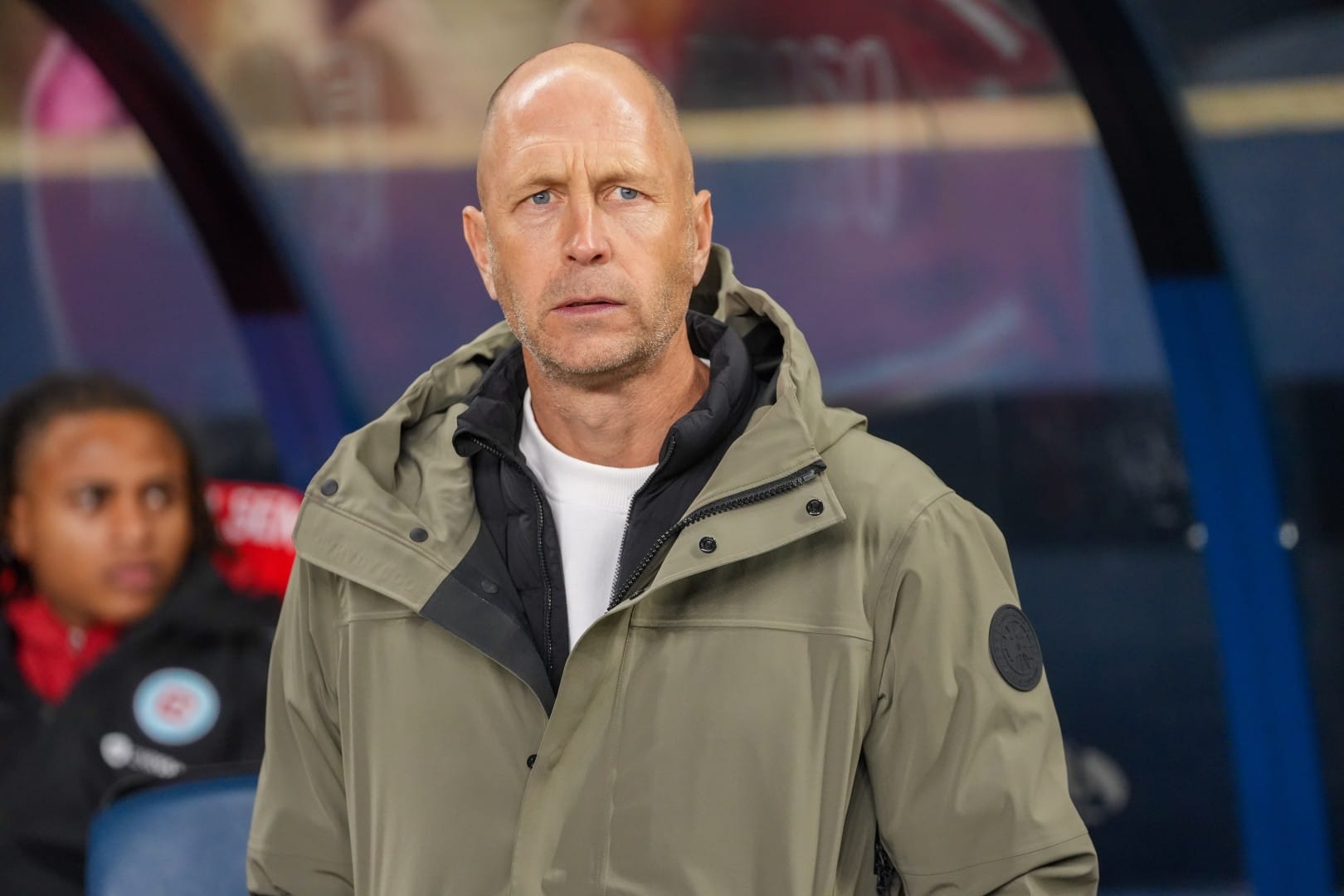
Berhalter’s use of the metric is not-so-subtly pushing back on the narrative that the team pressed more with Hugo Cuypers in the lineup than they have since Robert Lewandowski’s arrival. That’s true as far as it goes.
Here’s the issue with pressing, though: it only works if you do something with the ball when you win it back – particularly quickly, exposing weaknesses in the opposition’s rest defense, and if you’re pushing guys forward, that can also leave you exposed in transition moments.
And that’s just what happened, with the Fire pressing intensely enough that Charlotte Head Coach Dean Smith called Berhalter “bold” in the postgame presser, and Charlotte looking dangerous in the transition moments coming out of them.
Charlotte, meanwhile, have the highest PPDA out of any team not just in MLS, but the entire top 15 men’s leagues on the planet. They do. not. pressure. you. on. the. ball.
That’s why Mbekezeli Mbokazi was able to stroll 10 yards forward with the ball on multiple occasions without a Charlotte player coming anywhere near him.
Instead, Charlotte are confident that their defense will stop oncoming attacks, and try to score in transition moments, either through that or when the opposition creates a giveaway.
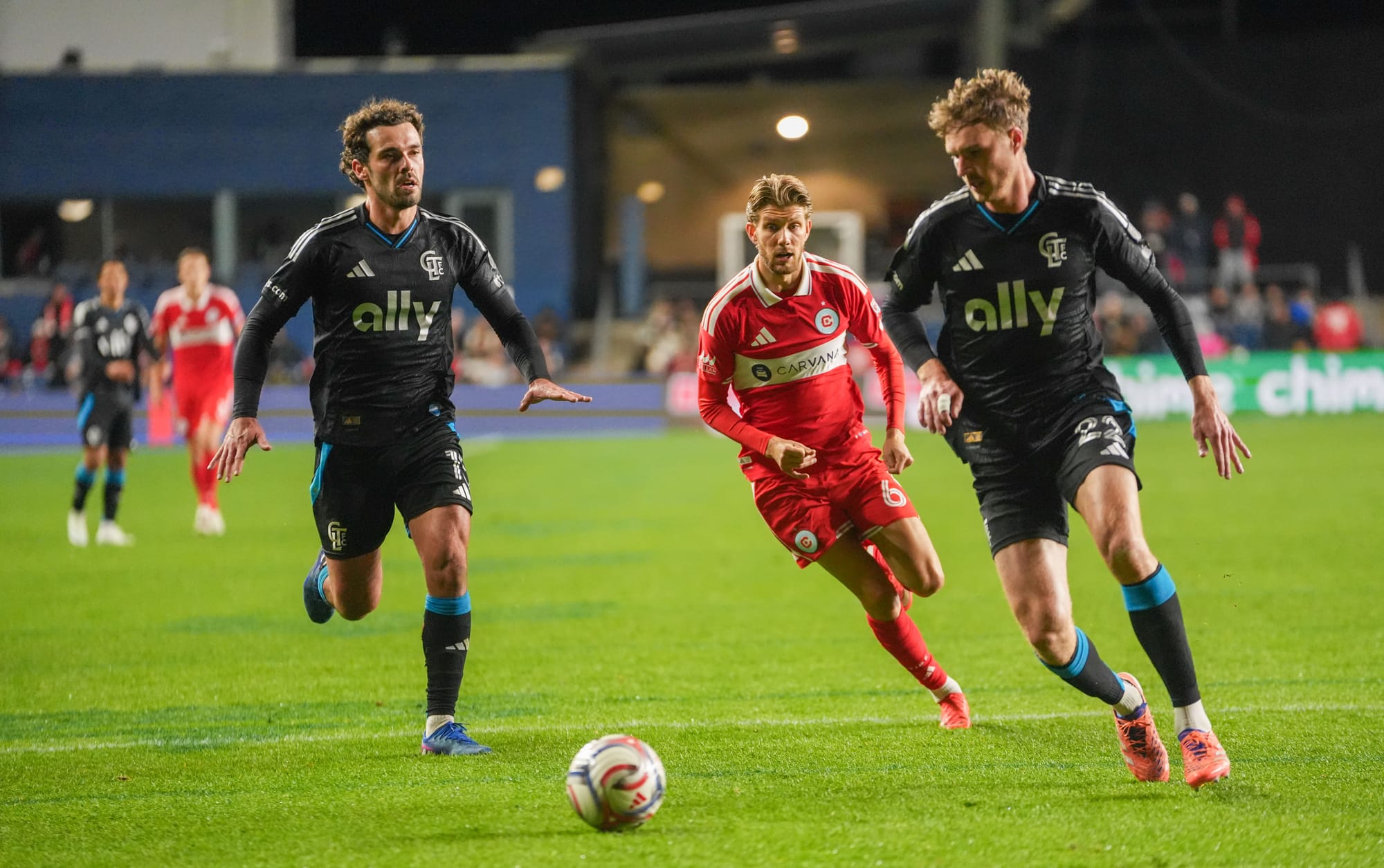
And if they can’t do that, they know that being dangerous in transition can lead to chances off set pieces. And that’s exactly how Charlotte scored both goals.
The defense certainly isn’t “lock down” anymore
Early in 2026, the Fire basically flipped the script from 2025. We’ve talked about it a ton but for anyone new: Last year’s Fire could score at will but leaked goals like a sieve.
Early this year, the team was scoring at a respectable, but less-than-stellar rate, but the defense looked solid in ways that would have been unimaginable just a few months prior.
Then, for a few reasons – Mbokazi’s injury is very, very high on that list, and he has not looked 100% since – the Fire stopped looking like that. As a result, the Fire had five clean sheets in the first half of the year, but the only one in league play in the second half was the win away to Charlotte.
I highly suspect that’s part of why the team started pressing more intensely.
But it’s also meant that the Fire have looked a lot more like the 2025 edition, especially in moments when it matters most.
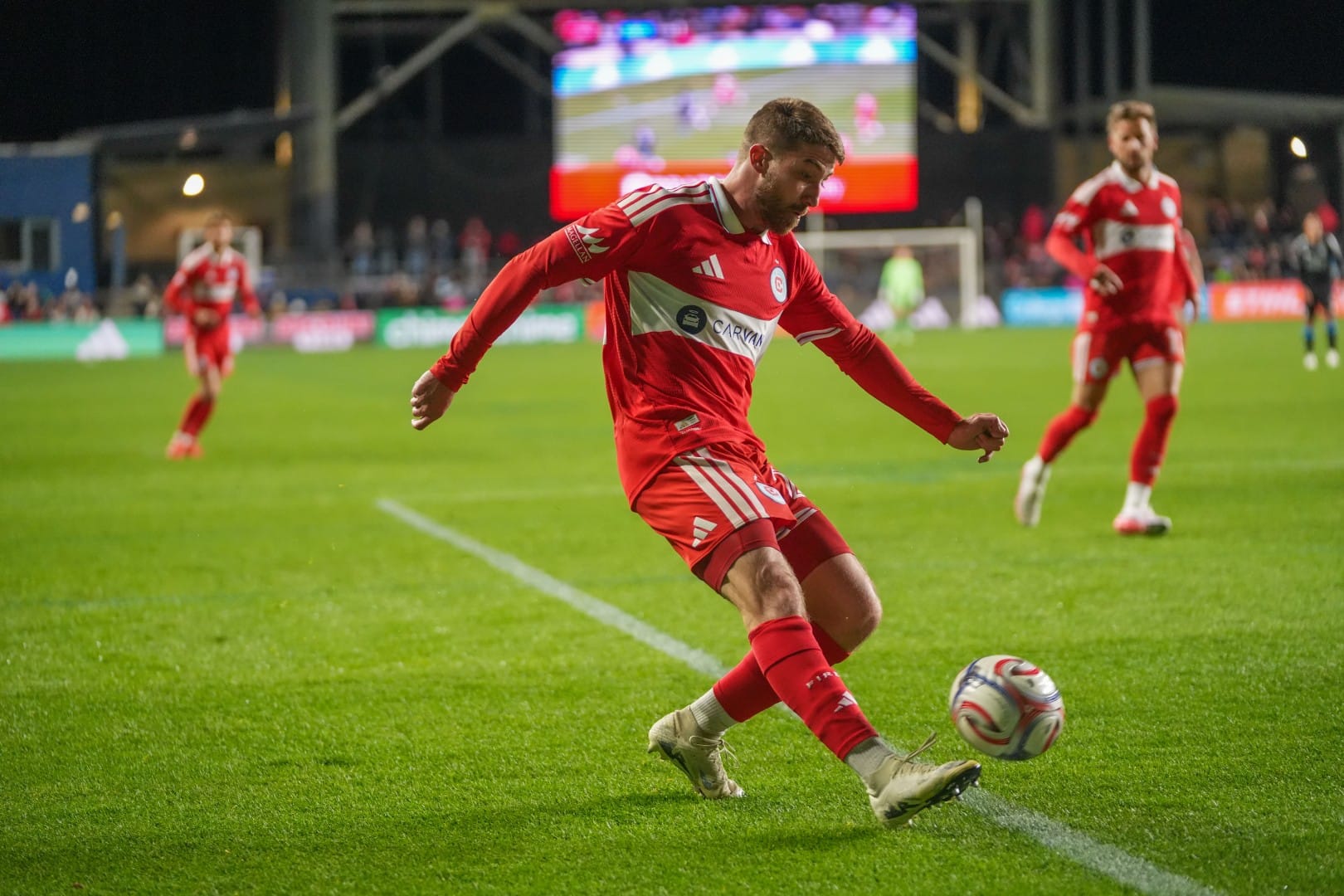
Some of it is the opponent – Charlotte’s roster is far from perfect, but they do have one of the top attacking quartets in the league – but some of it is very much due to the way the Fire are playing.
And in this one, a lot of that goes to Jack Elliott. He had a very, very rough outing, letting Charlotte attackers rush past him, committing careless giveaways (leading indirectly to Charlotte’s first goal) and, well, there was the handball.
“It’s a tough one,” Berhalter said of the call. “When you look at it and the guy belts it off, maybe has a great shot, Jack [Elliott]’s two yards away and his hand is away from his body.”
Listen, I’m sympathetic: Elliott jumped, well, the way that humans have evolved to jump in the air. Technically, the rule is that he can’t make himself “unnaturally bigger.” I don’t think he did: He jumped. And I’ve always thought in those situations – where the play wasn’t called on the pitch – that VAR intervention should happen only if it looks like a player makes some attempt to make themselves bigger (otherwise, how is it a “clear and obvious error?”). Clearly, Elliott didn’t make an effort to make himself bigger as a result of the ball coming towards him. From that distance, reaction was impossible.
Still, that’s the way the rule has consistently been called, particularly in MLS, where going to the monitor all but means that a verdict has been rendered, and Elliott should have known better.
Now Berhalter has a choice for the must-win game in Charlotte: stick with Elliott, the team’s captain, or play Andreas Hanche-Olsen, who doesn’t have Elliott’s height nor any chemistry with Mbokazi, the team’s most talented center back but one who certainly doesn’t play the position the way it’s written in textbooks.
If I had to bet, I think the Bundesliga veteran gets the nod in Charlotte.
Brady wasn’t told ahead of time
In the week leading up to this one, The Hot Line (subscribe for free if you haven’t) focused on what seemed like a wild hypothetical: If it looks like a game is going to PKs, should Berhalter take out Chris Brady, the team’s locked-in starter who doesn’t have a good track record from the spot, and put in Josh Cohen, the team’s veteran backup who, from college through play in Europe, has an amazing record at stopping penalty kicks?
Well, that’s what happened, and in a cruel fate, Cohen faced a penalty – singular – and saved it, but that wasn’t ultimately enough.
So, when was Brady told that that was going to be the plan?
When he saw his number lit up in red next to Cohen’s in green.
“We didn’t prepare Chris for it,” Berhalter said after the game. “We didn’t think it was necessary to tell a guy if we are going to penalties we are going to take you out,” saying beforehand the decision was “not a knock against Chris, it’s a compliment to Josh.”
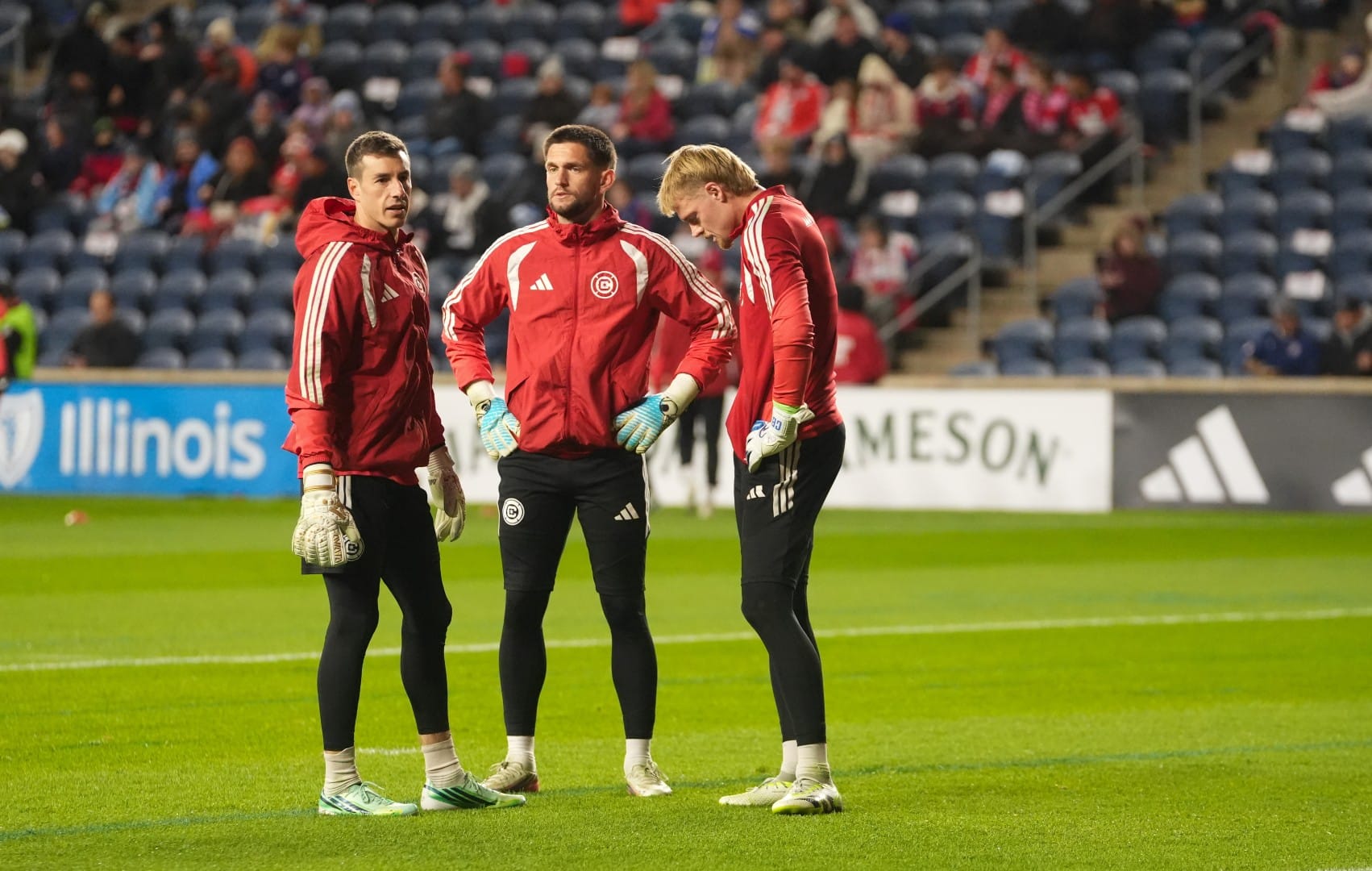
Here’s the thing: I think it was the right call. Cohen’s performance from the spot is obscene, and penalties have been a rare weak point in Brady’s game.
Still, let’s hope Brady sees it that way or it’s going to be a fun flight over to Charlotte after Thanksgiving.
The Fire really need to pass out maps to Bridgeview
Or something.
Listen: It was Empty Seat Week in the Audi MLS Cup Playoffs™, with notably sparse crowds from Miami, where a new stadium and the GOAT aren’t enough to move tickets, to Dallas, where it looked like about half the seats were empty – which is even more remarkable when you remember that Dallas’s capacity is already down to just over 10,000 because of ongoing renovations.
Some of it was scheduling, with MLS, being MLS, inexplicably playing games in markets in the south, where college football is basically the state religion on Saturday, while playing games in NFL markets like Chicago on Sunday (and somehow managing to conflict with the NHL in Vancouver on Sunday in a game that also involved a Chicago team). Creating a schedule with that many conflicts in the sporting calendar is remarkable – particularly when you somehow extend kickoff weekend of round one all the way to Tuesday.
Still, this was Robert Lewandowski’s most consequential game since coming to MLS, and the Fire still only managed an announced crowd of 14,879. To their credit, that number feels pretty credible, unlike the sellout reported in Dallas.
Very much not to their credit, it’s still a colossal marketing failure.
Last year, the Fire weren’t sure until Decision Day if they would make it into the first round proper or if they’d have to play in the wildcard game. Between Decision Day and the Fire’s game against Orlando, the team had four days, and they still managed to get a crowd of 13,783 out to Bridgeview on a Wednesday.
Nine days later, in their only home playoff game on a weekend last year, when the team’s back was against the wall against the Supporters Shield-winning Union, they managed to get 2,552 more fans than they announced in Bridgeview last night.
This year, they had more than two weeks to sell tickets, but in part of the time leading up to the game, the Fire’s website featured information about their 2027 sprint season kickoff luncheon. Big hint, guys: That’s what you do after the season is over.
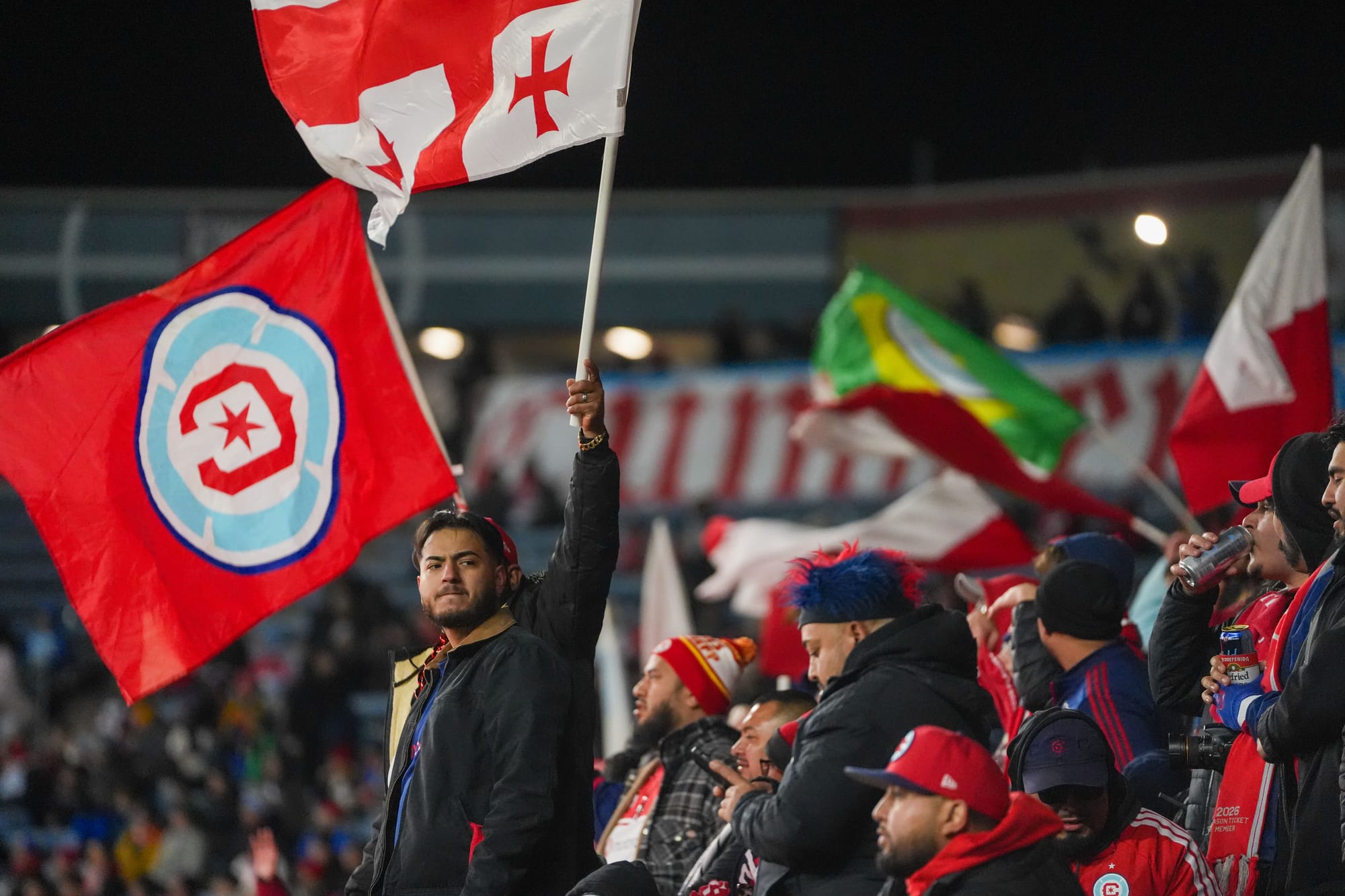
A few positives: One, the Supporters Section was full. And it was loud. And it was energized. A lot of the people who, honestly, have the hardest time making it out to Bridgeview given how inaccessible the venue is by public transit made it out. (Though at the same time: The Supporter’s Section was full! They were energized! They were providing a great atmosphere, and not enough people got to see it live because of all the empty seats!)
Two, yes, the Fire currently have a $850 million, state-of-the-art facility under construction in the South Loop that should mean that no Fire fans will have to schlep out to Bridgeview in just a couple of years.
But the team is spending $20 million a year on Robert Lewandowski, the second-highest profile player in the league behind Lionel Messi. Privately, team staff expressed confidence down the stretch, feeling that the team’s window of contention is open now.
Lewandowski’s guaranteed years on his contract end before McDonald’s Park opens. You can’t tell me that Chicago’s population doesn’t know where Harlem Avenue is!
They need to do more to get people to come out to Bridgeview.