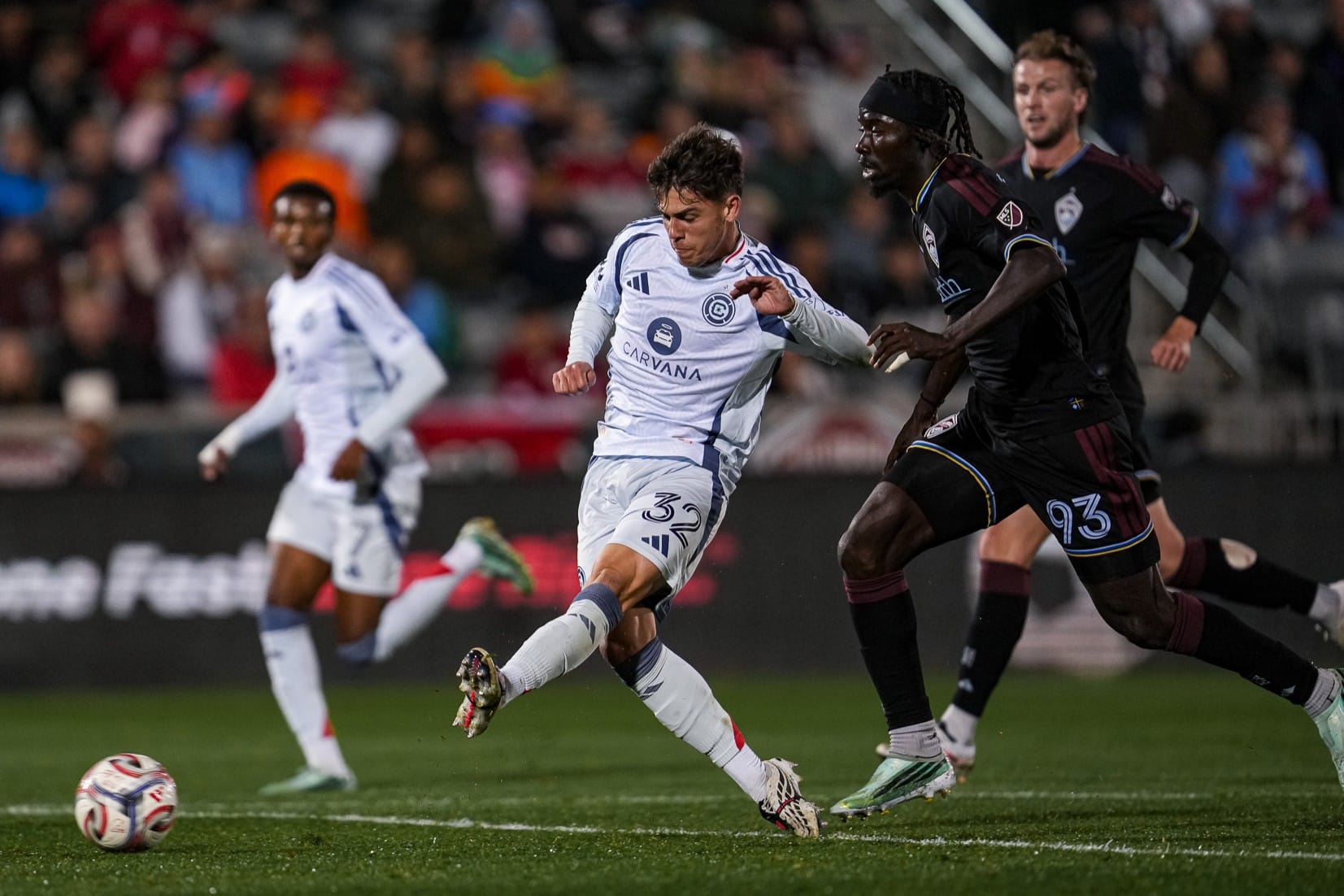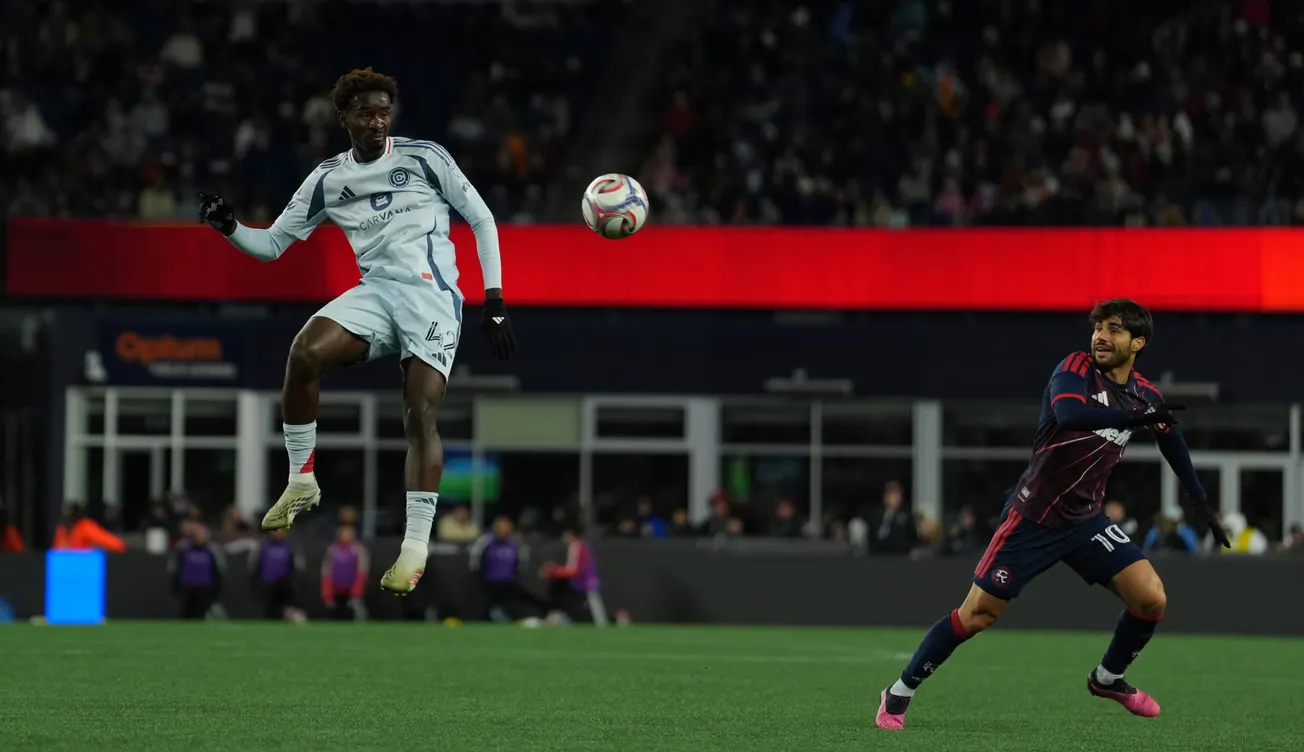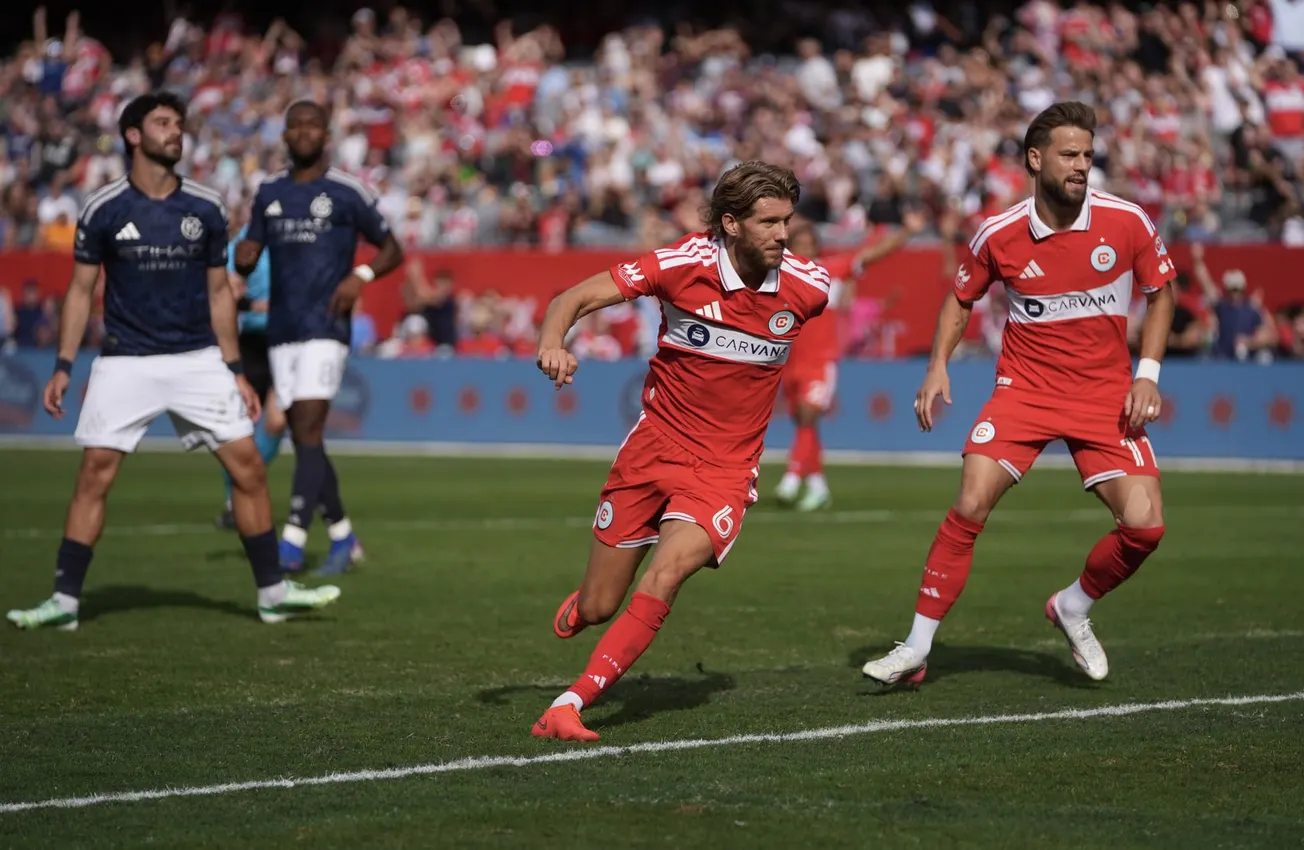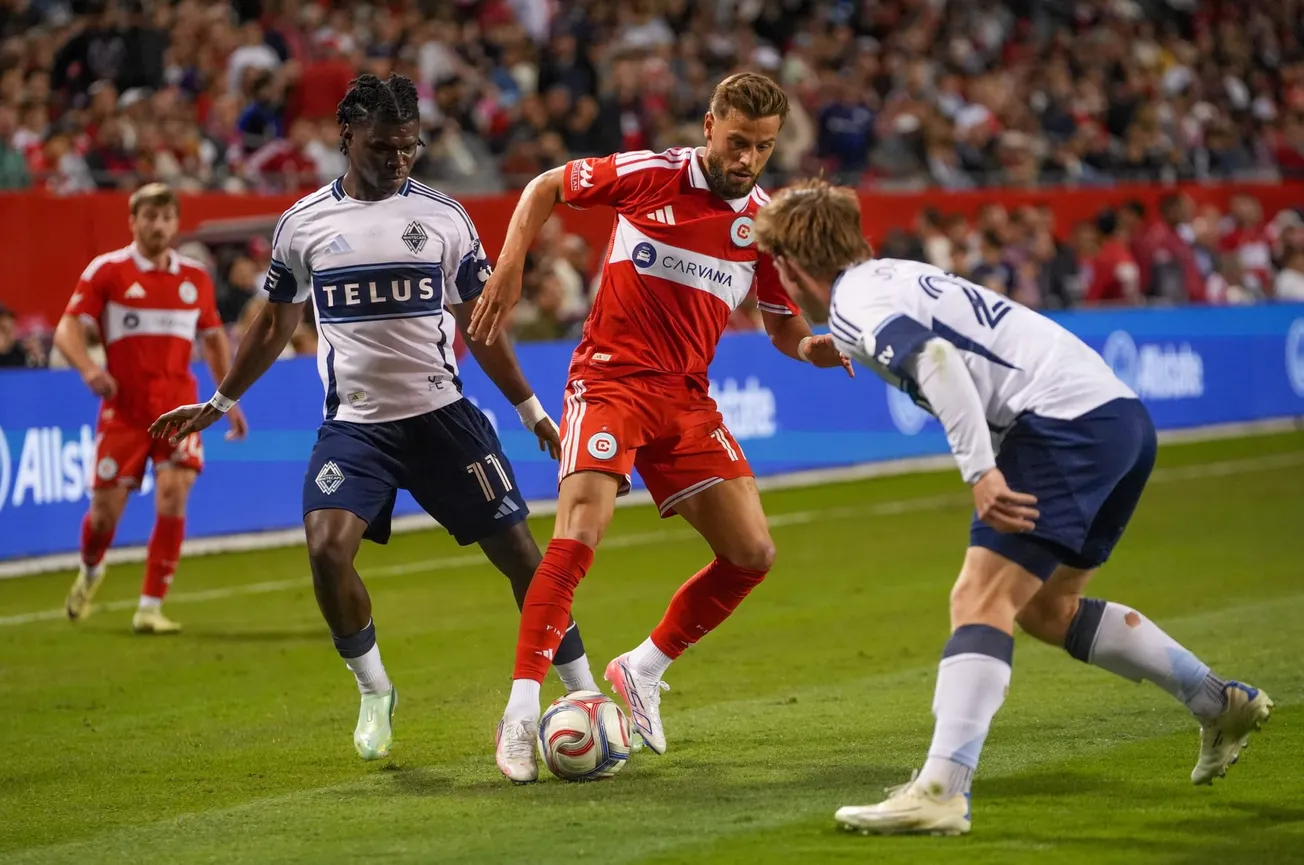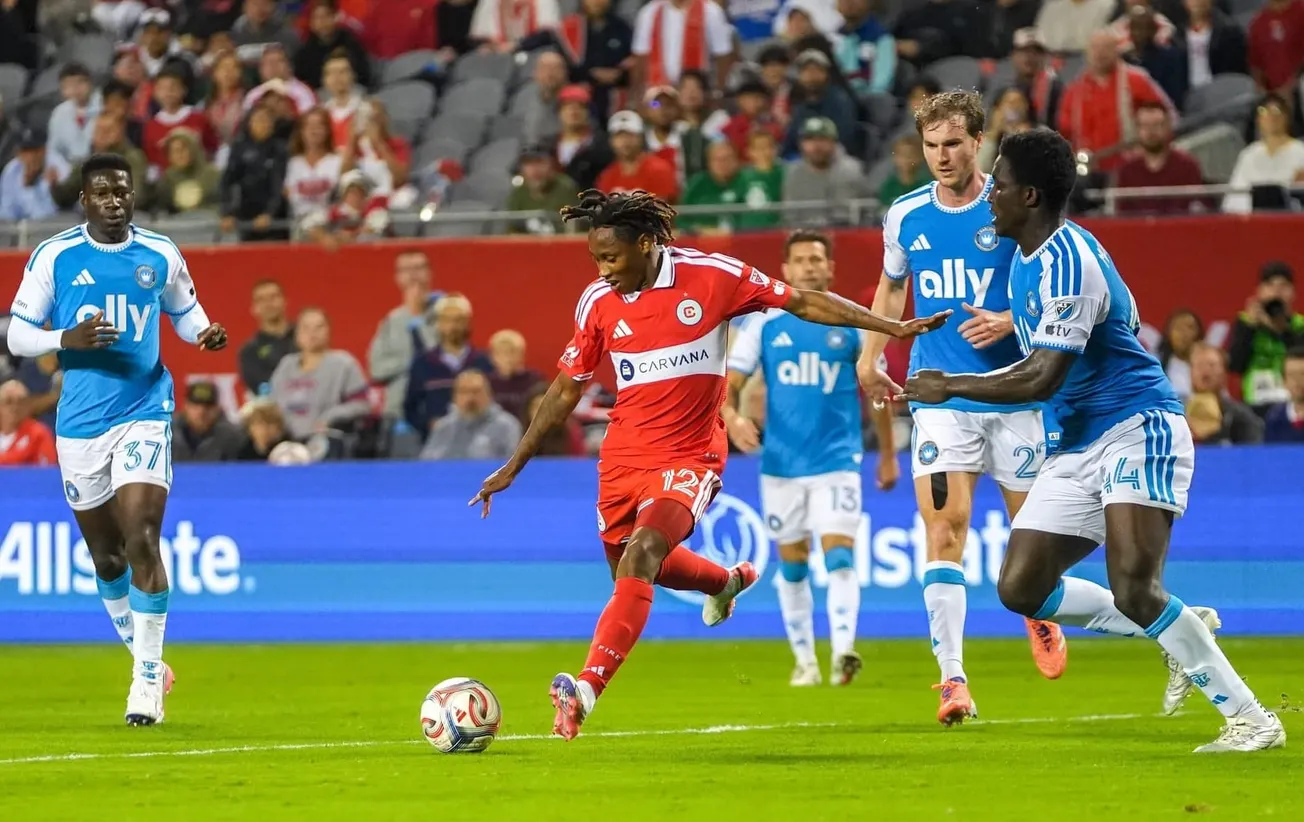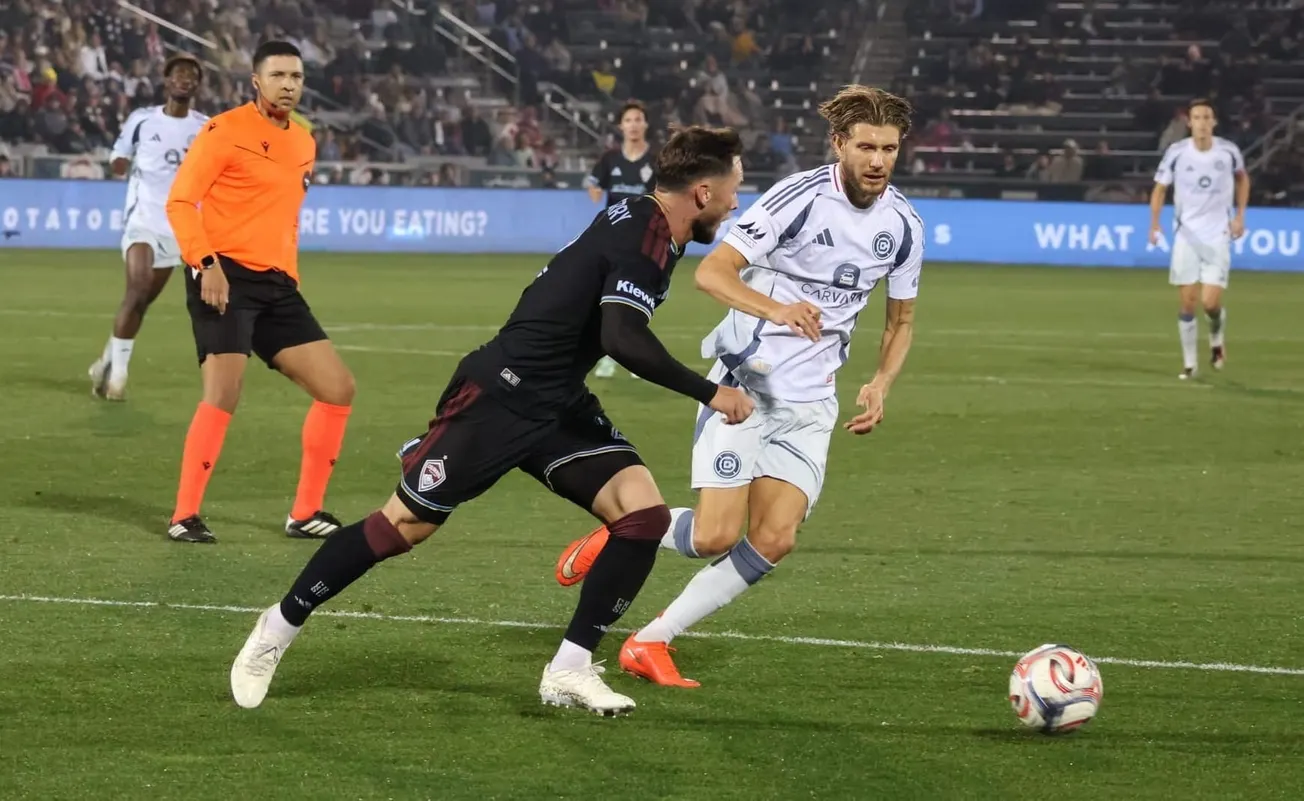

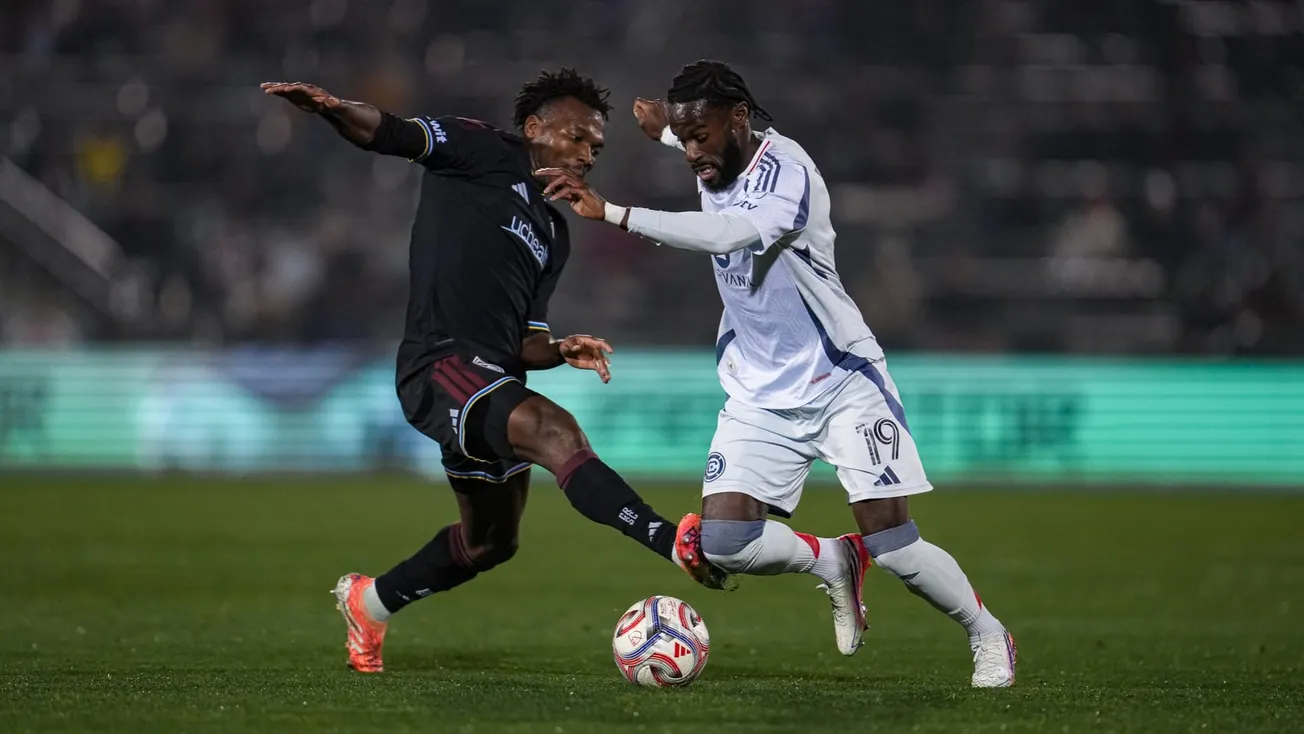
The Chicago Fire fought back to get results in two this week, with a point at home and three on the road. Now 33 games into the regular season, the team continues to shift and evolve, now with eyes firmly on the playoffs.
With just one game left in the regular season, here’s what we learned in the regular season’s Soldier Field and road finales.
The team can battle back
For the past four games, including twice this week, the Fire conceded first. That’s now happened in five of the team’s previous six games, including the team’s 2-1 win over NYCFC earlier this month. That’s five times in one month. It also happened three times in September. Before that, it had just happened five times all year.
Look: You’re not going to get me to tell you that it’s a good thing that the Fire have made a habit of letting the other team go ahead first. It isn’t. But in October, the Fire are 3W-1D-1L when it’s happened (their only other loss this month came against the Union, when the team scored first).
André Franco, now returned to play (more on him later, don’t worry) was unsurprised that the team came back twice this week, getting a win and a draw. “I think that's a main characteristic of our team,” he said postmatch. “We never give up. We always try to win the game. Don't matter where we play or who we play. We always play to win.”
His coach, naturally, concurred with the result, but didn’t like how they got there.
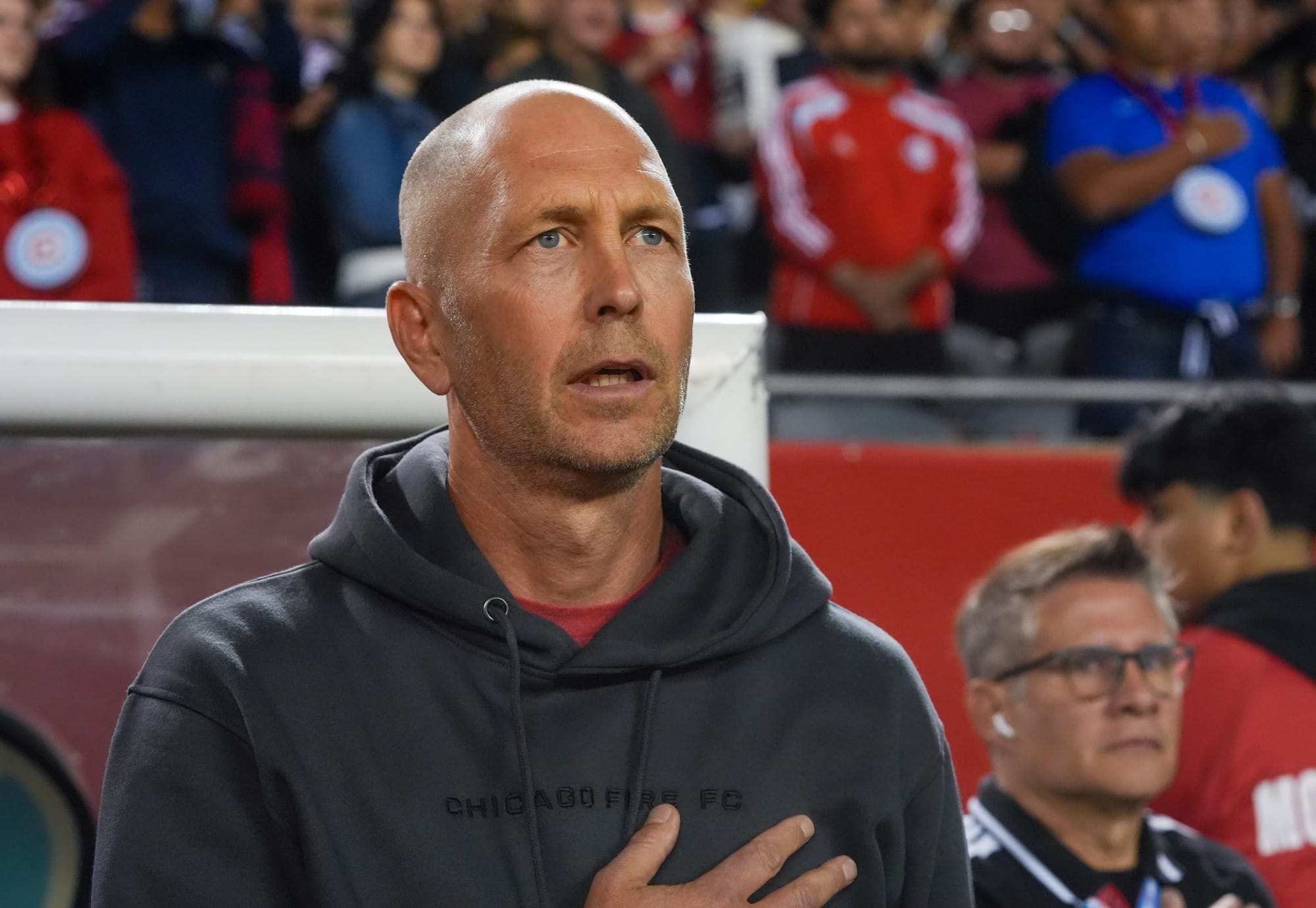
“It's good that the guys clawed back into the game,” Gregg Berhalter said after the game, also saying that he was “still not happy with the goal we conceded” to go down 1-0, “still not happy with the pressure. thought it went from outstanding to poor over the course of the game in terms of the varying degrees of it. But I think the consistency and the effort was there in terms of the effort and that was always important. We didn't do the best job at times pressing, so that opened up spaces, and that's how they scored their first goal.”
Scoring first makes the team more likely to win. That is an absolute no-brainer. But at the same time, in the playoffs, it’s good that the team now has reason for confidence that if they do concede first, they can still battle back to win.
The Fire have their “Mr. October”
Since coming to Chicago last year, Jonathan Bamba has played 55 games in MLS play for the Men In Red, and over that span, had four games with multiple goal contributions.
The first was his first MLS appearance against Columbus at the start of the 2025 season. All of the rest have come in October, including the Fire’s win over Colorado and draw with Orlando this week as well as the first game of the playoff series against Philadelphia last year.
Between Orlando and Colorado, Bamba had three goals and an assist this week, and easily could have more of both.
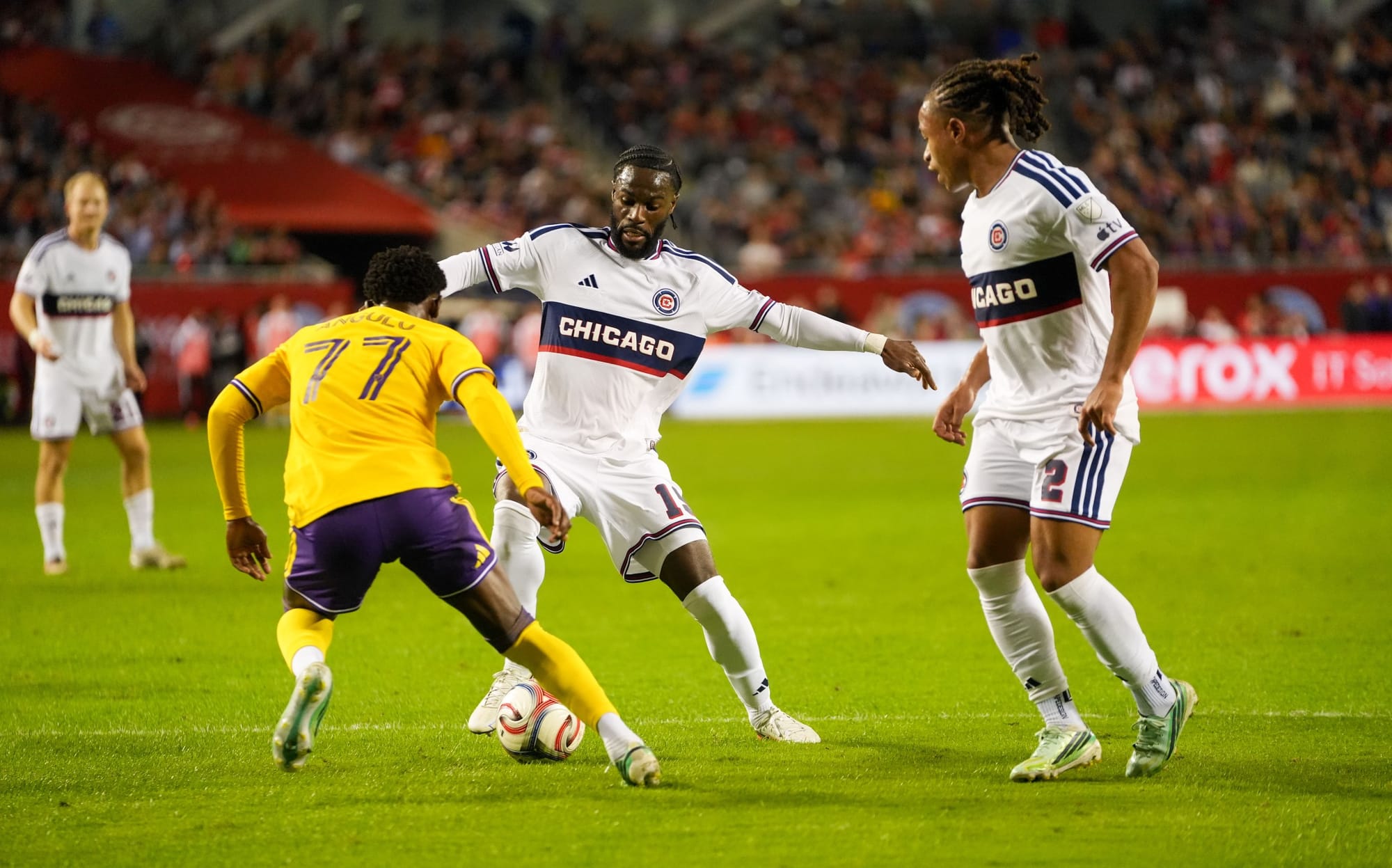
It’s refreshing to see from Bamba, who has had, by pretty much any measure, a rough time since coming to MLS, between long spells of playing well but being unrewarded for his efforts and facing non-soccer related absences that took him back to his native France.
You could ask where this version of Bamba – confident in front of the net, seemingly always in the right place at the right time – has been all year, or you could just be glad that the Fire’s second-best paid player is producing at a high level right as the games start to matter the most. He made team of the matchday after Wednesday’s draw; his brace against the Rapids all but assures him of another nod in this one.
I say just take it: At times, particularly this year, Bamba’s confidence on the pitch was clearly lacking. He would clearly be too far in his own head to take advantage of his speed and skill on the ball, and would instead try to over-complicate things. Taking three too many touches, trying to find the absolute perfect pass rather than taking a quality chance himself.
That makes it all the more promising that so much of what Bamba showed us this week looked so simple: A quick flick to tap in a goal against the Rapids. Being the first to pounce on a lose ball off a deflection to set up Maren Haile-Selassie for a goal against Orlando.
“With Jo, it's really simple,” Gregg Berhalter said after the game, “just keep doing what he's doing. He has the skill. He has the technical ability. So for him, it's about, how does he continue to get in good attacking positions? And then when he is, how does he finish them off? His goals are a great example of that."
Those things might actually be simple, but to set yourself – or your team – up for those opportunities, you need to do all the right things to put yourself in that place. He’s now doing that – though it’s no surprise to his teammates. “We know what kind of player he is and the quality he has,” Maren Haile-Selassie said after Bamba’s performance off the bench on Wednesday. “I’ve said it before, that it’s not always obvious or visible for outsiders but in the team we know the quality he brings.
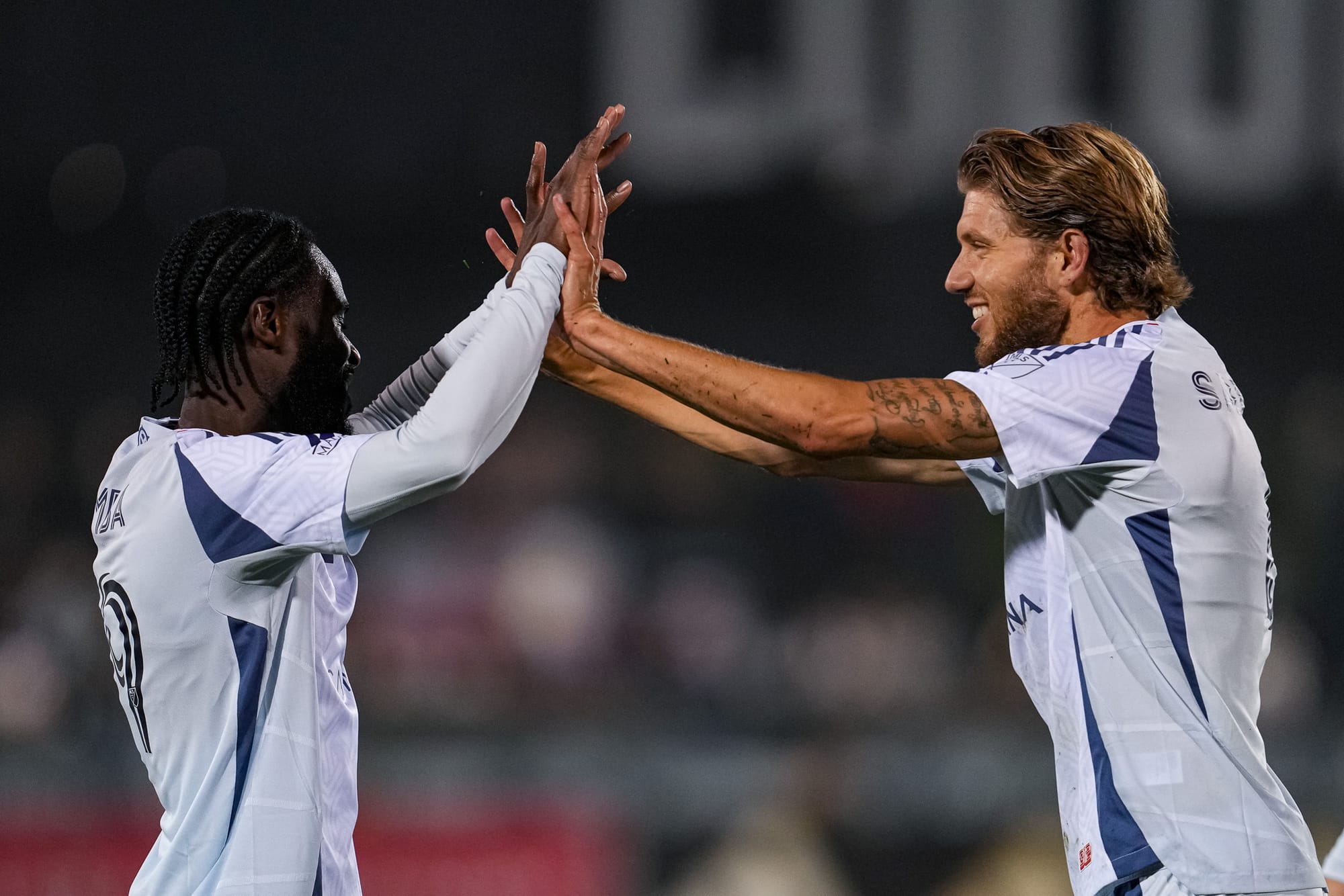
Will Bamba’s form continue into November? There’s every reason to think that it will, and if it does, the Fire suddenly start looking like a much more dangerous team.
Long Live the 4-4-2
In 2026, the Chicago Fire have, at various points, been playing out of a 4-4-2 in possession (they’ve consistently defended out of it, or something like it, as is common). We’ve talked about it (ad nauseum).
In recent weeks, though, we haven’t really seen it as much. Even when the team was nominally listed as playing with a 4-4-2, in practice, it has often played more like a 4-2-3-1 or some other variation of it.
This time, the Fire spent sticking with that formation, even in possession. With Robert Lewandowski starting the game on the bench, Maren Haile-Selassie and Johan Gómez nominally started up top. (In reality , there were stretches where Bamba, not Haile-Selassie, was the most advanced player for the Fire, particularly coming out of defensive situations. Soccer isn’t foosball. Guys aren’t anchored into a spot.)
For most of the game, when the Fire had the ball, they were doing a pretty good job of getting in good positions. They were also doing a less-great job of turning that into actual chances. That has long been the narrative of this team in a 4-4-2: They have the skill and ability to create pressure, but are missing someone to turn that into real chances; a more “dangeresque” than “dangerous” attack.
That changed when Robert Lewandowski came on for the Fire. In the super-sub role, he took off Maren Haile-Selassie (who had his worst game of the month, which still means a pretty solid game overall) and played with Gómez in the second striker position for about 20 minutes.
Just 11 minutes after coming on, Lewandowski scored, breaking a career-high scoring drought in league play. Gómez was essential in the build up, with a quick flick to relay Anton Salétros’s pass through pressure and on to Philip Zinckernagel, who set up Lewy’s goal.
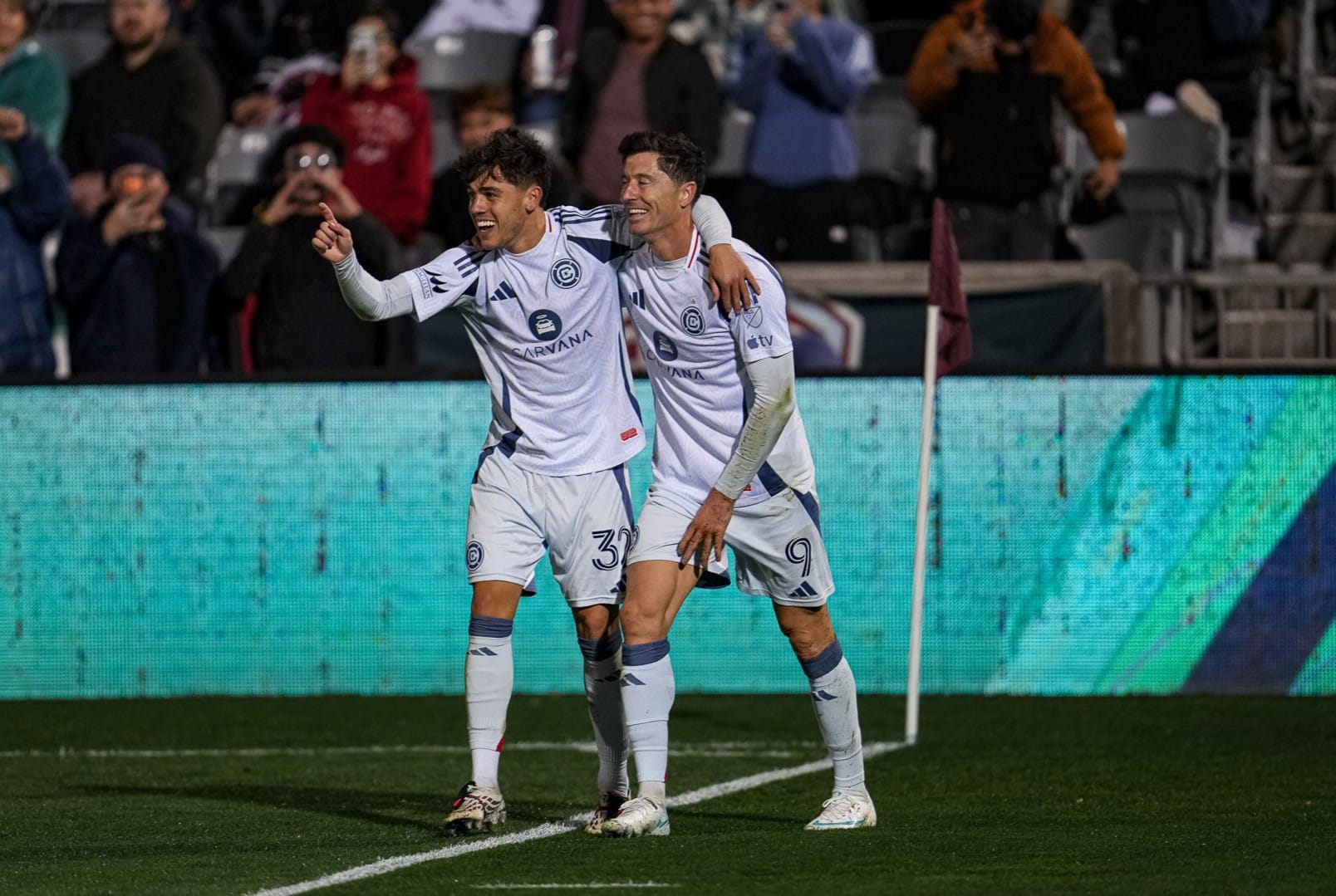
That’s darn near the kind of play that Berhalter probably envisaged being a frequent occurrence when the plan had been for Lewandowski to be paired with Hugo Cuypers. The 4-4-2 hasn’t always been effective, but this was a good example of how it might work, with effective pressing and support from Gómez allowing Lewandowski to occupy spots higher up the pitch than we’ve often seen from him of late.
Oh, and the 4-4-2 might be dead
Not long after the goal, however, Gómez’s night was over, making way for André Franco in his first game since the Fire’s win over Inter Miami last year. One year, one month, and one day after leaving that game with an injury, he was back on the field for the Fire.
Franco only played 402 minutes for the Fire in 2025, all of them in September after joining the team from Porto. In that short time, however, he enabled a shift in how the team played, enabling a shift to a 3-4-3 that effectively gave the Fire’s then-porous defense another defender while also showcasing his abilities as an incisive playmaker.
Playing under 20 minutes including stoppage time, with seven touches on the ball, we didn’t see enough to give Franco any kind of rating in his first minutes of the season. On rewatch, I also didn’t see any evidence, one way or the other, of his ability to do quick changes in direction or pace from speed – eccentric deceleration – that are often difficult for players coming back from an ACL injury. The jury on Franco’s level this year is barely empaneled, and they won’t be returning a verdict anytime soon.

Still, if – a giant, load-bearing if – he is healthy and effective, Franco opens up a number of possibilities for the Fire that they haven’t had without him, almost none of which involve using a 4-4-2 in possession.
Even if he isn’t at a level where he can start this year, assuming Lewandowski will typically be in the XI for most games, it’s likely that we won’t often see the 4-4-2 going forward: When the team has tried it with Haile-Selassie as the second striker alongside Lewy, it hasn’t been horribly convincing, particularly for Lewy’s play.
And Maren has been playing too well to take him out of the XI – certainly, if you swap Gómez into that spit and leave Haile-Selassie on the bench, you’re giving up a lot. Now that Bamba is in-form, and Zinckernagel plays well, the Fire’s “best XI” really doesn’t involve playing two center forwards.
It’s good that the Fire have 4-4-2 with Gómez and Lewandowski a tool in their bag. But I don’t think it’s the right tool, particularly against teams at a higher level than the Rapids.