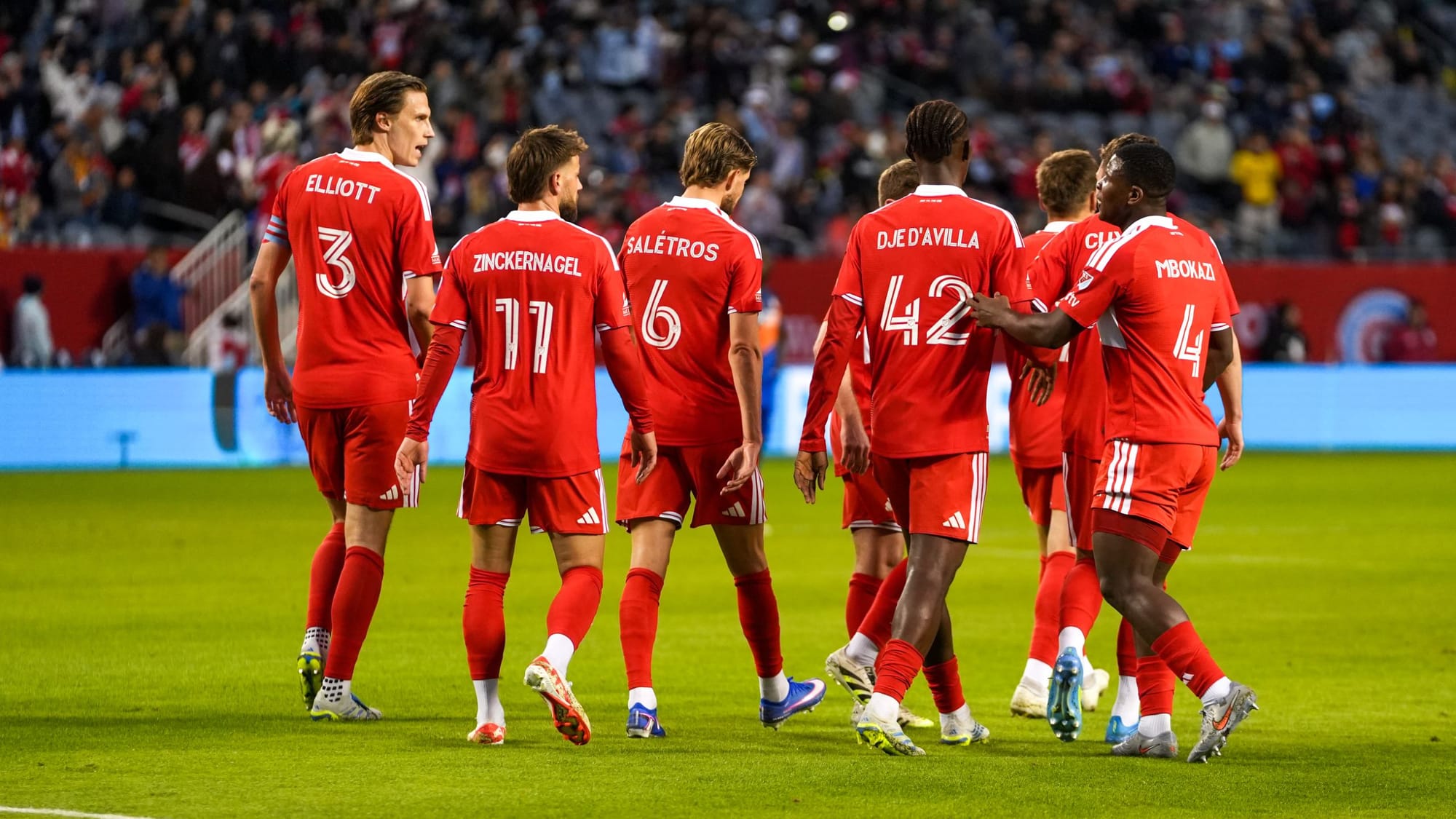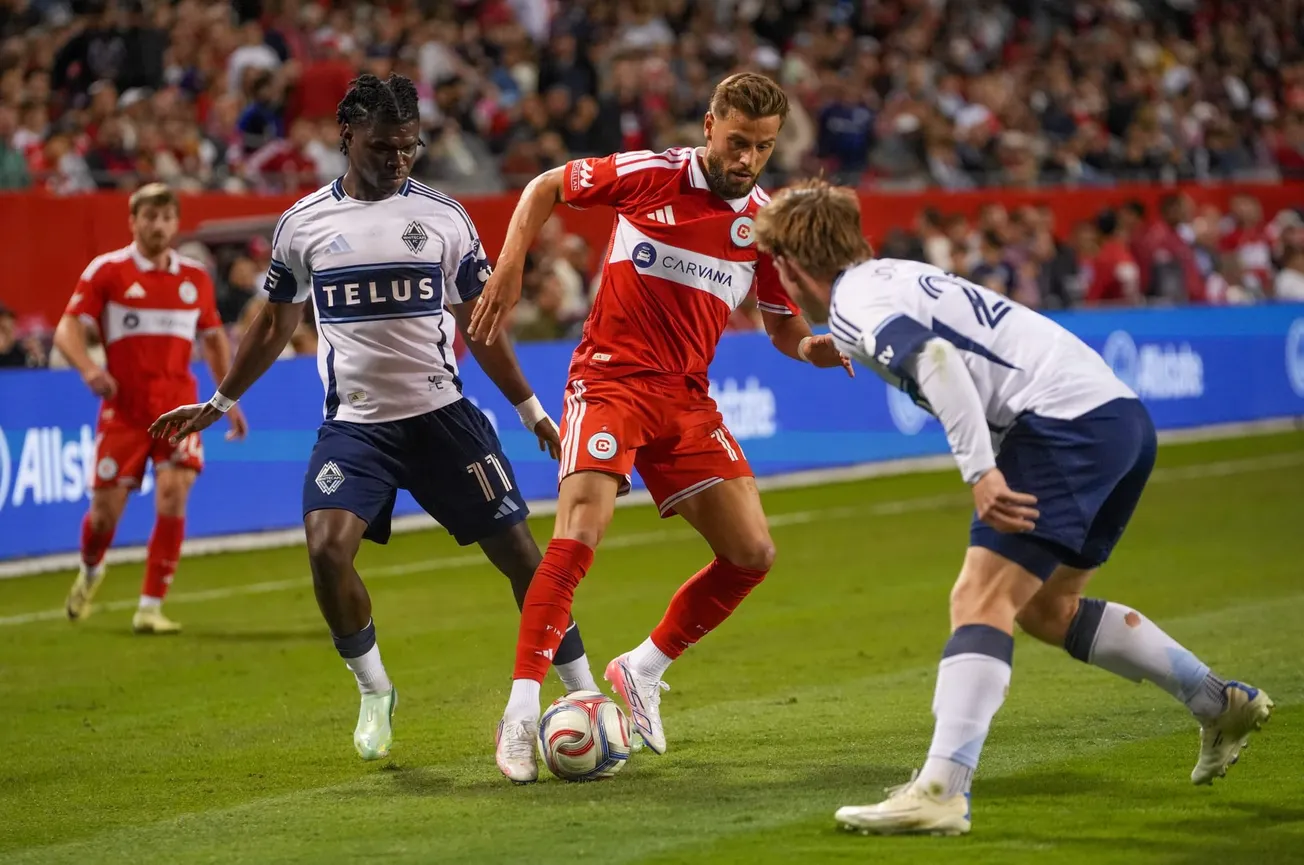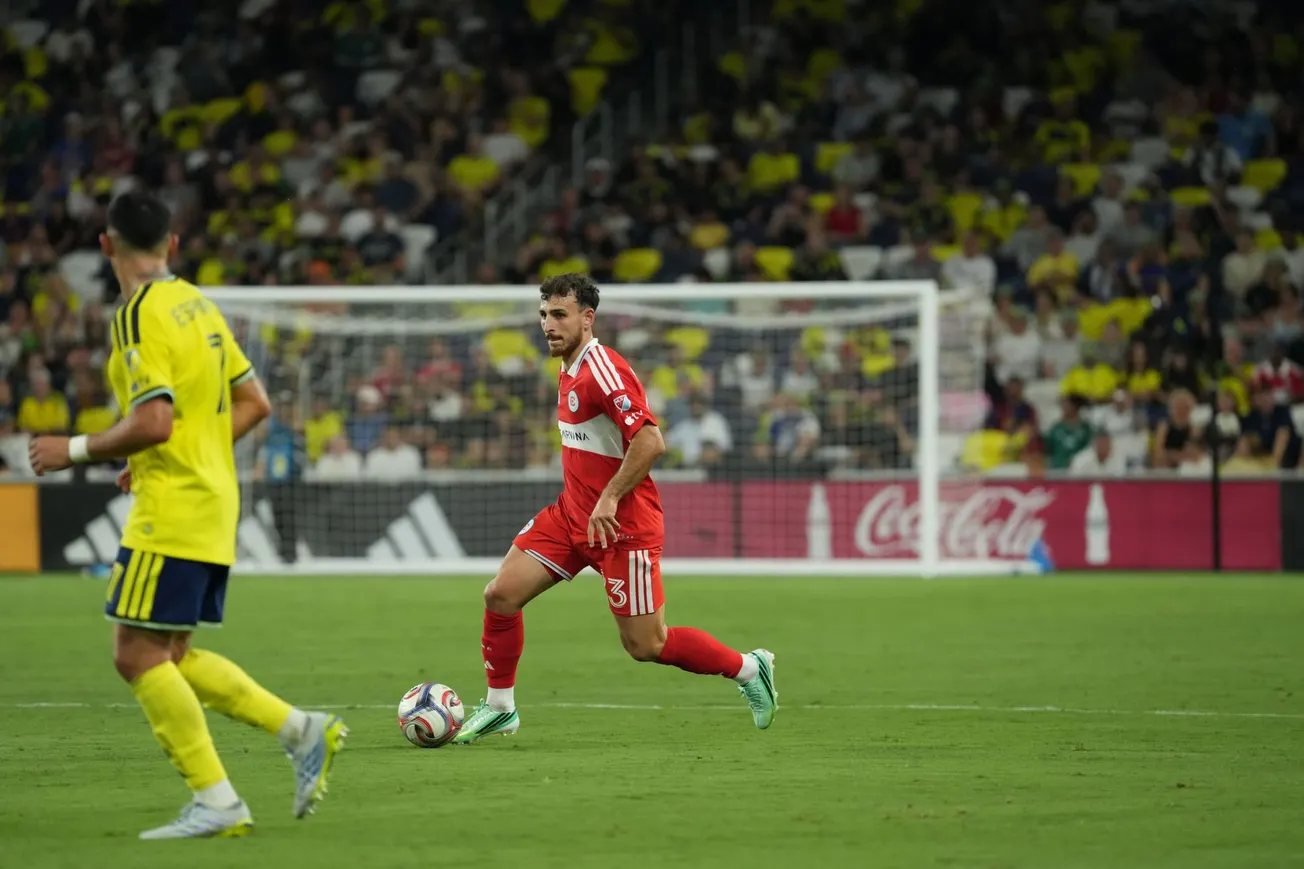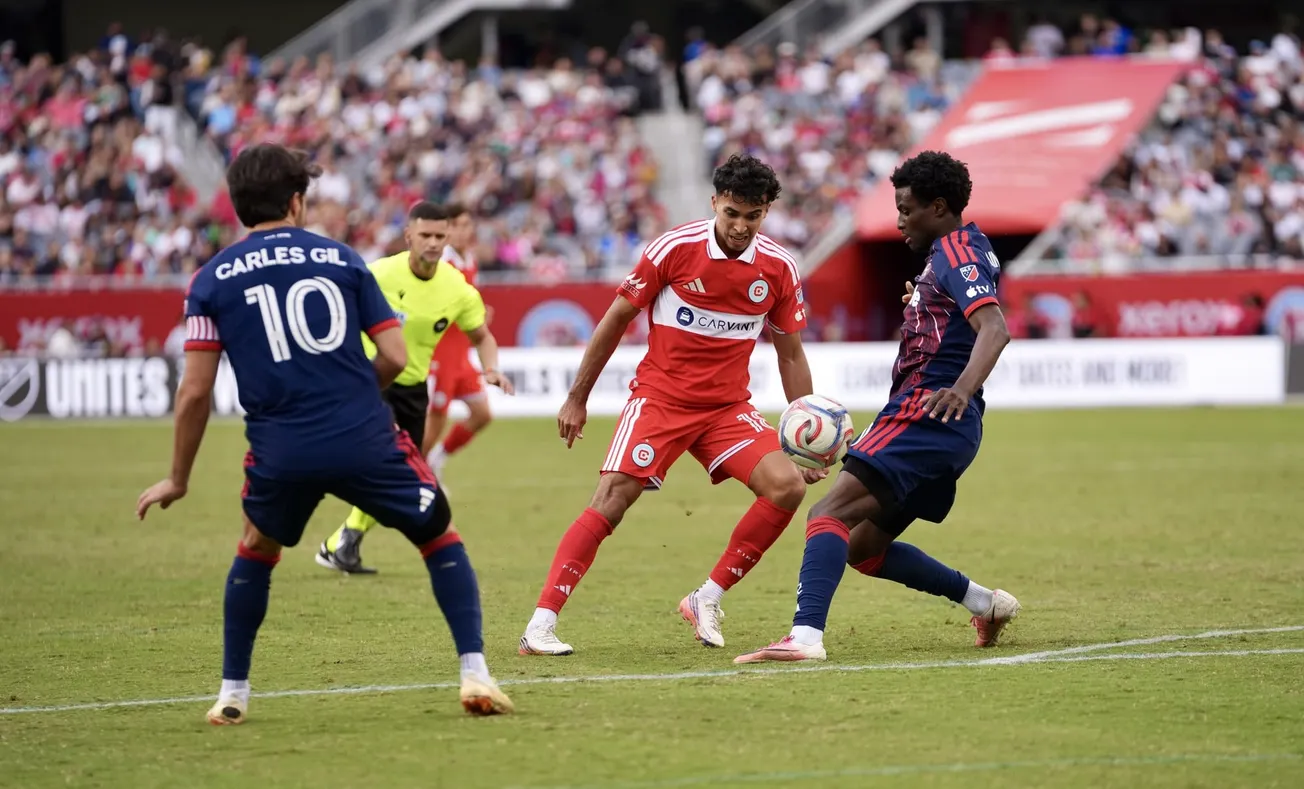

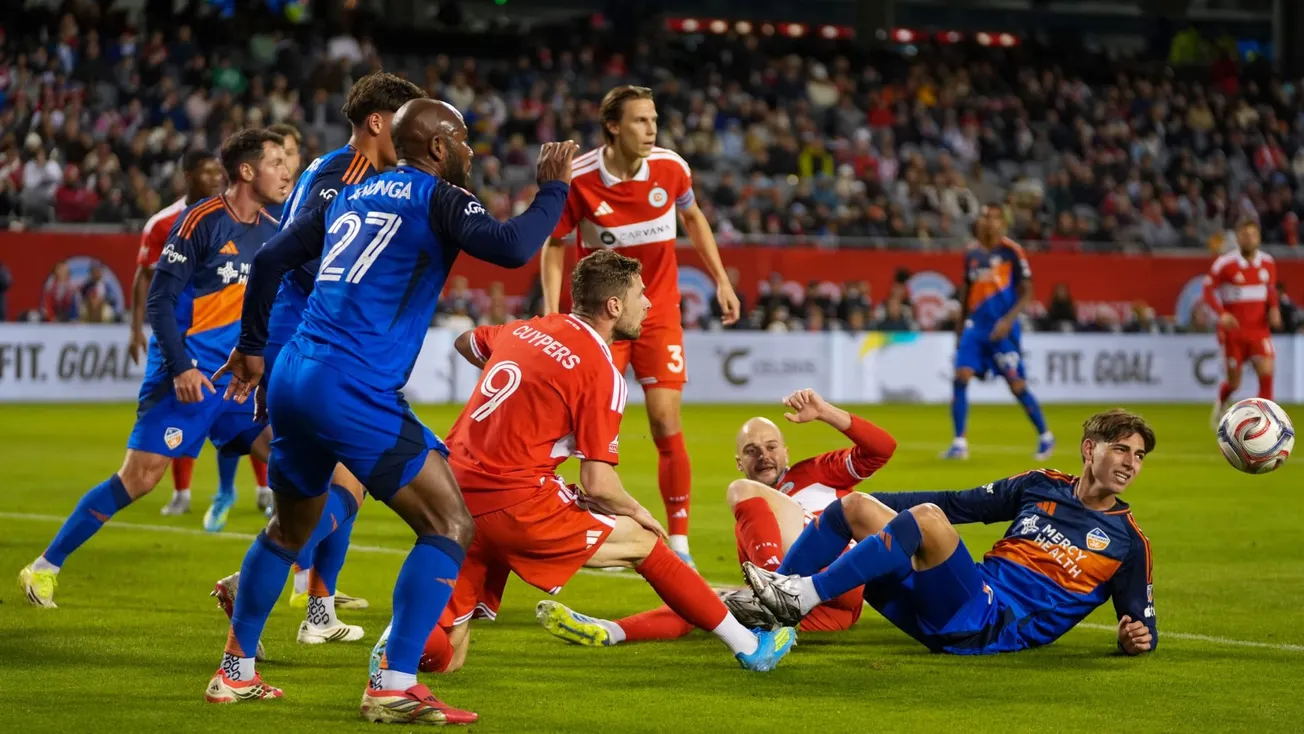
The Fire capped off their third game in eight days with a dominant offensive performance against Cincinnati courtesy of a red card that put them up a man for a considerable length of time – but ultimately it wasn't enough to get a result as small mistakes in a few moments were all Evander needed to get a hat trick at Soldier Field.
Here's five things we learned as the Fire's undefeated streak in league play came to an end.
1. You really can’t win ‘em all
After the Fire’s 2-1 loss against St. Louis City in the U.S. Open Cup on Wednesday, we talked about how strong the Fire have been in the run of play this year. The basic point being that the Fire have hardly trailed in 2026. In fact, the Fire had held the lead for about seventeen times the number of minutes that they spent trailing – but had lost three times after 11 competitive matches in the year. Turns out, we may have been on to something.
Last night at Soldier Field, the Fire were dominant: The Fire had 33 shots, 10 of which were on target – that’s the total number of shots FC Cincinnati had in the game, per Fotmob. No fewer than 28 of the Fire’s shots were in the box, 20 of which were in the second half. Cincinnati managed just three shots in the Fire’s box all game.
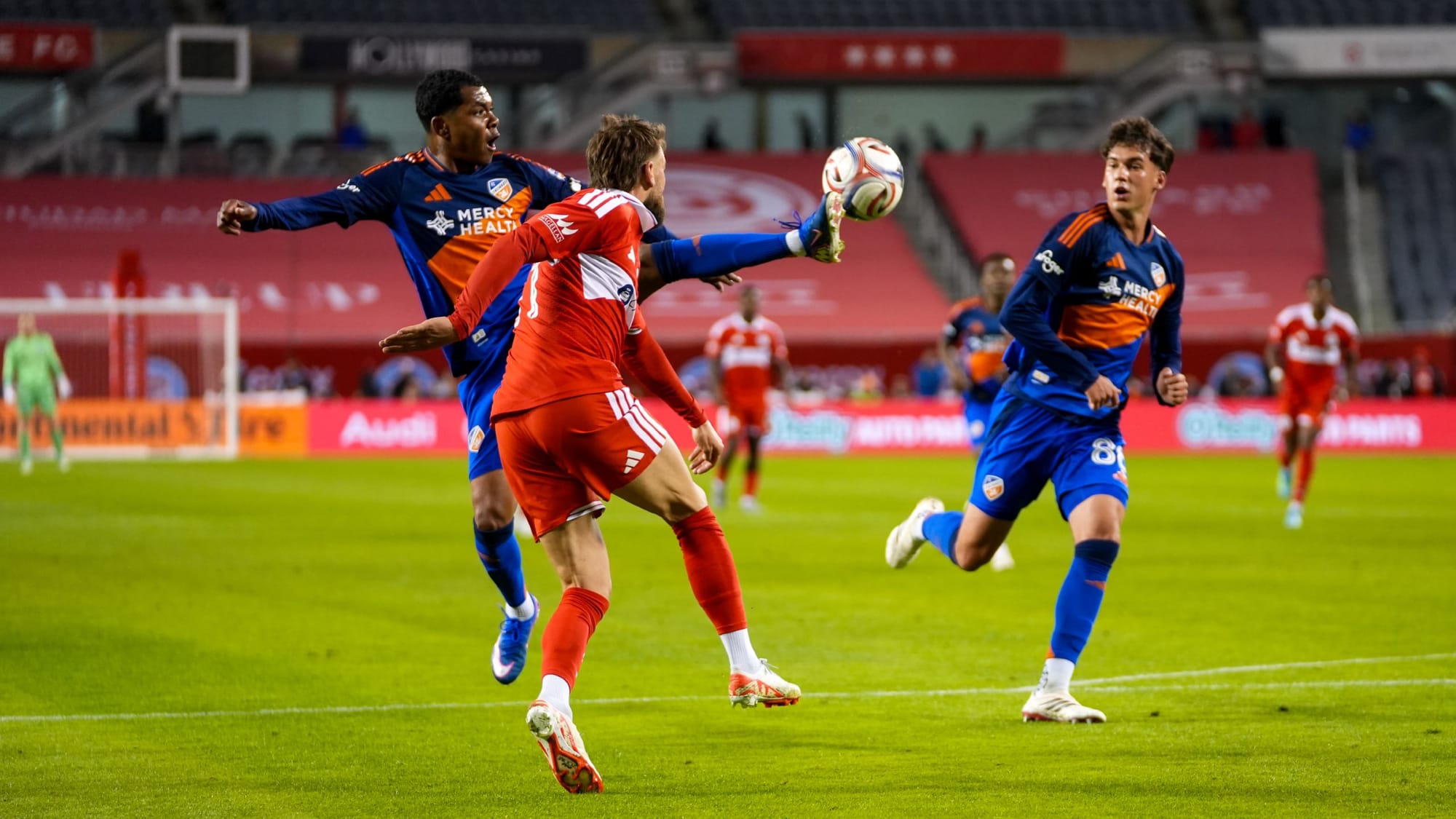
The Fire had more touches than Cincinnati in Cincinnati’s half (268 to 244). Touches in the opposition box were even more lopsided, with the Fire getting 68 touches in front of Roman Celentano, while FCC only managed 12 at the other end of the game.
As a result of all that, the Fire finished the game with 4.47 xG compared to 1.58 for Cincinnati, with 2.97 of that coming in open play for the Fire compared to 0.9 for the visitors.
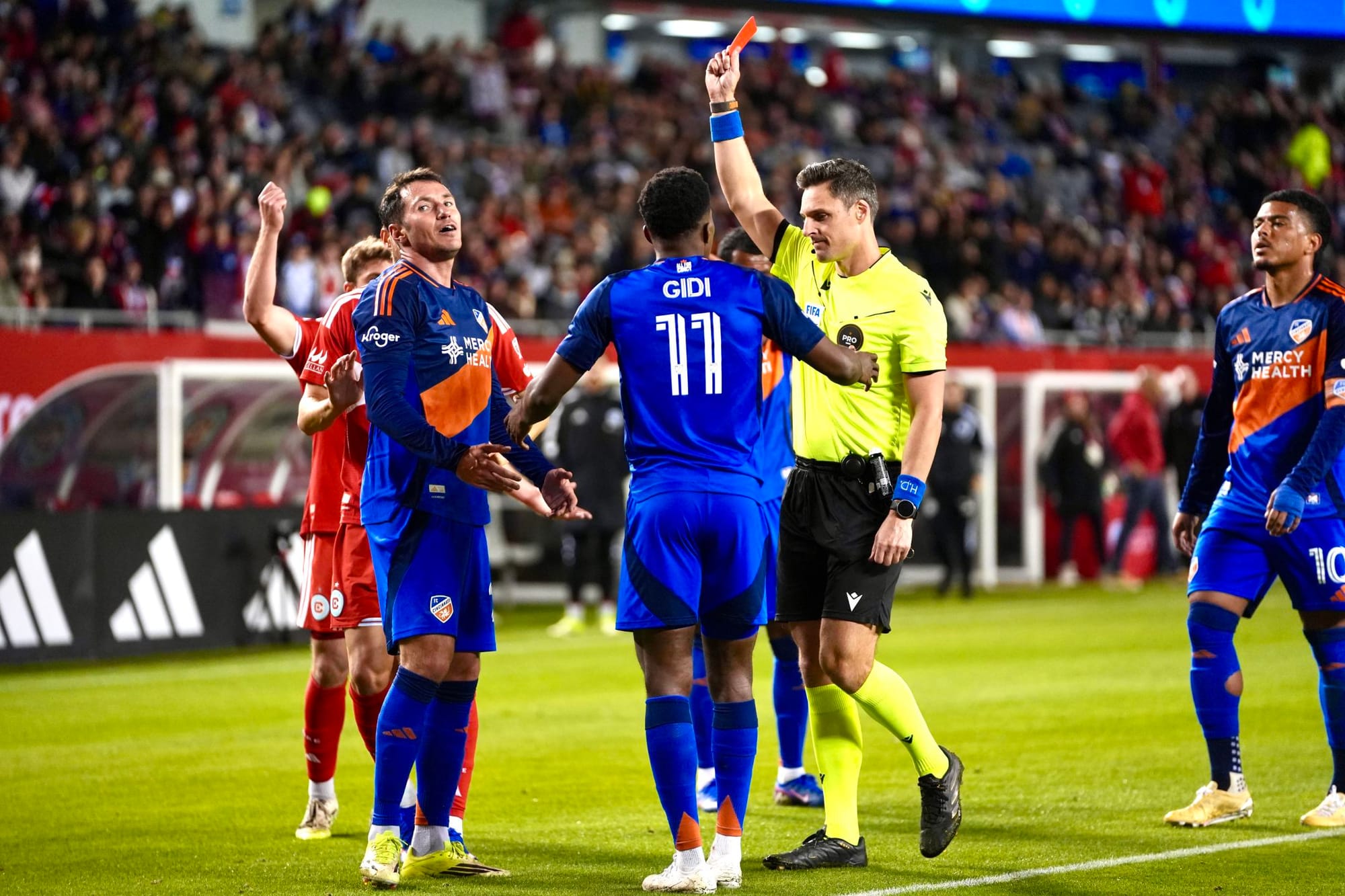
It was, overall, the kind of performance you’d expect from a team that was playing up a man for more than half an hour (21 of the Fire’s shots came after Kyle Smith was sent off).
And yet the Fire lost the game. There’s two ways to look at that.
One is Gregg Berhalter’s. Coming into the press conference smiling – though a shade later than normal – before sitting down the Fire head coach said “this is why we love this game, right? Absolutely incredible,” continuing “I told the guys, maybe three moments in the game where we weren’t good and other than that, we played a really good game.”
Berhalter then rattled off many of the same statistics from above about the Fire’s dominance, asking “what else do you want from a game?” before saying he was “really happy with the performance” from his squad. Sometimes, you play well enough to win, but sometimes, ball no go in (copyright Matt Doyle, Tactics Free Zone).
Here’s the other way of looking at it: Using American Soccer Analysis’s “Where Goals Come From” system for classifying shot quality, the Fire had two shots that qualified as “great” in open play, with the opening goals from each team coming off of one of those “great” shots (the opening goal from each team came off of “great” shots,” while the second goal from each team came off “average” shots). In total, 27 of the Fire’s shots were “average” or “poor.”
Playing up a man, the Fire knew there was going to be space, they knew there would be looks on net – but instead of creating great chances with the space they were afforded, they settled on average ones.
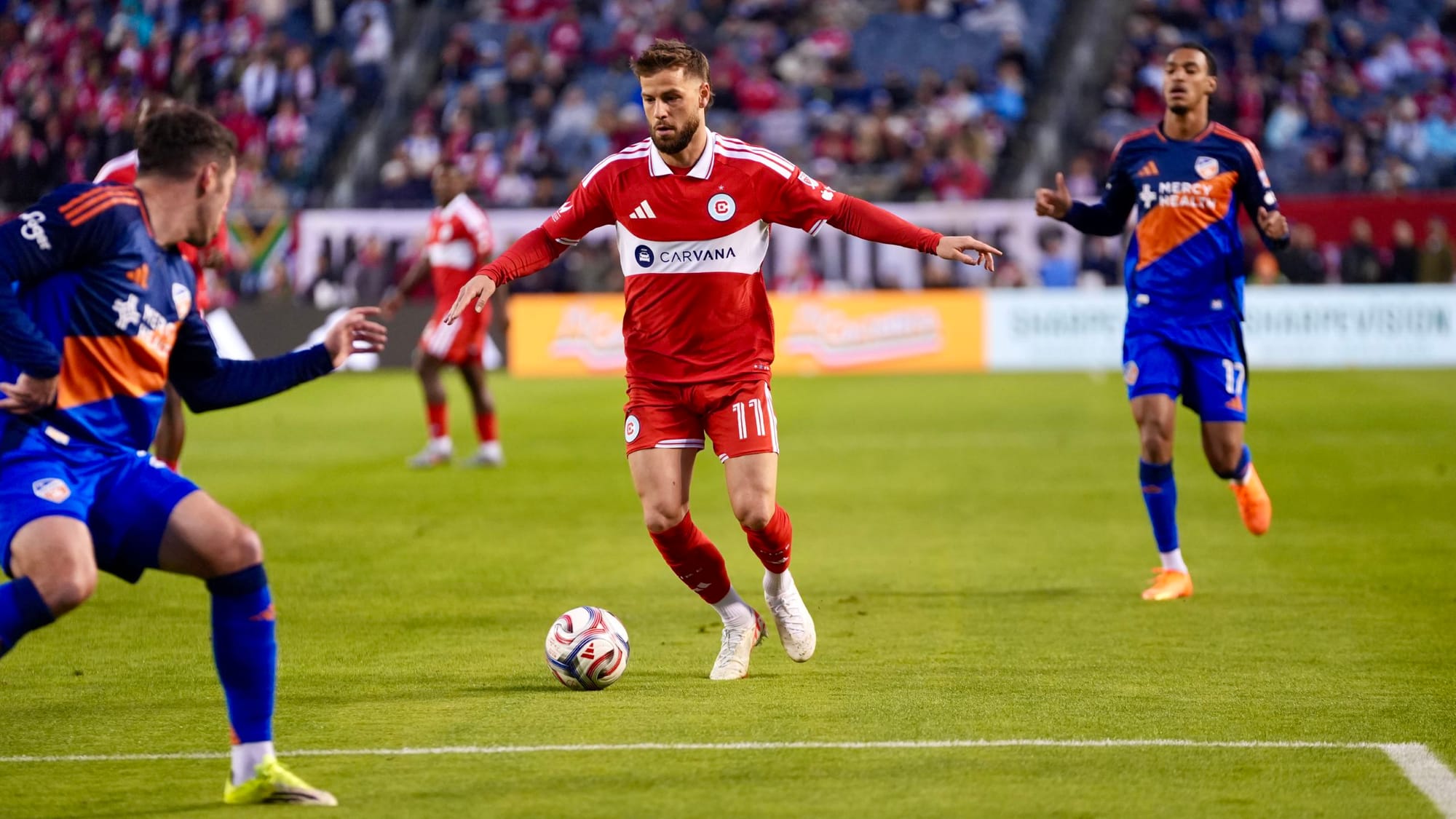
Chance creation – not just the ability to create any chance, but the ability to unlock the game and create great (or at least very good) chances has been an issue for the Fire all year. We’ve talked about it several times in several different ways, going back to the season opener against Houston, but the summary is, the Fire could really use a chance creator in the attack - someone who can make space for others, turn good chances into great chances, and occasionally, just maybe, create something out of thin air when needed.
Even though he didn’t say it directly, Berhalter knows this, saying that while up a man, “I think we resorted too much to playing – I’m talking about the last four minutes – we resorted too much to playing direct, leading to 50-50 balls. So, I didn't love that part of it. We could have been more calm and collected. When we did that, Phil had that really big chance, right, that volley, and that was through a more methodical build-up, just fast ball movement.”
I don’t think Gregg was really just talking about the last four minutes.
2. Berhalter is acting like he doesn’t trust his bench
In a somewhat surprising move, the Fire had the same starting XI that played FC Cincinnati two weeks ago, despite the availability of Jonathan Bamba, who missed the game in Cincinnati while away from the team for personal reasons.
That put the team back in a 4-4-2 featuring Robin Lod as a second striker, playing off Hugo Cuypers, and Djé D’Avilla as one of two deeper-lying central midfielders, alongside (but typically behind) Anton Salétros.
Bamba’s exclusion from the XI is understandable, as he works his way back into a rhythm after being away from the team for two weeks. Regardless of that, starting Lod was an understandable choice by Berhalter, after he had a relatively strong performance against Cincinnati two weeks ago, giving the Finnish veteran an opportunity for a “bounce back” game after a combination of some bad luck and a bad performance after coming on against St. Louis on Wednesday.
D’Avilla, however, had a rough outing against Cincinnati two weeks ago, scoring the game-tying own goal that gave FCC in the 86th minute.
Both had some of their worst performances in Fire uniforms last night, as did Mbekezli Mbokazi, who didn’t seem nearly as sharp as we’ve come to expect from the young South African international.
This isn’t to harp on those individual performances (though more on Mbokazi and D’Avilla in a bit). Bad games and off nights happen. And Robin Lod may not be an option next week, after Kyle Smith clipped his eye in the play that sent FCC down a man. After the game, Gregg Berhalter told reporters that Robin Lod was “in the ER right now. We’re getting a diagnosis. It’s not good, though. It’s not great.”
The point is, it was obvious, well before the Fire went back to the locker room at half, that those three players were not having great games.
Taking a healthy player off isn’t a form of punishment. D’Avilla in particular, has struggled to find his best form if he starts on the wrong foot. That’s a weakness in his game, and one he has to work on, but was also not something that looked like it was going to be solved.
For Mbokazi, the overall performance was an outlier, even if none of the issues on display were new (more on this in a bit). For Lod and D’Avilla, however, it wasn’t the first time that we’d seen a weak performance. So far, neither had really been able to recover and fix them in-game.
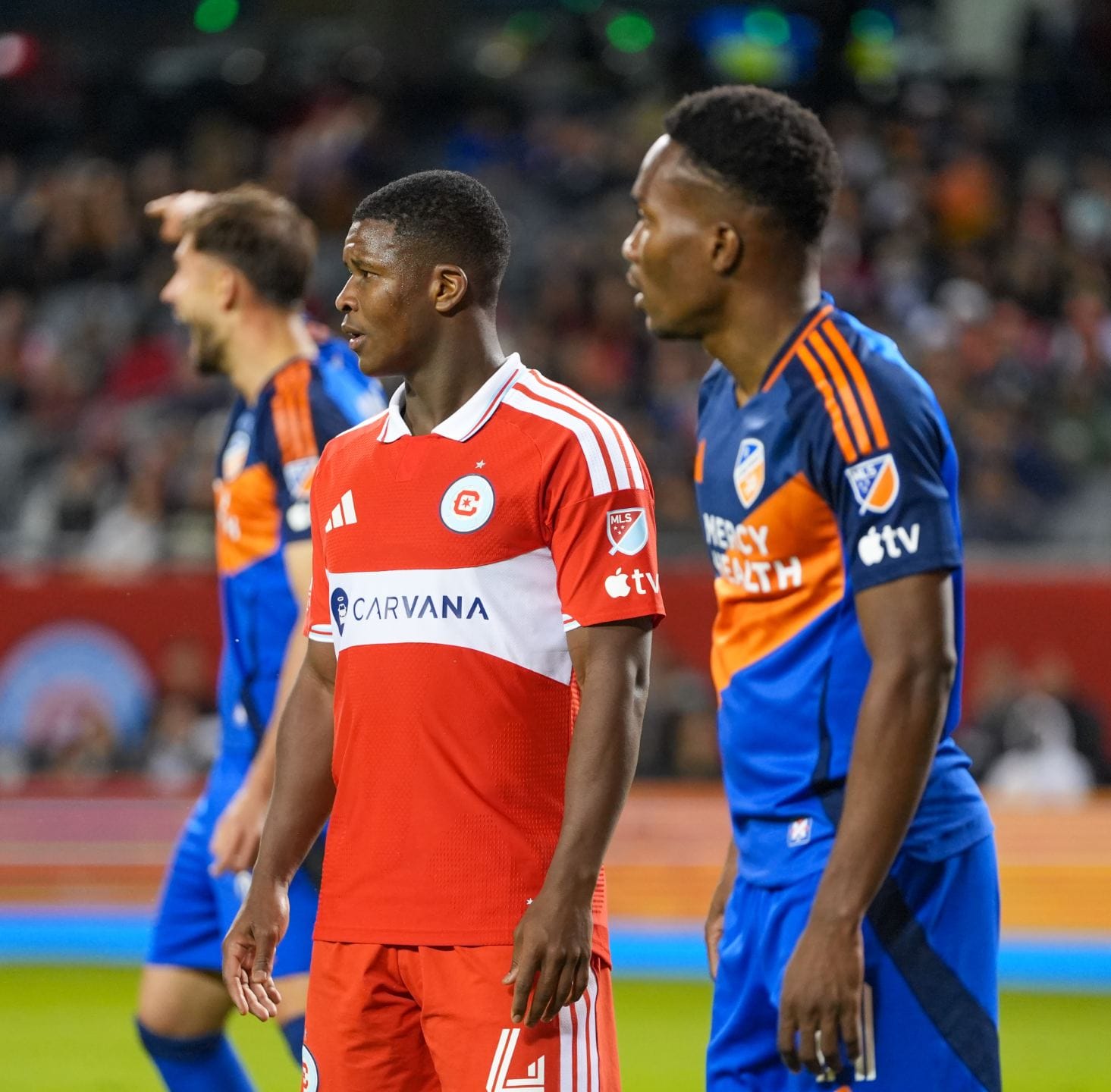
In that situation, both from the team perspective and for the long-term benefit of the player, the right thing to do is to take them off. It may not be what the player wants in the moment, but the alternative is to risk letting a player repeat the same mistakes, slowly treading an off night into a rut.
Berhalter, however, made just two changes during the course of the game. The first was forced, with Lod’s injury (and subsequent trip to the ER) ending his night. That put Bamba on and in 44 minutes including stoppage time, he looked good, if not exactly transformational. Maybe he would have been a planned sub later in the half.
Barring injury, however, Berhalter has seldom gone to his bench before the around 75th minute unless injuries force his hand earlier. There have been exceptions – it happened midweek! When Anton Salétros scored to give the Fire a 1-0 lead in the Open Cup, he and Hugo Cuypers were promptly taken out afterwards (ultimately, to the team’s detriment). But as a rule, when there have been subs, they’ve come late.
It’s confounding; We know that Berhalter trusts the players on his bench. In this case, Bamba is a typical starter — and even if he wasn’t 90 minutes fit, it turns out, he was comfortably (at least) 44 minutes fit. He could have provided a welcome replacement for Lod, better able to dribble past Cincinnati’s defenders and with the ability to ask questions of their back line with speed in a way that Lod can’t.
An off night was all but inevitable for Mbokazi at some point. If anything, the surprise is that it hadn’t happened sooner. Joel Waterman may not provide the highlight-reel-worthy defensive plays that Mbokazi does, but his game is less likely to require them. It’s hard to imagine a more direct replacement than swapping one likely World Cup-bound center back for another.

In the midfield, both Maurio Pineda and Sergio Oregel Jr. were on the bench. Oregel is hardly a like-for-like, and would have required moving Salétros back and having him cover more in defense than would have been ideal. Pineda, though, has over 121 MLS regular-seasons starts for the Fire, spanning four different coaches.
Asked about the lack substitutions after the game (the other sub the Fire made was putting on Jason Shookalook deep in second-half stoppage time), Berhalter said “I felt the attacking group, especially the top four guys, that would be the primary players we could take off, were getting chances; they were creating danger.” That’s fair for at least three of them: Maren Haile-Selassie looked good even though by the end of last night’s action, he’d played 270 minutes starting with last week’s game against Kansas City. Zinckernagel played 256 over that stretch, and 245. The trio looked simply tireless.
Further back, however? After the game, when pressed about D’Avilla, Berhalter said that although there was “merit to discussing that and thinking about” the choice not to sub him off for Pineda, he also said that Pineda “had 90 minutes in his legs from Wednesday.”
Funny to bring that up now…
3. The minutes this week could really have been managed better
Let’s rewind for a minute: For the first time this year, the Fire played three games against MLS opponents in the span of a week. On the face of it, all three were winnable. And, particularly with all three of them at home, the Fire favorites in each.
The games were, in order, a league game against an out-of-conference team that are favorites to win the Wooden Spoon, a midweek Cup game against a team that lacks high-end talent, and a reverse fixture against a conference opponent that the Fire was beating until the final minutes of the game when they met just two weeks prior.
That gave Gregg Berhalter a number of choices that he hadn’t had to make this season around squad rotation. The question becomes, which games do you prioritize?
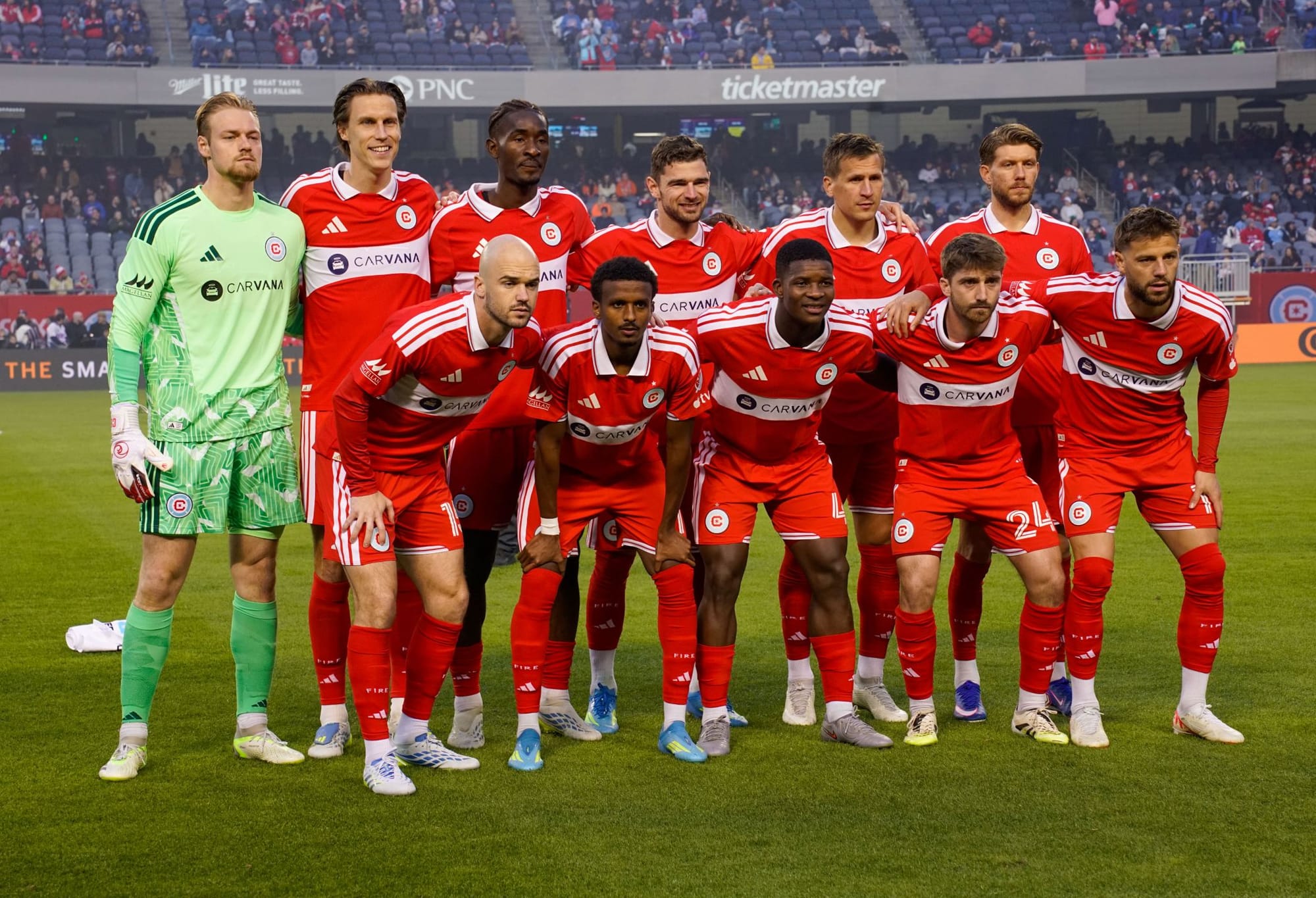
Here’s what ultimately happened: The Fire ended up with just one win, in arguably the least important game of the set – the 5-0 victory over Sporting Kansas City, a team that plays in the opposite conference.
Here’s how they got there: The Fire started a full strength lineup against Sporting Kansas City on Saturday. The only changes from the week before were bringing Puso Dithejane for Lod (Dithejane was suspended in the Open Cup match due to a red card received against Detroit City FC), and Joel Waterman for Mbekezeli Mbokazi (a fairly even swap). Every regular starter (and Waterman) went a minimum of 75 minutes in that match.
Midweek, in a Cup game against St. Louis City, the Fire rotated both fullback slots, giving Dylan Borso and Viktor Radojević starts. Jack Elliot was rested, giving Mbokazi and Joel Waterman starts at center back, and Sergio Oregel and Mauricio Pineda started in the midfield. Jonathan Dean – the most versatile fullback on the roster – did not make the short bench allowed in Cup games. That proved to be to be a costly omission after Dylan Borso’s injury caused Viktor Radojević to slide to his non-natural side. Just two minutes after the change, St. Louis were able to work past Radojević, resulting in the eventual game winner by Edward Löwen.
Hugo Cuypers and Anton Salétros were both subbed off right after the Fire scored a goal, giving them a 1-0 lead, while Haile-Selassie and Zinckernagel both went the distance.
That meant that heading into yesterday’s game against FC Cincinnati, having been knocked out of the Open Cup for the year, the Fire had a lot of minutes on some very important legs: Haile-Selassie had played all 180 possible minutes, while Cuypers, Zinckernagel and Salétros had all played over 140. Ultimately, all four of them played the entirety of the game, and the only non-injury substitution of the match was swapping off Dean for Jason Shokalook well into second-half stoppage time.
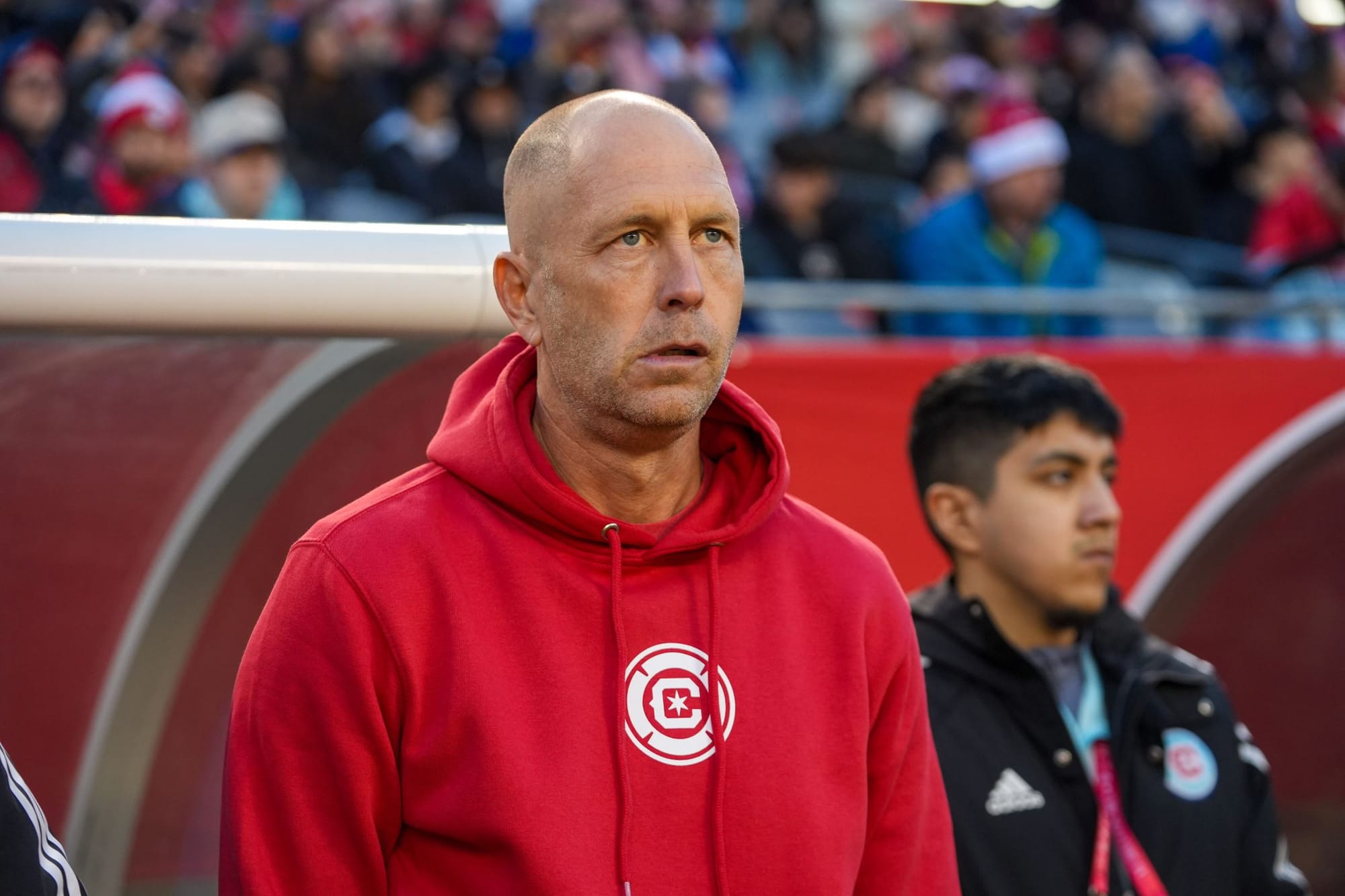
Ultimately, when deciding which game to prioritize, Berhalter ultimately chose all three. And what his team has to show for it is a fun, dominant win over Kansas City that ultimately won’t have much impact on the Fire’s season, and two close-but-not-quite performances in games that probably mattered more.
The Open Cup seemed like the team’s easiest path towards qualifying for CONCACAF Champions Cup next season. Now that’s not an option. The Leagues Cup is the next opportunity. The Fire’s first game is five days after their previous MLS match, and then the team has three games in the course of the week – followed by a date with the Portland Timbers just three days later.
It’s admirable to try to win every game. But you shouldn’t be willing to die on every hill. Sometimes, you’ve got to pick your battles.
4. Learning can be painful
After the game, Berhalter said that despite an overall strong performance from his squad, there were “maybe three moments in the game when we weren’t good.” Those moments ultimately proved costly for the Fire, and D’Avilla and Mbokazi were involved in all of them.
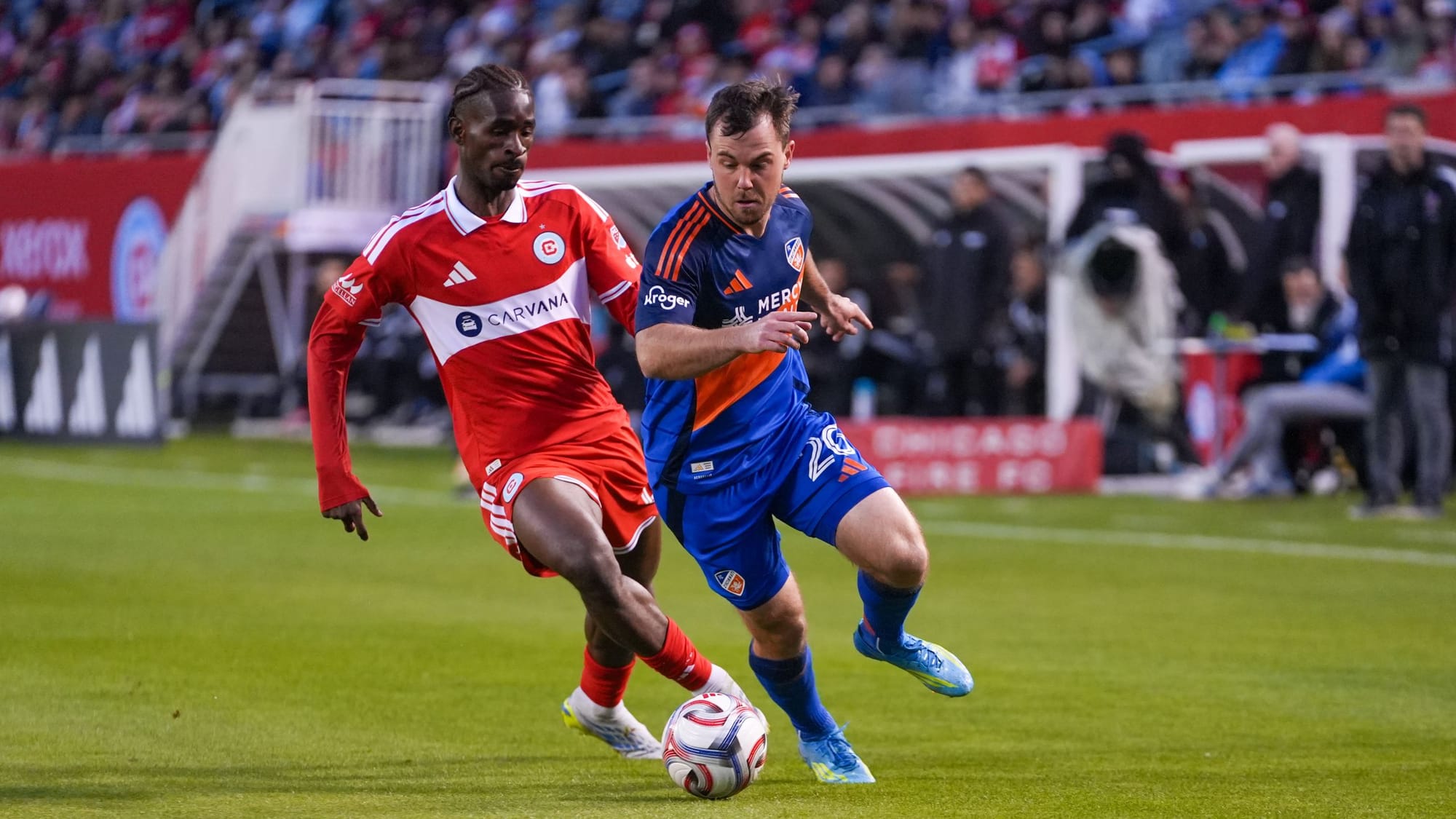
Both players are relatively young and inexperienced. Neither has come close to reaching their full potential, but the path to getting there isn’t guaranteed, and last night was a reminder that progress along the way is often painful.
This is, to some extent, what Gregg Berhalter signed up for when building this lineup out. By the time of the World Cup break, assuming he starts every remaining game, Mbokazi, just 20 years old, will have played more games in MLS than he did in any single season in South Africa. D’Avilla, turning 23 this week, had played less than 3000 minutes in the Portuguese Second Division before signing with Chicago.
Although Mbokazi’s performance against Cincinnati stands out as particularly rough, he hasn’t had the best run of form over the past few weeks. Typically, the issues have come from missing plays in individual moments. One of the challenges that players have to learn as they adapt to being locked-end starters on top flight clubs is mental: Managing your energy level over 90 minutes, keeping positioning and pressure consistent, staying fully engaged to each game, week-in, week-out, through a long – and often punishing – regular season.
Case in point: Cincinnati’s first goal. As Kévin Denkey approached, Mbokazi hesitates – just for an instant – giving the Belgian striker all the space he needed to find his run inside and flash the ball across goal. As the ball was recycled back in from the other direction, Mbokazi instinctively played the rebound right back to the center of the box – and to the feet of Evander, ready to pounce and score an easy finish. Against most players in the league, those small mistakes likely wouldn’t have mattered. Against players of Denkey and Evander’s caliber? They proved costly.
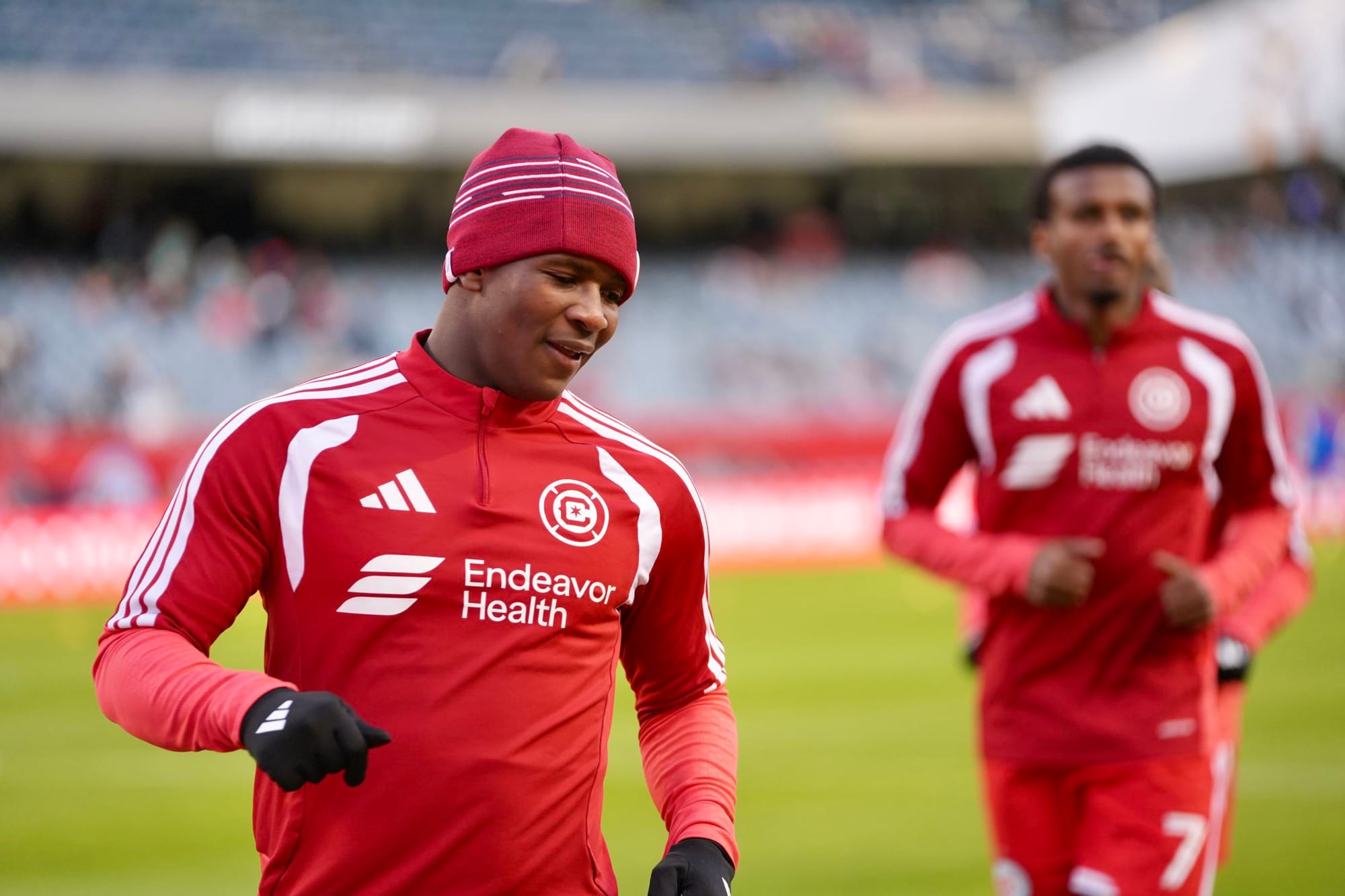
Ironically, Mbokazi’s smaller lapses have often led to some of his biggest moments – he may be out of position at the start of a play, but his impressive recovery ability combined with top-of-league tackling abilities have led to many of the fantastic plays of him that get widely shared on social media. For him to take the next step in his career, though, he needs to learn to rely on those traits less, reading the game better to render them unnecessary. As he approaches his career record for minutes (1,010, which he hit in 2024-2025 with the Orlando Pirates), mental fatigue as well as physical will set in.
For him to be the kind of player he can be, he needs to, as the kids say, learn how to stay “locked-in.”
D’Avilla, meanwhile, has often been a streaky player. The way one analyst put it last year, if he has one bad touch early, he won’t have a good game. That, unfortunately, has remained true for the Ivorian.
At the end of the 2025 season, he seemingly found his form, putting together a string of strong performances as he helped the Fire earn their first playoff berth this decade. That put him on lists of players to watch in MLS for the 2026 season. Those lists often serve as a kind of preview for lists of which players will be sold to big clubs in Europe for eye-watering fees.
It hasn’t been the 2026 that he’d hoped for, his performance last night was a great example why. Cincinnati’s game winner came from the penalty that D’Avilla conceded. In the play leading up to it, D’Avilla choose to control the ball despite traffic in the box. A poor touch caused the ball to spill out. Trying to recover, D’Avilla went in with an overzealous tackle ‒ and with that, a yellow card and a penalty, despite actually winning the ball.
Here’s what Berhalter had to say about it: “Looking back, I think it's a penalty. I really do. There is no question D’Avilla got the ball. But in the midst of getting the ball, he follows through and cleans the opponent out and it's unfortunate. I think D’Avilla had more time than he thought, he takes a heavy touch, which got out of control, and decided to make that play. For me, it's a penalty. I understand why they gave it. I know in the replay it didn’t look great, but it happens.”
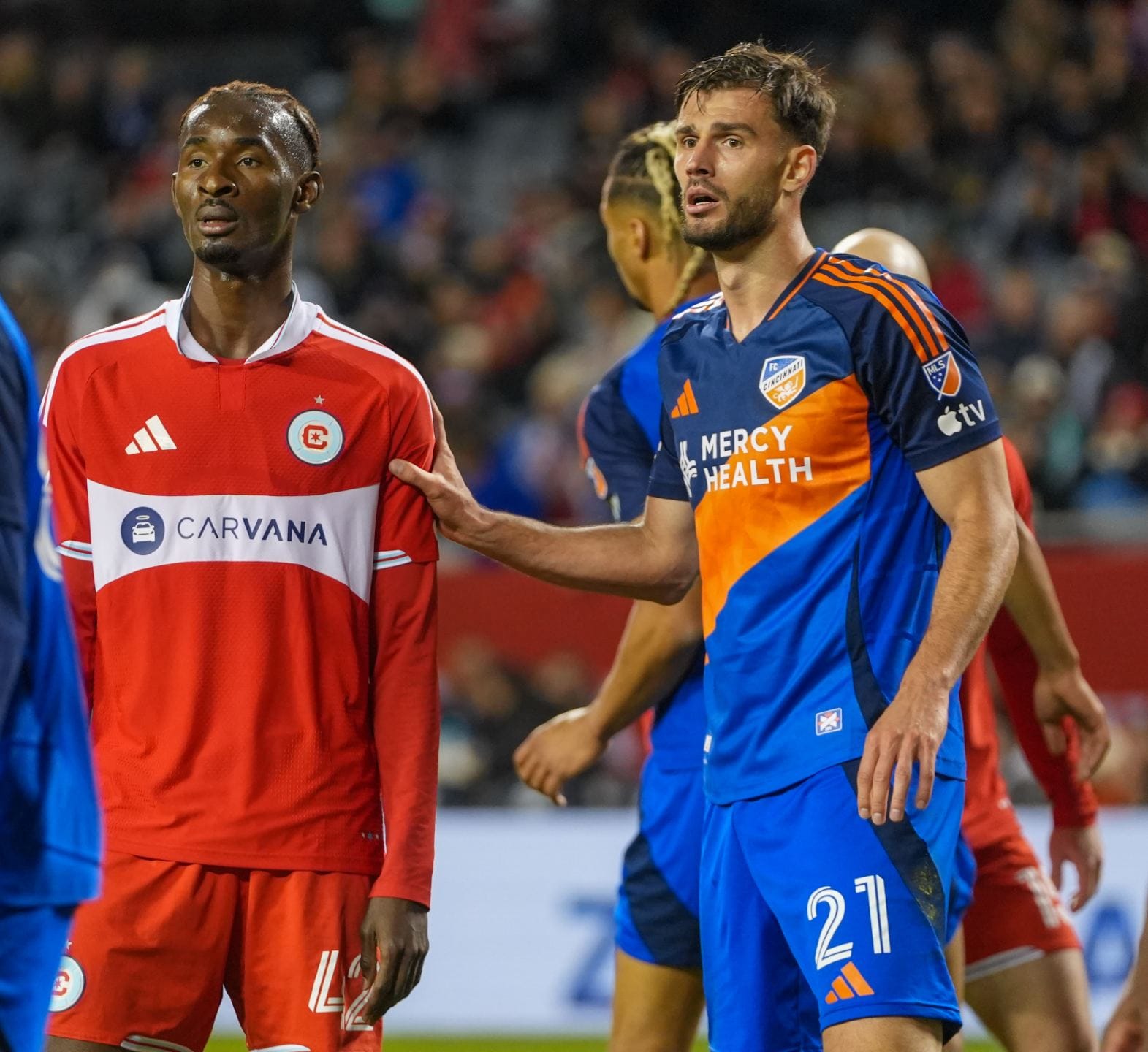
That continues a rocky 2026 for D’Avilla – see above regarding the own goal the previous time these teams met – that included D’Avilla temporarily losing his spot to Pineda earlier in the year and his visible frustration at being subbed off against Atlanta a few weeks ago.
To some extent, that’s what teams sign up for with young players. There will be ups, and there will be downs, but the hope is to have a trajectory that’s overall headed upwards. D’Avilla did that at the end of 2025, and there’s every reason to think he can do it again. Mbokazi has a lot on his young shoulders, between starting duties with a new club in a new continent and heavy expectations for his World Cup performances from inside and outside of South Africa.
Last night was a reminder that it won’t always be smooth sailing on the way there.
5. Hugo Cuypers is a special player having a special season
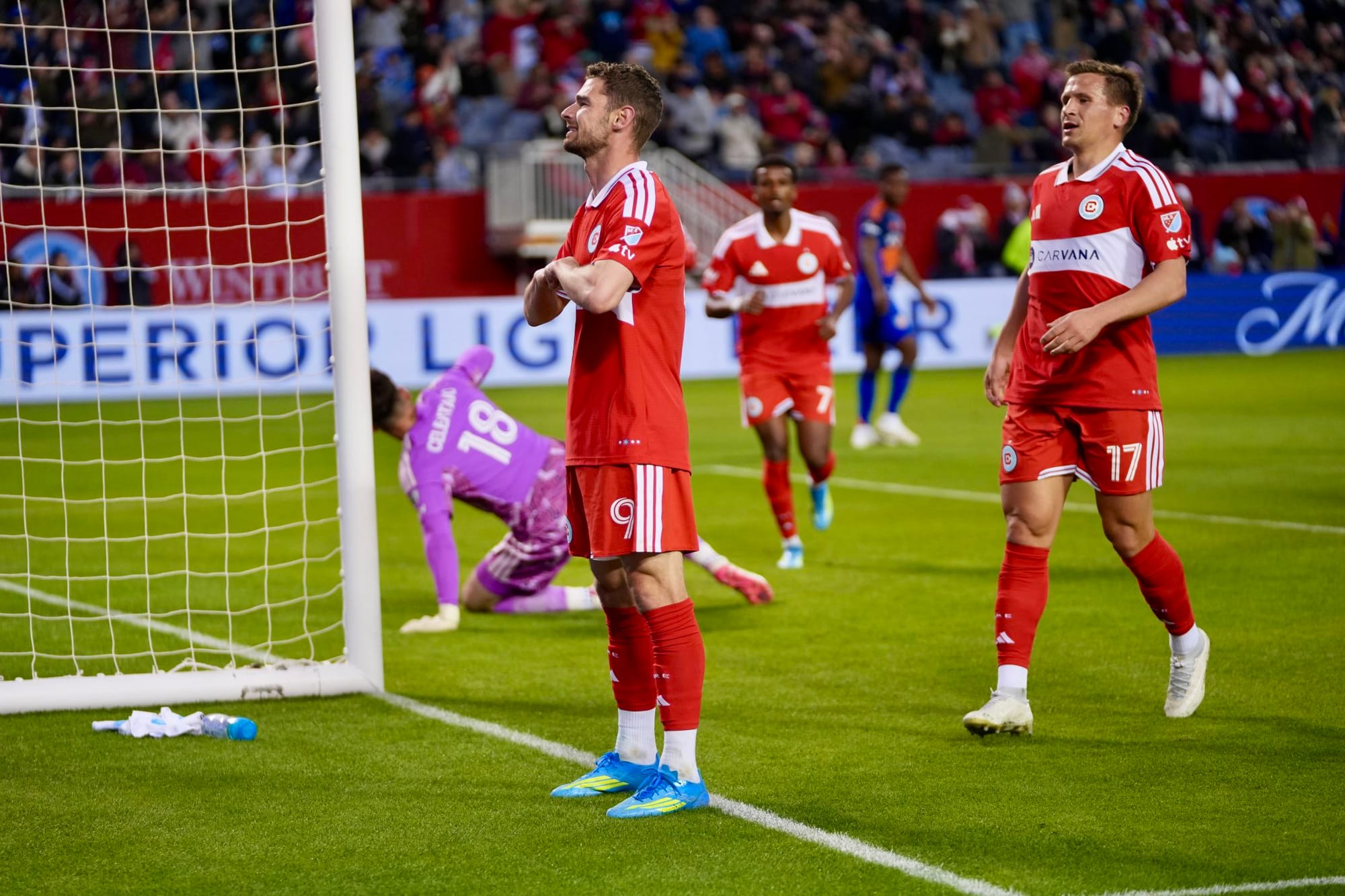
Cuypers’ goal in the 16th minute extended the team-record scoring streak he set last Saturday to seven games. When he added his second on the evening and 10th of the season just 12 minutes later, he became the fastest player in FIre history to make it to double-digit goals on both an individual and team basis: No Fire player has scored 10 in the team’s first 10 games of the season. Cuypers, however, has hit that mark in just seven league appearances for the team.
In his first year in Chicago, Cuypers also hit 10 goals – in 2,630 minutes, exactly 2,000 more than he’s played so far this year.
As a result, about one-third of the way through the season, he’s currently tied with Petar Musa for the lead in MLS’s Golden Boot race, despite playing 183 minutes – two full games – less than the Croatian forward.
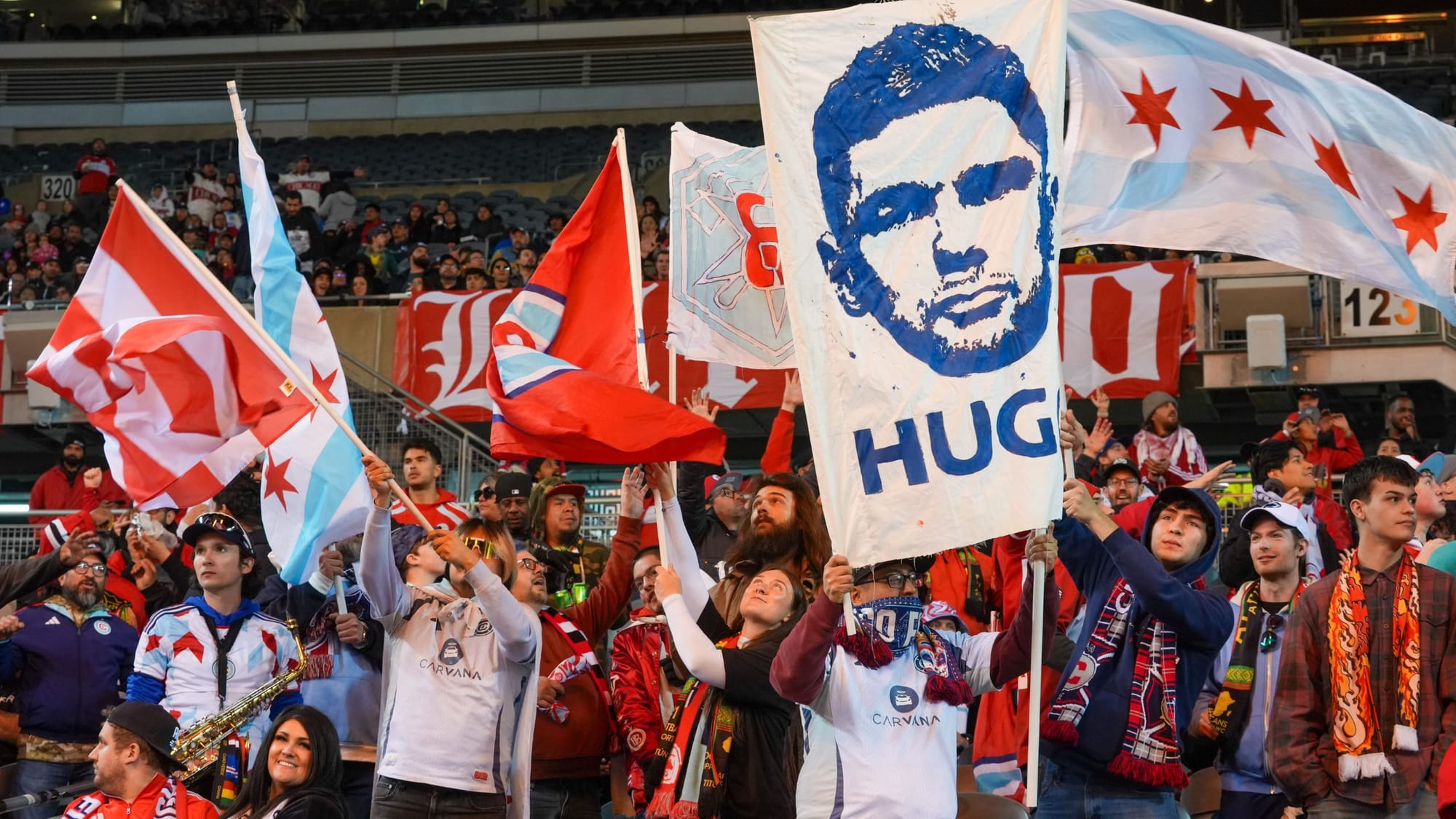
Yes, he has now missed two penalties. But the fact that Cuypers has 10 goals
The underlying numbers that Hugo Cuypers is putting up are stellar. He’s at just under 8 xG (and, since this hasn’t come up a lot for people who pay attention to the Fire, it’s normal for Golden Boot candidates to overshoot their number here, though Cuypers is outshooting his numbers by even more in open play). On American Soccer Analysis’s goals added (G+) metric, which is the best single-number that we’ve got for evaluating performance, he’s second in the league behind Preston Judd in total (at +4.30 vs +5.03 for Judd), despite having played 258 fewer minutes.
He is putting up the kind of production any team would love to have, even from a pure goal-scorer – a poacher, a player who established residency in the opponent’s box – but that’s not the kind of player Cuypers is, and the numbers show it. Again, looking at the G+ metric, Cuypers is far and away the most effective striker in the league at interrupting – taking things like tackling, intercepting, recovering and blocking.
That’s something that, both by the eye test and by the statistics, few strikers are going to give you. And he’s doing that while tied for the Golden Boot lead, giving the Fire their first real shot at having a winner of that honor in a decade.
We've said it before and we'll say it again: Cuypers is a special player. And he's having a standout season.
We'll let the striker take it out with something he said after the match: "What the coach has instilled since he has arrived is a process, a way of playing. Overall, through the months and years, you're gonna get more results from that. Unfortunately, those last two didn’t go our way, but that’s the way the game goes.”