
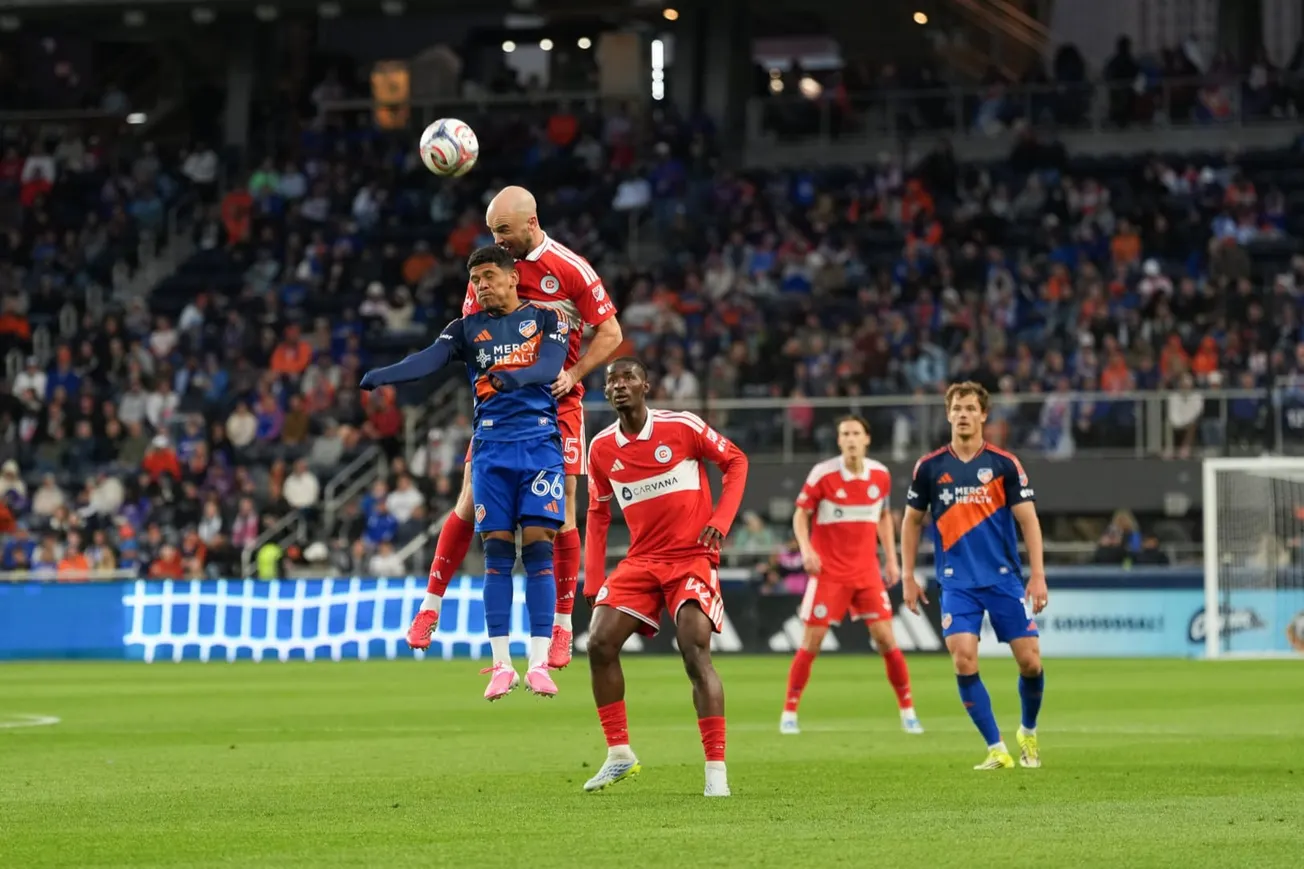
The Fire went to Cincinnati on a four-game winning streak across all competitions looking for a win that eluded them in both the meetups between the two teams last year.
They went up early, allowed an equalizer and then surged to a two goal lead that they carried into the final stretch of the game but couldn’t hold on, settling for a 3-3 draw that means the winning streak has now slid to a five game unbeaten run, with four in MLS play.
Well: As the saying goes, you can’t win ‘em all. Still, results that don’t go your way are often educational. Here’s five things we learned from the Fire’s 3-3 draw at TQL Stadium last night.
1. Sometimes, it might feel like last year
MLS seasons often feel like a weird length: It feels like it’s early and then, boom, suddenly, you’re a quarter of the way through. And the quarter mark is right about where we are – technically, it’s at half time next Saturday, when the Fire host Sporting KC. At that point, it’s both simultaneously still early and yet, you’re deep enough in that if you have to be seeing trends.
So far in 2026, the Fire results haven’t always been pretty, but the team has been getting results. It hasn’t always been as pretty as it was last year, but the tradeoff has been that the defense has been elite (more on that in a minute).
As a result, the Fire were coming off two 1-0 victories in league play where, particularly against top-of-the-conference Nashville, it never really felt like the Fire weren’t comfortable, even with a one goal lead.
That’s a far cry from last year, when the Fire could – and often did – pile on goals but just as often let the same thing happen at the other end (keep in mind, they were the first team in MLS history to score seven goals and allow seven against in the same season). As a result, the Fire couldn’t finish off games since no lead felt safe (well, maybe call the 7-1 win over D.C. United the exception that proves the rule).
Last night, though, it really did feel a lot more like 2025 for the Fire. After a relatively even first half where Zinckernagel’s goal from the penalty spot was the difference, FC Cincinnati dominated the Fire in the second frame. They outshot the Fire 14-3 in the half, starting with Kenji Mboma Dem’s header less than a minute in that went off the woodwork. The xG in the second frame was 2.04 for the home team, and just 0.16 for the Fire. Cincinnati were getting chances early and often.
If the Fire had made adjustments after Cuypers’s second goal in the 48th minute to stop – or at least stem the tide of – Cincinnati’s attack, it might have been a different story, but by Ender Echenique’s shot from the top of the box in the 52nd minute that forced Chris Brady to be incredibly sharp, it was clear that this was going to be like last year, when a two goal lead didn’t feel like enough.
So it turns out that…
2. The defense isn’t infallible
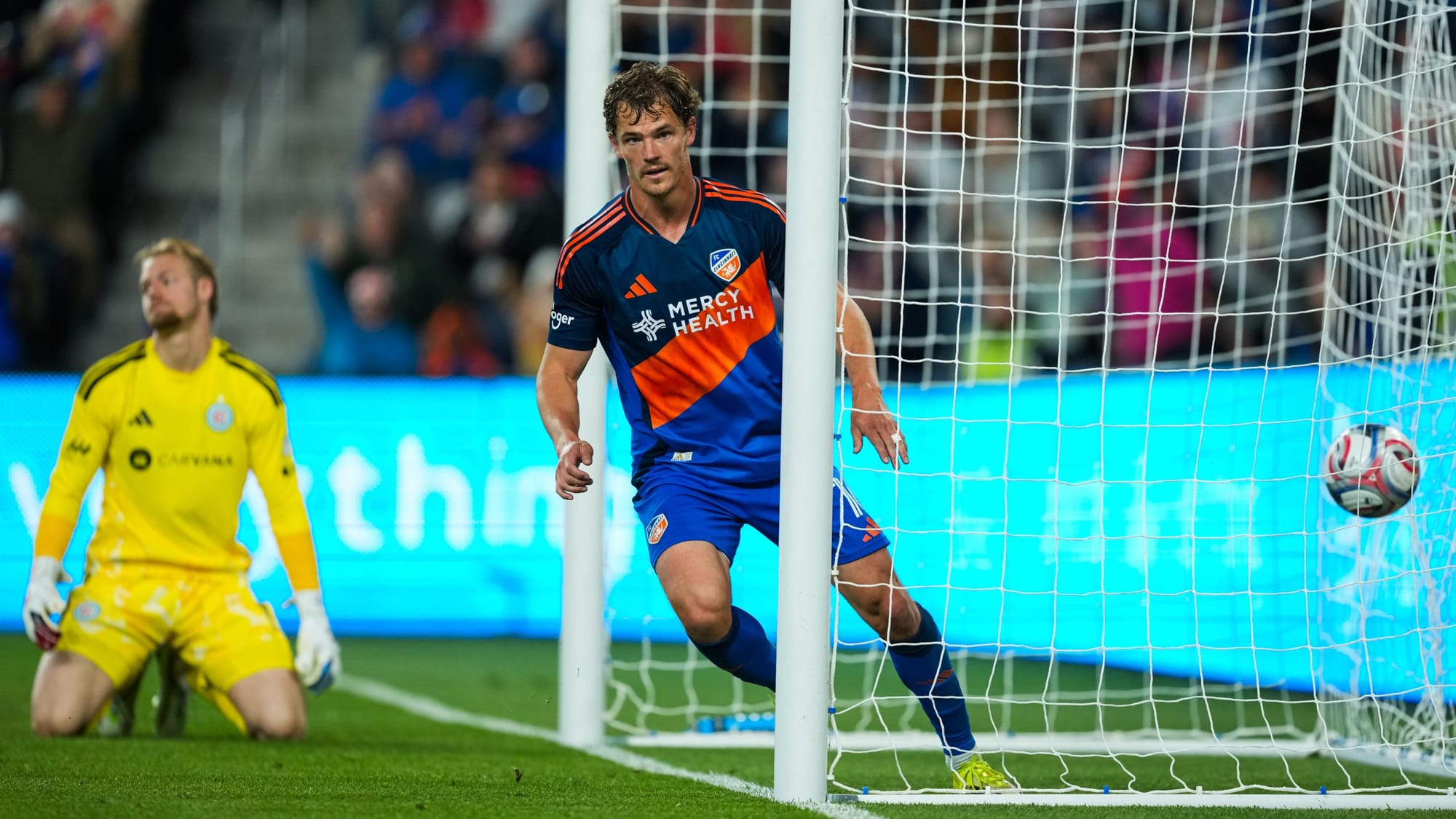
When Djé D’Avilla deflected a lobbed ball into the box past Chris Brady, equalizing the score for Cincinnati, it was the first time in 2026 that the Fire conceded more than two goals. That was also the first own goal the Fire conceded this year.
It was the second time that a defending mistake cost the Fire that night. About 10 minutes before, Mbekezeli Mbokazi tripped Gerardo Valenzuela just as he entered the box, causing Malik Badawi to point to the spot for the second time that evening.
Mbokazi has started to get noticed around the league, and Fire fans have certainly enjoyed watching him. Fire fans voted him Man of the Match and he made it to MLS’s Team of the Matchday. He clearly has supreme talent, but, as Jack Elliott noted after last week’s game against Atlanta, he’s still a “raw talent.”
Behind the highlight-reel plays, the underlying numbers show what the team captain – and Mbokazi’s partner on the back line – meant. After last night’s action, Mbokazi has 0.89 goals added according to American Soccer Analysis’s database. Goals added includes both offensive (adding goals for your team) and defensive contributions (subtracting another team’s chances of getting a goal) and boils it down to a single number.
That puts Mbokazi in the middle of the pack amongst center backs, at 47th out of 122 players in the database. On a per game basis, he’s 93rd. If that doesn’t pass the eye test, here’s why: He’s put up strong numbers at interrupting, shooting, receiving and passing. But his fouling has cost the team (due in no small part to the penalty last night), where he ranks 108th on a per-game basis – very near the bottom. He’s still got concrete things he needs to learn if he wants to reach his potential, and there’s a good chance that MLS is the best league in the world for him to do that.
You know who has been elite in a game changing way for the Fire’s defense? Chris Brady. He’s beating the expected goals (xG) that he’s faced by a league-leading 5.42 over eight matches (on a per-game basis, LAFC’s Hugo Lloris is slightly ahead of him, but Brady has played 220 minutes more than the Frenchman).
Put another way, that means that Brady is letting in just 56% of the goals that the models would expect. I’ve often argued that few metrics – even advanced metrics – truly isolate the player: It takes two to complete a pass. That’s especially true with goalies: xG accounts where shots are taken from, and xGOT accounts how likely goals are to get in based on where the shot actually goes. But that doesn’t say if the goalie isn’t where they wanted to be on the shot because the attacking team had multiple players open.
Brady has benefited from the Fire’s improved organization on the back line, and with Mbokazi’s ability to clear the ball out of danger before it becomes a shot or a second chance has greatly helped the Fire. But when Brady’s had a decent back line in front of him, he’s been absolutely elite, and that’s the case here.
The Fire’s defense has been very good – and there’s reasons to think that the team might continue beat the xG model as a result – but going the other way, the team has been hewing a lot closer to where the models say.
And on that note….
3. The Fire really don’t have an Evander (that they’ve been playing)
Matt Doyle, whose analysis is the best in the business, was quick to pick up on the fact that the fire have lacked a chance creator in central midfield. We’ve talked about it too, both in these pages and on The Bonfire. I don’t really want to harp on this too much, but the TL;DR is that last year, André Franco, when healthy, was that guy.
Before that? The Fire didn’t really have a guy playing that role, at least, not the way Franco did during the Fire’s fall surge that sent them into the playoffs – or a guy like Evander did last night.
Evander finished the evening with a goal on the night and a combined 2.28 xG plus expected assists (xA). Zinckernagel was second in the game, with 1.3 – but just 0.28 xA (this is using Opta’s model, which only includes primary assists. I wish MLS would give us the tools to use their data for this stuff, but they don’t). I’m assuming that at least 400% of that comes from Zinck’s absolutely stunning through ball that led to Cuypers’s first goal of the evening.
Evander isn’t a perfect player, and he’s been having a rough season: The penalty shot was his first goal of the year, meaning he still hasn’t scored in open play. And he’s got just one assist on the year, coming a month ago against the Revs. But seeing his ability to be such a creative force made it laid bare the fact that it’s not something the Fire have had this year.
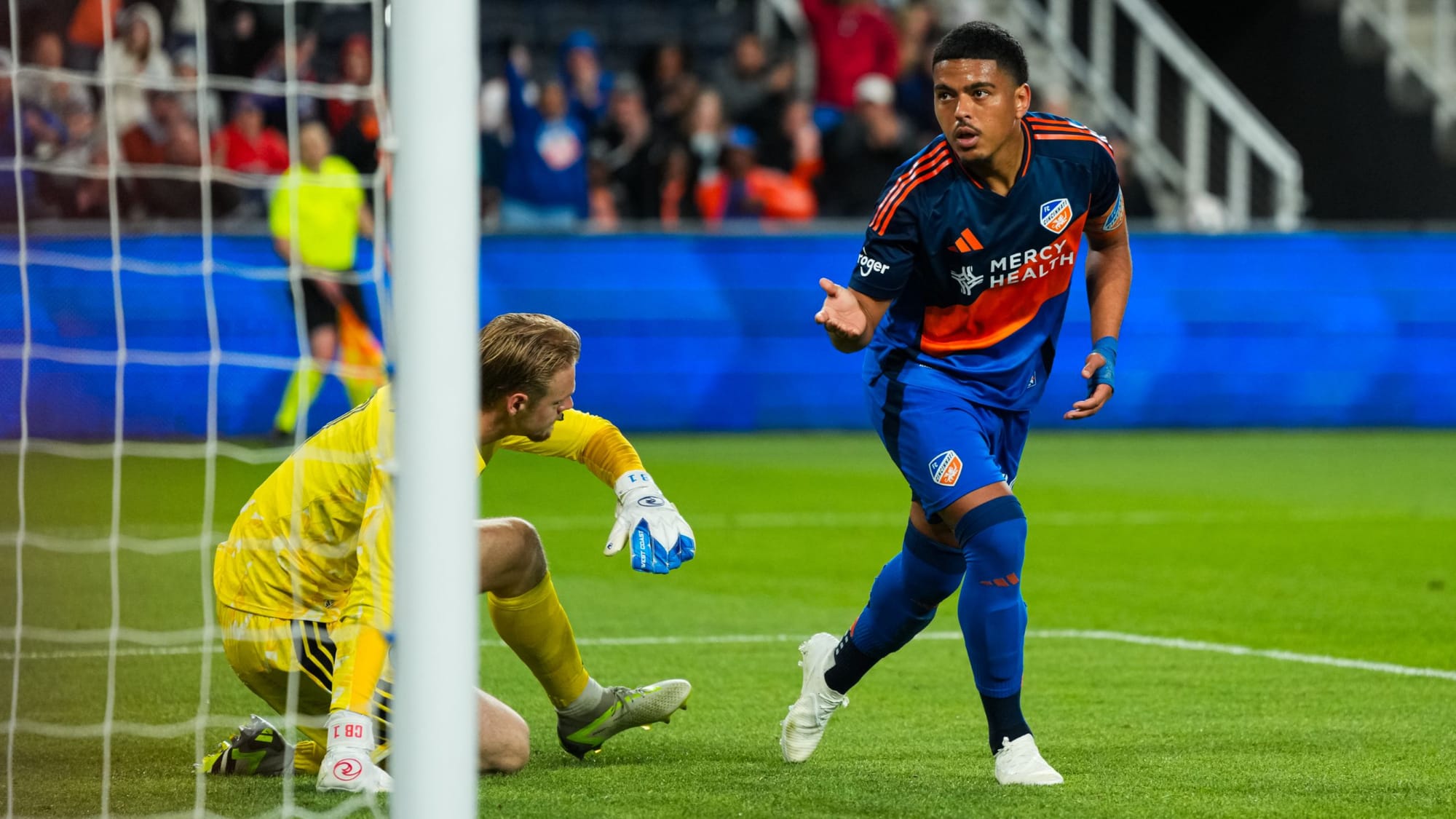
Once again, Robin Lod was asked to play a version of that role, and once again, it was a disappointing outing for him. He’s been struggling since coming to Chicago. Maybe Minnesota United didn’t want to bring him – a club legend – because they knew something the Fire didn’t. But overall, I think he hasn’t been asked to play to his strengths and it’s early enough that I still think there’s a good chance that he’ll turn that around (then again, I said that about Kellyn Acosta for far too long, and it didn’t happen).
Despite struggling this year, Evander is 14th in the league in expected goals plus assists per 90 minutes, at 0.87. Cuypers – notably not playing the same position – isn’t far behind at 0.83, leading the Fire, but that’s obviously skewed towards goals. Jonathan Bamba – also not a midfielder – is next up for the Fire, at 0.64 (34th in the league). Zinckernagel has 0.55 (48th). Lod is 77th.
He’s been asked to play a variety of positions, so not all of his time has been in the central midfield role, but a lot of it has – and it hasn’t been convincing. It’s just not good enough for a team with ambitions to be a top team in the conference.
So what’s Berhalter to do? So far, the Fire have been getting results and after the World Cup break, they expect to have Franco back – and the transfer window will be open so even if Franco isn’t at 100% (and many players aren’t for at least a year after returning from ACL surgery, though some are), they can bring in another player.
Until then, though? John had a good suggestion on The Bonfire: See how Maren Haile-Selassie does in the role. John pointed out that Haile-Selassie, who has six starts on the year, is playing too well to be taken out of the XI. Despite that, it’s hard to make the case that he should be starting ahead of either Zinckernagel or Jonathan Bamba on the wing.
Haile-Selassie is a fast, technical player and, despite not playing in a role where he’s asked to be the chance creator, he leads the team with 1.9 xA. On a per-game basis, that puts him in the 93rd percentile in MLS this year. Also on a per-game basis, he’s in the 95th percentile for dribbling – something the Fire could use more of to challenge opposition defenses – and he’s in the 91st percentile for creating what Opta considers “big chances.” And all of those stats come per-game stats come with one of those games being a start at left back in the season opener.
I’m not saying he’ll take over the league. But he is a quality player who has been playing well. Would that have helped in this one, with Bamba absent? No. But when Bamba and Zinckernagel are both available, it’s something I hope Berhalter thinks about.
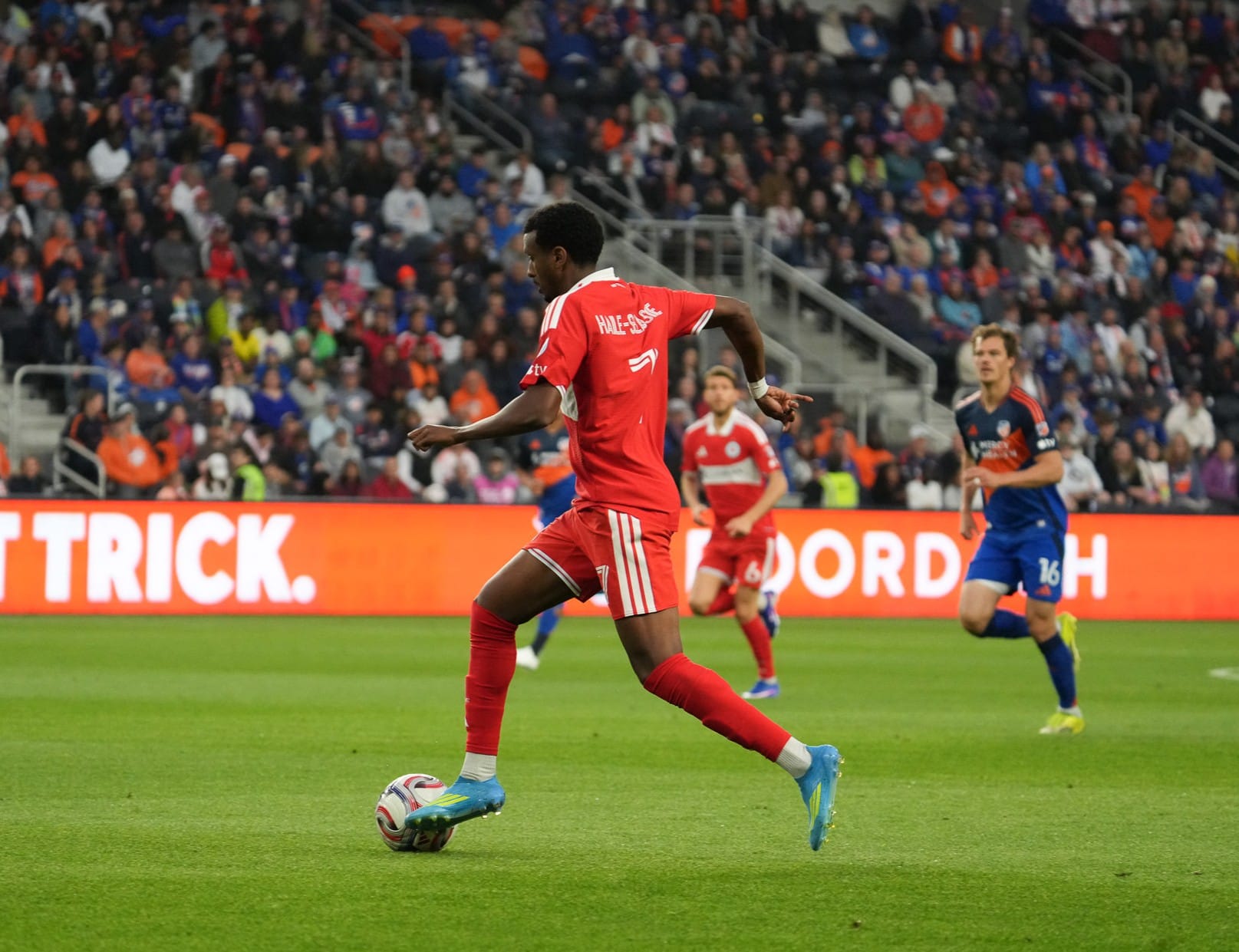
I also hope that the team is starting to plan for what happens if Franco doesn’t look like he’s at 100% by this summer, with the window open. Pinning the hopes of a very good team that feels like it’s near a window to compete for trophies on a player coming back from an ACL injury
Speaking of possible transfers to the Fire….
4. Hugo Cuypers is on a mission to be irreplaceable
MIR97 Media has been one of many outlets that have reported on the Fire’s efforts to bring Polish superstar Robert Lewandowski to Chicago. The issue, though, is that in general, the Fire play one striker at a time, and Lewandowski would all but certainly be a designated player, through the duration of a lengthier stay in Chicago.
That puts Cuypers, who is technically in a contract year (his deal expires at the end of 2026, but the Fire have an option year that keeps him under team control through 2027), in somewhat of a precarious position, and I’ve heard more than one rumor that, as part of the process of kicking the tires on Lewa, the team’s also put out feelers to see what they could get by moving Cuypers on.
At the start of preseason, with Lewandowski rumors swirling, I asked him if he was worried about it. He said that he’d “been around football a long time, so I’m mature enough to deal with it in an easy way.”
Apparently, what he meant by that is that he was going to score a boatload of goals and make it look easy.
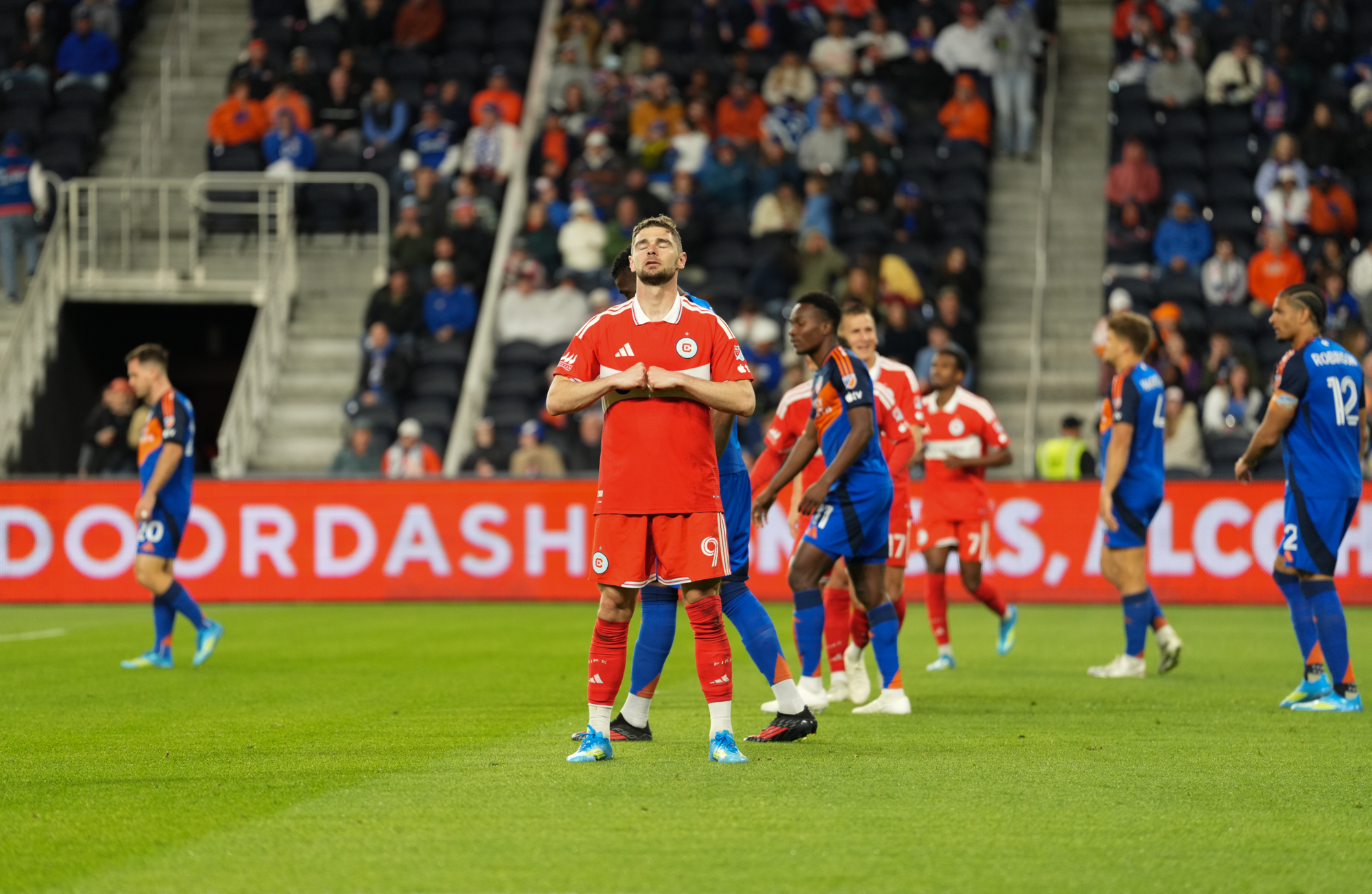
He had two goals last night, coming back from a head injury that kept him from the Fire’s past two games. He wasn’t able to join the team in training until Thursday. And on Saturday, he walked into the lineup like he hadn’t missed a single beat.
So far in MLS this year, only Petar Musa (9 goals) Sam Surridge and Lionel Messi (both with 7) have more than the six goals that Cuypers has scored. And they’ve all had more appearances than Cuypers, who has now missed three games this year due to injury (Surridge has played fewer minutes than Cuypers, partly as a result of Nashville rotating as they’ve competed in CONCACAF).
Cuypers is eighth in the league amongst all players in American Soccer Analysis’s (G+) metric, and amongst strikers (thank you to ASA for separating out strikers, wingers and attacking midfielders, although listing Messi as a striker is certainly a choice), he’s fourth in the league.
In interrupting – intercepting, blocking, clearing, and recovering-type actions – account for 0.67 of Hugo’s number, which puts him far and away the best in the league. The only players in the same neighborhood as Cuypers are Orlando’s Tyrese Spicer (0.41) and Houston’s Ondrej Lingr (0.30). If you haven’t heard of them, that might be because they’ve got 0 goals between them this year. Musa, Surridge and Messi all have negative contributions in that metric.
He might not be the best pure goal scorer in the league, but he’s a very good one. And he does things that other elite strikers in the league don’t, and that Lewandowski all but certainly wouldn’t do for the team either. He’s on a mission to be irreplaceable for the Fire, but if the team does move him on, he’s making sure that he will have no shortage of takers.
And you know what else?
5. He’s Hugo The Selfless Striker
A lot of sports writing and analysis becomes, well, tropes. There are slightly different versions of the same statement that are said by coaches and players around the world in basically every sport.
One of those is that goal scorers like to score goals, or the slightly different “goal scorers score goals. It’s what they do.” You could ask AI to generate 100 variations of that and I guarantee you that unless it started hallucinating partway through, every one of those versions has already been said by an actual person in an interview.
Well, Cuypers is a goal scorer. But last night, we learned he’s also a selfless one.
Deep in first half stoppage time, with the game tied, Cuypers drew a foul in the box that awarded the team a penalty. I was already starting to write something about a first half brace for the Belgian when Zinckernagel took to the spot.
Zinckernagel converted, giving him his second goal of the season and goal contribution on the night after assisting on Cuypers’s opening goal.
The Dane led the Fire last year with 30 goal contributions in the regular season, split evenly between goals and assists. Earlier in the year, he became the first Fire player to hit double digits in both categories in the same season. By Decision Day, he’s broken the team’s record for goal contributions.
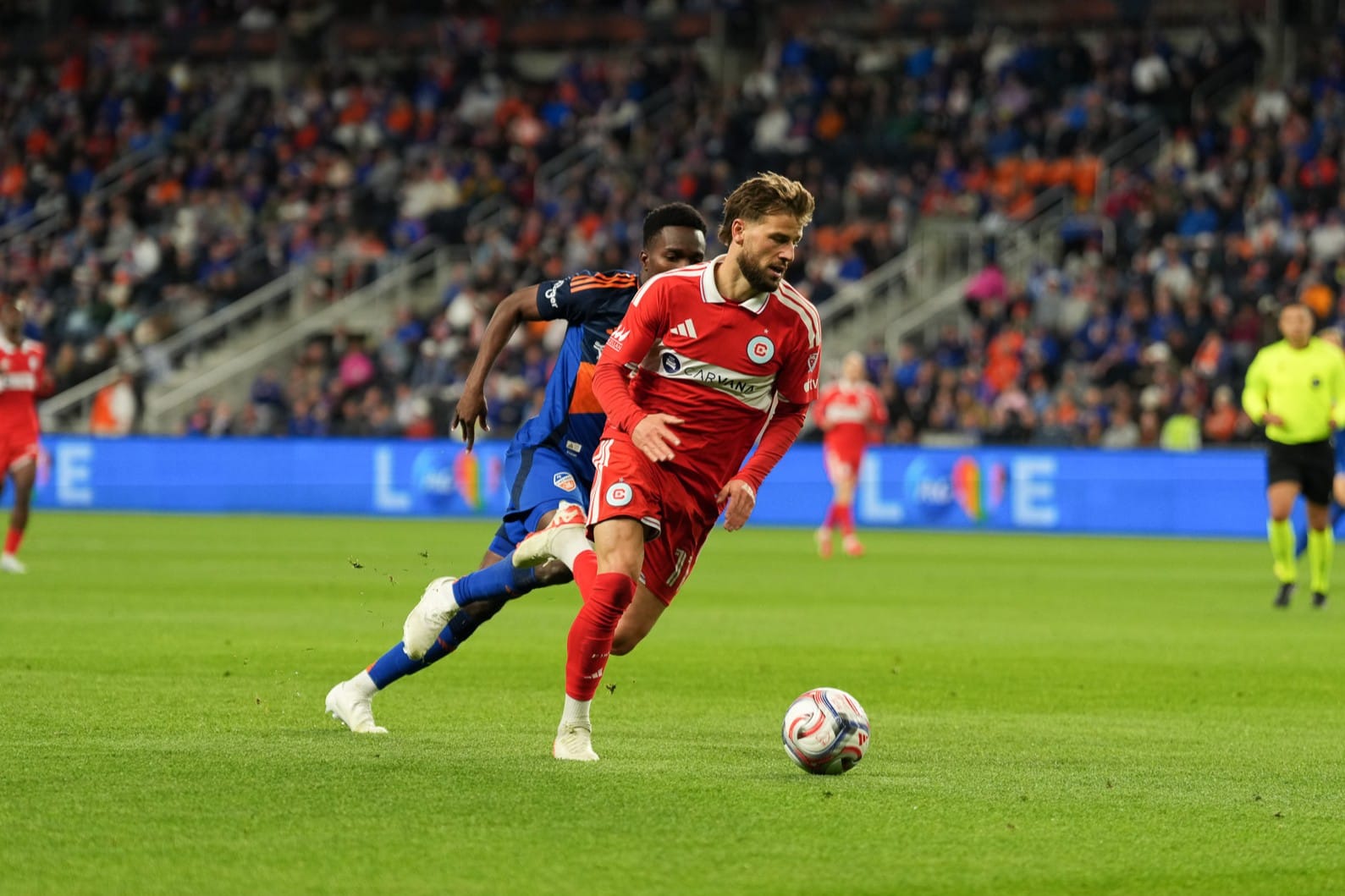
In 2026, though, it didn’t feel like he picked up where he left off. Playing outside of his favored position for much of the Fire’s opening games, Zinckernagel still hadn’t made first goal contribution of the year.
In the three games since, though? He’s had four, including the two last night. His two goals and two assists may still be half the rate that he hit last year (he was due to revert some to the mean, but I still think he’s good for more than half the production he had last year), but regardless, the goal from the spot fully puts any slow start behind him.
Cuypers, though, is in the hunt for a Golden Boot. In light of that, after the game, I asked Berhalter about Zinckernagel taking the penalty after Cuypers drew the foul. Here’s what the gaffer said: “No, we have designated penalty takers, and Hugo was number one, Phil was number two. And on the pitch they decided, Hugo decided, to give the ball to Phil.”
Joe Chatz wasn’t going to leave that quote be, and what that said about the Fire’s leading goal scorer. “I think it says a lot about Hugo. We know what type of guy he is, we know what type of character he is, and things like that demonstrate it, that he's not a selfish person. He's in it for the team. He shows it by his play and by, I think, gestures like that.”
When Cuypers was asked about it, he said that “I had already scored!”
I’m still trying to square his unselfish behavior with his clear hunger for scoring goals, but regardless: He’s Hugo the Selfless Striker, everyone.
Honorable Mention: It’s Great to be Together
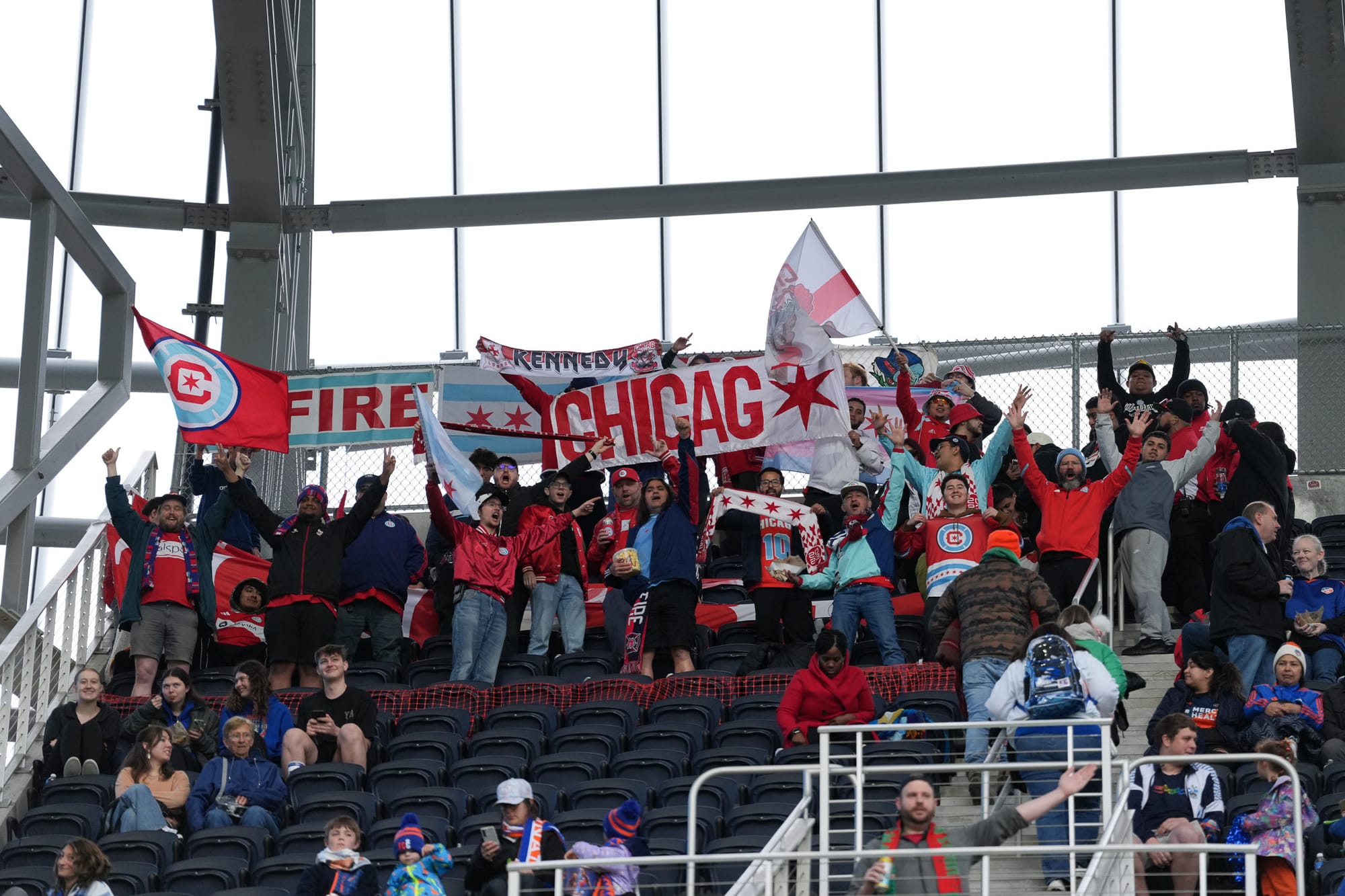
One of the best things about sports is its ability to bring people together. You see that with the diversity of fans showing up at Soldier Field – and soccer venues around the country – on matchdays. On a smaller scale, you see it with the gameday traditions of families, from elaborate tailgates to parents and kids climbing on the couch and putting the game on TV.
Fire supporters had a strong turnout in Ohio (in two games now this season), and a surprising number were there in Houston for the season opener as well.
One of the best things about American soccer culture is how welcoming it is of people from different walks of life, different backgrounds and diverse identities (and, point of fact, last night was FC Cincinnati’s Pride Night). On top of that, though, outside of two heated hours during matches, supporters from different clubs (generally) welcome each other.
The Fire’s matches against Cincinnati – the Jake Peters (or RIPeters) Memorial Derby – are a great example of (don’t worry: there were no fatalities involved in the derby). The derby is borne out of a Fanfreundschaft (fan friendship) between Fire and Cincinnati supporters.
American supporters are as passionate about their team as any around the world (Chicago to Houston is roughly triple the distance as the trip from Newcastle to Bournemouth, the longest away trip in the Premier League. You don’t do that without passion). But before and after matches? Supporters from the two clubs (generally) get along.
More personally, when I’ve gone to say hi to Fire supporters at away matches, I’ve been blown away – and quite frankly, very humbled – by the warm reception I’ve gotten.
Covering the game has given me a great number of connections to people around the continent (and around the world) that I cherish, but writing (and podcasting) but writing is often a solitary (if not quite lonely) activity. We see traffic, we count hits and listens, we measure engagement – but all of that’s far removed from actual humanity. In moments, you have to wonder if the work you’re putting actually matters to anyone.
So being in a city hundreds of miles away and getting that kind of reaction means a ton, and I can’t begin to say enough about how moving it was.
Truly, from the bottom of my heart, I appreciate it.