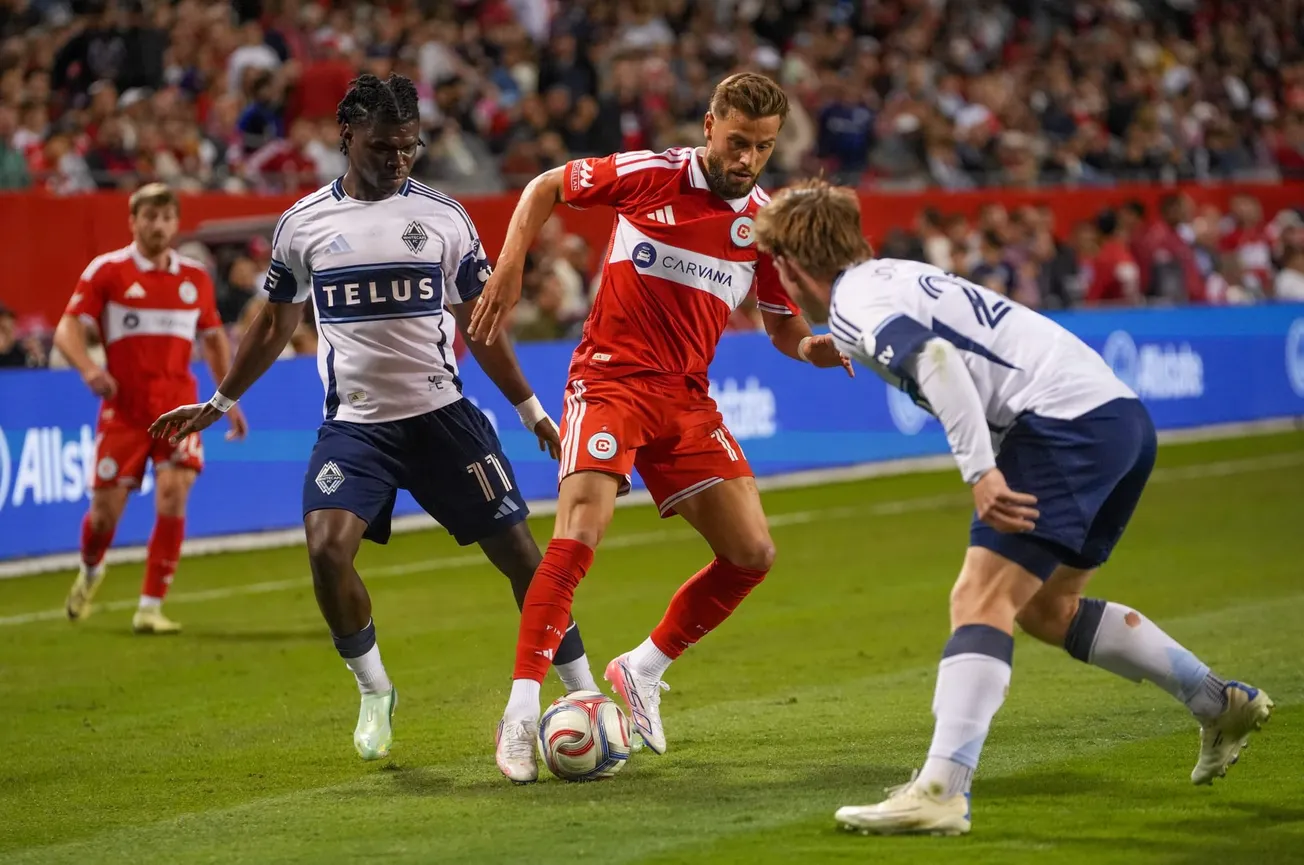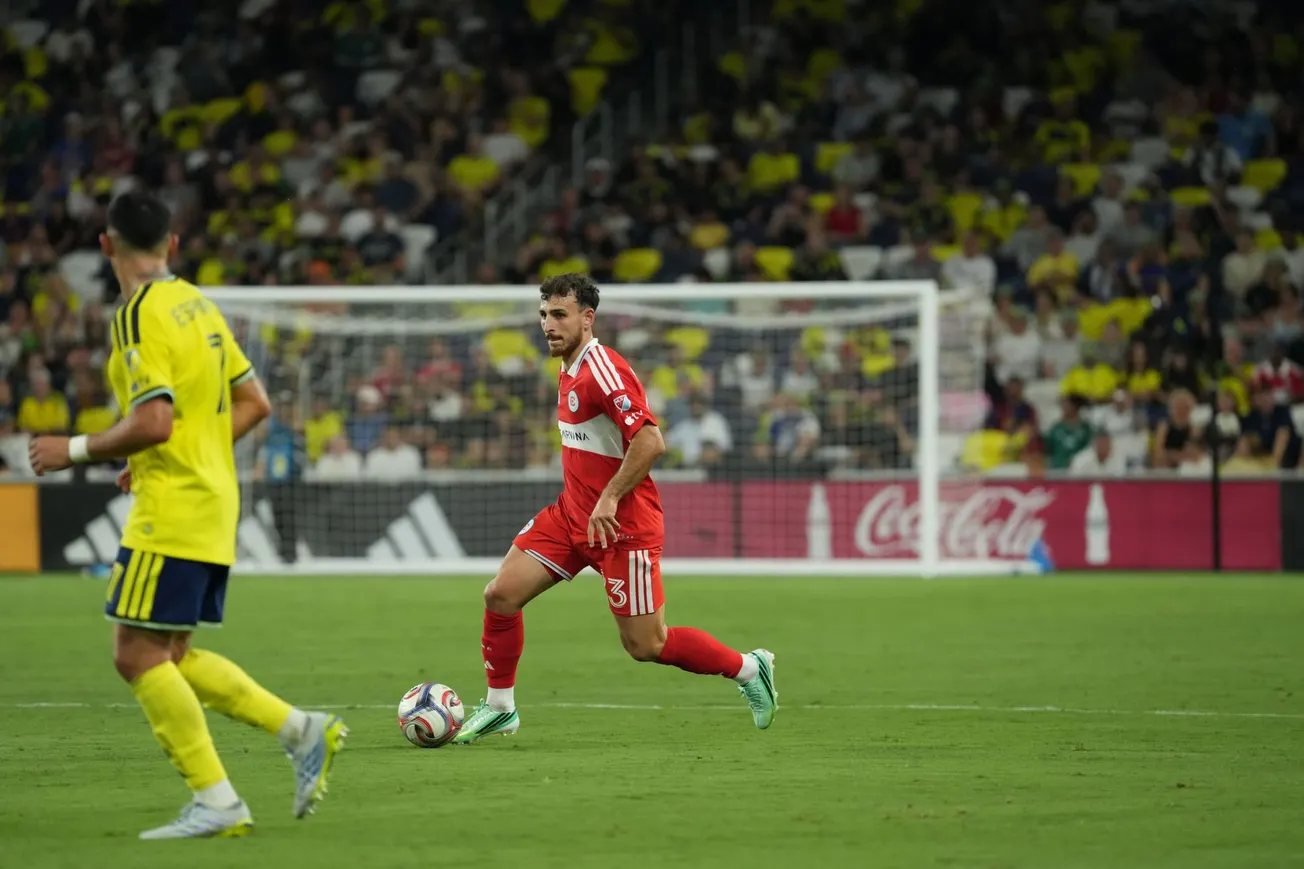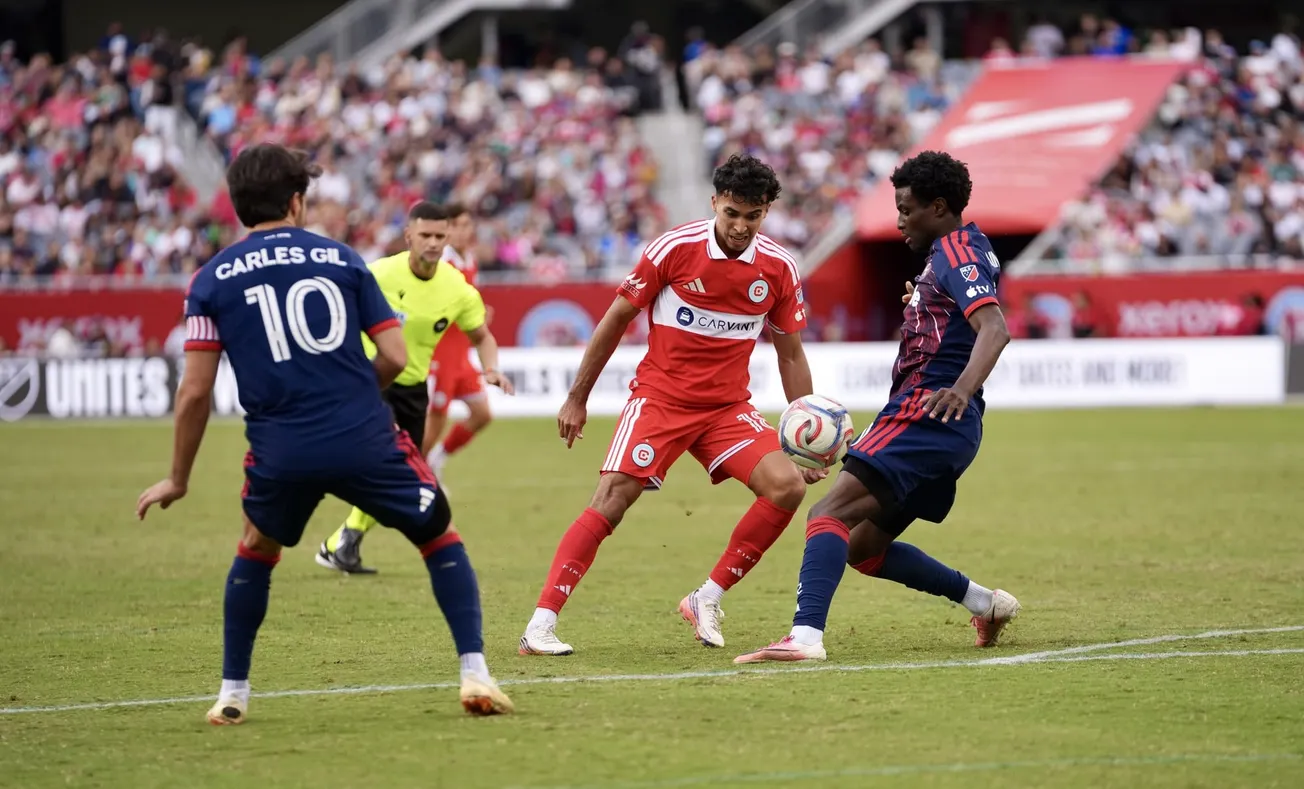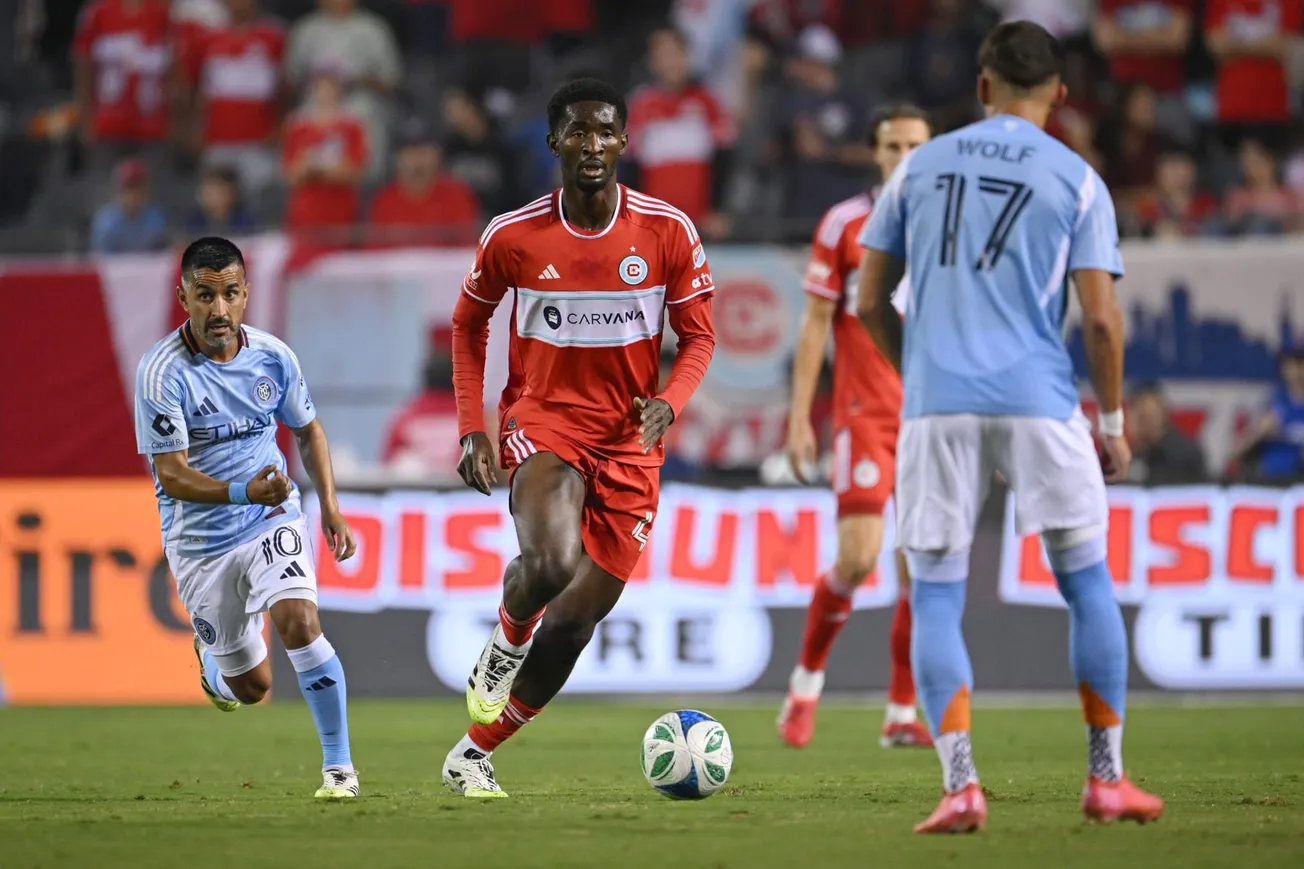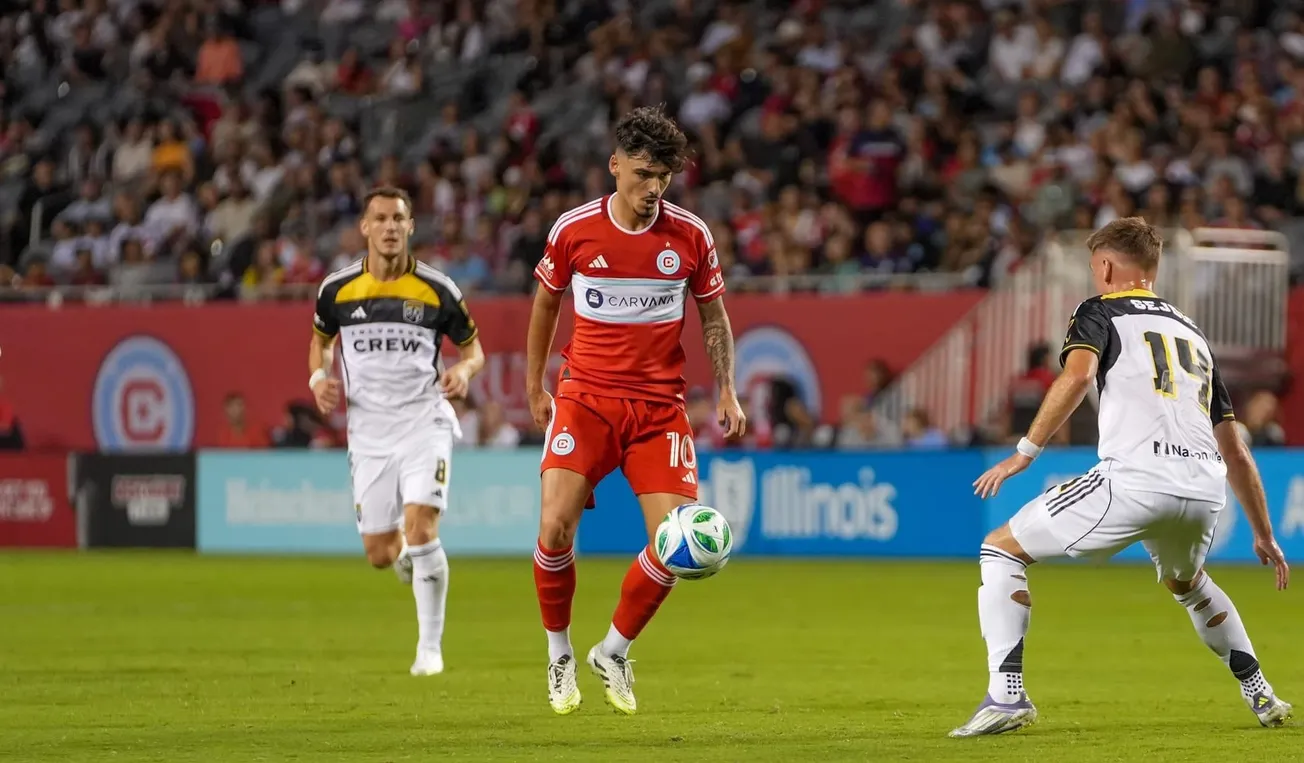

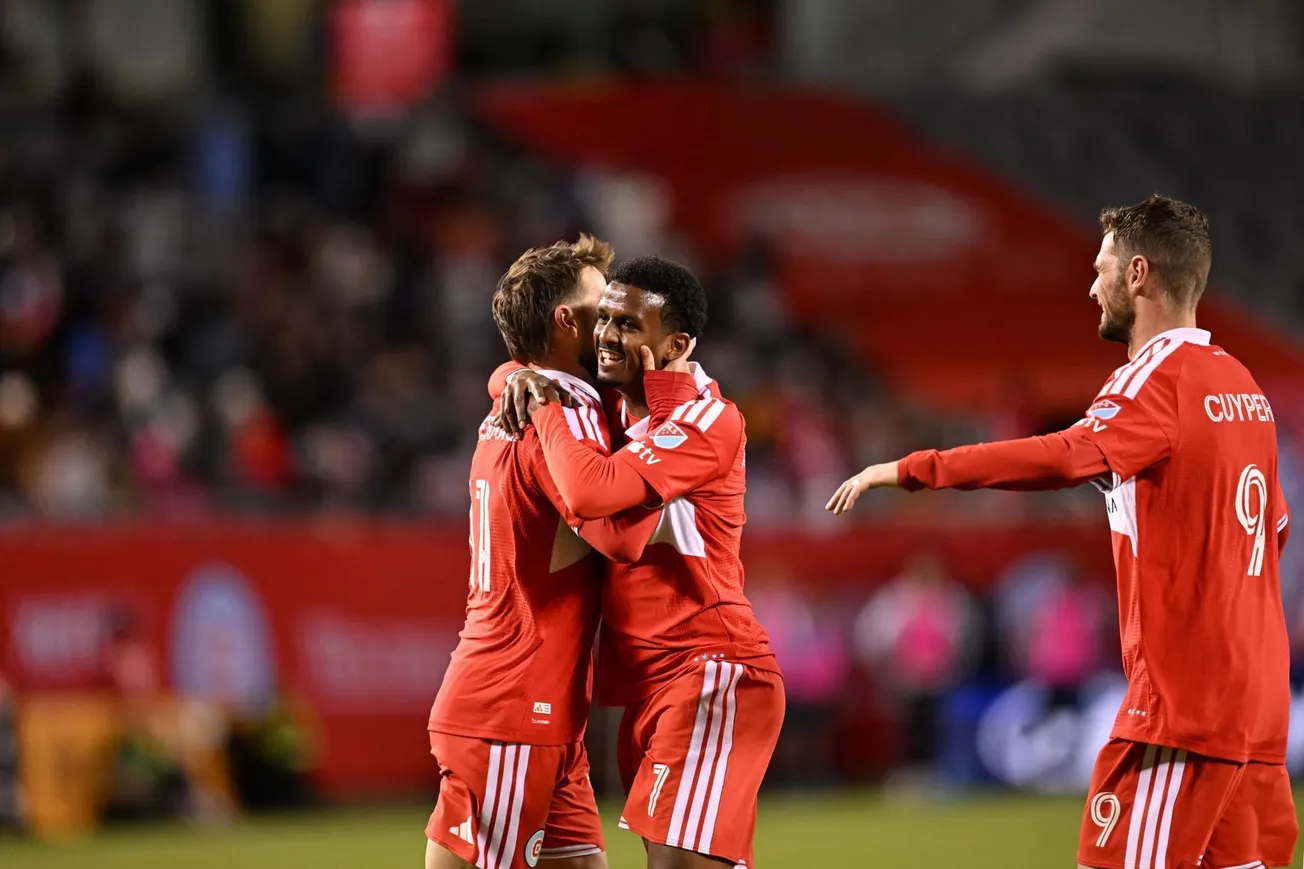
A frustrating first half gave way to a five goal second-half outburst for the Fire, marking the first time the team had a five goal margin of victory in front of home fans since May 8, 2019 when the Fire dispatched the New England Revolution.
Sporting Kansas City may be down on their luck (and a lot more) right now, but there’s still lessons we can take from this one. Here’s five things we learned last night at Soldier Field.
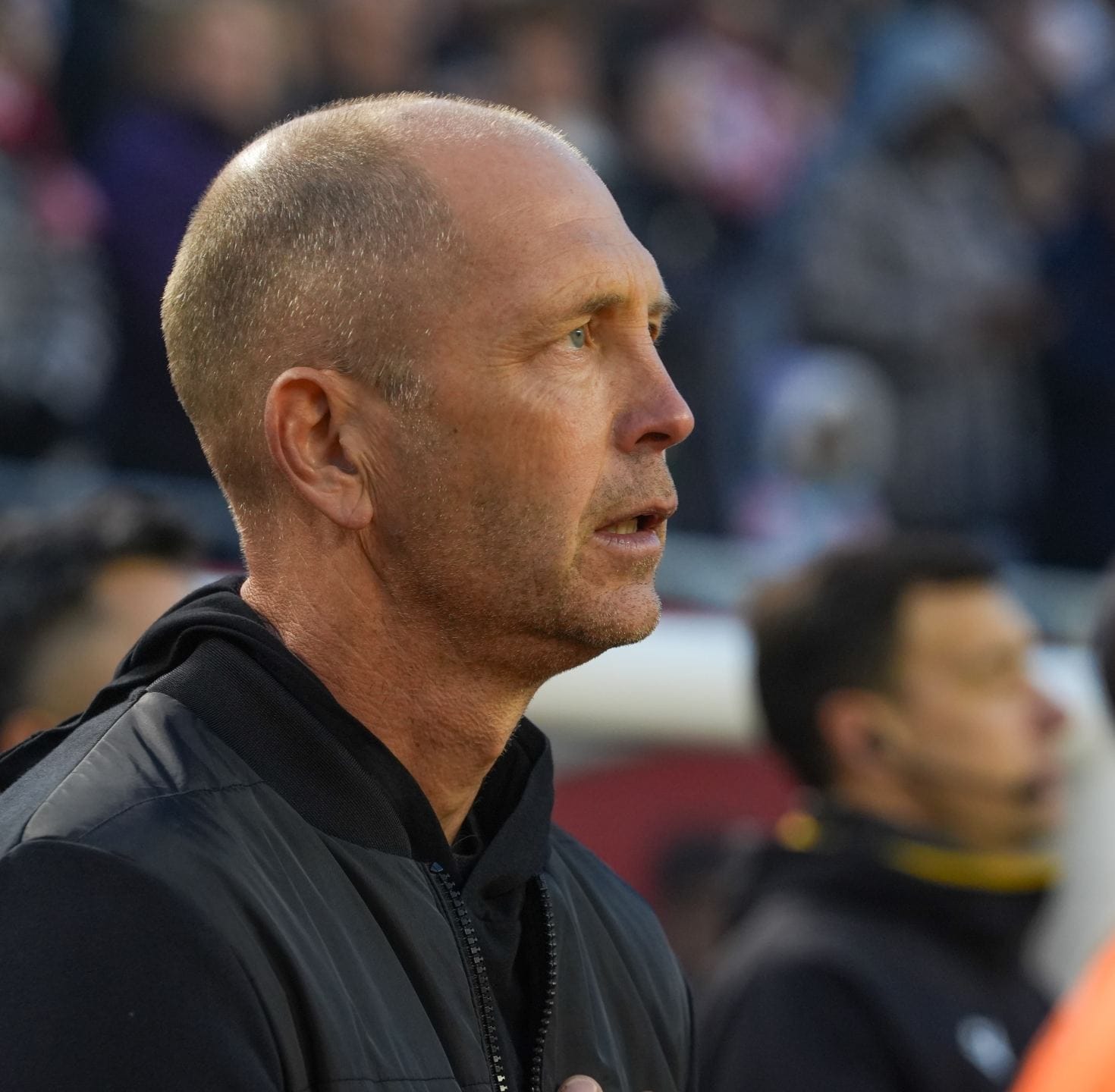
1. Yes, Gregg Berhalter knows how to break down a low block
One of the most often-lobbed criticisms about Fire Head Coach Gregg Berhalter during his tenure at the helm of the U.S. Men’s National Team was that his teams couldn’t break down a low block and as a result, struggled to get results against what could fairly be called “weaker opponents.”
The shouts – that is, if you can call it a “shout” when it’s a post on Twitter from an anonymous profile with a vintage soccer ball or American soccer logo – got particularly loud early in the 2022 World Cup qualifying cycle, the USMNT’s played to a 0-0 draw in El Salvador and a 1-0 defeat in Panama.
Here’s the thing: Unlike basketball, where big skill gaps often result in Harlem Globetrotters-vs-Washington Generals-like score gaps, soccer is a low-event sport and as a result, the low block can be frustratingly effective. Fans who came to the sport through playing get this. But for fans coming to soccer from say, basketball or gridiron football, it’s a change that some struggle to make.
Don’t believe me? Here’s Hugo Cuypers, the man currently one goal shy of sharing the Golden Boot lead in MLS this season on it: “You can’t underestimate how hard it is to break a low block down. They had one chance at the beginning of the game, and they didn't really counter, so it was hard to find those spaces. It's a balance between trying to take the risk to go and create chances and not getting broken in counter-attacks.”
Against the FIre, Rapaël Wicky lined his team up with five players in the back, and even though the Fire had about 75% possession in the first half, and the field tilt (the ratio in one team’s final third vs their opponents) was 84-16 in favor of the Men In Red, the Fire had no shots on target in the first half due to the effectiveness of SKC’s low block.
In the locker room at half, however Berhalter showed that he knows how to make adjustments to break a game open, because, spoiler to no one, the game did not end 0-0.
Speaking of….
2. Berhalter can go to his bench first
One of the other criticisms of Berhalter (which we’ve made on The Bonfire is that the team has often failed to make the needed adjustments at half and that he’s gone to his bench too late.
Last week, Berhalter didn’t look to his bench until the 73rd minute – by which point FC Cincinnati had already swapped four players. It’s a bizarre contradiction from a man who calls his subs “solutions” on a regular basis.
Although the team did make some adjustments at half, the first few minutes of the second frame felt mostly like a continuation of what we’d seen in the opening 45. The Fire’s first shot on goal came off Cuypers’s penalty, which came when a relatively routine pass into the box – the kind of thing that SKC had successfully handled a number of times by that point (no pun intended) – resulted in a handball.
On the restart, SKC actually had some of their best attacking moments (grading on a curve here), stretching the field and earning one of their two corners of the night. It didn’t feel dangerous for the Fire, but it was as close to dangerous as SKC were likely to get. Stuff like that sometimes gets an equalizer.
Then Berhalter went to his bench, bringing on Robin Lod for Puso Dithejane in the 61st minute. With Lod came a shift: After playing as the second striker in a 4-4-2, Maren Haile-Selassie moved nominally to the left wing, and he, Lod and Zinckernagel would rotate in and out of central positions as Dean and Gutman pushed higher, putting emphasis on the “wing” part of the wingback role. (More on this in a bit.)
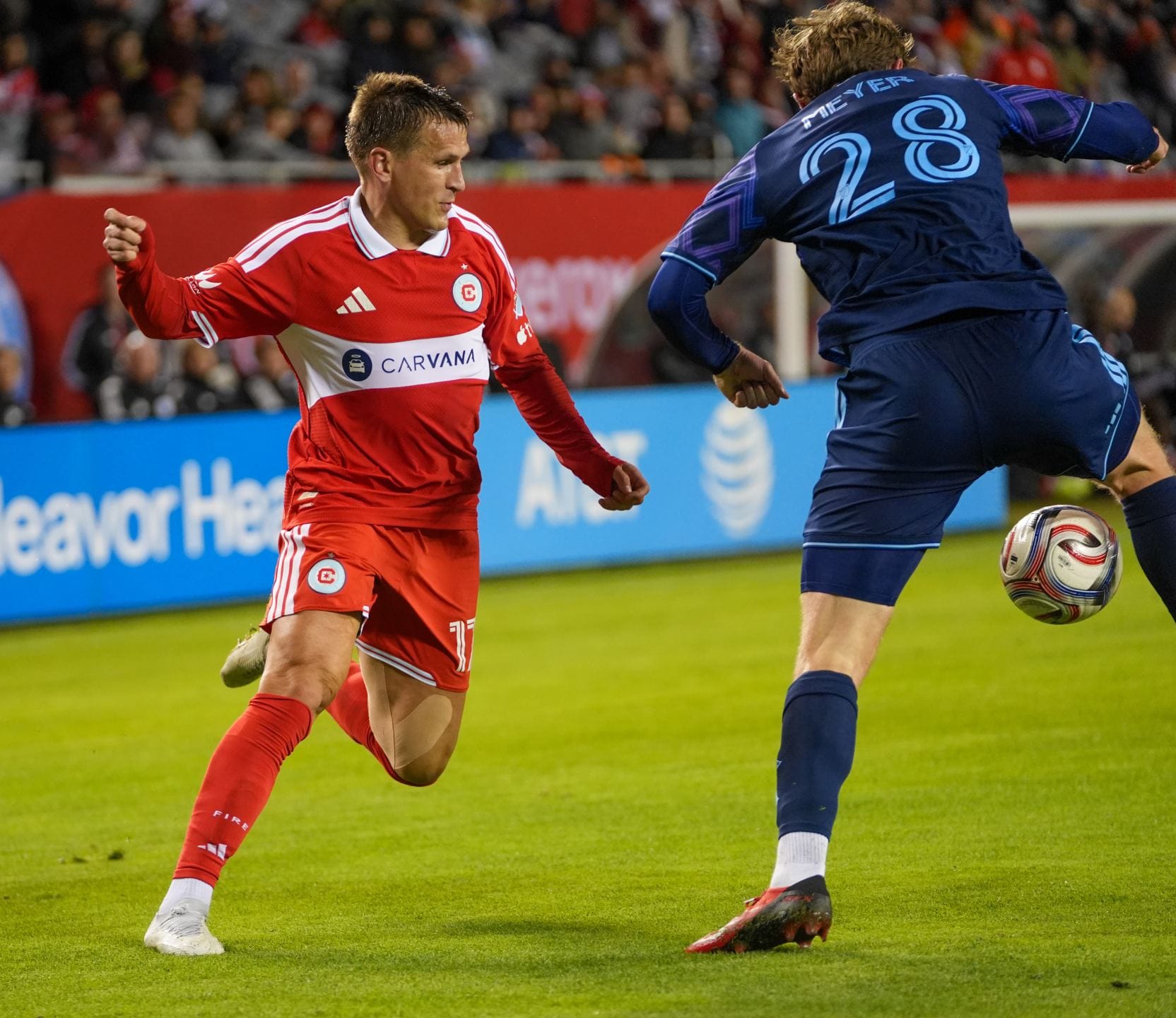
It took a bit for the adjustments to take root, but just a few minutes later, the Fire had their second goal of the evening, and first from open play. It wasn’t exactly “game over” for SKC at that point, but based on what we’d seen so far from the visitors, getting a result would have taken something close to a miracle.
A sub that brings a tactical shift that changes the game for the Fire. You love to see it. (None of that, by the way, is an indictment of Puso Dithejane’s play in his first MLS start. The South African U22 had a good performance, with Berhalter calling it “lively” in postgame media availability, while also praising his attitude and mindset.)
3. I hate this but the MBAs are right: Good work can come from committees (sometimes)
Earlier this month against Nashville and Atlanta, with Hugo Cuypers out with a head injury and Berhalter deciding that Jason Shokalook, nominally the team’s backup at his position, wasn’t ready for a start (something we talked about), the Fire settled on a “scoring by committee” approach.
That involved playing out of a 4-4-2 (something the Fire hadn’t done previously under Gregg Berhalter), putting Lod and Haile-Selassie up top. It worked! The team emerged from both games with 1-0 victories. But, as the score lines suggest, it didn’t exactly look like a recipe for continued success. (There’s a reason that “scoring by committee” is often used pejoratively.)
Another thing we talked about (several times now): the team’s lack of a playmaking no. 10 central attacking midfielder while André Franco is injured.
The Fire had SKC pinned deep throughout the first half, and over the course of the match, out-passed SKC 708 to 289. The Fire completed five times as many passes in the final third as Kansas City in the match (156 to 31), using data from Opta.
Here’s how that felt in practice: When a reporter returned after leaving the press box during the first half (likely to call in for postmatch media availability for the Chicago Stars following their win earlier in the evening) and asked me how things were going, I joked that the Fire had been on the power play and honestly? That’s kind of how it felt. But it wasn’t a terribly effective power play, with the Fire often cycling the ball outside of the box and not really breaking through (again, no shots on target for the Fire in the half, despite having the ball three times as much as SKC).
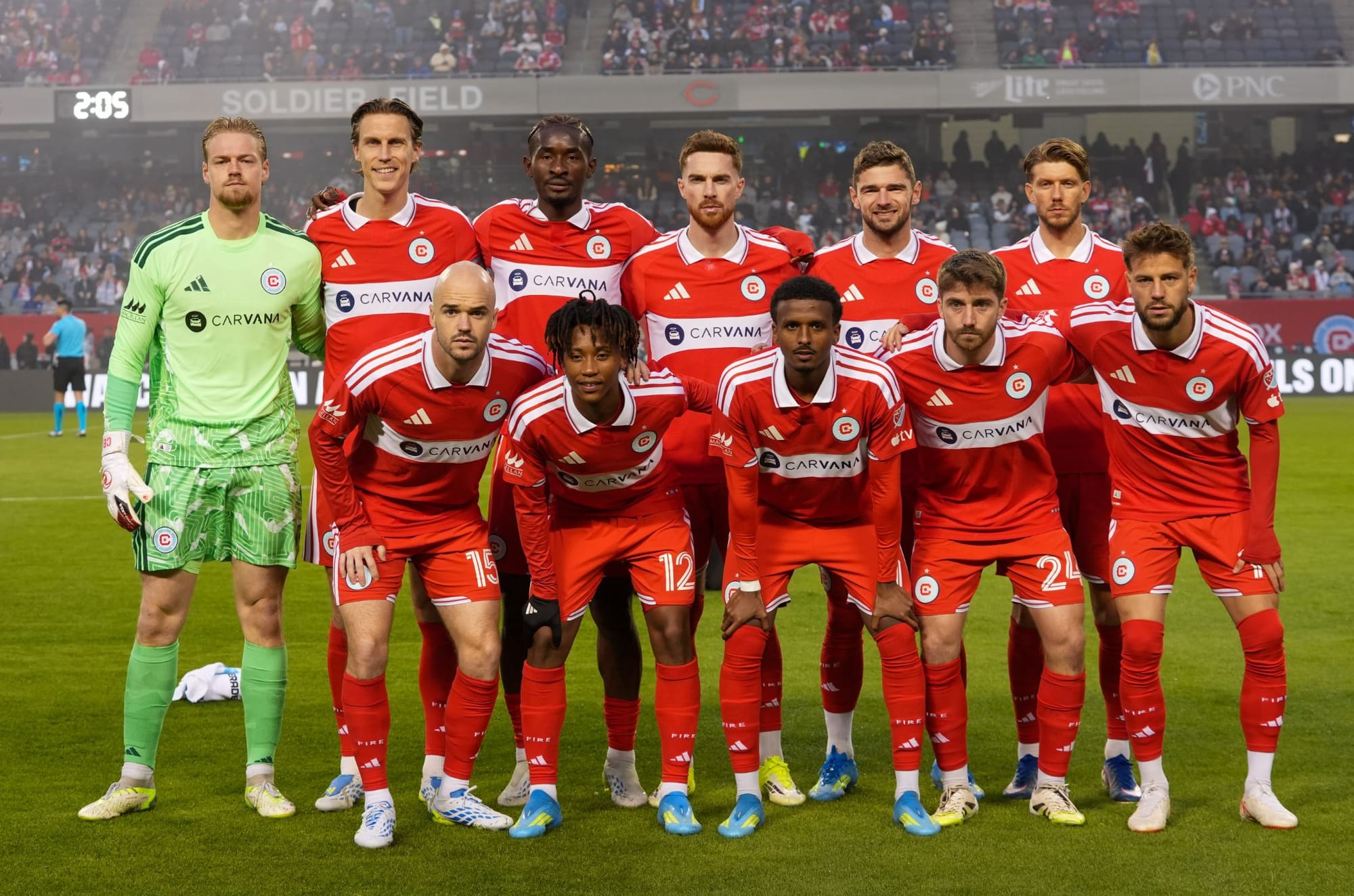
Despite that, they didn’t get clear chances in the first half, with their closest coming off Zinckernagel’s corner.
The team sorely needed a creative playmaker, and it showed. Lod may not be that guy, but he was the closest option to it on the bench, and that tactical shift we talked about?
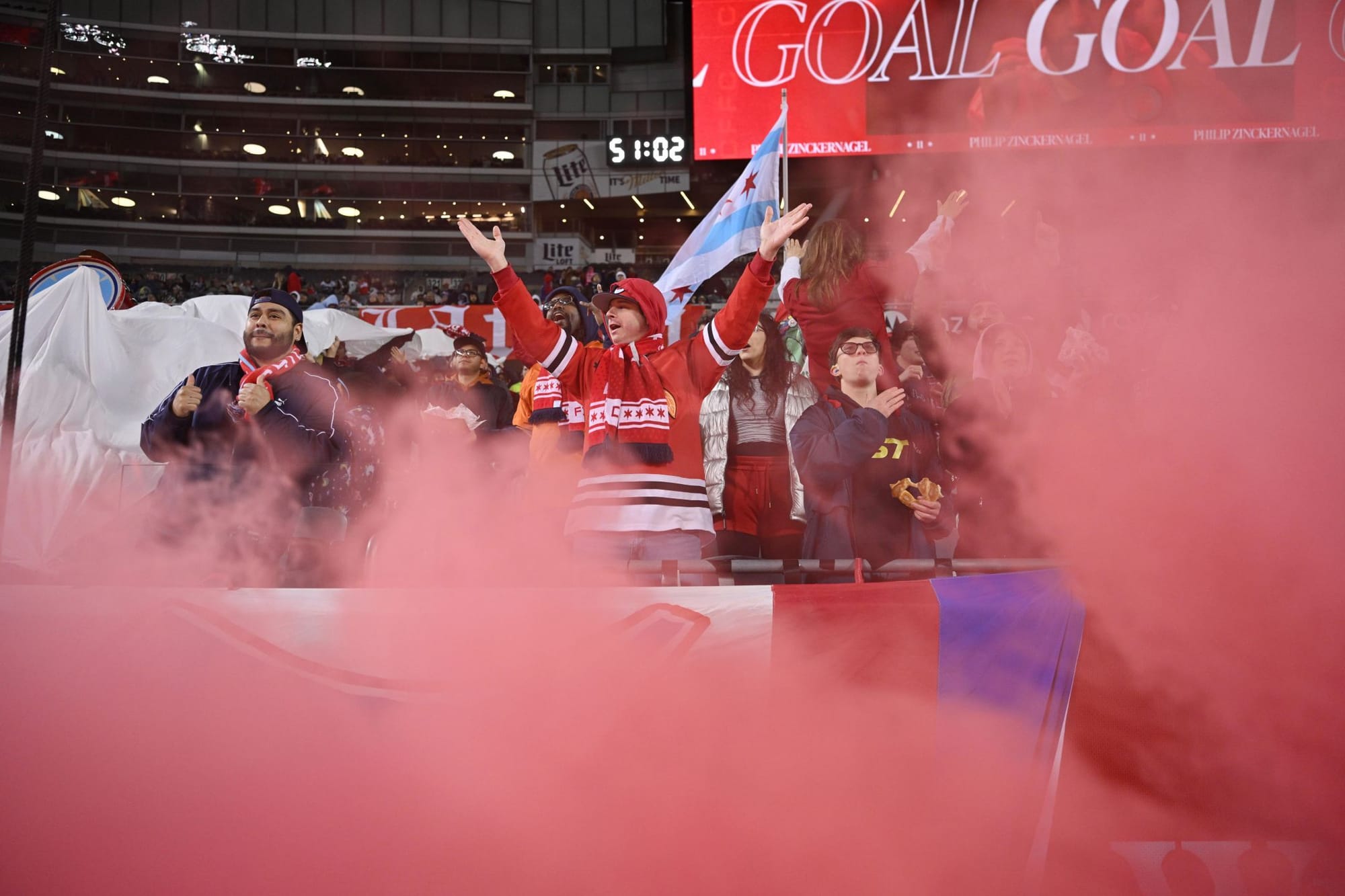
That effectively gave the Fire a “no. 10 by committee.” It worked. The Fire’s second goal – first after Lod came on and the tactical shift – came when Anton Salétros played the ball through Kansas City’s more advanced (relatively) line to Zinckernagel, who carried it towards the box, taking about half of SKC’s players with him before laying it off to Lod just inside the penalty area. A quick one-touch to Maren gives Zinckernagel the time he’s got to stream in to the left side of the box, and after holding up just for a second (sending two SKC defenders comically falling in opposite directions as they tried to stay on their mark), Zinck sends an off-balance shot past Pulskamp.
On the next goal, it was Haile-Selassie who sent in the pass to Zinckernagel who was making a run to the right post, taking both SKC defenders with him. The Dane had a legitimate look on goal but laid it off for Cuypers who had nothing but a sprawling Pulskamp between him and the goal.
The creative parts of the midfield role were shared between three players, two of whom scored.
It worked, but I wouldn’t expect similar results if the Fire tried it against better opponents.
4. Sporting Kansas City are a very bad team
In a minute, there will be a lot of very nice things said about the Fire. But before that, here’s some cold water: Sporting Kansas City are not a good team this year. They may (or may not!) be the worst team in the league this year, and they’ve got a very, very thin roster.
After the game, Wicky was asked about his formation shift, playing a five man back line for the second time this year (sometimes, three center backs is a three man back line. This was not one of those times.) Here’s what he said: “Right now, again, Justin Reynolds is out. So I don't have a real fullback on the right side. We know that Jake Davis can help out, but then when he's in the back four, it's not always easy for him against some fast wingers. So that's why we did this again.”
Not only is Justin Reynolds, who played 145 minutes for the Fire in 2025, SKC’s starting right back. He’s their only right back. I still own some Justin Reynolds stock, and my assessment when asked about him by Drew VanderPloeg from the SKC-focused Home and Away pod, I said that he had a lot of upside, particularly for his cap hit. But he had a total of 364 MLS minutes in three years since signing with the Fire first team. He’s got 249 so far this year.
That’s important context for the 5-0 win. Zooming out, here’s a harsh-but-technically-true (and we all know technically true is the best kind of true) narrative about the Fire’s 2026 season: Coming into this game, the Fire had yet to win a competitive game, including in the U.S. Open Cup, if they hadn’t scored by halftime. They did that against SKC.
Of the team’s two losses, they held the lead going into the second half but couldn’t hold on (against Houston). In the other, they scored late then conceded almost instantly before a dagger deep in second half stoppage time (against D.C. United). The team took a lead into the locker room in one of their two draws. In other words, despite trailing for (depending on how you count) just 13 minutes of the 2026 season, the Fire hadn’t managed to get a win (and only have one result) without leading by half.
This time, the Fire finished strong! They had five goals in the second half. Regardless of opponent, that’s something. A narrative for the Fire in 2026 that was already emerging by the Fire’s third game of the year against Columbus (when it was discussed in these pages) is that this team has struggled to play well for both halves in a game.
Up till tonight, when that happened (and it hasn’t always! The team looked pretty comfortable against Nashville, one of the top teams in the league, being up by a single goal for almost the entirety of the match), it was the second half that was the issue.
This time? It was the first half. Per Opta, the Fire had just 0.18 xG in the opening frame (MLS’s model had the team higher, for reasons that I can’t understand without redefining the term ‘xG,’ because they gave credit to the cross from Philip Zinckernagel that Cuypers couldn’t connect with midway through the frame). Yes, it’s hard to break down a low block. And yes, the Fire did succeed in doing it - emphatically - in the second half.
But big picture, the Fire have led for just under half of the competitive minutes they’ve played this year. They’ve trailed for, depending on how exactly you count stoppage time, about 13 minutes. In total. And they have two losses to show for it.
Despite being an imperfect team, this team does look like they can do things that we haven’t seen the Fire do since fans were bringing BlackBerries to games en masse. But to do that, they need to do it for something a lot closer to all 90 minutes of a match than we’ve consistently seen from this group.
5. The team can put up some superlative numbers
Last night, Cuypers accomplished something no Fire player has in the team’s history: Scored a goal in six consecutive league games. He was a major focus last week, but here’s something Berhalter said about him after the game yesterday when I asked him about how hard he’s been working:
“Hugo just comes to work every day, brings his lunchbox, and comes to work. That's what he does. He literally has a lunchbox every day. That's how hard he's working. It's a joy to coach a guy like that because, in his way, he tells us all the time that he's 100 percent committed to winning. It's not loud, screaming at the top of his lungs; it’s just, he comes to work, and when he plays the game, he competes.” (I did some fact checking, and although Cuypers may figuratively bring a lunchbox to work, in reality, he eats the team’s nutritionist-approved meals.)
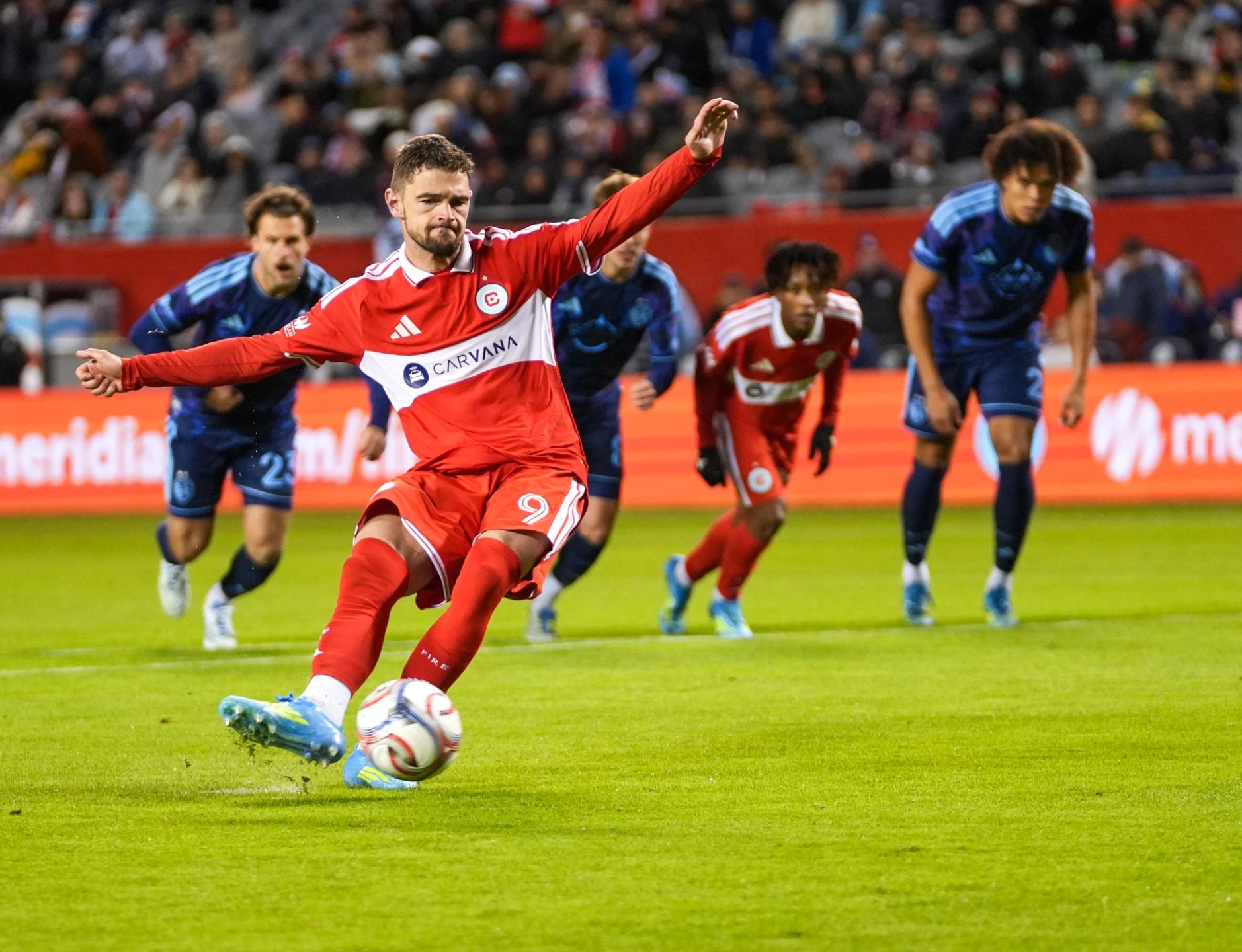
Not only is he scoring, he’s pressing. And active in the re-press. He’s engaged defensively, and he doesn’t seem to get tired. Like, ever. And he wasn’t alone in having a standout performance on the evening.
He’s now up to fourth on the all-time scoring list for the Fire, with 35 goals. That’s two more than David Accam (33). Up next on the team leaderboard is Chris Rolfe, with 48. At anything like the pace he’s on now, Cuypers is actually on track to hit that number this year.
Maren Haile-Selassie had his first four goal contribution performance, with a goal and three assists (fun fact: He’s had three assists in a game before. It happened last September, against Inter Miami).
All three have been standout performers for the Fire this year. Cuypers and Zinckernagel are both locked-in starters with the squad.
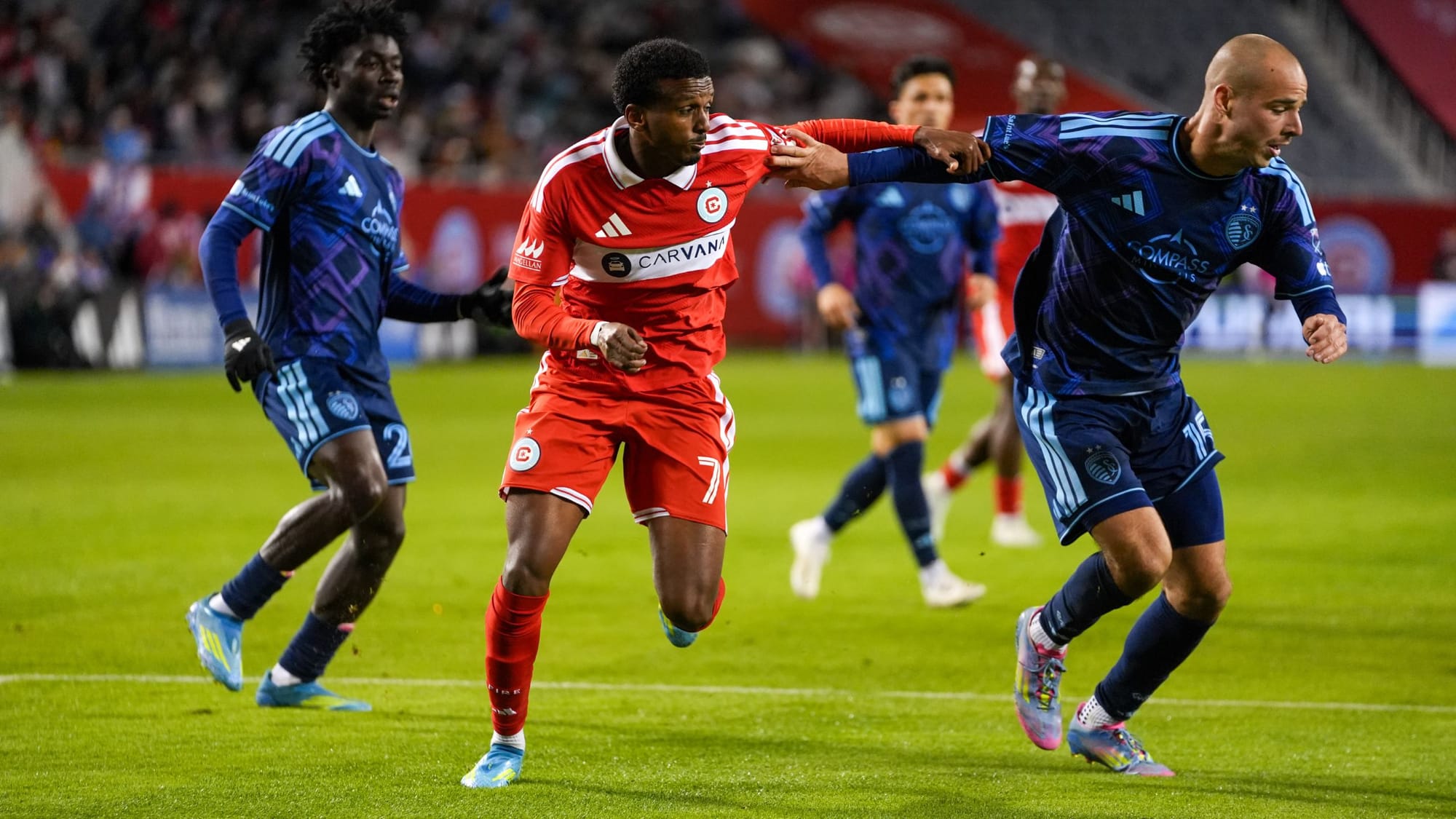
Maren, though? Last night was his seventh start of the year. That’s already two more than he had in all of 2025. Although Haile-Selassie ended up playing in 30 games last year, more than half of those 20 minutes or less as he was asked to close out games.
He started here because Bamba was out. And Bamba has been playing well in 2026! It’s going to be tough to ask Maren Haile-Selassie to go back to the bench given how he’s played, but that might not happen if he’s given the starting spot (if not the exact role) that had been Lod’s for much of the year. That’s what happened last night.
Could that be rotation? Or could it be a recognition of how well Maren’s been playing?