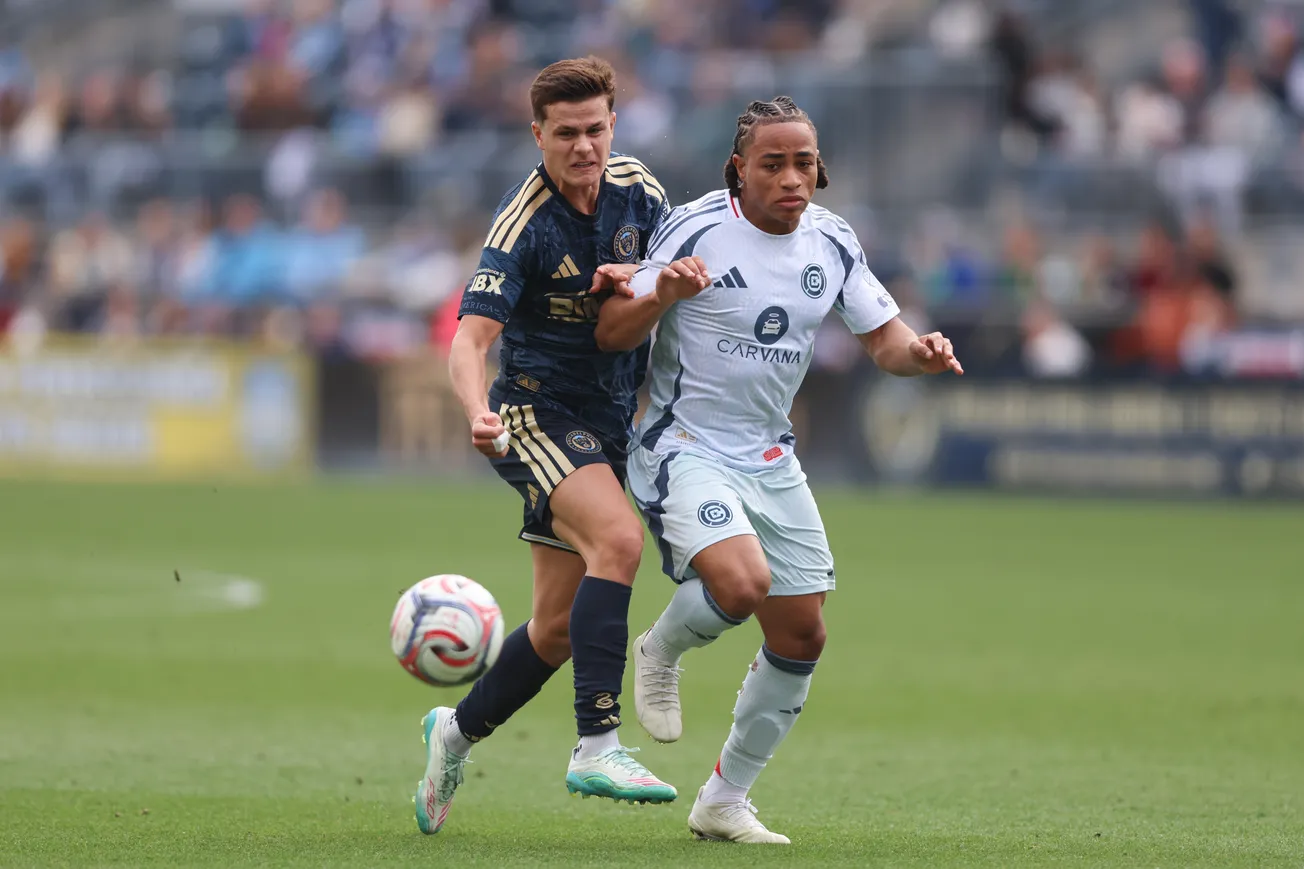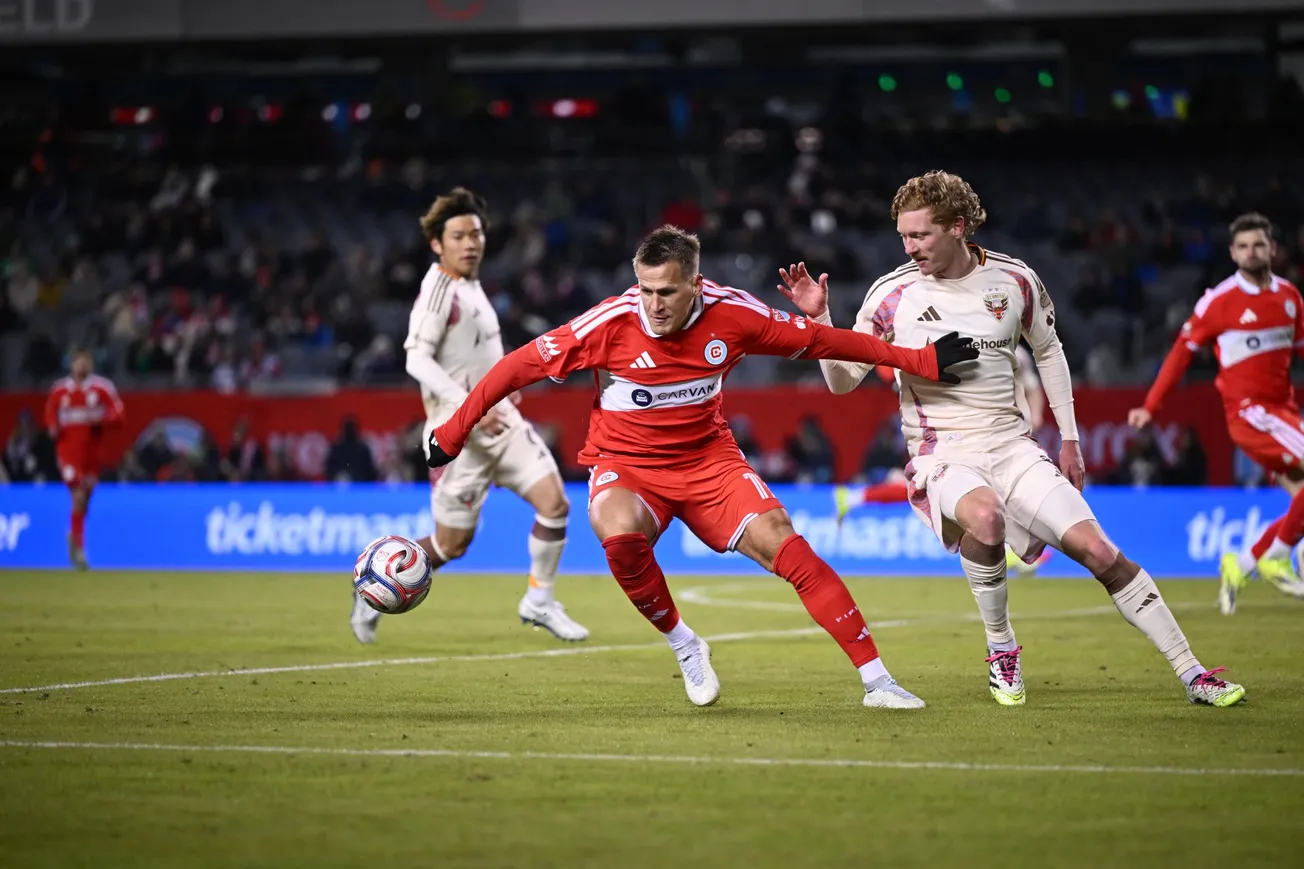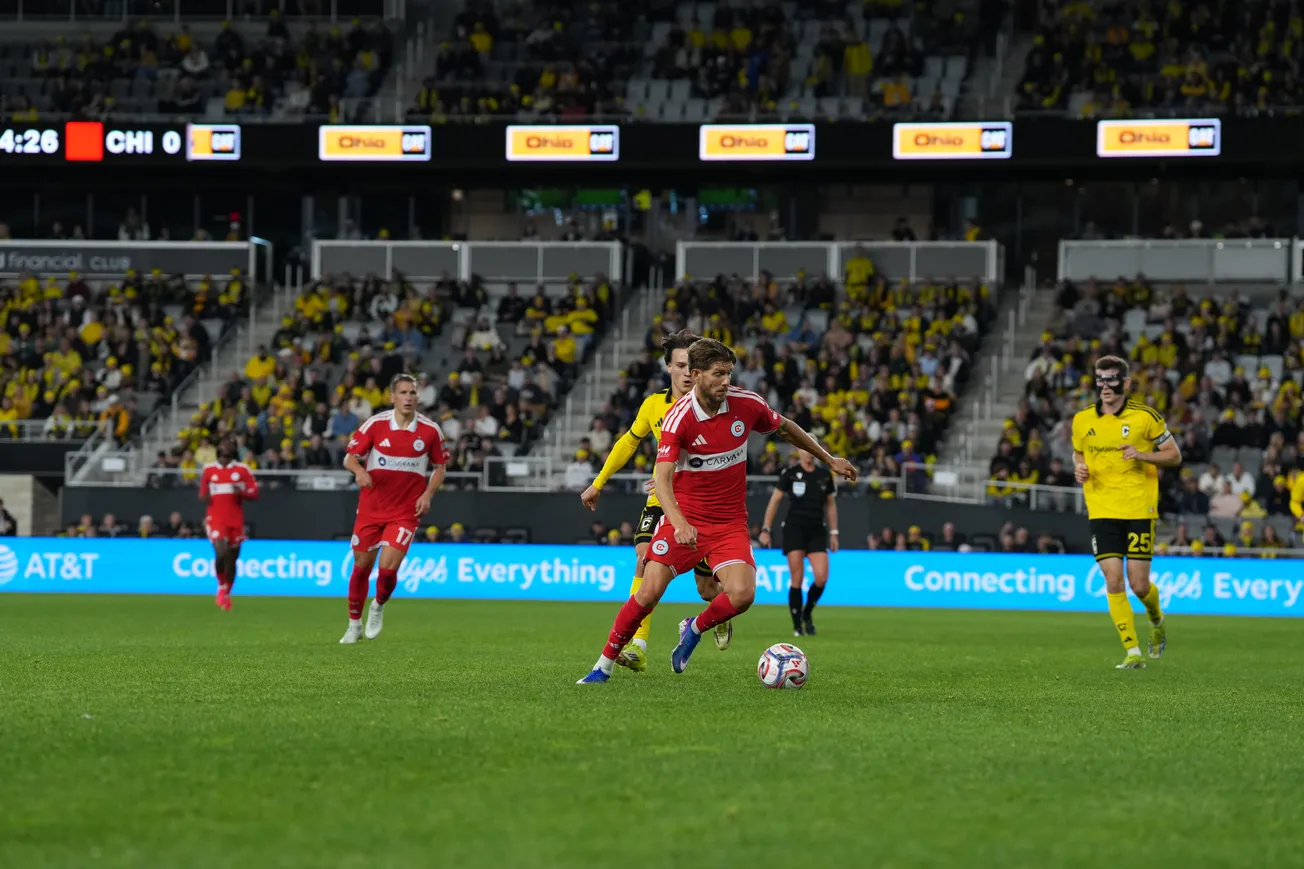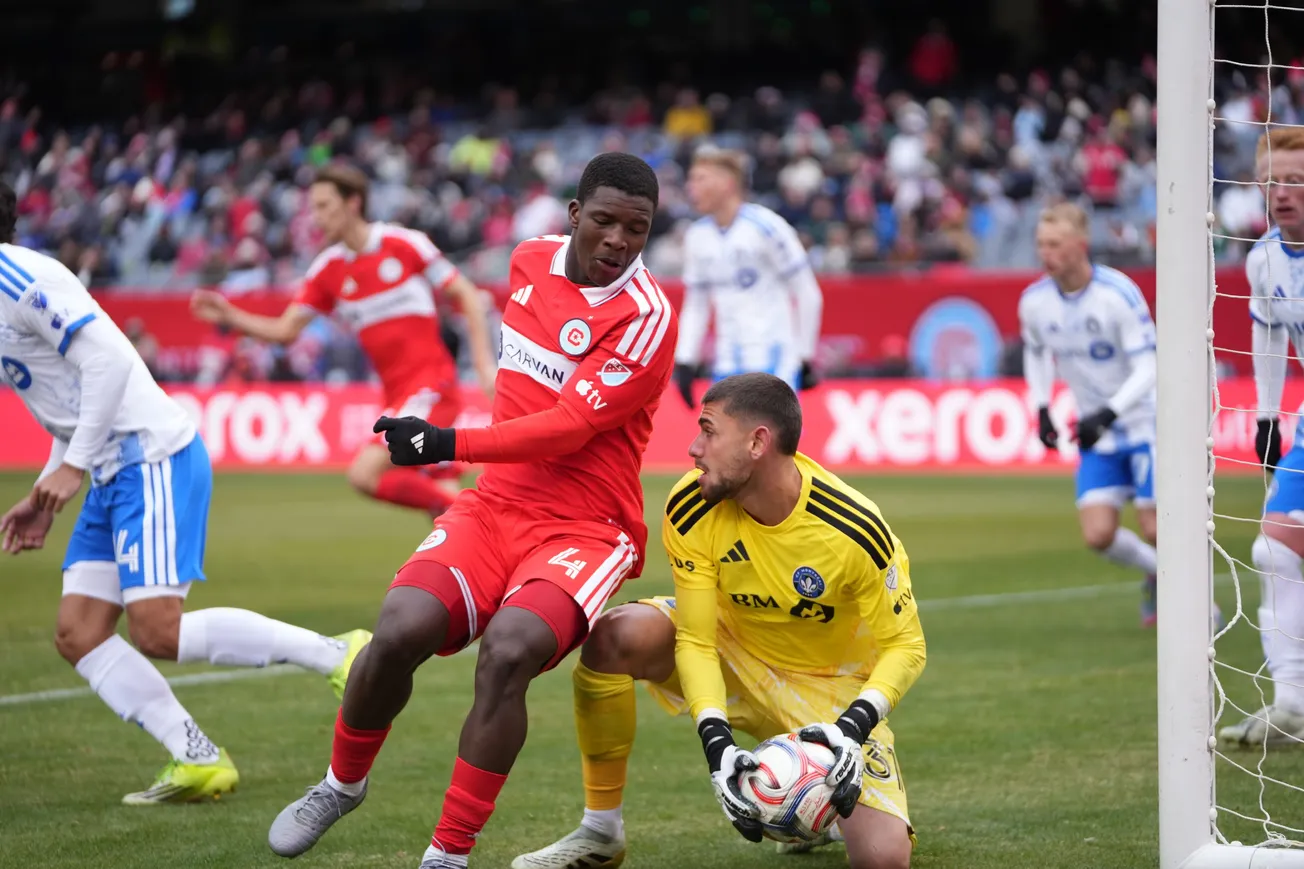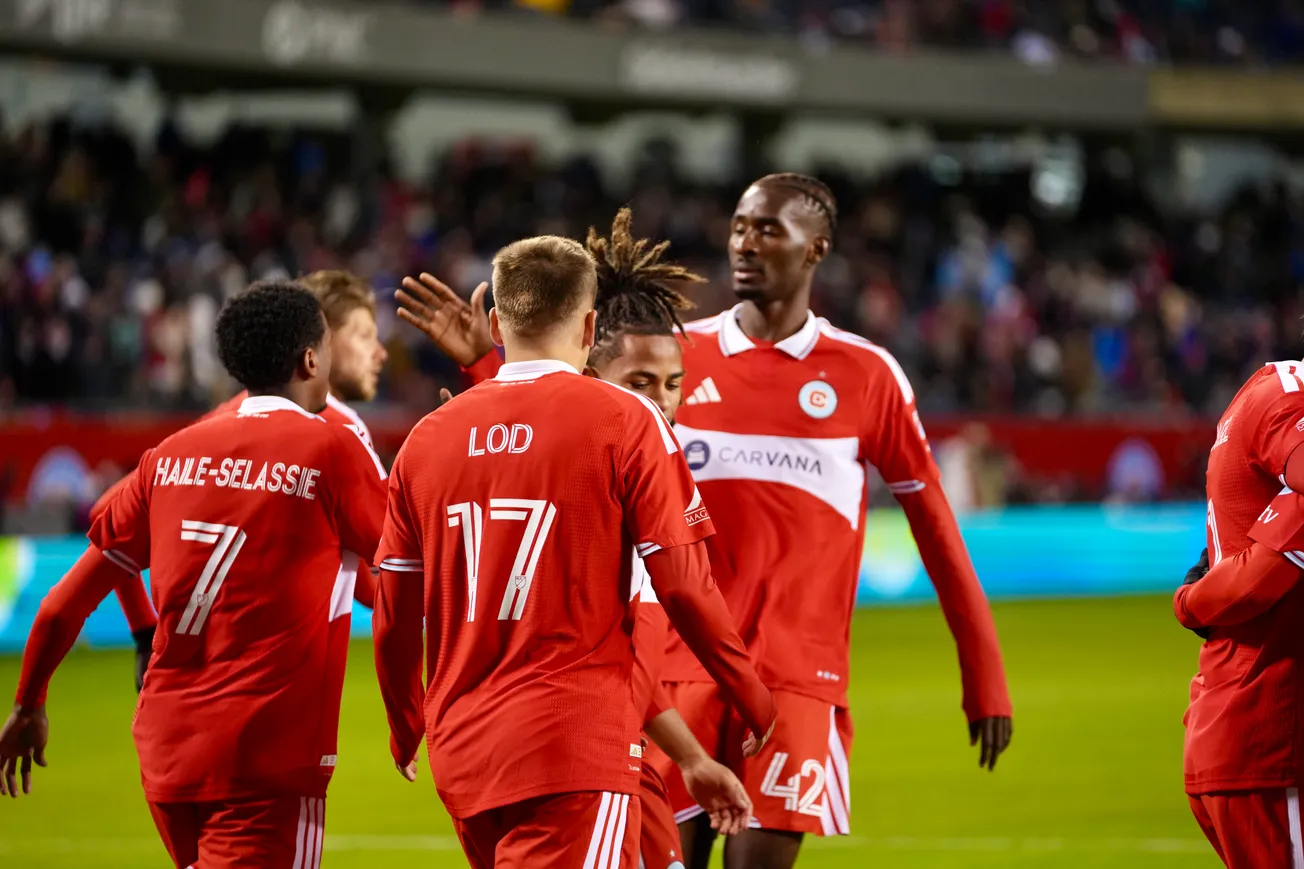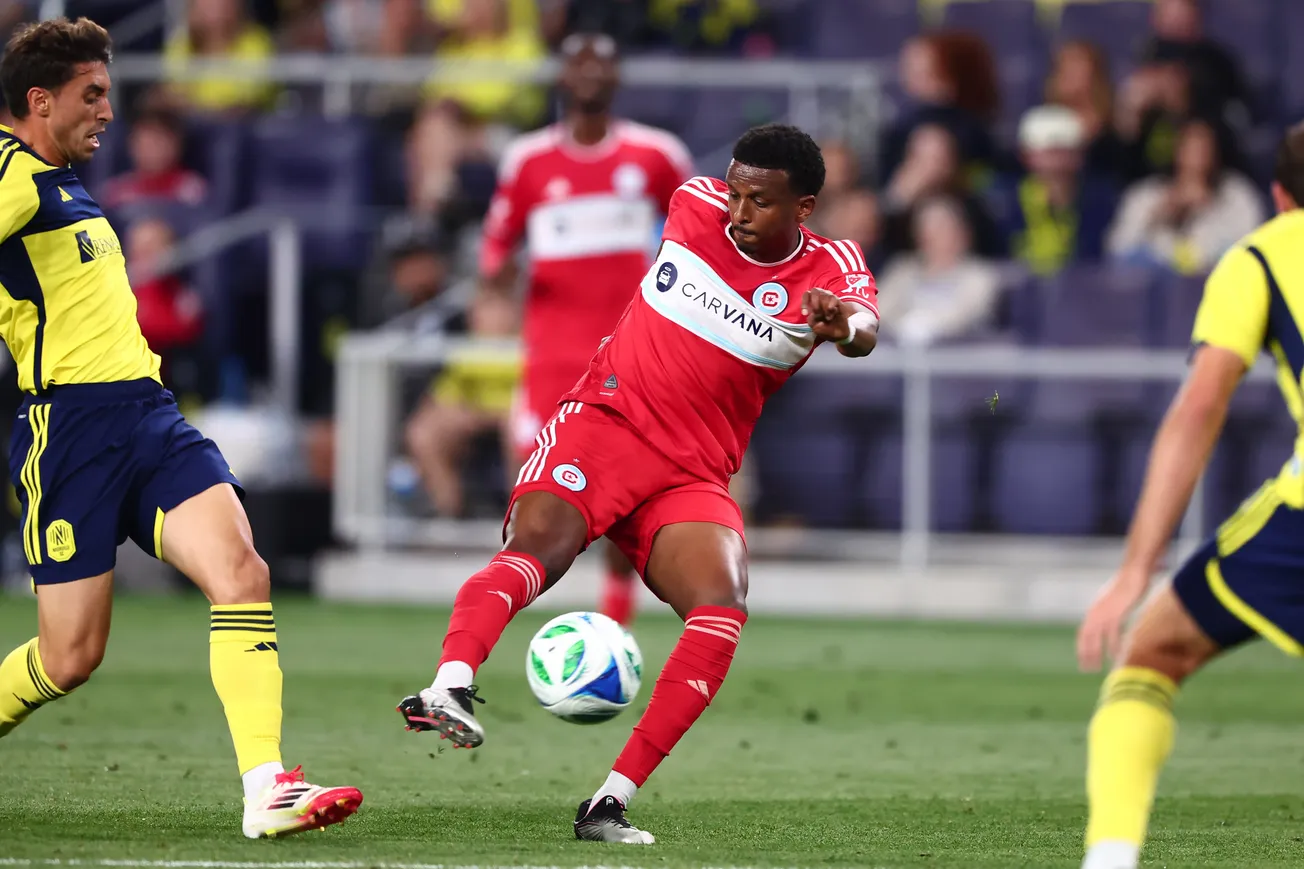
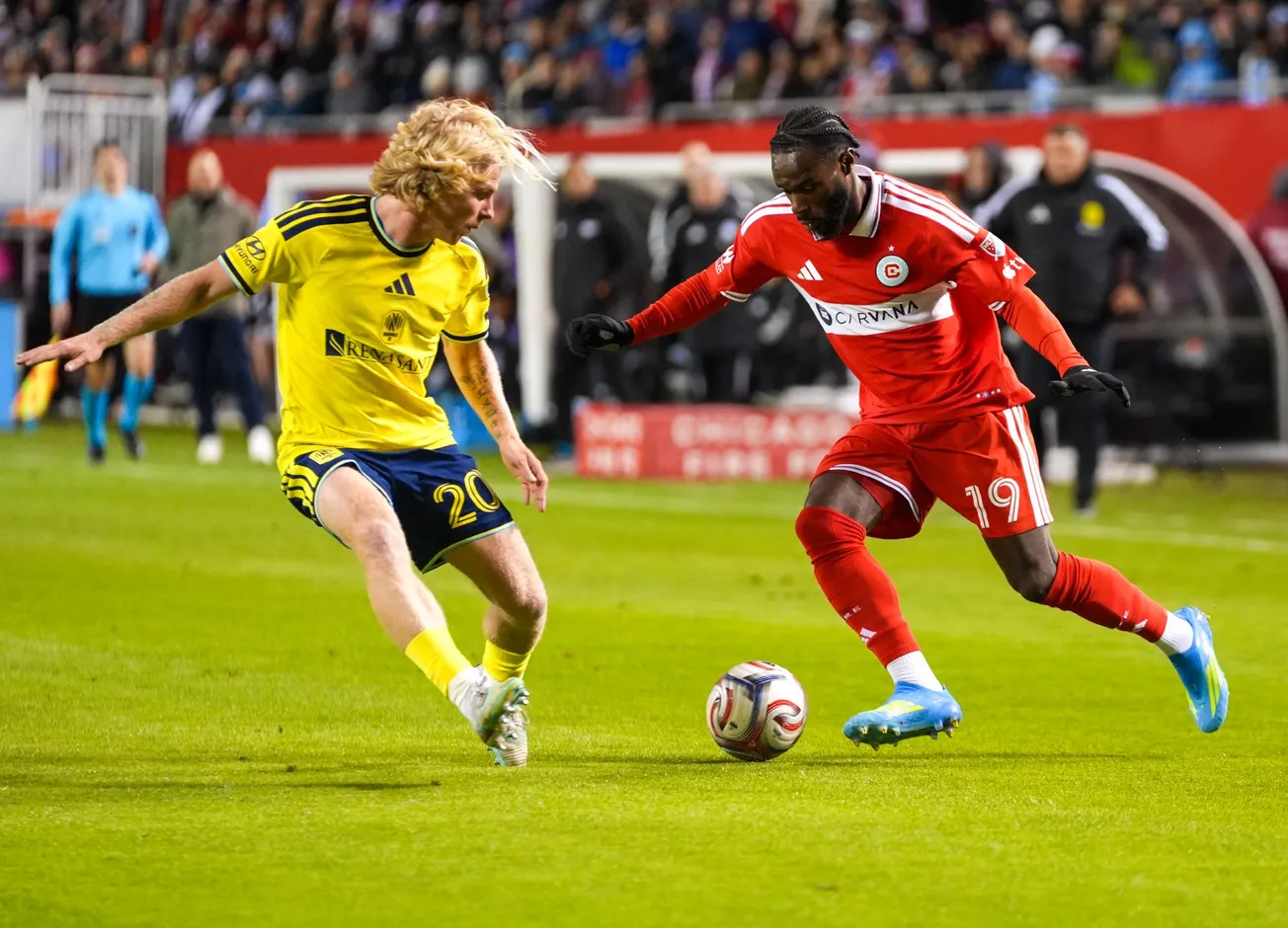
Facing Nashville the day before Easter, the Chicago Fire hosted Nashville SC, a team that was coming into the game undefeated across all competitions and who they'd only managed to beat once in their history, and came out with a win off of the fastest goal in Fire history, coming just 17 seconds into the match.
The weather may have been ugly, and the soccer may have been a lot more Champagne of Beers than champagne, but the team held on and managed their third clean sheet in six games as they toppled the team that started the day in pole position of the Supporters Shield race.
The win improves the Fire to 3W-1D-2L after six games, and suddenly, it feels like the team is fully back on track. Here’s five things we learned last night.
1. This team can break streaks
Ahead of the Fire’s game in Columbus a month ago, I noted how strong the Crew’s record had been in home openers, before saying “streaks are made to be broken.”
And that’s been exactly what the Five have been doing.
After the win – just the second for the Fire over Nashville in 10 meetings – Fire Head Coach Gregg Berhalter said “We’re used to breaking streaks.The Philly steak, we broke the week before, haven’t won in 13 years there. That’s what this group is about.”
Speaking after the win, Chris Brady told reporters that “we haven't had a lot of success against this side in recent years, so just proving to ourselves, time and time again, that we can step up to the big challenges like this”
Last year, the Fire made the playoffs for the first time in eight seasons and won a postseason game for the first time since 2009. In 2026? The Fire have come out with their first away win against the Union since 2013 and now, broke Nashville’s four game winning steak against the Fire going back to 2023.
Although there isn’t a streak for the Fire to break next week when the Fire host Atlanta United ‒ the team got their first win against the Five Stripes since 2021 last year ‒ the squad still has plenty of dominoes they could topple: The 2006 U.S. Open Cup victory remains the team’s last trophy The team hasn’t made it to the postseason in back-to-back years since 2009, which is also the last year the Fire had home field advantage in the first round of the playoffs.
As it stands, the Fire are one point out from 4th in the East (yes, it’s still very early) and start their U.S. Open Cup campaign starts in nine days.
2. The Fire can play through adversity
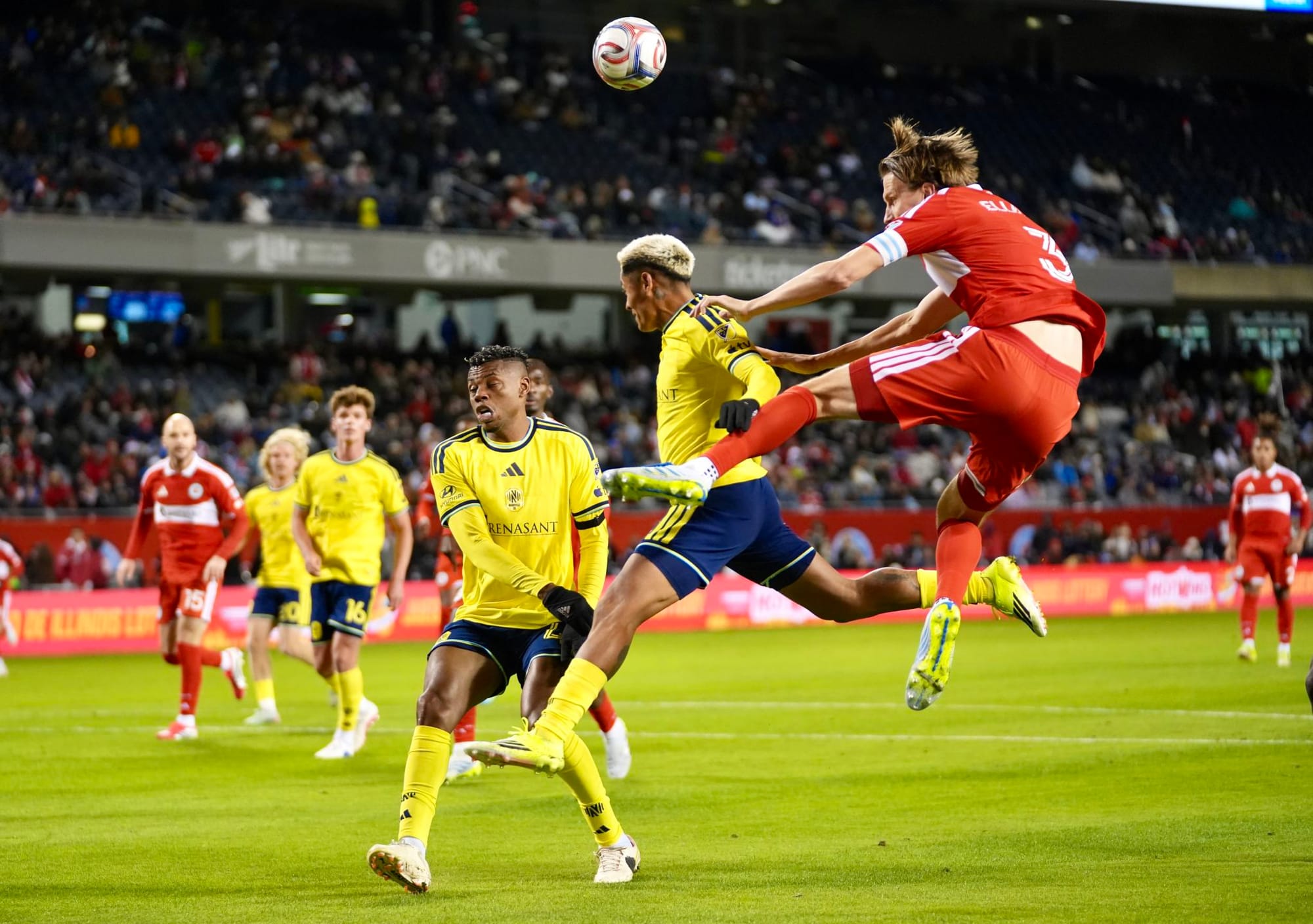
End of the day, the Fire needed a couple save-of-the-week contenders from Chris Brady to seal a 1-0 win against a team that has been great but who, even if they did play their starters, still have a date against Club América on Tuesday. That’s three points for the Fire in the standings, but by no means a comprehensive beat down.
Still: The fact that the Fire had that kind of performance is remarkable considering the amount of adversity the team faced.
With Hugo Cuypers not healthy to play, and Gregg Berhalter feeling that Jason Shokalook, nominally the no. 2 on the depth chat at striker, wasn’t “quite ready to start” a game, the Fire, once again, had to switch up the starting XI in a way that changed the formation and tactics, opting to play out of a kind of 4-2-2-2 with Maren Haile-Selassie and Robin Lod each splitting the duties.
As if that wasn’t enough, Joel Waterman was due to get the start as Jack Elliott works his way back to health after a battle with sepsis kept him out from the Fire’s last game – until a knock in warmups ruled him out. That put the Fire captain back in the XI, but with a minute restriction that saw 17-year-old Christopher Cupps come on early in the second half as Nashville pushed for an equalizer and the Fire fought to preserve the clean sheet.
Oh, and the Fire’s other starting center back, Mbekezeli Mbokazi? He got in “at 5 PM” the night before the game, according to Berhalter “from a trip to South Africa, and he played 90 minutes.”
Add to that winds strong enough that the Fire weren’t allowed to use pyro or fireworks for pregame festivities or goal celebrations, and there would have been many, many excuses at the ready for a weak performance.
Instead, the Fire came out strong, and by the time Nashville got a shot on target – something that didn’t happen till the 74th minute – it felt like the Fire’s game to lose more than anything else.
And speaking of…
3. The defense can carry this team
Last year, the story around the Fire was that the team could be competitive but their inability to see games out defensively limited the team’s ceiling. They were fun to watch, scoring the second most goals in the league after Inter Miami, but they also allowed more goals than any other team that made the postseason than the team from South Florida.
This year? The Fire have three clean sheets in six games. They’ve been allowing less than a goal per game – and the five they’ve let in is 2nd best in the Eastern Conference behind Nashville and six best in the league behind LAFC, who have still yet to concede, the Quakes, Sounders and Whitecaps.
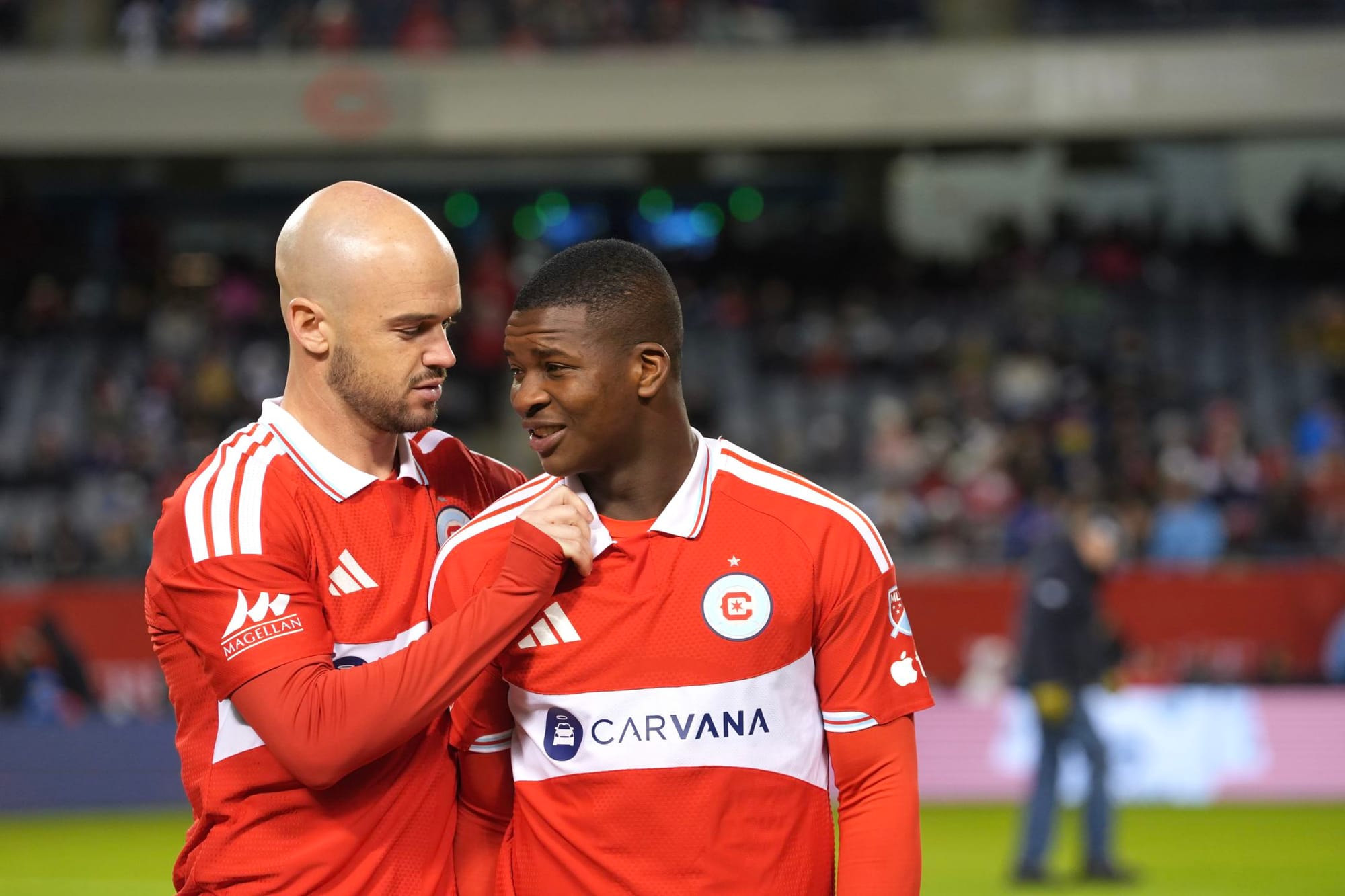
On the other end of the pitch? The Fire have scored eight times this year. That’s the fewest of the 16 teams currently in a postseason spot outside of the Seattle Sounders (six) and D.C. United (with four, half of which came against the Fire).
The Fire simply couldn’t rely on the defense to help them secure results last year. This year, it’s increasingly feeling like they can. Hopefully, the midfield will gel (I still think the teams needs a chance creator), Cuypers will stay healthy (he’s currently tied for fifth in expected goals + assists on a per-90 minute basis, according to American Soccer Analysis’s data) and eventually, Franco will come back, but until then, being able to rely on the defense to see out games is welcome, and potentially massive, change for the Fire.
And a big part of the improvement so far is because…
4. The kids are more than all right
So far, 20-year-old Mbekezeli Mbokazi has been as good as advertised for the Fire. He hasn’t been perfect – in fact, he’s made a fair share of mistakes – but he’s been very, very good. Case in point, he can do stuff like this:
This is a brilliant pass from Corcoran and even better defending from Mbokazi.
— Ben Wright (@benwright.bsky.social) Apr 4, 2026 at 8:59 PM
[image or embed]
He’s been good enough where, even when he gets into trouble, he usually gets himself out of it.
Mbokazi is one of four players aged 22 or under who were in the Starting XI for the Fire, all of whom played in the back half of the pitch, along with Chris Brady, Leonardo Barroso and Djé D’Avilla.
All four of those players made it the full 90 minutes for the Fire, and when the final whistle blew, six of the 11 players on the pitch were 22 or younger, including 17-year-old Christopher Cupps and 21-year-old Viktor Radojević. (Jason Shokalook, age 23, was also on the pitch to see out the Fire’s victory.)
By comparison, Nashville only had two players in their lineup in that age range, and they only played one at a time, with 24-year-old Patrick Yazbek coming on for 20-year-old Matthew Corcoran in the 61st minute (we can debate where the line is for “young player,” but I’m putting my foot down and saying that 24 is on the wrong side of it) and 21-year-old Reed Baker-Whiting coming on late as the Nashville looked for an equalizer.
Few teams in MLS regularly start 20-year-old center backs. Even fewer give minutes to teenagers in the position, as the Fire did by having Cupps on for more than half an hour with Jack Elliott facing a minutes restriction as he works his way back to full fitness. The Fire played them both, together, in front of a 22-year-old keeper, behind a 22-year-old defensive midfielder and secured a clean sheet.
Necessity may have forced Berhalter’s hand a bit here (the plan had almost certainly been for Waterman to either play 90 or to play a substantial portion of the game with Elliott coming on to work his way back to fuller fitness, and if Sam Rogers was healthy, he might well have come on instead of Cupps), but in the end, he trusted the kids and the kids got the job done, and all looked good doing it.
5. Together, Everyone Achieves More
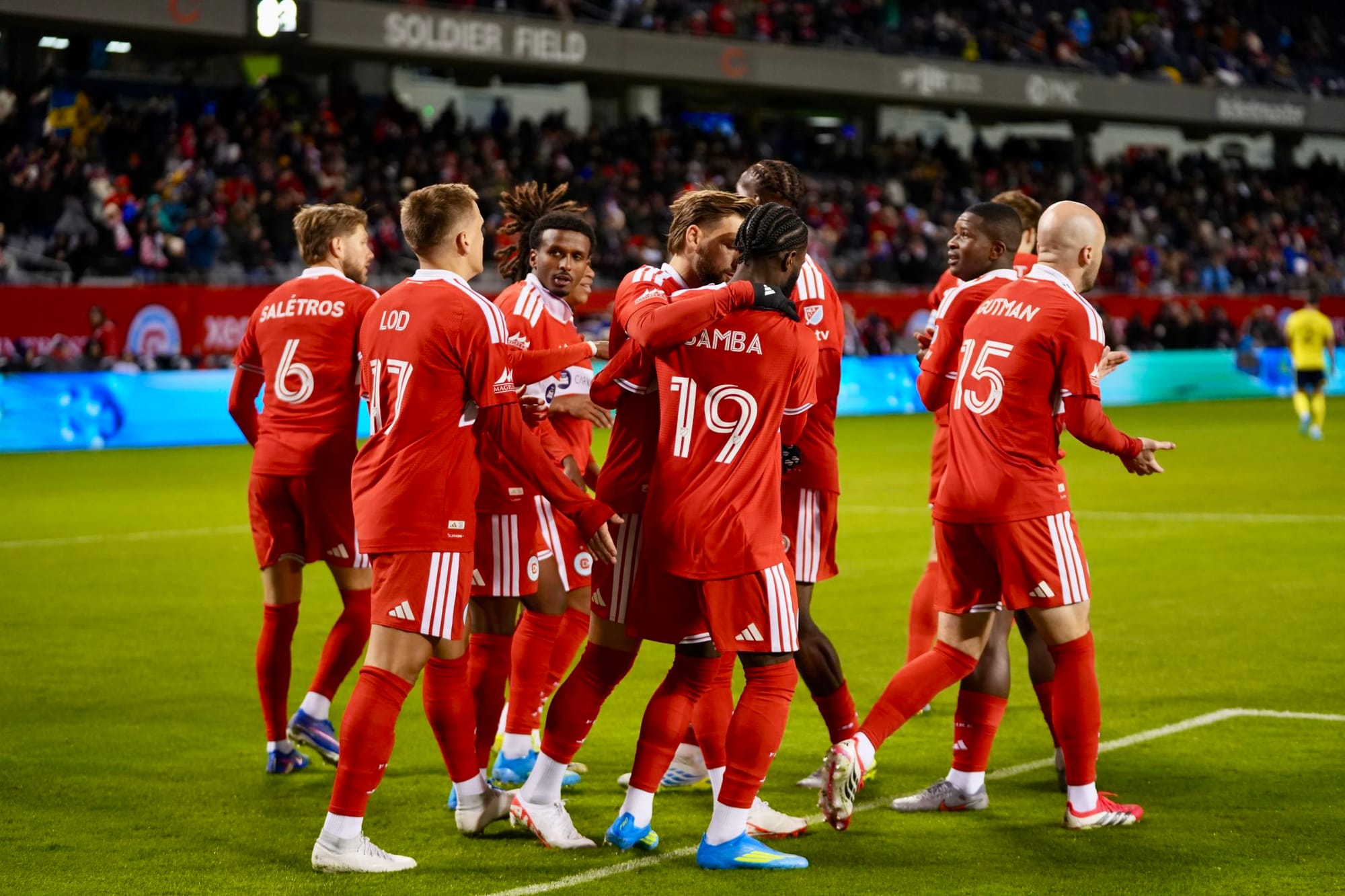
Yes, that spells team and is one of the most cringeworthy posters you’ve seen in a school or workplace ‒ but it still describes the Chicago Fire. Although there were some standout plays, overall, it wasn’t any individual performance that earned the Fire the win, but the collective.
Yes, Chris Brady made some amazing saves, and you can pick out anything from Maren Haile-Selassie (playing out of position and whose pressing at kickoff led to the game’s only goal) to a couple key defensive plays by Mbokazi as being a difference-maker, but overall, the group’s performance was better than that from any individual player, and the team played well as a cohesive unit.
It’s really hard to pick out a single poor performance from anyone on the team. Djé D’Avilla had a very strong performance on both sides of the ball, and was able to absorb pressure and play passes through it several times ‒ that is no mean feat against a team like Nashville.
Anton Salétros, playing in partnership with D’Avilla, had one of his strongest nights with the Fire to date. At kickoff, he played a difficult pass to Jonathan Bamba, whose quick cross to Zinckernagel led to the game’s only goal. That’s exactly the kind of pass-before-the-pass play you’d want from a guy with Salétros’s profile, and he provided a lot for the Fire on the other side of the pitch, providing stability, being in the right spot for an outlet pass, and making good defensive plays.
Jonathan Bamba has quietly been having exactly the kind of season you’d want form the DP, with three goal contributions, including two goals and the assist on Zinckernagel’s first goal of the year. Although he called it a “big relief” to get one in the back of the net this year, he noted that it was “pretty similar to last season,” with a slower start to what became an All-Star campaign for the Dane.
Maren Haile-Selassie should get all the credit creating the turnover that led to the goal, and even if his night was a bit quieter, both he and Robin Lod showed versatility and their pressing, coming playing well out of their normal positions, did a lot for the Fire, both in terms of asking questions of Nashville and in terms of making it difficult for Nashville to build.
A performance where the collective is more than the sum of its parts? That is exactly what you want to see for a team that is trying to make a case that they belong in the upper echelons of the league.