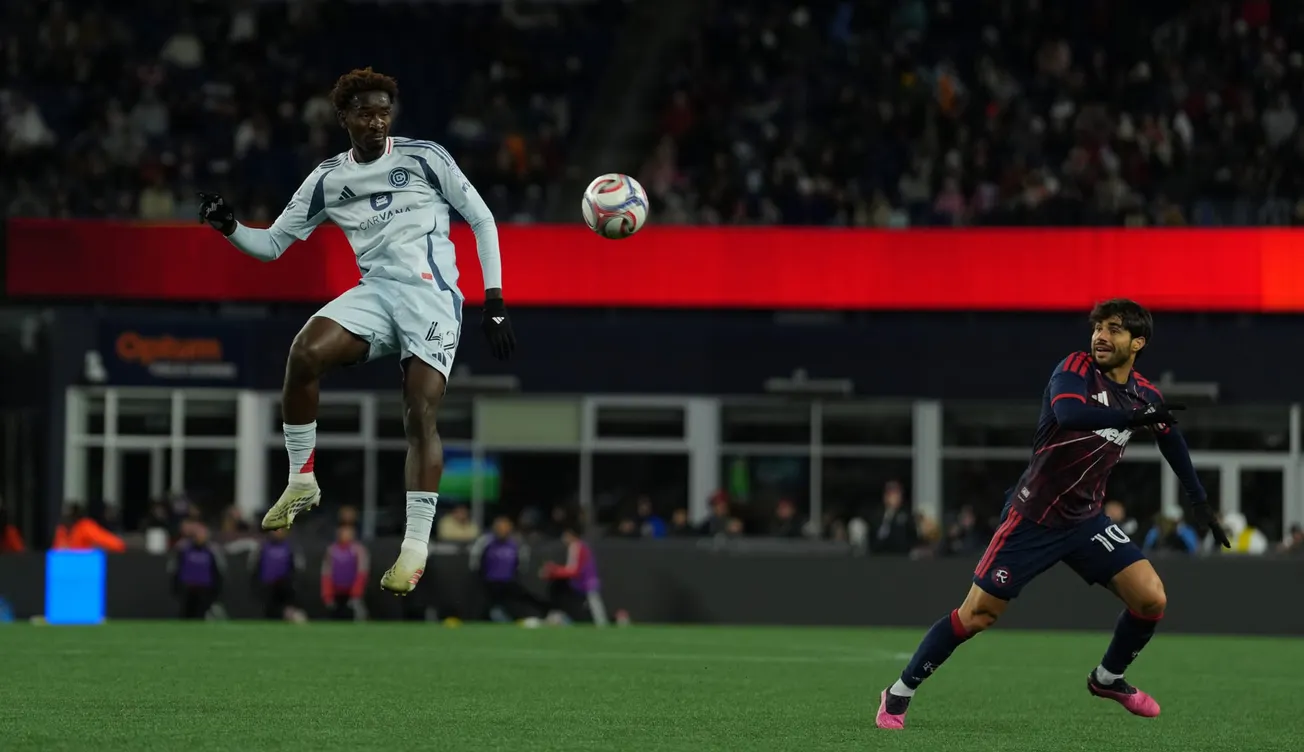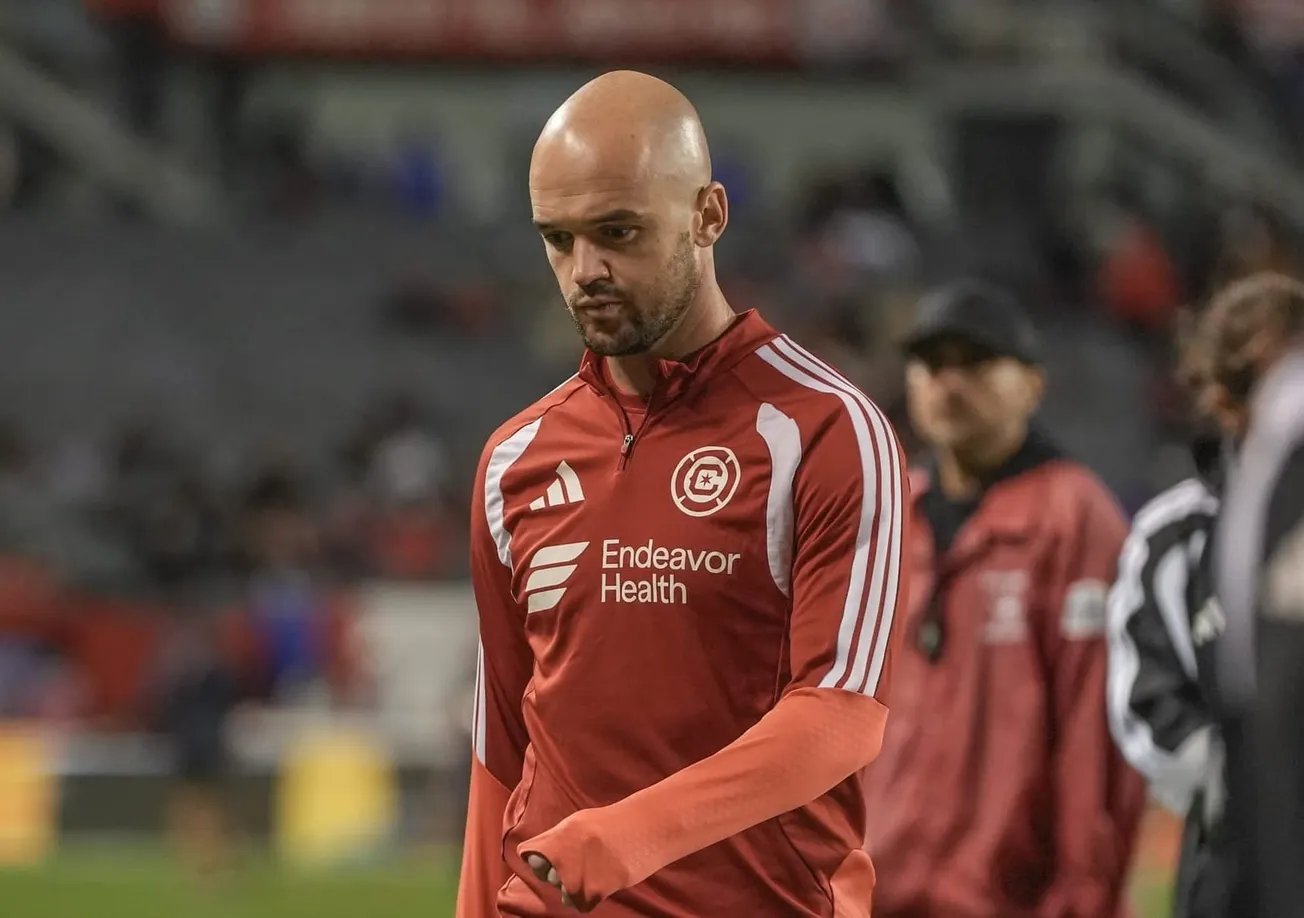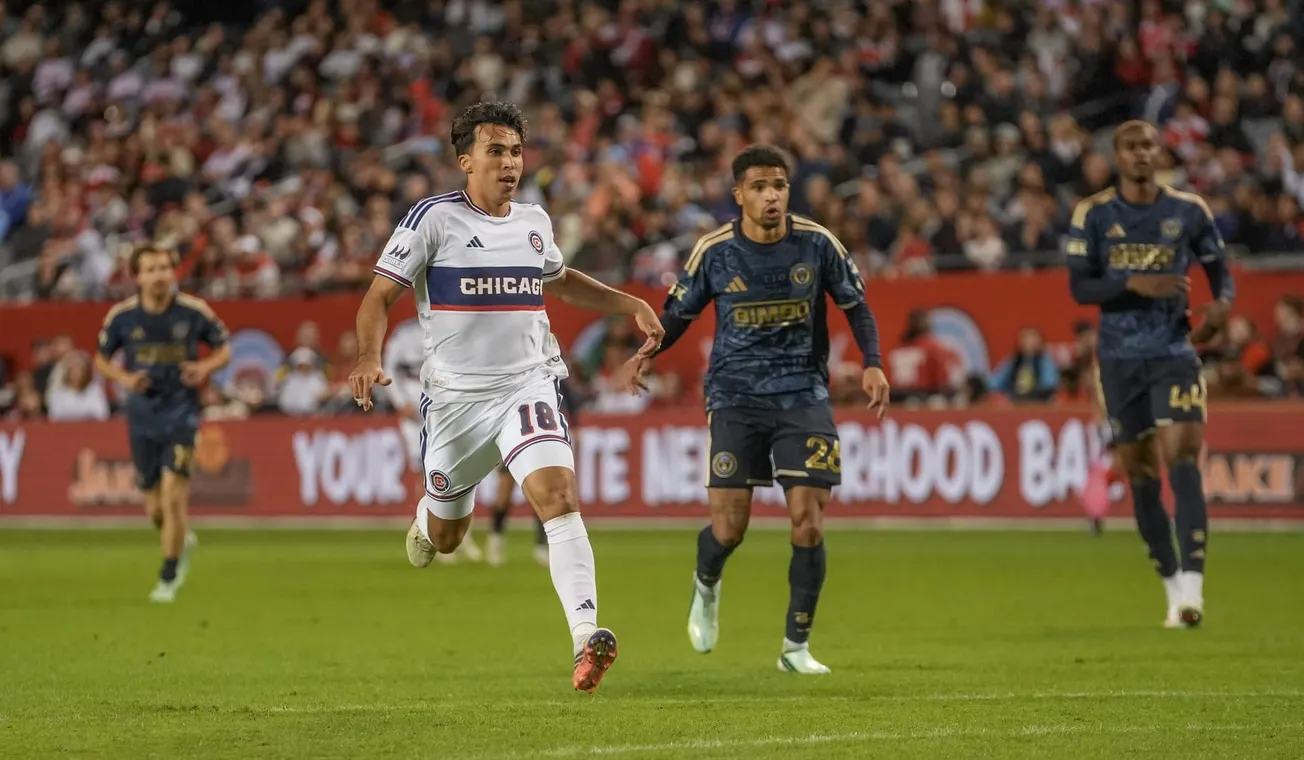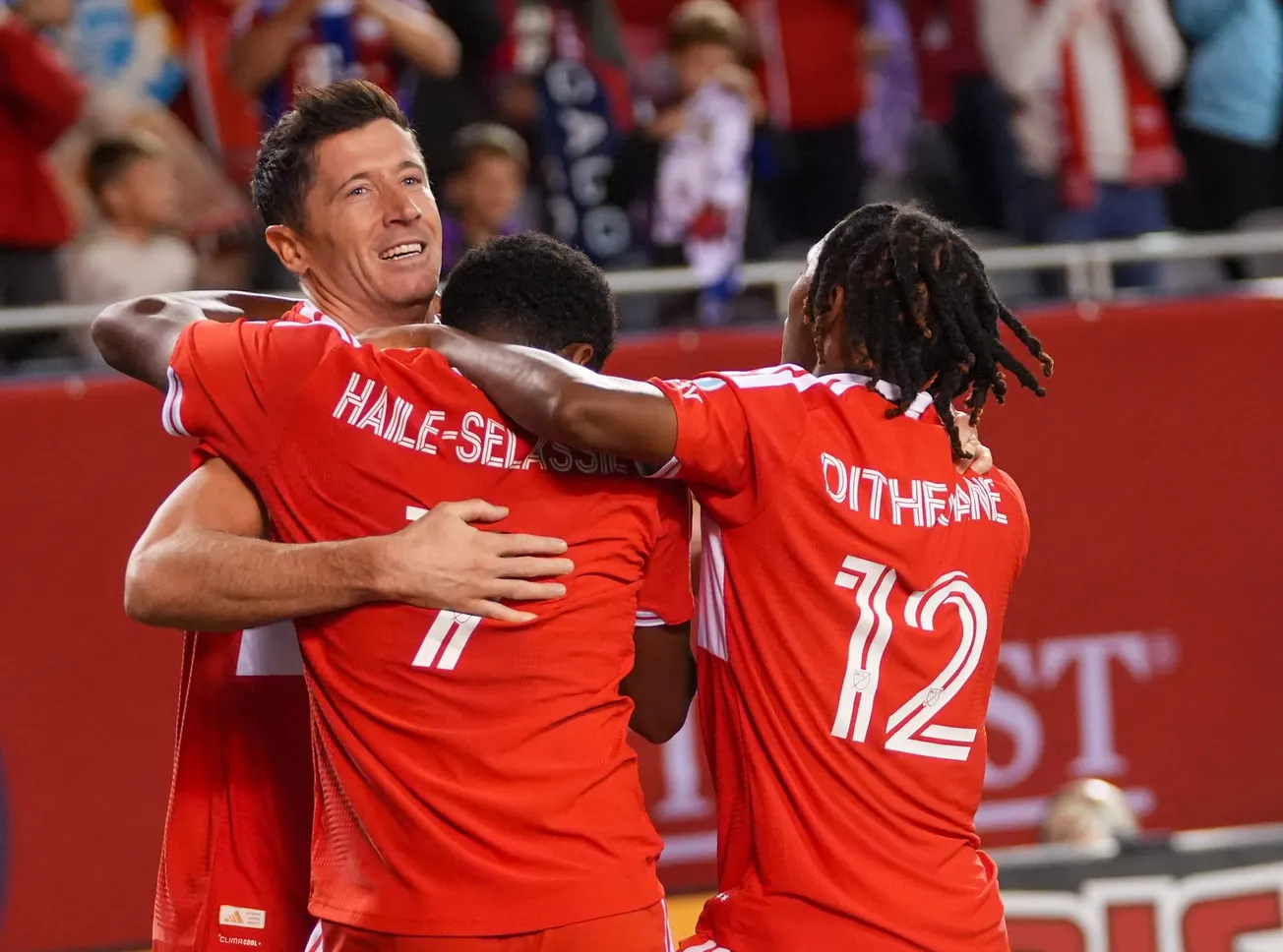


No “five things” on this one ‒ a midweek cup game played in a stadium owned by a public school district where four players had their first starts with the Fire makes it hard to learn five things ‒ that is, at least to learn them with enough conviction that I’d take them to the bank ‒ but here are three quick thoughts on what we saw from the Fire’s 2-1 victory over Detroit City in Hamtramck on Tuesday night.
1. The Magic of the Cup lives ‒ and that magic is fun
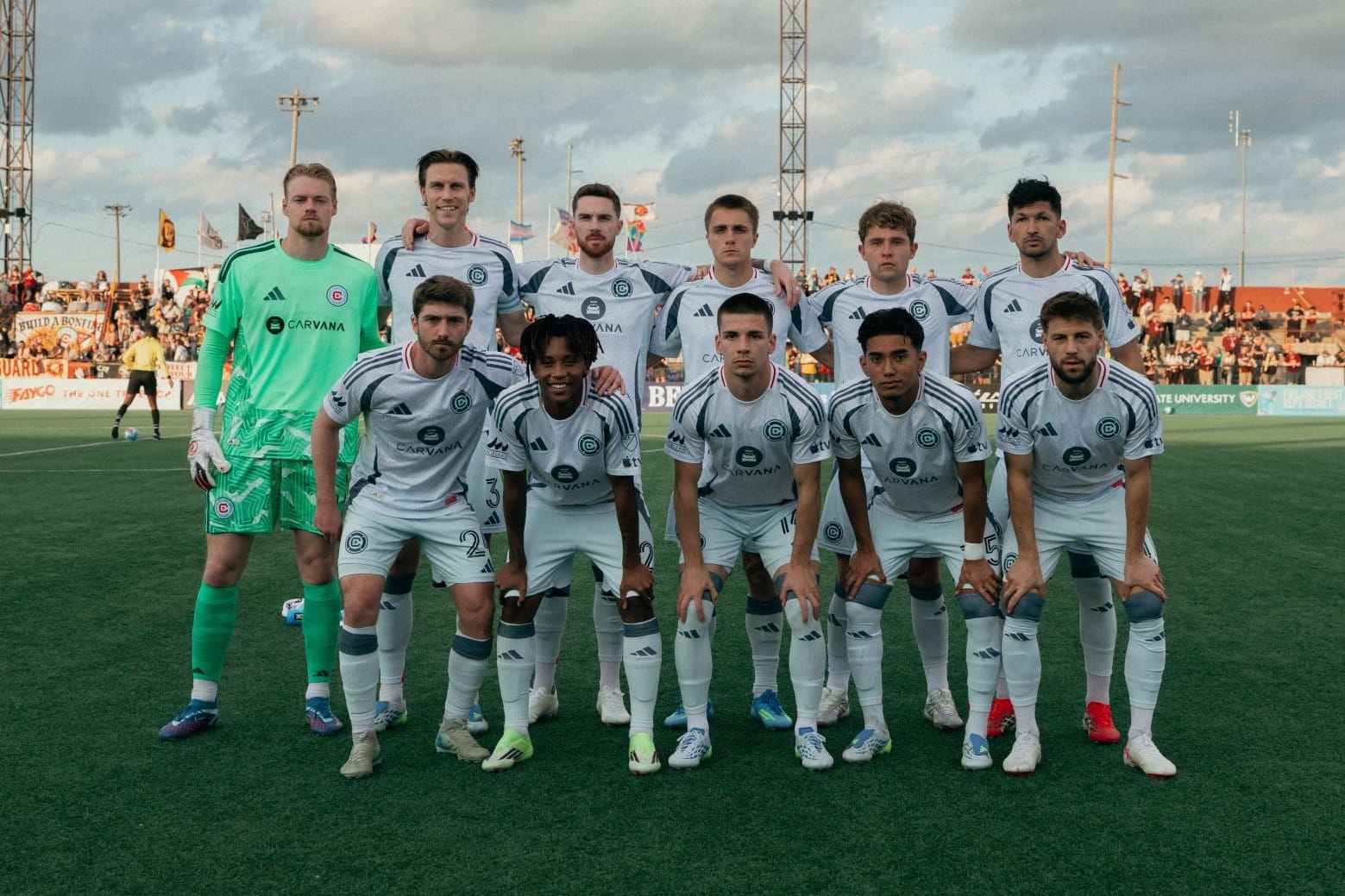
The atmosphere at Keyworth Stadium, a 7,933 seat venue built during the Great Depression and renovated, partly from volunteer labor by Detroit City supporters when the team played in the amateur NPSL, was great: The stands visible from the broadcast were packed, and tifos for the match ringed the stadium. The announced attendance for the night was 6,229, which is more than Detroit averages for league matches.
One of those tifos made a factually incorrect comparison between Detroit and Chicago style pizzas which will not be reprinted here (for the record: Chicago’s is better, and Chicago’s is tavern style). Another said “Build A Bonfire” featuring flames and the Chicago team’s logo (we thank you for the publicity).
Catch them in an honest moment, and the vast majority of the fans there knew the home team was overwhelmingly likely to end the night in defeat, ending their cup journey. Despite that, they showed up and packed the house.
Detroit – long past the club’s plucky volunteer labor days ‒ is due to move to a new 15,000 seat soccer specific stadium in 2027 that will drastically raise the team’s commercial potential and provide the kinds of amenities that Keyworth just can’t.
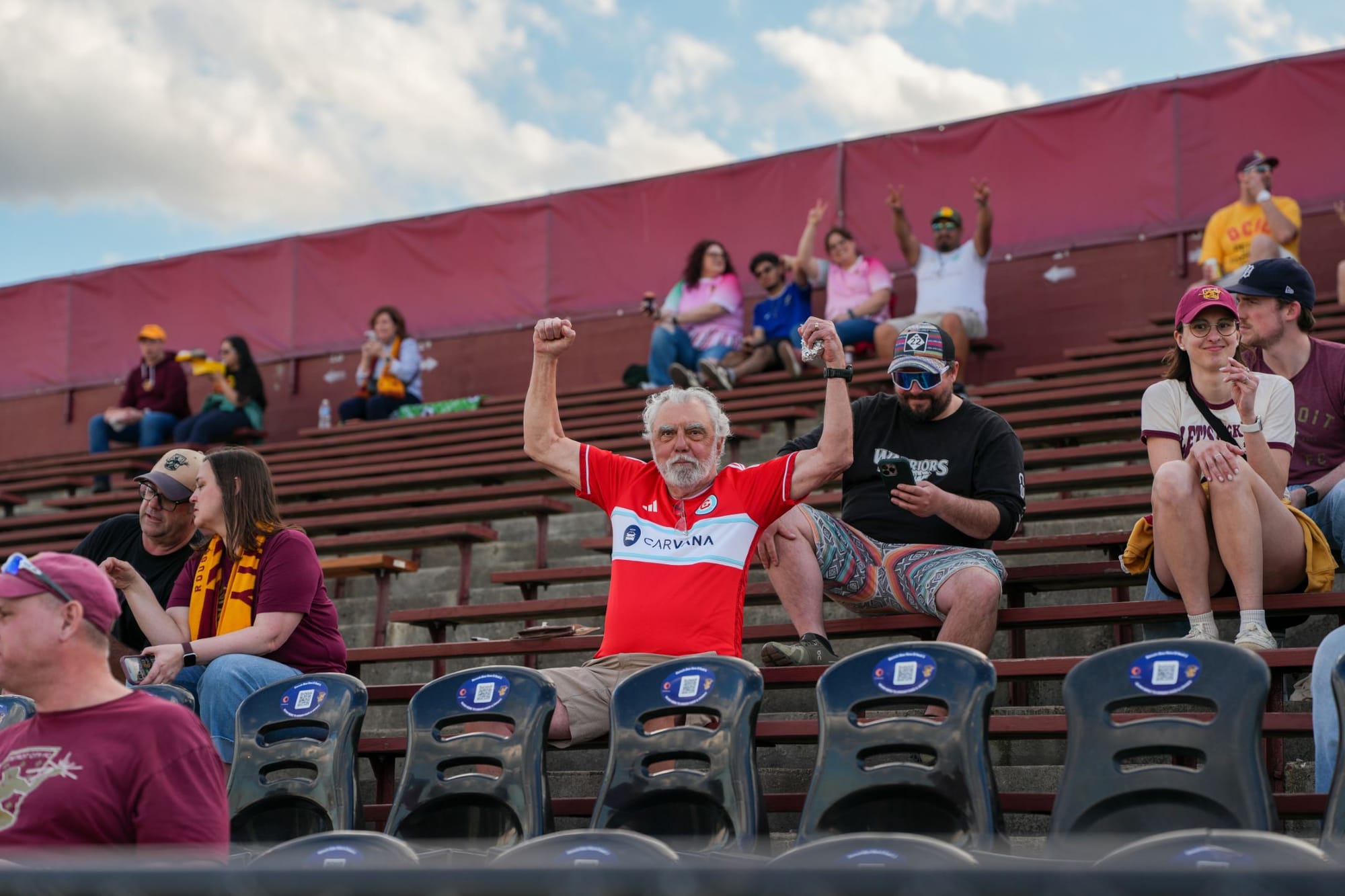
That will mean that future games will lose some of the charm seen in broadcasts of domestic cup competitions: In England’s FA Cup, it’s seeing a Premier League club show up and play the stadium of a club of much humbler position, whose ground is ringed by terraced houses but where the hosts can sometimes make it more than interesting.
In this case, it was seeing players like Philip Zinckernagel in a building ringed by urban two-story houses that wouldn’t have looked that out of place in many places in Chicagoland.
The Fire are set to host in the next round against the winner of St. Louis City and FC Tulsa. Detroit City lost on the pitch, but in doing so, passed on a challenge: It’s up to Fire fans and supporters to make the atmosphere at the 20,000 seat SeatGeek Stadium as fun as the one we saw last night in Detroit.
2. The Fire are only as good as their focus
Through much of the opening 30 minutes of the game, Detroit City felt more like the protagonists than the Fire. Neither team had many clear chances, but Detroit had the first real look on net, a low shot that was sent across the box and went wide – but not by that much (it’s likely, but not certain, that Brady would have had it had it been on frame).
It didn’t really feel like the Fire didn’t have the game under control: Detroit got forward on occasion, but a big part of that is that Joel Waterman and Jack Elliott were pushed up well past half in possession. The Fire’s game plan was clearly built on the belief – which turned out to be true – that even if they gave Detroit acres of space in behind, they wouldn’t be able to exploit it by getting past the lines often.
Still, the Fire didn’t show a ton going forward through much of the match, and they often had passes that might best be described as being lazy and unfocused. When that happened, Detroit were able to pick them off and get going the other way.
Sure, part of that is probably the playing surface, which had clearly seen better days and wasn’t up to the standards that the Fire likely experience even when playing in the handful of MLS facilities that don’t use higher-quality playing surfaces. After the game, Berhalter called it out, saying the surface and lighting were two of the factors that the team knew was going to make the game “difficult.” But even if Detroit were used to it, it was the same surface for both teams.
The Fire weren’t able to simplify the game to adapt, using long balls over the top when they realized that even simple passes wouldn’t always connect and trusting superior speed and one-v-one ability to beat Detroit defenders to loose and second balls – and as a result, Detroit were able to make it interesting.
It felt like the Fire weren’t quite zeroed in on this game, and as a result, Darren Smith, Detroit’s leading scorer (and one of three South Africans to feature in the match) was able to do something that Sam Surridge, Hany Mukhtar, Miguel Almirón, Emmanuel Latte Lath and Saba Lobzhanidze weren’t able to do over the past two games and score one against the Fire.
A minute later, it almost looked dangerous when Puso Dithejane was sent off (Why did he get a red? I’m not sure: it wasn’t shown on the broadcast, and Joe Chatz, who was there in person, couldn’t see it from his vantage point. Whatever he did, it’s between Puso, the ref, and God.)
They won and advanced, and at the end of the day, that’s all that matters. But the fact that the Fire conceded after consecutive clean sheets against both Nashville, one of the league’s best teams, and Atlanta, one of the teams featuring some of the league’s most expensive attacking talent is a lesson for the Fire that they’d do well to learn now, before it costs them down the line.
3. Jason Shokalook deserves more looks (and so do some of the other debutants)
After the Fire’s 1-0 win over conference-leading Nashville, Fire Head Coach Gregg Berhalter said that the team didn’t quite think that Jason Shokalook was ready to start, which is why he turned to a new formation, playing out of a 4-4-2 that essentially played without a true striker.
A week later, he kept the same Starting XI for the first time all season, thereby keeping Shokalook on the bench as the team, once again, went on to win 1-0. Throughout his career, one of the things Berhalter has been very good at is developing young talent – and that includes, especially, finding the right situations for players’ development.
Still: Pure goal scoring has translated well from MLS Next Pro to MLS, and Shokalook won the 2025 MLS Next Pro Golden Boot with 20 goals, and he’d only had limited minutes in what you’d generally call “garbage time.”
We've also seen, time and time again, the MLS SuperDraft is a good place to find goal scorers: Patrick Agyemang was selected 12th overall in the draft ahead of the 2023 season, spent part of the year in Next Pro (10 goals in 11 games) before becoming a regular. 18 months later, he was sold to Derby County for $8.1 million and looked likely to be selected to the USMNT World Cup roster had a tragic injury not derailed that.
I'm not saying Shokalook is the next Agyemang (but he has put up similar numbers: 17 goals in 14 appearances for the Akron Zips his last year before being drafted, then scoring 20 goals in 22 MLS Next Pro appearances last year) – but he doesn't have to be to be an no. 2 in the depth chat behind Cuypers.
In this one, against a second division opponent, Berhalter gave both Shokalook and David Poreba, the 2024 MLS Next Pro Golden Boot winner who still hasn’t played a minute in MLS, the starts, and both delivered.
Shokalook had both of the Fire’s goals in this one. The first one coming off Zinckernagel’s service on a free kick. And it felt like a goal-scorer’s goal: Both literally and metaphorically, he didn’t need to see the net to know where it was.
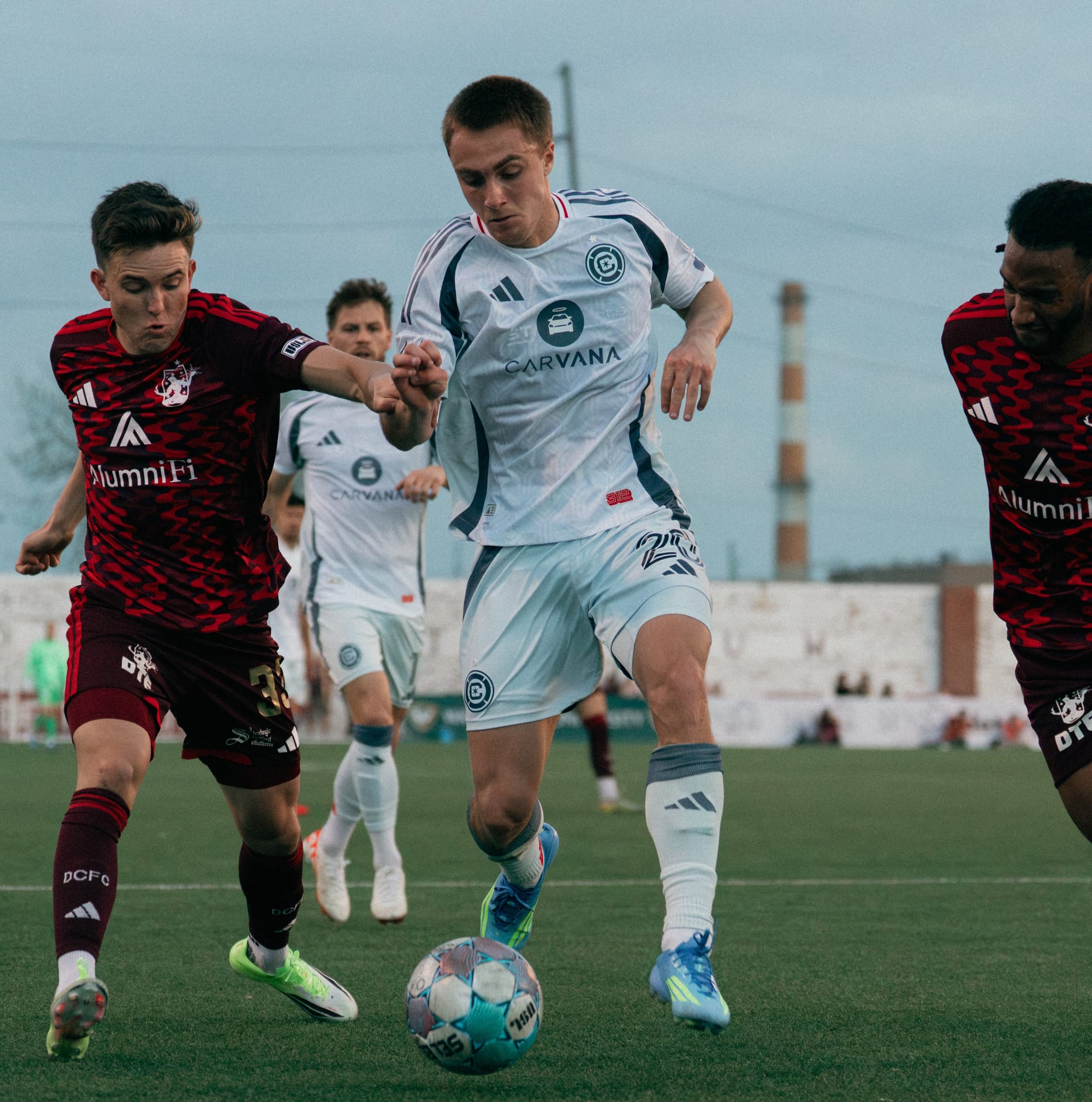
The second felt even more so. Coming off a great ball from David Poreba – again, in his first minutes and first start with the first team – Shokalook received the ball in the box, feinted right and then cut across Detroit’s central defender on the play to send the ball past Carlos Herrera, giving himself a brace in about two minutes and his team a two goal lead. Would that exact move have worked against an MLS back line? Maybe not, but Shok has an instinct for getting balls into the net that the Fire could use whenever Cuypers isn’t on the pitch.
Dithejane, who’s only had limited minutes, looked like he was at least keeping up with things, but evaluating his performance is trickier – again, as far as I know, only he, the ref and God know what he did to get sent off, but he at least didn’t look out of place.
I think Viktor Radojević, the other Fire player who had his first start last night, had already made a case for more minutes from his debut. I also think he likely would have had them already, if he wasn’t behind Andrew Gutman in the depth chart, and if Gutman’s play wasn’t so crucial to the ways the Fire were looking to get a second goal and put things away.
Overall, though? I’m not really sure what more Shok, and to a lesser extent Poreba, could have done with the opportunities they’ve had to make the case for more time on the pitch.