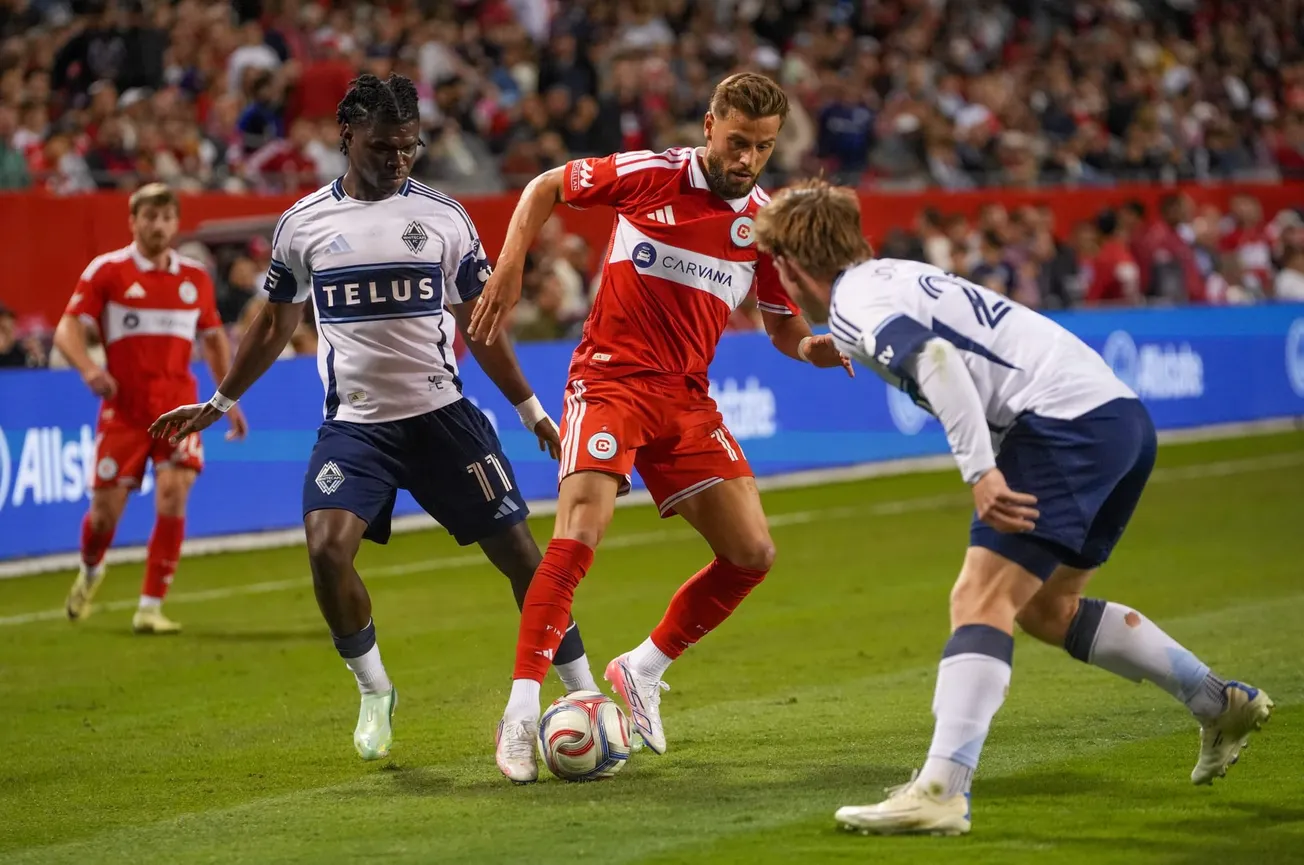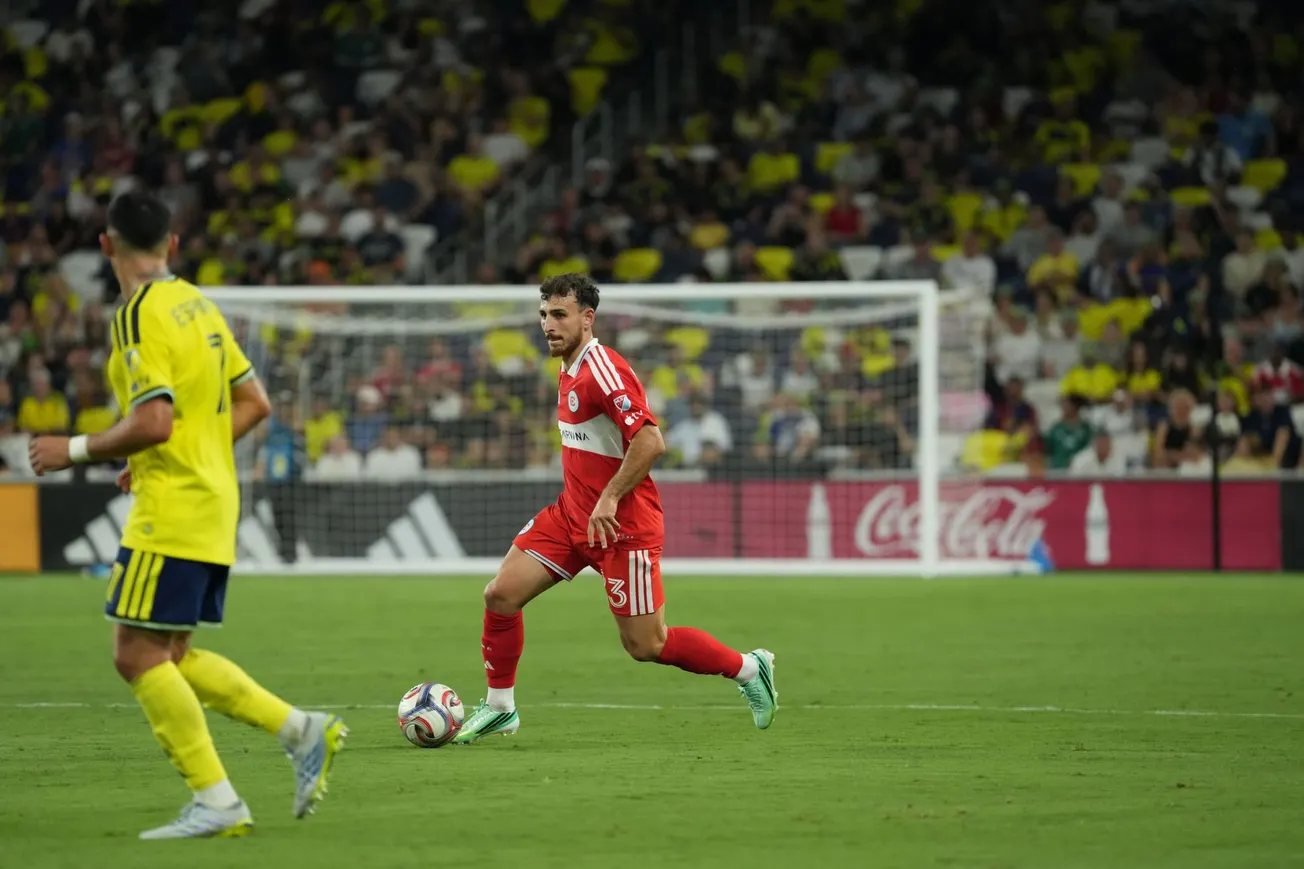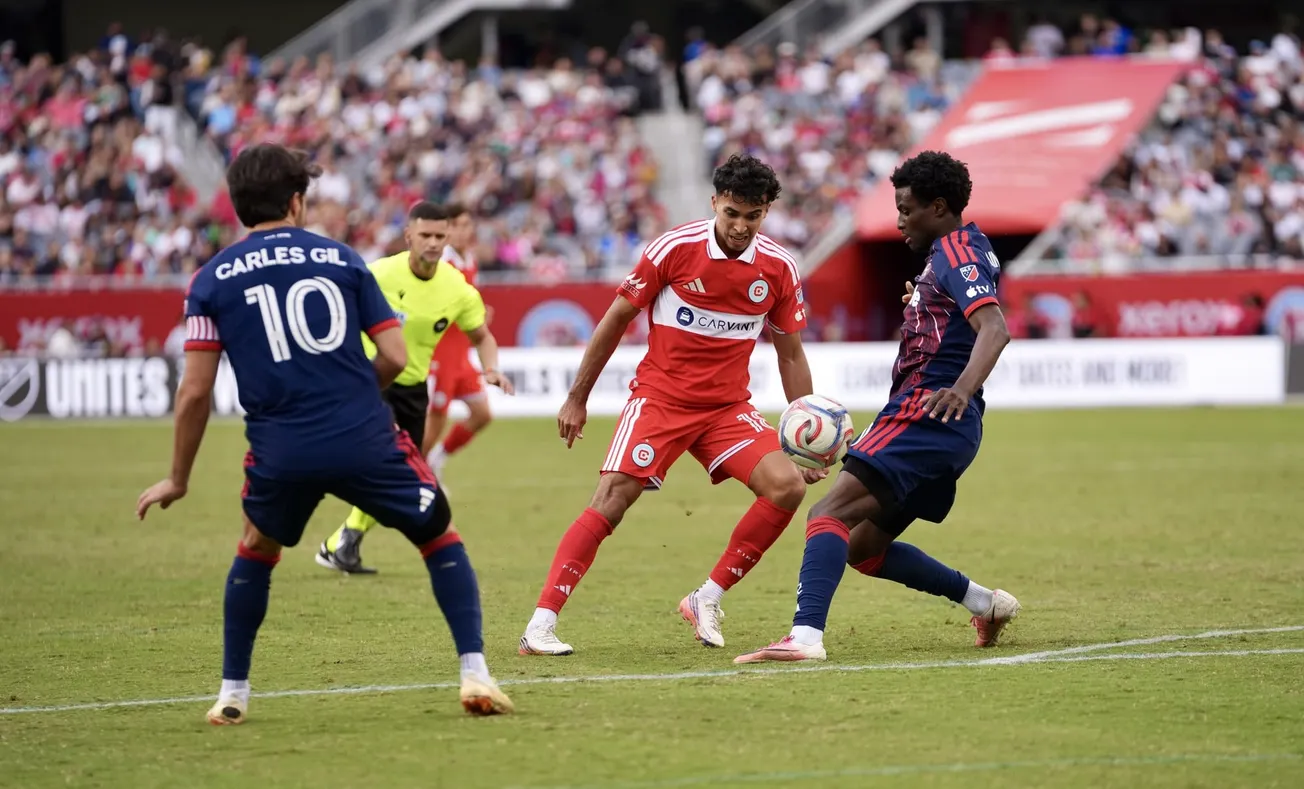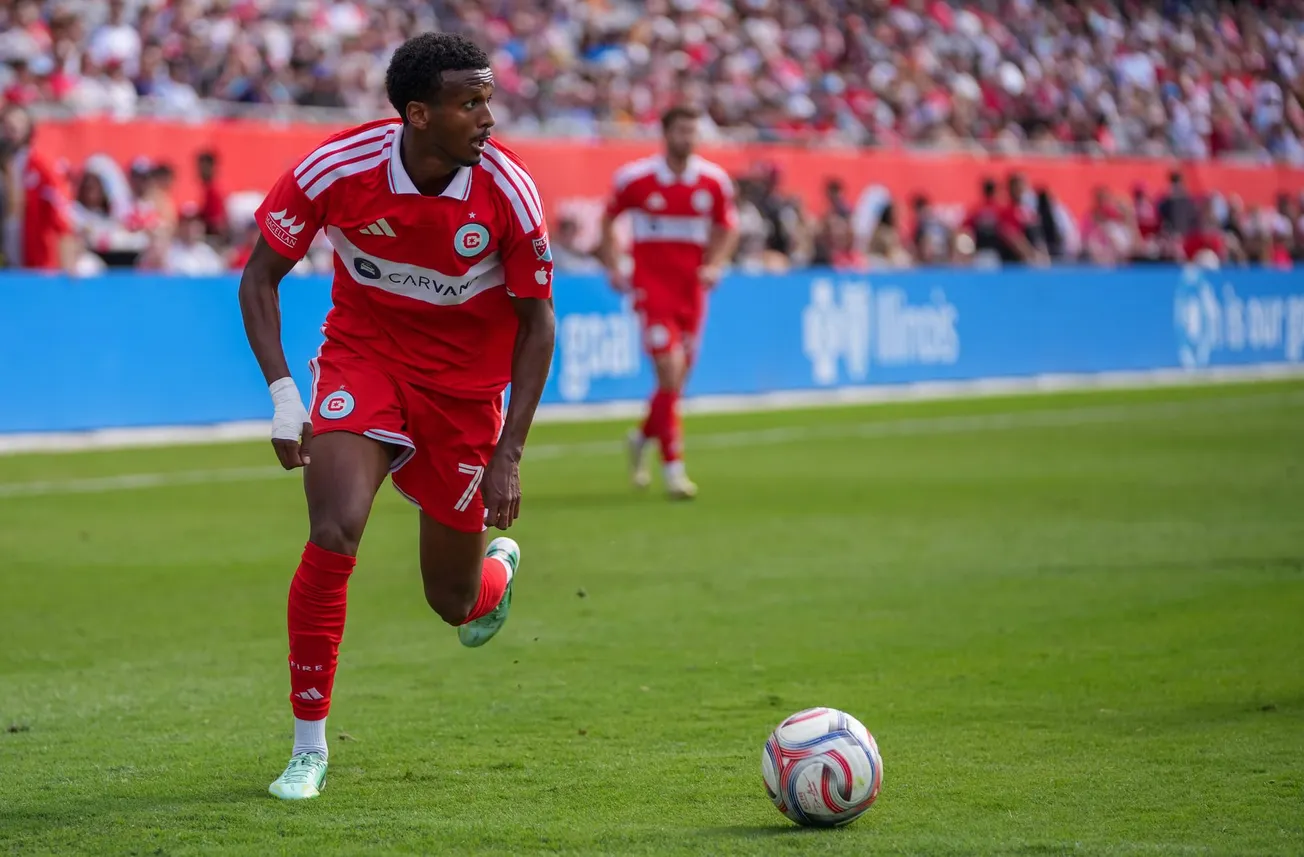

It took until the final half hour at SeatGeek Stadium but the Chicago Fire found a way to defeat Santos Laguna, putting them in a strong position to advance to the quarterfinal round of the Leagues Cup. It wasn’t all smooth sailing, however, as it took until the final half hour of the game for the Fire to get on the board.
Here’s what we learned last night in Bridgeview.
It’s not always going to be pretty
When the whistle blew at half and the Fire were down 1-0, if you asked the crowd in Bridgeview what the final score was going to be, only a few of the most unquestioningly devoted Fire fans would have told the 3-1 victory for the home team that this ended up being.
Throughout the first half, Santos looked like the team that was there to win it. They were faster on loose balls, they had no problems outmuscling the Fire, and although the Fire had more pressure, the team was struggling to convert those into real chances.
All too often, the Fire’s passes wouldn’t fall correctly, and it felt like spacing and communication were off. By the time someone wearing red was ready to pass the ball off, the lanes were closed down by a sea of white shirts.
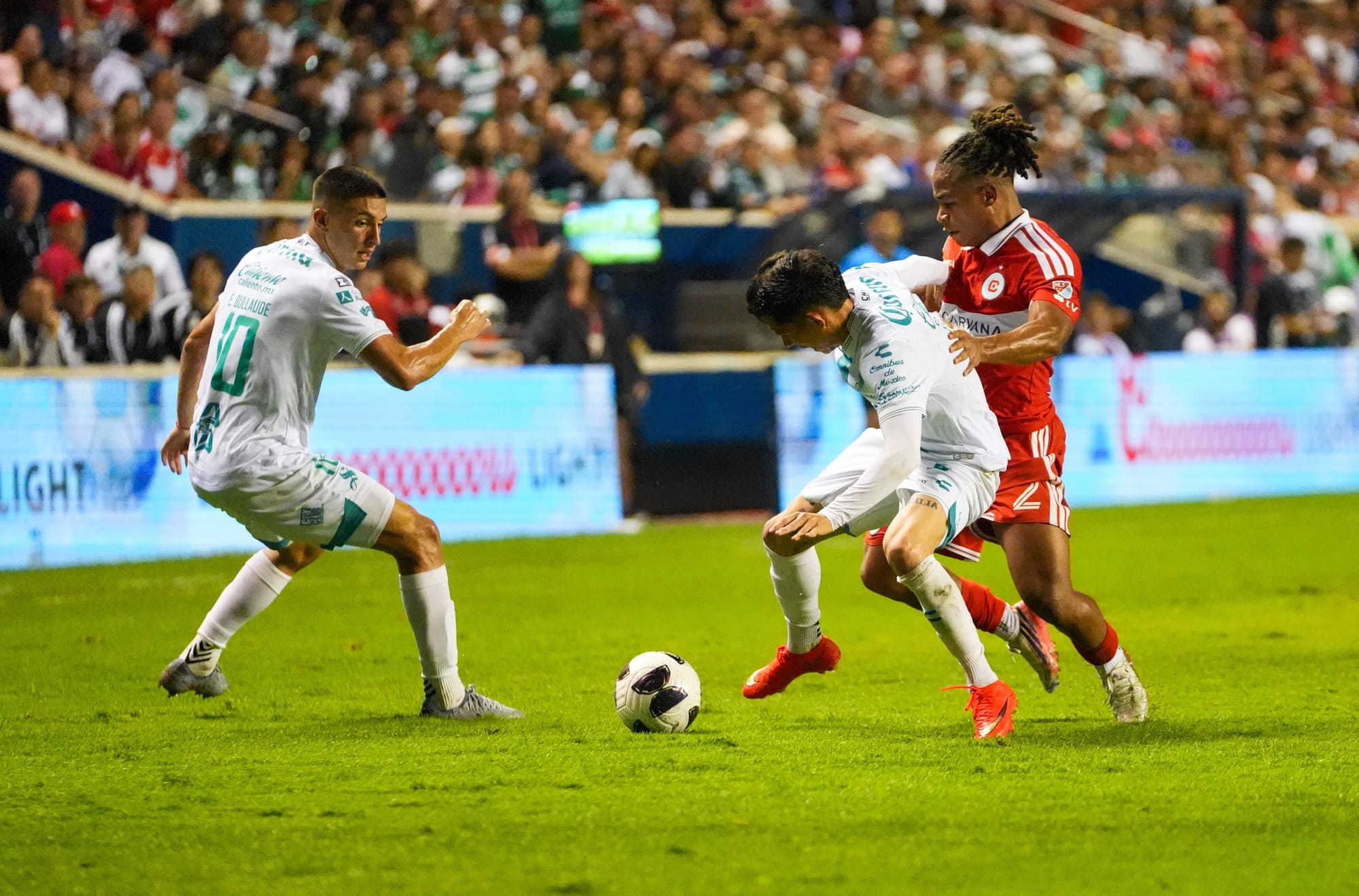
Possession still fell mostly in favor of the home team, but Santos seemed more than comfortable with that, and the team was finding chances off of quick counters.
In other words, you’d have a hard time believing that it was the Fire’s home game and that Santos were the ones who had difficulty travelling to town for the game.
The trio of substitutes that the Fire put on at half made a difference: The spacing looked better, the passing was a little bit crisper, but the changes didn’t ultimately amount to the kind that mattered: The Fire were still struggling to create clearcut opportunities.
When Santos hit the woodwork for the second time in the game in the 67th minute, it felt like the Fire would be very lucky to make it to PKs – but even if the Fire won in the shootout, with the way they knew the table was shaping up, that looked like it might end up being a temporary salvation, at best.
…but it doesn’t always have to be
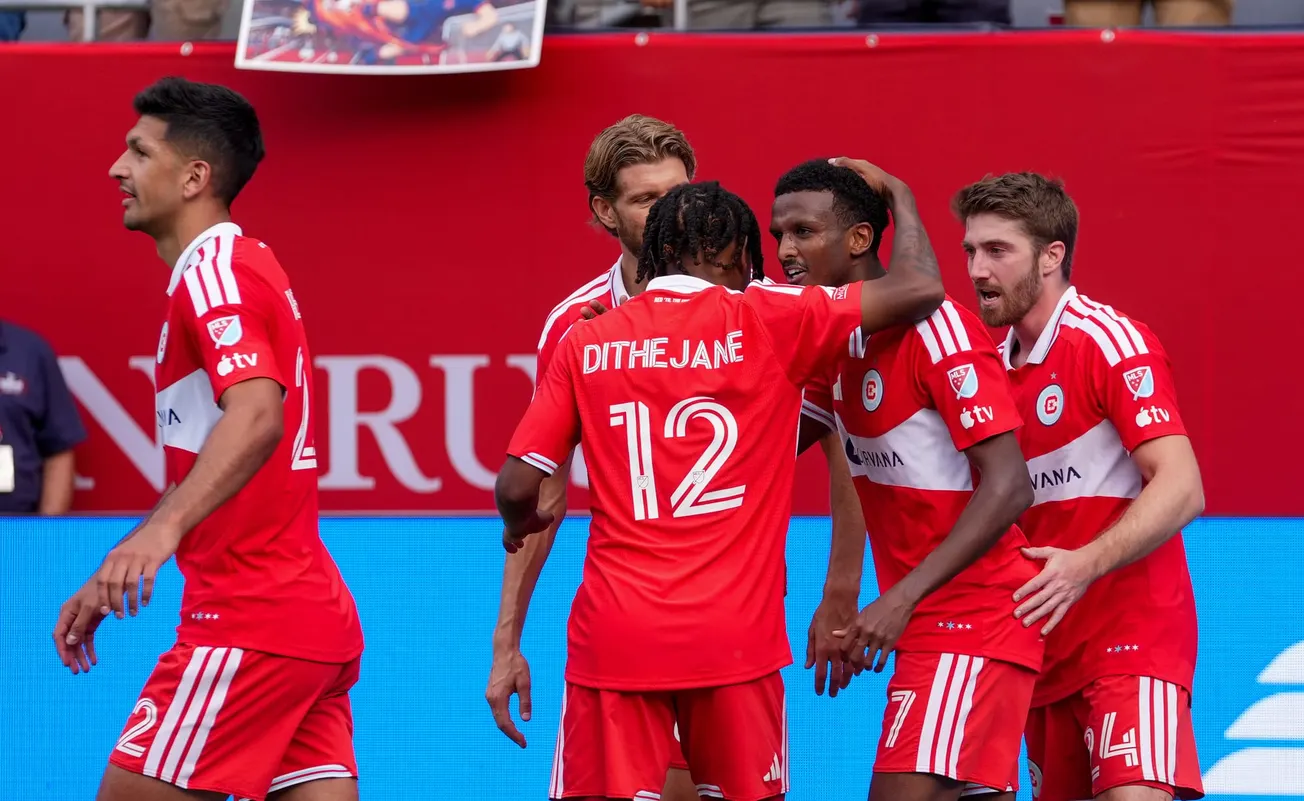
It wasn’t until a second set of substitutions, with Puso Dithejane and Robin Lod coming on just before the 70th minute, that the tide turned.
From that point onwards, the Fire looked like the dynamic, skilled team that they were supposed to look like throughout the full game, and within minutes, Philip Zinckernagel went to the near side of Santos’s goal and found the equalizer for the Fire.
In the build up to that play, Sergio Oregel Jr., Dithejane and Lod – all substitutes in this one – all had a hand in making the goal happen.
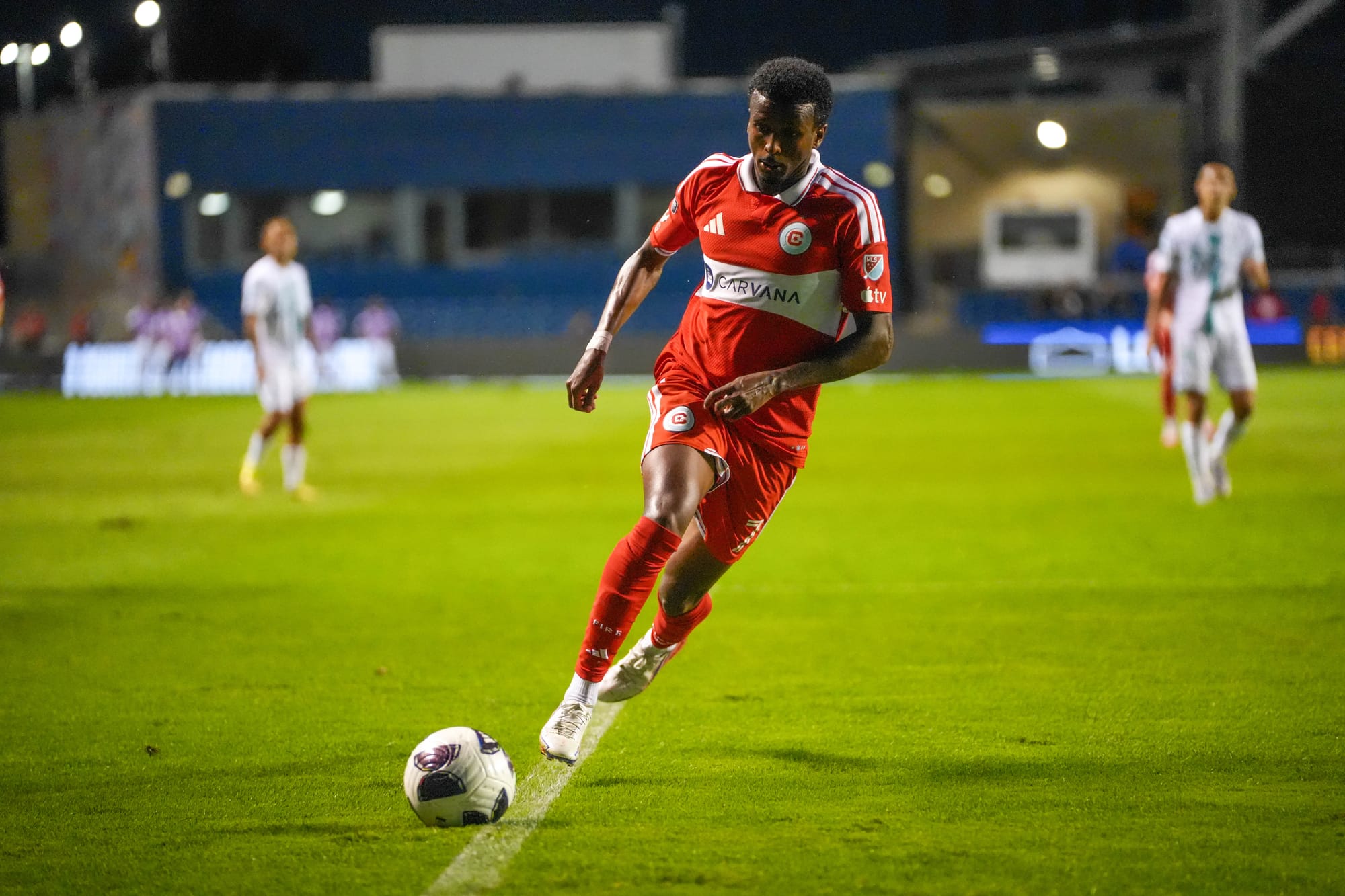
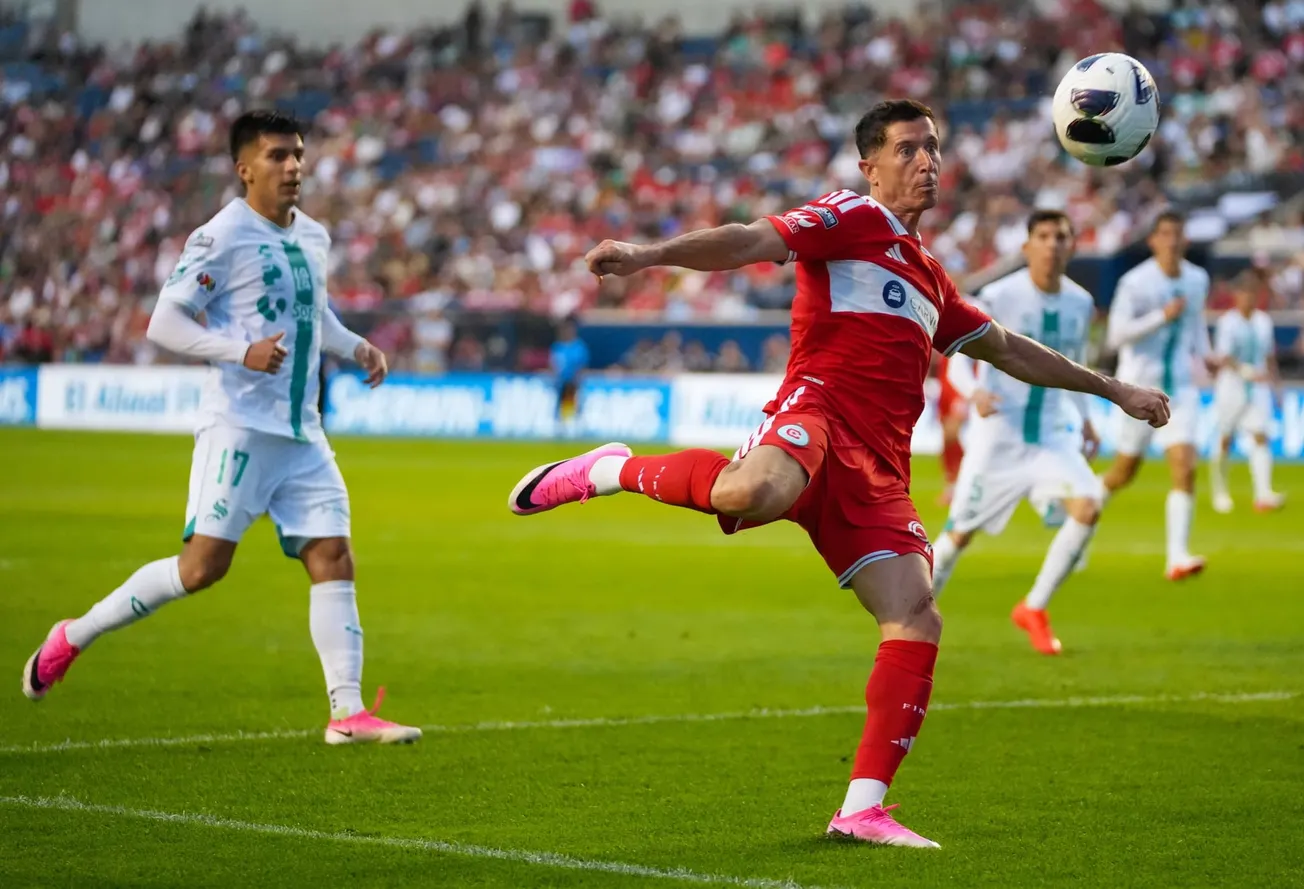
From that point onwards, the Fire were flying. They had some great chances – Lewandowski probably still can’t believe he didn’t get the go-ahead goal about 10 minutes later – but it really felt like the Fire were going to not just make it to PKs but win.
Depending on how you count, six of the Fire who were on the field at kickoff haven’t been regular starters this year, including Robert Turdean, a 16-year-old whose first minutes with the first team were against a Liga MX opponent in a knockout competition (more on that in a minute).
The team found a way to rotate and get its way out of a hole to find a win.
What made the difference? Here’s Gregg Berhalter on it: ““It was the mentality. We talked about the key of the game being our mentality. And at halftime, I went into the locker room. I said, ‘Guys, isn't this fun? We're competing here. Let's go! This is what it's about. This is when you feel the energy, and you feel the passion; that's what this whole thing is about.’ In the second half, we turned it up. So it's a really good thing.”
That counts. Actually, for a lot, in the grand scheme of things.
The adaptability of this team is becoming a real asset
The Fire had managed to get results – you won’t see me saying much more than that – playing out of a 4-4-2 over the past few months.
Switching back to a 4-3-3 or a 4-2-3-1, they’ve managed to get more, and start to look like the team that’s finally realizing its potential.
Formations aren’t tactics, and neither drives results, but the team made a number of changes starting at half that added up to a strong performance.
Here’s Berhalter on what changed:
[There was] no formation shift. More detail, more formation corrections because what we were doing in the first half wasn't the answer, and we needed to get more structure in our attack. Access midfielders play inside to play outside and then get the ball in the penalty box. We didn't do that at all in the first half. Everything was going outside, and then it's easy to defend. But I talked before the game to the solutions group, and I said we're going to need them to make an impact. When you look at the game, they certainly did make that impact. We made seven changes to the lineup from last game. And so it shows that we can count on everybody, and that's the most important thing. If a person doesn't have their best game, we have someone in the back to come in and do a good job and fill their shoes.
The kids are alright
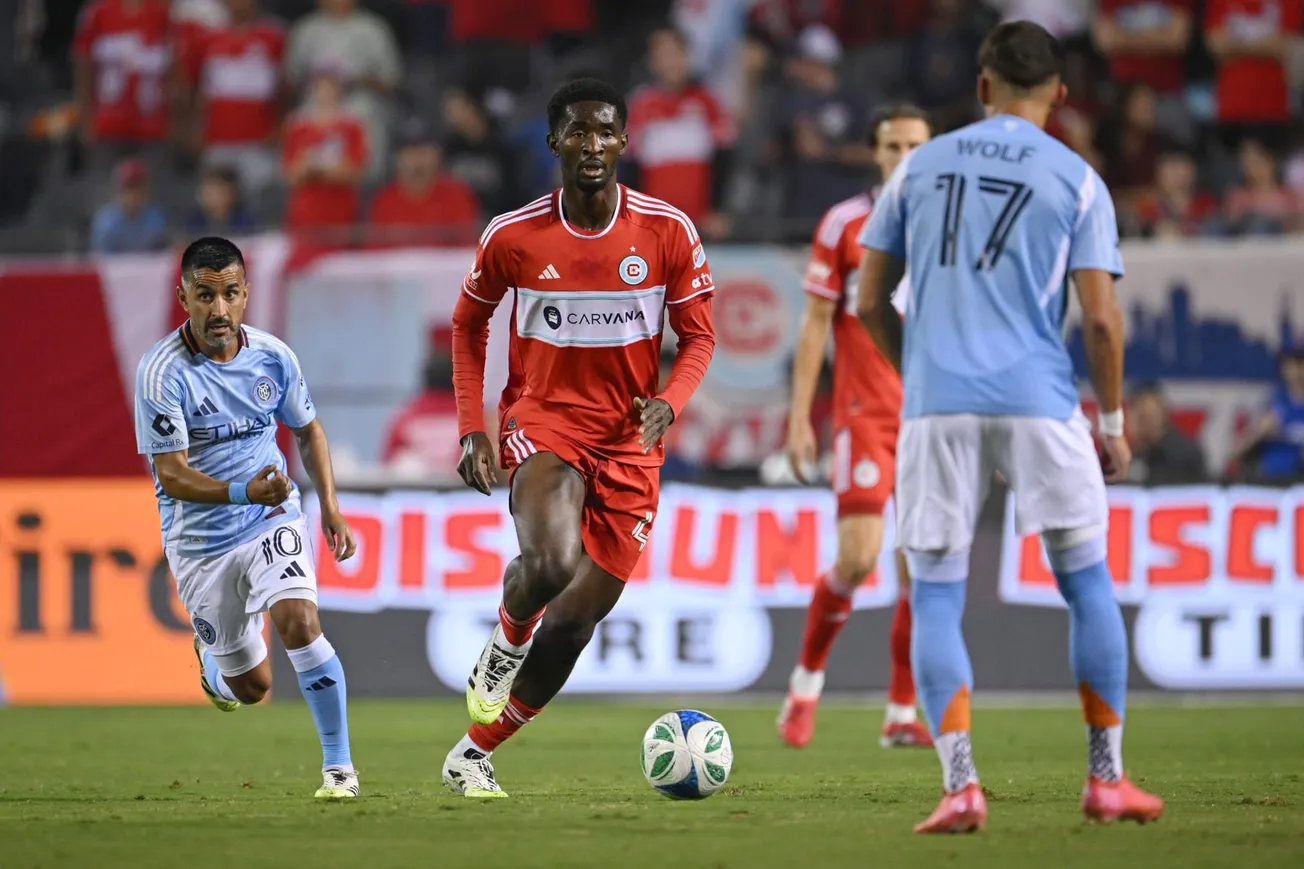
Last year, the Fire played – and then later, started – 16-year-old Christopher Cupps at center back in a league game. This year, they started 16-year-old Robert Turdean, a couple months younger than Cupps was at his debut.
Here is the thing: You see Cupps playing the ball from your seat at the stadium or on TV, and you wouldn’t instantly know he was sixteen. There’s 16 year-olds who look like men (that doesn’t take anything away from the accomplishment of starting at such a young age).
And then there’s 16-year-olds who, well, look like Robert Turdean, who’s listed at 5’7” and 135 lbs. – and both figures might well be a little on the generous side.
Coming in a must-win game in a knockout competition against an opponent who are looking for their first win under their current head coach, this was always going to be a very physical, intense game.
In other words, it was exactly the kind of match where you probably don’t want to start someone who’s 5’7” if they’re wearing cleats and weighs 135 lbs if they’re carrying a bag of groceries.
And yet Turdean more than held his own.
Afterwards, he told us that “Those small touches at first helped get my confidence level up. After that, I can continue to do more. Getting those small touches helped me throughout the game.”
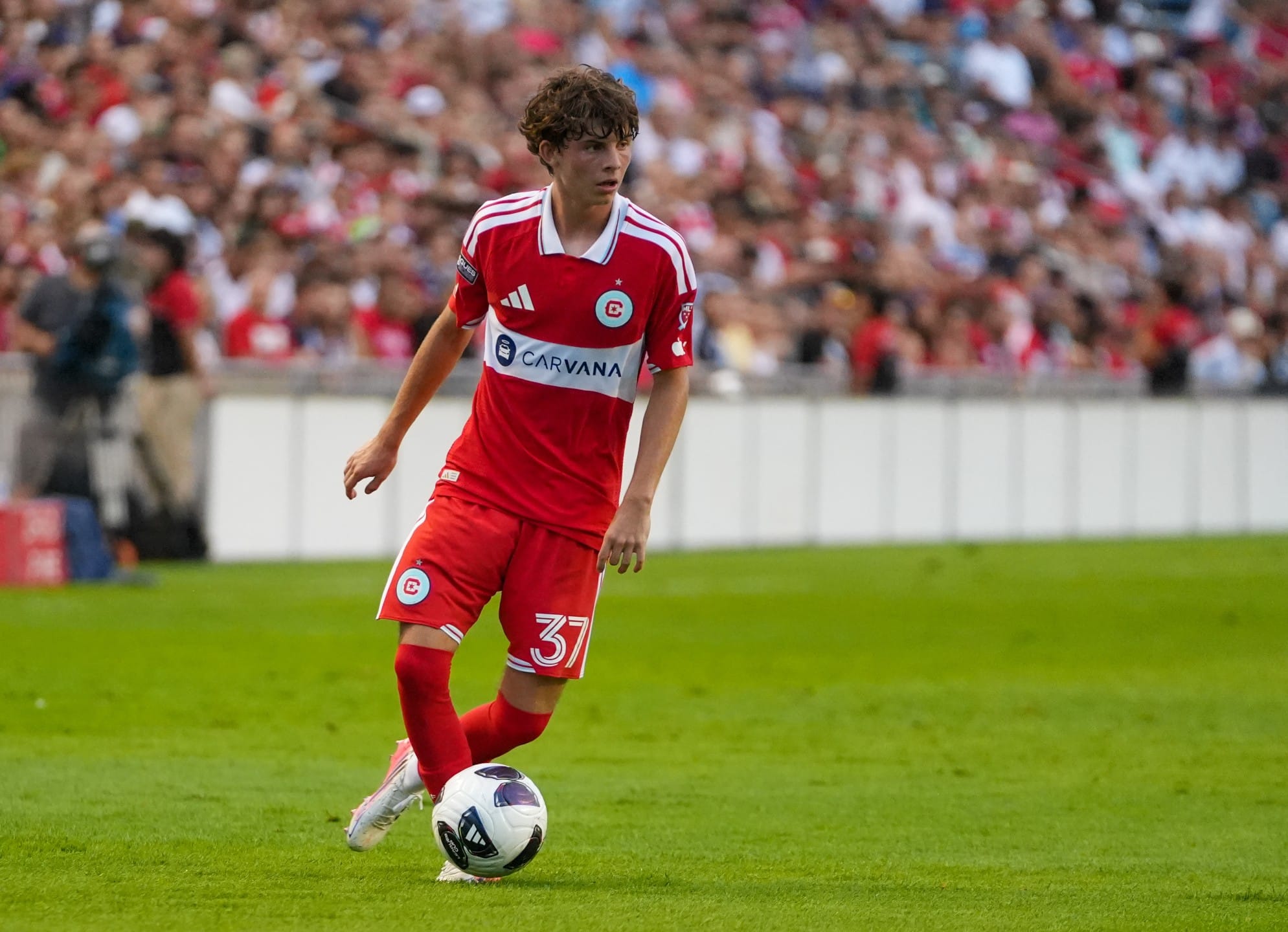
Here’s what his coach had to say about his performance: “You know, a sixteen-year-old kid. He's got a ton of confidence in his own ability. He's a guy that when you put him in the starting eleven in a game like this, he doesn't flinch. He doesn't get nervous, and he steps up, and he did a good job. We took him out just because we thought his legs wouldn't last for much longer, but he did a really good job, and congratulations.”
Six years older than him, Puso Dithejane started off the year as a lightly-used bench option to a regular rotation piece – and is making a clear case for more starting minutes. With him on, the Fire’s attack became instantly more dynamic.
Dithejane has just one MLS start to date, playing 81 minutes in the Fire’s 5-0 win over Sporting Kansas City, but with the Fire resuming league play this weekend, I wouldn’t expect that stat to hold for very long.
The ref was in over his head
Here’s my general rule of thumb about talking about the referees: A quick comment is fine, but for more than that, the way the ref called the game has to either have created conditions that led to a player getting hurt or changed the outcome of the game.
Technically, by that standard, there’s nothing to say: The Fire, even when they weren’t playing well, looked like the more skilled team and in the second half, looked like the team with more energy. That’s usually enough to get a result, and they did.
And no players were carted off with injuries. According to Paiva, though, it got close.
In the postmatch press conference, when asked about what he thought about the way the game was refereed, a wry smile went on Santos’s Renato Paiva’s face. He answered this, and two other questions, with a total of six sentences. Three of those were some variation of “[Lucas] Di Yorio’s leg was almost broken,” a reference to his no. 9 getting tackled in the 75th minute by Jack Elliott, a play which earned the Fire captain a yellow.
Listen: I’m not in a position to seriously question Paiva here, but at that point in the match, he had two substitutions and two windows available and he elected to keep the Argentine attacker on even though he had other attacking options on the bench, and Di Yorio was able involved in a number of plays in the final quarter hour of the game.
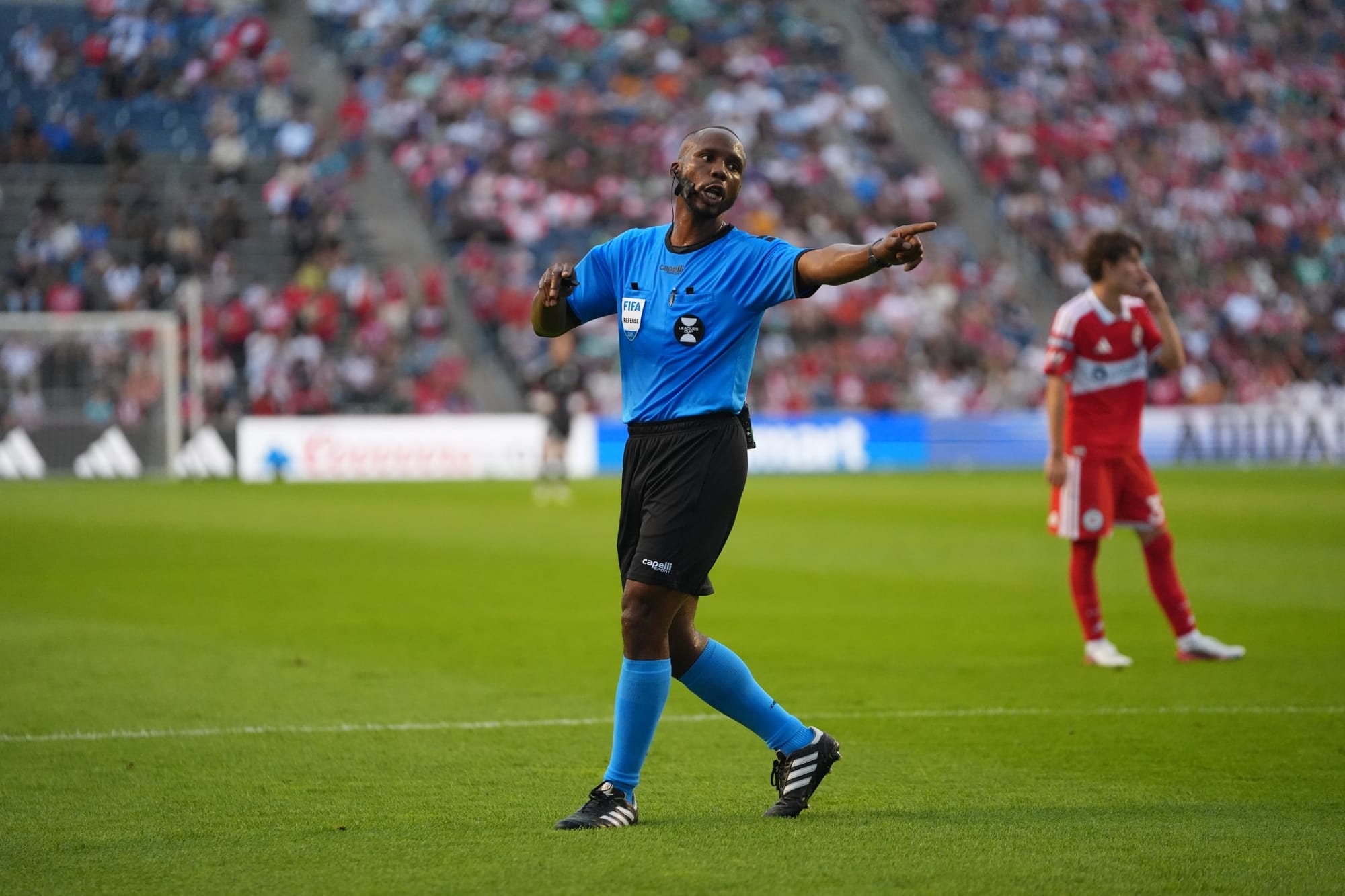
I also don’t think that Elliott thought he could get away with one – if I have to blame anyone or anything, I’m first pointing my finger towards the playing surface at SeatGeek – but at that point, and several others, it felt like the game might be getting entirely away from Reginald Gumbs’s control.
All night, the way he called the game confused both players, fans and the media. Calls as simple as free kicks were given late. It really looked like players on both teams learned quickly they could gang up and pressure Gumbs into a favorable decision.
We stopped for VAR checks more times and in more ways than would be typical, suggesting again, that the video officials were working to make sure that when Gumbs made decisions, he was given the best information in front of him.
To be fair: This was, by far, the highest-level game that he’d refereed in his career, and we all have to start somewhere. But this was a rough start and it feels fortunate that his choices didn’t have significantly more severe consequences.