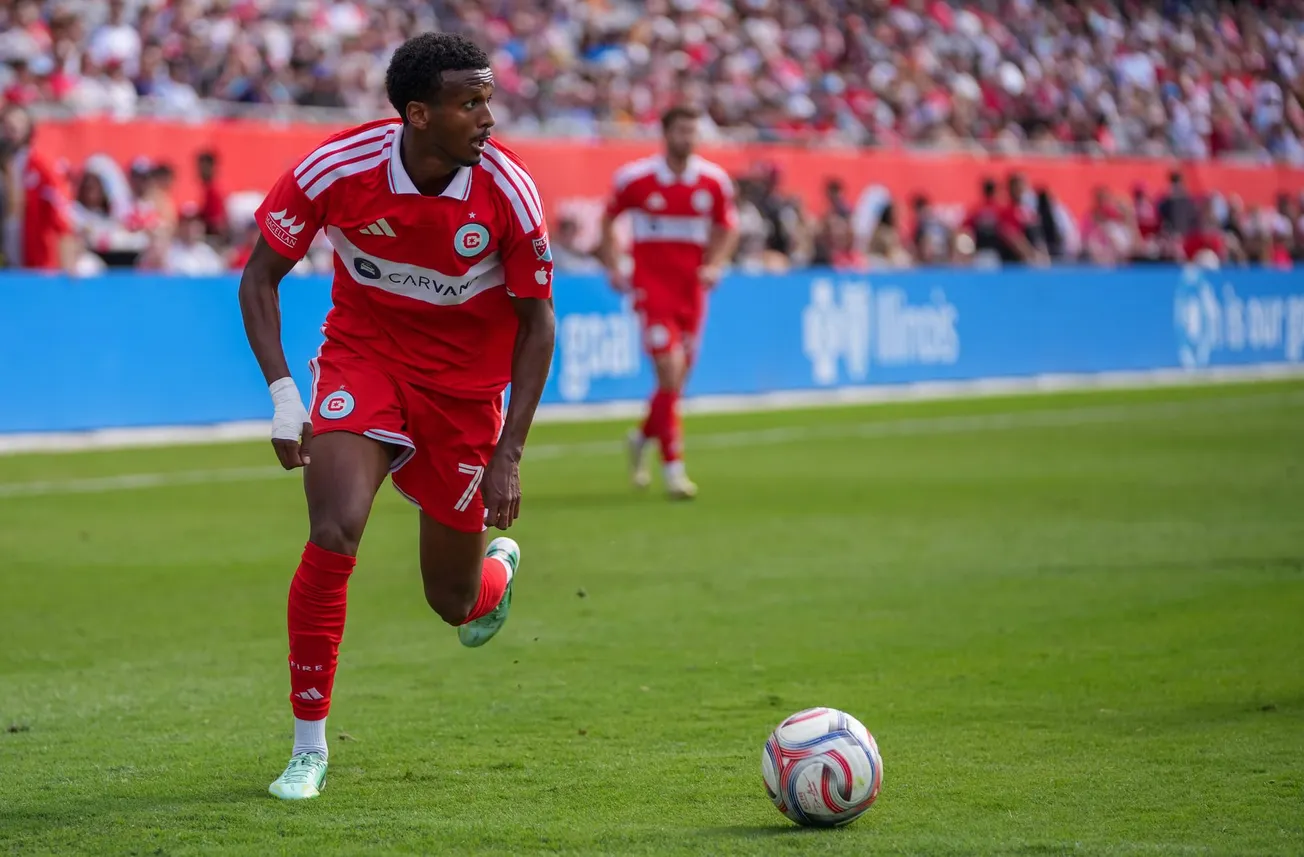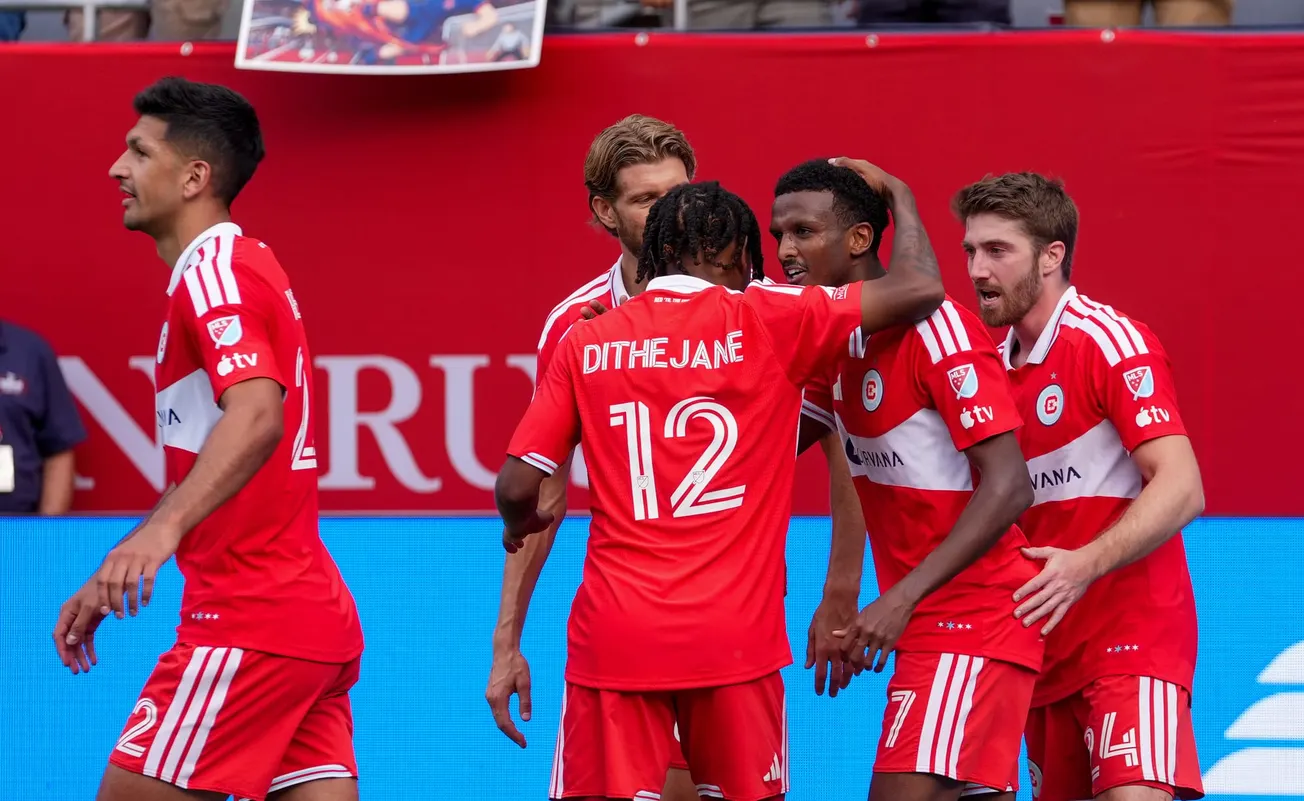

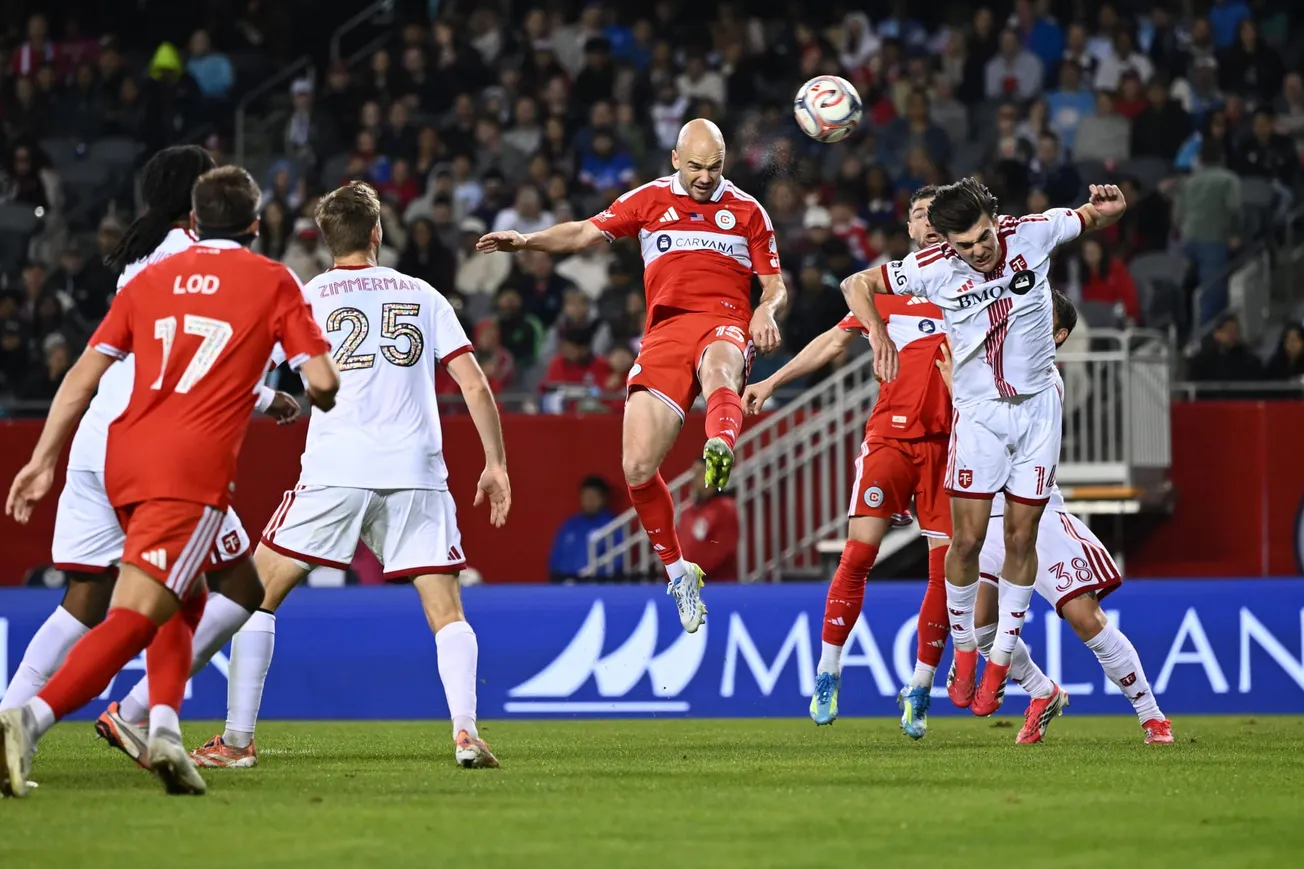
That's it, folks — the Fire's first half of the season is in the books and they're now off until the middle of July. The team finished on a high note, with their third win in a row as they climbed to third in the Eastern Conference with 26 points. Here's five things we learned from a hard-fought victory at Soldier Field.
1. The team can “win ugly” like a good team
should
In a lot of ways, the Fire’s victory over Toronto wasn’t the prettiest, going from the way the Fire (and both teams, really) played down to ugly patches of dead grass that came as a result of Soldier Field having hosted a Bruno Mars concert a week prior, including risers on the playing surface.
Big picture, though, none of that really matters. The Fire got their third win in a row. The team has seven wins and 22 points in their past 10 games. They’re sitting in third in the East, fifth in the 30 team league, and have the league’s fourth best goal differential at +11.
If basically any Fire fan (or MLS pundit, for that matter) was in a coma for a couple years ‒ heck, even a year or so ‒ woke up and took a look at the Fire’s position in the standings, they would start wondering if they somehow woke up in a parallel universe.
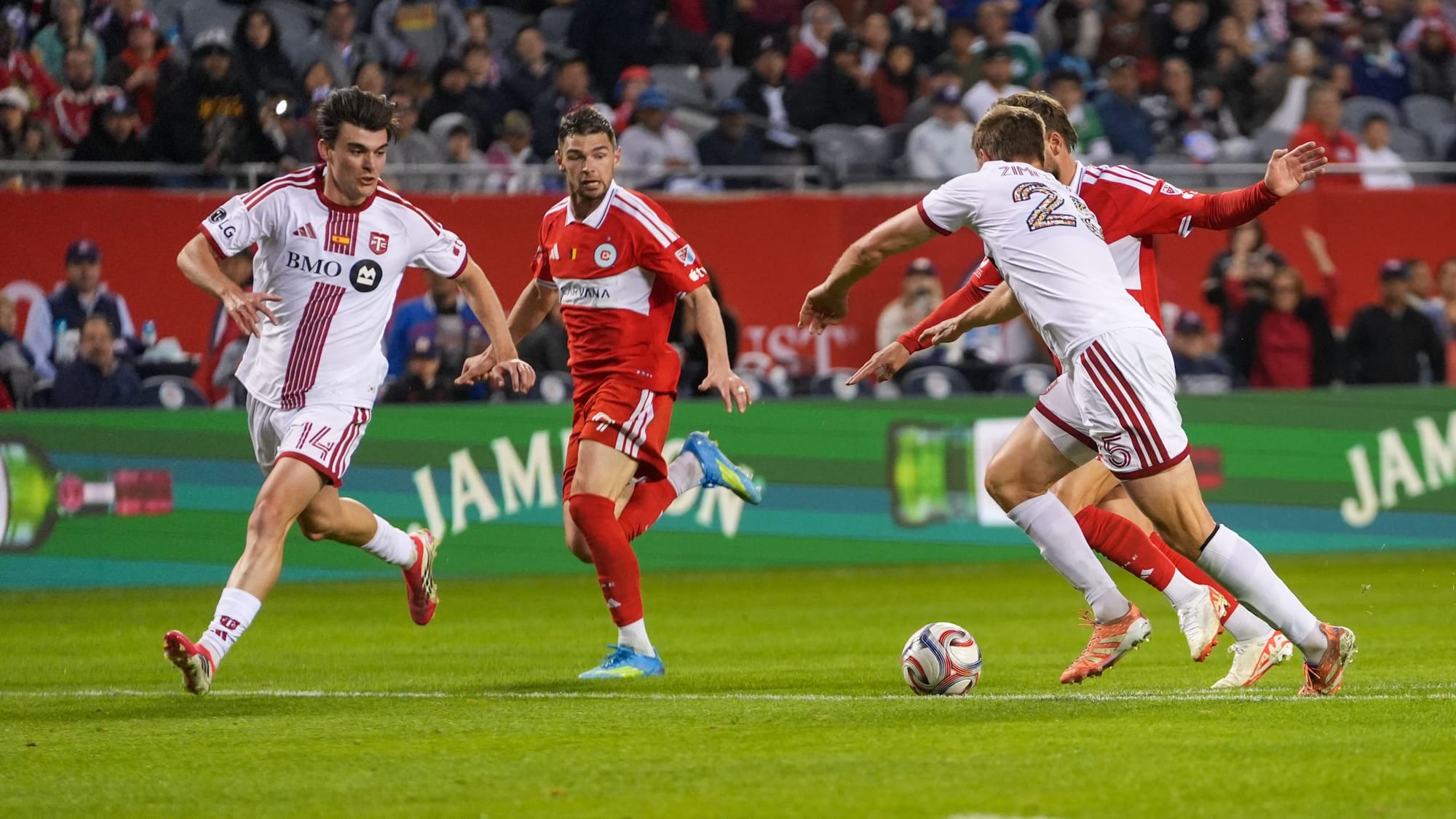
The team has done that without their best creative midfielder in André Franco. And they’ve done it while integrating a 20-year-old center back in Mbekezeli Mbokazi as a game-in, game-out starter. And it all happened alongside a formation change from head coach Gregg Berhalter, a slow start by Philip Zinckernagel and limited availability of key players throughout the first half of the season that kept the team from employing the same Starting XI more than once in 2026 until relatively recently.
In other words, the team has been getting results despite some real headwinds and challenges, and despite things going far less than perfectly.
That is exactly what good teams do, and it shows that in 2026, the Fire have made that transition. In previous years, even making the postseason required everything to go just about perfectly for the Fire. In 2025, it took a late-season surge fueled by incisive play from André Franco to get the Fire in. After Franco’s injury, the Fire’s only victory came against an Orlando City team that had won just one of their previous 10 games across all competitions before facing the Fire, and the team couldn’t get wins against Toronto and New England sides that had already been eliminated.
This year, things haven’t been going perfectly for the Fire by any stretch, but the team is still perched near the top of the table. The Fire are that kind of a team for the first time since iPods were the hottest Christmas or graduation present.
2. Subs aren’t the only way to adjust
A talking point about Berhalter – going back to his days with Columbus and the U.S. Men’s National Team – has been his in-game management, and specifically, how he uses (or doesn’t) substitutions to change games. That criticism has been echoed in these pages, and it’s something that we’ve talked about a lot on The Bonfire.
That’s a bit ironic considering it’s a coach who insists on calling his subs “solutions,” and the criticism has been about more than his use of his bench options (or lack thereof), but it’s the easiest, most visible thing for fans to zero in on.
Still, subs aren’t the only way to change a game.
Going into the tunnel after 45 minutes, both teams looked about even and the game was tied 1-1. It felt like a next-goal-wins kind of game, and it turned out that was true. At the intermission, which team would get that next goal felt like a coin toss.“We were disconnected in the first half, offensively,” Berhalter said postgame. “We were disconnected. The game was disconnected. Our four guys were high, we weren't dropping at the right moment, we weren't playing behind at the right moments. So what it led to was six guys, them pressing us and us losing the ball in difficult positions. They had a couple good transitions right before halftime.”

In the second half, though, even before Gutman’s header put the Fire ahead again, it felt like the Fire had the edge. That came about not so much because the Fire were running rampant ‒ they weren’t, and the team had just 0.52 xG in the second half ‒ but instead, because they weren’t going to let Toronto score.
What changed? Back to the GGGaffer: “At halftime, we said we need to make some adjustments. We need to come closer to each other. We want to overload a little bit on one side of the field to advance the ball. And then if we can't do that, we need to play behind them, and we need to have guys that are willing to make the runs. And I thought in the second half it got a little bit better. I liked the defensive shape better in the second half. I thought it was compact, and they had some of the ball but didn't hurt us that often.”
Although the xG in that second half was close to level – 0.52 for the Fire, vs 0.41 for Toronto, in open play, Toronto had basically nothing in the second frame. They had just seven touches in the Fire’s box (versus 20 in the opening 45 minutes) and only 0.07 of Toronto’s second-half xG came from open play. It was still a close game — Toronto goalkeeper Luka Gavran came very close to equalizing with his second goal of the season (!) deep in stoppage time — but ultimately, the adjustments worked.
Last year, for the Fire to get results, they often had to steamroll opponents. This year? Even when games are close, the Fire can still look confidently in control. They can edge out wins in more tight games, and that’s a big part of the step forward the team has made this year.
“At halftime, we said we need to make some adjustments. We need to come closer to each other. We want to overload a little bit on one side of the field to advance the ball. And then if we can't do that, we need to play behind them, and we need to have guys that are willing to make the runs. And I thought in the second half it got a little bit better. I liked the defensive shape better in the second half. I thought it was compact, and they had some of the ball but didn't hurt us that often.”
3. Still, the subs were effective
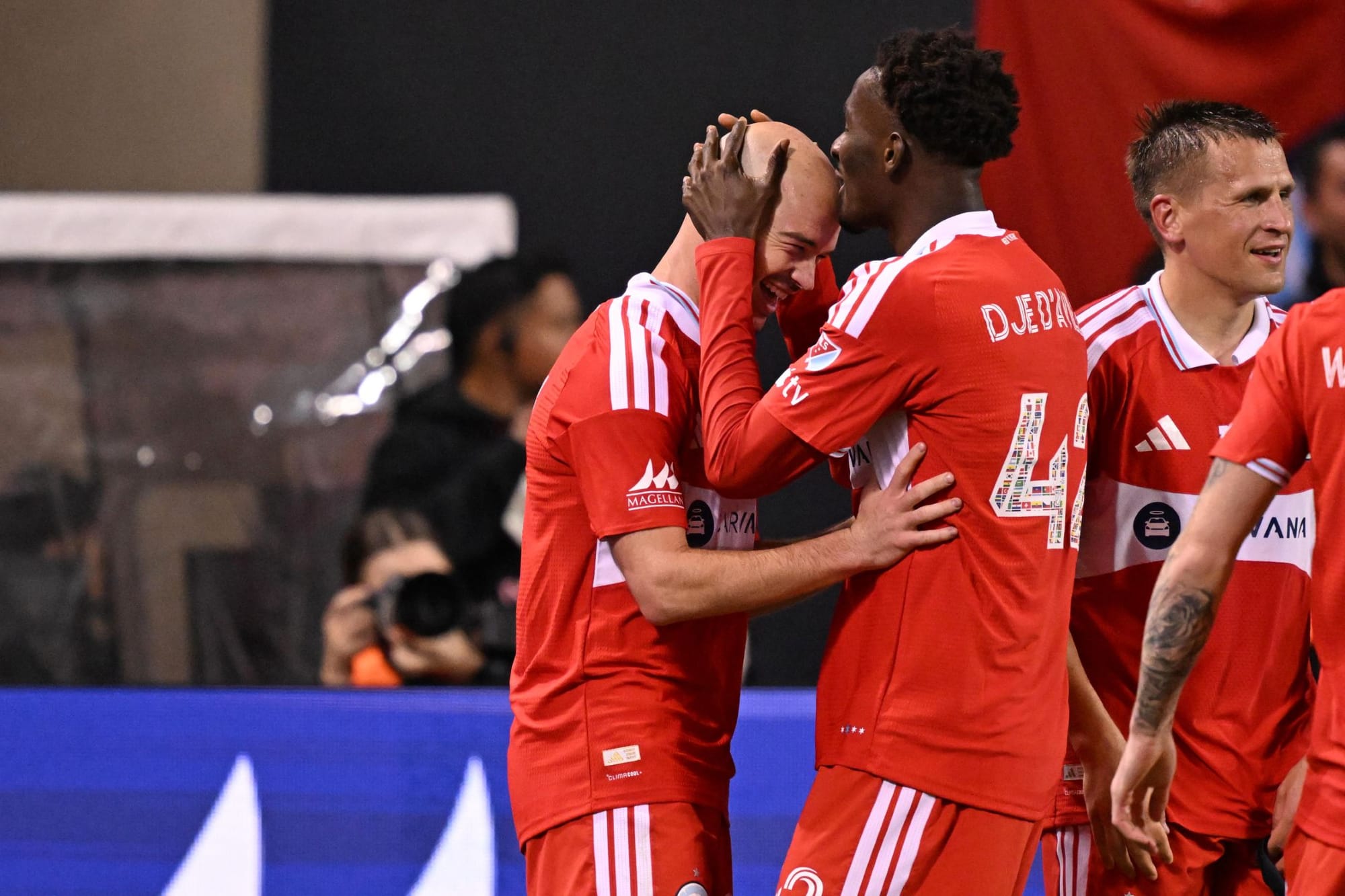
Throughout 2026, Djé D’Avilla has had good games and he’s had some that fall, to be generous, short of level, but he’s been a consistent starter (he’s one of nine players going into the break with double-digit starts). That wasn’t the case last night, when Gregg Berhalter kept him out of the XI after serving a one game suspension for yellow card accumulation last week.
He came on for Mauricio Pineda in the 61st minute as the Fire’s first sub off the bench, and for the last half hour, it looked like the suspension and time on the bench was exactly what the young Ivorian defender (he turned 23 earlier this month) needed.
“D’Avilla,” Berhalter said after the game, “I can imagine, was upset at not starting the game. It's a choice we make as coaches. All you could do as a player is try to prove the coaches wrong. He did that today with his performance.” That half hour was one of his strongest performances of 2026, winning tackles, helping the team maintain a defensive shape that they seldom have been able to since switching to a 4-4-2, and making all 18 of the passes he attempted.
It wasn’t just him. “We challenged the solutions before the game,” Berhalter said after the win. “I think all of the guys that came in – Joel [Waterman] stabilized the back line, I think D’Avilla was able to win his tackles and create some good counterattacks. Puso [Dithejane] came in the game and made a good impact as well.”
With the second half of the year packed with midweek fixtures, the ability to rotate – and change games with options off the bench – is going to be essential for the team to get where they want to be. The past couple games, they’ve been doing that.
4. Lod is getting more comfortable
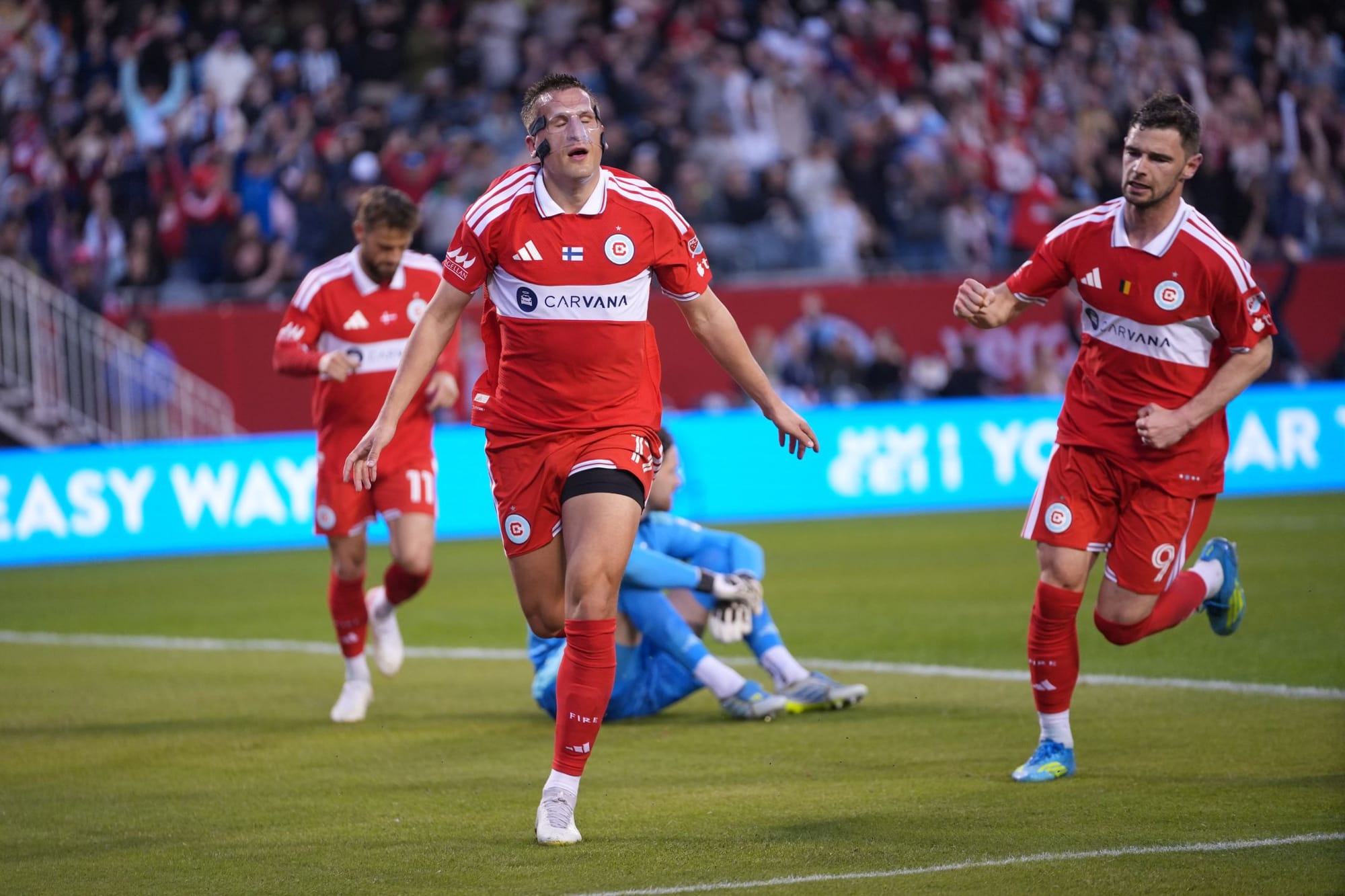
In his years with Minnesota United, Robin Lod was one of the most effective players in his position in MLS. He proved his utility under multiple coaches with several different styles of play, and it really felt like the Fire had a minor coup when they managed to grab him as a free agent.
Since coming to Chicago, however, his play often has fallen short of those expectations. Some of that is how he’s been used — he’s often been asked to play outside of the roles he’s been best in — but over the past few weeks, he’s stepped things up.
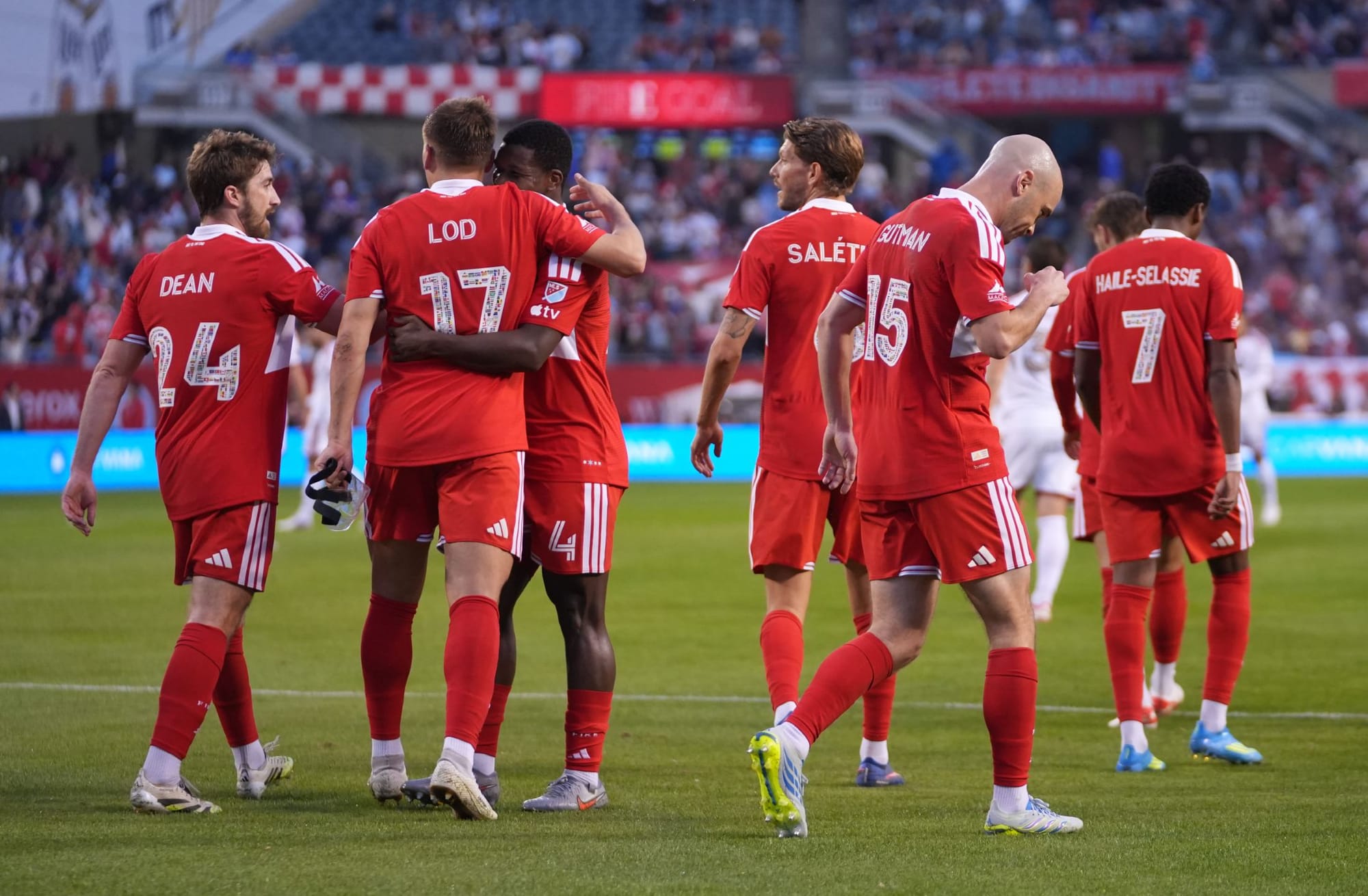
Now he’s got two goals in the Fire’s previous three games – both of which he scored while wearing a transparent face mask after suffering multiple fractured bones in his face and eye damage during the Fire’s 3-2 loss to Cincinnati earlier this month, but even without the goals, it’d be fair to say he’s stepped things up of late.
“He scored a great goal today,” Berhalter said postgame. “He's a guy that you put on the field because he's such a smart soccer player and he makes other people better. Even though he may not be putting up the numbers that he would like, we think he's valuable to this group. Tremendous hard worker, good positioning, smart player and helps the rest of the team.”
For the Fire to maintain – or improve – their spot in the standings in the second half of the season, they’ll need improvements throughout the squad. Some of those will come from outside – the transfer window will be open before the Fire are back in action. A lot of it, though, will need to come from improvements from within the squad. André Franco’s return will be a big boost for the team. Improved play from young players like D’Avilla, Dithejane and Mbokazi will hopefully be another.
But down the stretch, with the grind of a crowded schedule? There’s something to be said about what a good, in-form MLS veteran who has been there before can do for the team. Lod is rounding into that form at exactly the right time.
5. Things are about to get a lot harder
Feel good about the Fire after all that? Well, here’s a dose of reality courtesy of Andrew Gutman. “We feel good,” Gutman said about the Fire’s position in the table, “but we also recognize that in the back half of the season, we're playing more top table teams.”
That’s true, and something we haven’t talked about since pre-season. Coming into Sunday’s games, the Fire’s opponents have averaged 1.21 PPG so far; for the rest of the year, their opponents average 1.42 PPG. That difference works out to about a 41 point finish for the pre-World Cup opponents to about 48 points for the ones the team has yet to face. In most years, that’s the difference from a team flirting with making it in the Wild Cards spots with one in a playoff position.
Of course, some teams have been unlucky ‒ as Matt Doyle likes to say, “sometimes ball no go in” ‒ so here’s a more analytical take: Before the start of the season, Paul Harvey used an Elo-based ranking to look at strength-of-schedule for every team in MLS before and after the World Cup.
Although I don’t have access to the Elo function Paul used, I re-ran Paul’s analysis using xGD from American Soccer Analysis as the backbone, and, well....
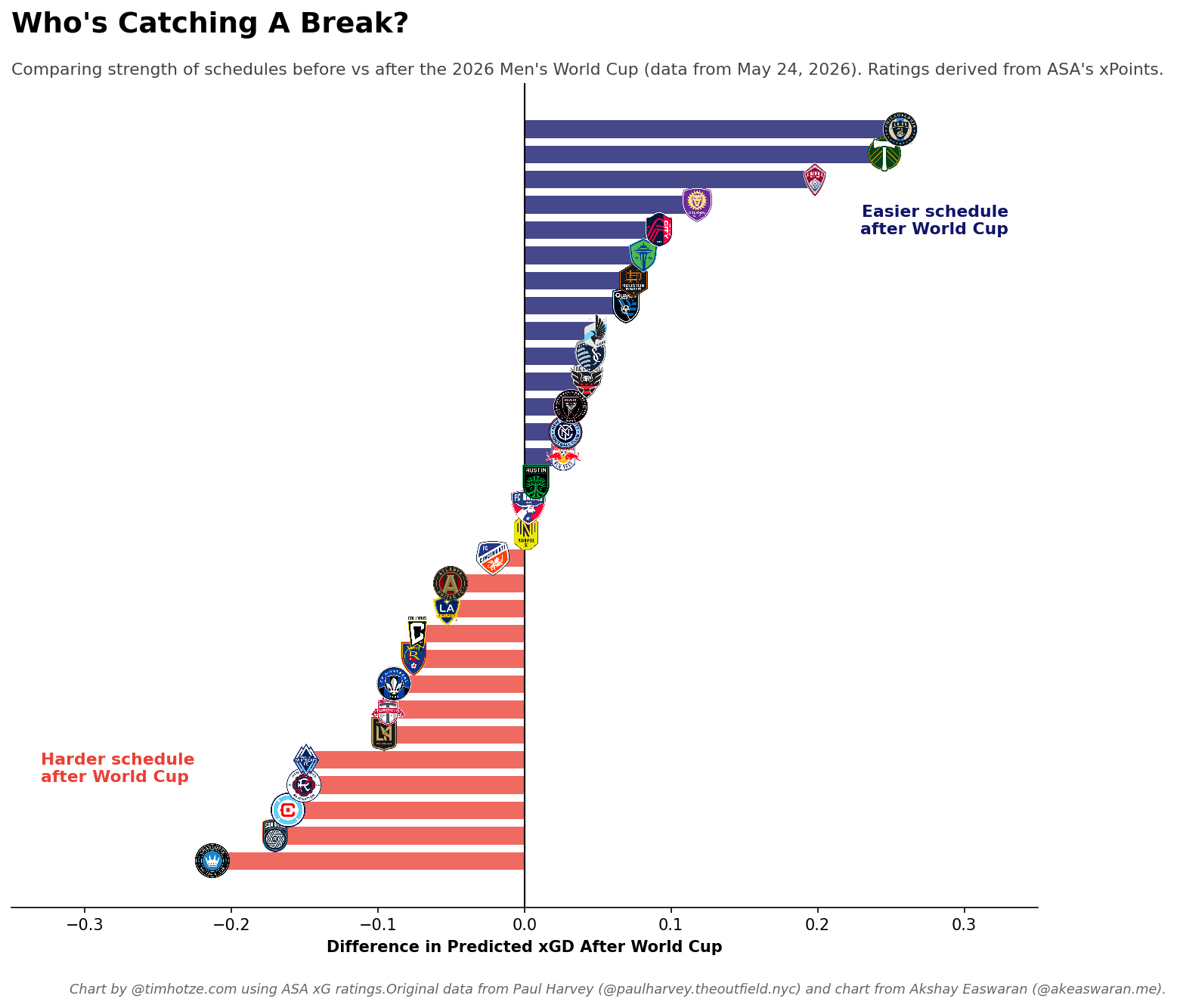
That chart is updated with results the data from all the results up to and including Saturday night.[1]
Only two teams have a bigger jump in schedule difficulty with the games played after the World cup break than the Fire: Charlotte (who the Fire face twice) and San Diego. It’s not all negative for the Fire: Last night’s win let the team overtake the Revs in the standings, and they’ve also got a bigger gap — likely with a less latitude to improve than the Fire.
(And whoever is coaching Philadelphia and Portland come July ‒ whether that's the same coach or a new one ‒ might end up looking like a genius because of things that they had nothing to do with. That’s the way the managerial cookie crumbles sometimes.)
The fact that Gutman brought this up tells me that this is something that the team has discussed (never believe it when a coach or player tells you they don’t look at standings and don’t look at anything other than the match in front of them).
Here’s Berhalter on his assessment of where the team is, and where they’ve got to go. “We're 14 games into it, so there's a lot of soccer left to play. The teams that are below the line are going to be trying to catch up; the teams that are above are going to try and extend their lead. And that's just the way it's going to be.”
“So for us,” the head coach said, “instead of making these major forecasts, we just want to keep improving, and you know we'll use the training period in the summer to get back in good form to attack the second half of the season.”
To get technical about it: ASA’s points database only has xPoints for games that have already been played. My analysis uses a Poisson model to translate team xG performance into xPoints. That’s the basis of what ASA does, but their model is less confident at extreme results. That’s probably right ‒ sometimes, ball no go in ‒ but my model has a 99.74% correlation to theirs with global bias in my model. Besides, since the graph shows xGD, it doesn’t matter for the chart one bit.) ↩︎